

Grace Paley (1922–2007)
Author of The Collected Stories of Grace Paley
About the Author
Grace Paley is a writer, teacher, feminist, and activist. Her Collected Stories (FSG 1994) was a finalist for the National Book Award. She lives in New York City and Vermont. (Bowker Author Biography)
Works by Grace Paley
Long Walks and Intimate Talks: Stories, Poems and Paintings (Women & Peace) (1991) 31 copies, 1 review
A Conversation with My Father 4 copies
Distance {short story} 2 copies
Apologo sulla felicità 2 copies
Questa è una storia sul mio amico George, inventore di giocattoli (in Più tardi nel pomeriggo) 2 copies
Nouvelles : Les petits riens de la vie ; Enorme changement de dernière minute ; Plus tard le même jour (2009) 2 copies
Ansietà (in Più tardi nel pomeriggo) 2 copies
Amore (in Più tardi nel pomeriggo) 2 copies
Friends - short story 2 copies
Grace Paley reads "A conversation with my father" and "Friends" short stories from her collection Later the same day (1986) 2 copies
An Interest In Life 1 copy
In autobus 1 copy
Paley, Grace Archive 1 copy
Livets små förtretligheter 1 copy
Samuel [short story] 1 copy
Associated Works
Wayward Girls and Wicked Women: An Anthology of Subversive Stories (1986) — Contributor — 579 copies, 9 reviews
For the Love of Books: 115 Celebrated Writers on the Books They Love Most (1999) — Contributor — 479 copies, 4 reviews
Points of View: An Anthology of Short Stories, Revised & Updated Edition (1995) — Contributor — 443 copies, 7 reviews
You've Got to Read This: Contemporary American Writers Introduce Stories that Held Them in Awe (1994) — Contributor — 413 copies, 3 reviews
The Art of the Tale: An International Anthology of Short Stories (1986) — Contributor — 381 copies, 3 reviews
No More Masks: An Anthology of Twentieth-Century American Women Poets (1993) — Contributor, some editions — 226 copies, 3 reviews
First Fiction: An Anthology of the First Published Stories by Famous Writers (1994) — Contributor — 196 copies, 1 review
War No More: Three Centuries of American Antiwar and Peace Writing (2016) — Contributor — 110 copies, 2 reviews
The Choices We Made: Twenty-Five Women and Men Speak Out About Abortion (1991) — Contributor — 102 copies
Wrestling with Zion: Progressive Jewish-American Responses to the Israeli-Palestinian Conflict (2003) — Contributor — 84 copies, 1 review
The Heath Anthology of American Literature, Concise Edition (2003) — Contributor — 73 copies, 1 review
More Stories We Tell: The Best Contemporary Short Stories by North American Women (2004) — Contributor — 66 copies
The Woman Who Lost Her Names: Selected Writings of American Jewish Women (1980) — Contributor — 57 copies
The Literary Lover: Great Stories of Passion and Romance (1993) — Contributor — 55 copies, 2 reviews
After Sorrow: An American Among the Vietnamese (1995) — Foreword, some editions — 54 copies, 2 reviews
Jo's Girls: Tomboy Tales of High Adventure, True Grit, and Real Life (1997) — Contributor — 48 copies
The Roads from Bethlehem: Christmas Literature from Writers Ancient and Modern (1993) — Contributor — 34 copies, 1 review
The Defiant Muse: Vietnamese Feminist Poems from Antiquity to the Present (The Defiant Muse Series) (2007) — Foreword, some editions — 19 copies
Bread and Puppet: Stories of Struggle and Faith from Central America (1985) — Foreword, some editions — 11 copies
Tagged
Common Knowledge
- Canonical name
- Paley, Grace
- Legal name
- Goodside, Grace (birth)
- Birthdate
- 1922-12-11
- Date of death
- 2007-08-22
- Gender
- female
- Education
- Hunter College
The New School for Social Research - Occupations
- poet
short story writer
professor
political activist - Organizations
- Sarah Lawrence College
City College of New York
Teachers and Writers Collaborative
American Friends Service Committee
PEN American Center - Awards and honors
- State Author of New York/Edith Wharton Citation of Merit (1986-88)
PEN/Malamud Award (1994)
Lannan Literary Award (1997)
National Institute of Arts and Letters Award (1970)
American Academy of Arts and Letters Academy Award (1970)
F. Scott Fitzgerald Award for Outstanding Achievement in American Fiction (2004) (show all 13)
American Academy of Arts and Letters (1980)
Edith Wharton Award Certification of Merit (1986)
Robert Creeley Award (2003)
Jewish Cultural Achievement Award (1994)
Lester B. Granger '18 Award for Lifetime Achievement (2006)
Vermont Governor's Award for Excellence in the Arts (1993)
Guggenheim Fellowship (1961) - Relationships
- Nichols, Robert (spouse)
- Cause of death
- cancer (breast)
- Nationality
- USA
- Birthplace
- The Bronx, New York, USA
- Places of residence
- New York, New York, USA
Thetford, Vermont, USA - Place of death
- Thetford, Vermont, USA
- Associated Place (for map)
- USA
Members
Reviews
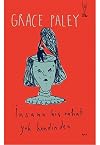
“Grace Paley, beni güldüren, ağlatan öyküler yazıyor. Paley, kimseye benzemeyen komik, enerjik, sade ve hüzünlü bir sese sahip bir yazar.” Susan Sontag
Genç bir askere tutulan işveli bir ergen, banliyölerdeki iki yüzlü babalar, arabada yaşayan bir iş bulma danışmanı, Noel piyesinde oynayan yahudi çocuklar, didişen aşık bir çift. Bu, gündelik hayatların kuytusunda kalan insanın küçük rahatsızlıklarını keşfe çıkan bir kitap. Paley insan olma halinin show more yalnızlığını, dokunaklı komikliğini usta bir kulakla ve ironik bir dille resmedebiliyor. show less
Genç bir askere tutulan işveli bir ergen, banliyölerdeki iki yüzlü babalar, arabada yaşayan bir iş bulma danışmanı, Noel piyesinde oynayan yahudi çocuklar, didişen aşık bir çift. Bu, gündelik hayatların kuytusunda kalan insanın küçük rahatsızlıklarını keşfe çıkan bir kitap. Paley insan olma halinin show more yalnızlığını, dokunaklı komikliğini usta bir kulakla ve ironik bir dille resmedebiliyor. show less
Notes on “Somewhere Else”
The narrator is virtually invisible, yet integral I providing a dry tone and unique first person point of view. There is no indication of gender, nor, surprisingly, does it matter. The narrator is part of a group and is an observer, like the reader, of events and action which gradually unravel to reveal the story. Because the narrator is a passive characater who does not impart judgment and feeling on her observations, we easily take up the job of judging, coming show more to conclusions and deciding for ourselves what to feel and what to make of the events that we see through her descriptions. And we do, but not without some hints.
Paley cleverly gives the narrator a dry, humorous and ironic tone, in perfect harmony with this story. Despite its self effacing invisibility, the tone is rich with imagery, ripe with similes. Paley wields powerful words with ease, and her command ranges from the complex, to the simple, to the biting, lovely, funny, and ironic commentary.
The story has two halves: the first shows the tourist group in China; the second occurs “about three months later” when the group member who shot more than 4,000 pictures until his camera “simply closed its eye, exhausted,” invites the others to a party and slide show at his house. It is at this event that the two half stories are joined by a single incident with a camera and one character in the distant past, joining an urban gangster theft of a camera with the theft of the photographs of Chinese people, raising the spectre of people’s racial beliefs and prejudices. This is a deep and dangerous subject, yet her joining of these two disparate halves of her story are perfectly suited to enlighten us on the subtlety of human nature, both stubborn and sublime. show less
The narrator is virtually invisible, yet integral I providing a dry tone and unique first person point of view. There is no indication of gender, nor, surprisingly, does it matter. The narrator is part of a group and is an observer, like the reader, of events and action which gradually unravel to reveal the story. Because the narrator is a passive characater who does not impart judgment and feeling on her observations, we easily take up the job of judging, coming show more to conclusions and deciding for ourselves what to feel and what to make of the events that we see through her descriptions. And we do, but not without some hints.
Paley cleverly gives the narrator a dry, humorous and ironic tone, in perfect harmony with this story. Despite its self effacing invisibility, the tone is rich with imagery, ripe with similes. Paley wields powerful words with ease, and her command ranges from the complex, to the simple, to the biting, lovely, funny, and ironic commentary.
The story has two halves: the first shows the tourist group in China; the second occurs “about three months later” when the group member who shot more than 4,000 pictures until his camera “simply closed its eye, exhausted,” invites the others to a party and slide show at his house. It is at this event that the two half stories are joined by a single incident with a camera and one character in the distant past, joining an urban gangster theft of a camera with the theft of the photographs of Chinese people, raising the spectre of people’s racial beliefs and prejudices. This is a deep and dangerous subject, yet her joining of these two disparate halves of her story are perfectly suited to enlighten us on the subtlety of human nature, both stubborn and sublime. show less
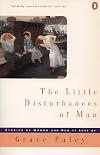
Many of these stories were written more than fifty years ago, yet their humor, humanity and life still literally leap off the pages to make you chuckle, wince and empathize with the various characters that populate them. And the collection's subtitle is particularly apropo - "Stories of Women and Men at Love." Not "in" love, you should note, but "at" love. Because, after reading these sharply hewn tales, you begin to suspect that Grace Paley does not put all that much stock in romance, or show more the kind of love that the women and men here are engaged in. The title itself, THE LITTLE DISTURBANCES OF MAN, might even indicate that man is not quite so important as he'd like to think. Indeed, that subtitle again: note that "women" come first.
Before I forget to say it: I loved these little stories. Grace Paley was not a prolific writer, producing only a few collections of stories. But she was good, damn good. She spent much of her life engaged as a political activist, marching, protesting and demonstrating. Married a couple times, with a couple of kids, writing was something she worked into the creases of her active and busy life. Perhaps the proof of this can be found here in "Two Sad Stories from a Long and Happy Life."
The first, "1. The Used-Boy Raisers," introduces us to Faith, along with her current husband, 'Pallid,' and her ex-husband, 'Livid.' Who are both hanging out in her kitchen complaining about the food, but the husbands seem to get along, to understand each other - and their names fit well. Livid needles her about another "old boyfriend Clifford," who shows up int the second sad story, "2. A Subject of Childhood." Clifford comes across as a self-absorbed creep, who she throws out after he accuses her of doing "a rotten job" as a mother, "lousy," in fact. She beans him with an ashtray, then considers -
"For I have raised these kids, with one hand typing behind my back to earn a living. I have raised them all alone without a father ..."
Reading these lines, I strongly suspected, Yup. This is how Grace Paley lived her life. Raising her two kids alone, writing when she had to, to make a living. In the same story, the boyfriend gone, the kids sleeping, she continues -
"I organized comfort in the armchair, poured the coffee black into a white mug that said MAMA, tapped cigarette ash into a ceramic hand - hollowed by Richard. I looked into the square bright window of daylight to ask myself the sapping question: What is man that woman lies down to adore him?"
What is man indeed? In another story he might be "The Pale Pink Roast." In another a washed-up Yiddish actor who likes to keep a mistress on the side. In another, Charles C. Charley, an air conditioning guy in his late thirties who gets involved with a teenager ("An Irrevocable Diameter"), or a sleazy Army corporal who romances a thirteen year-old at the same time he's dating her aunt ("A Woman, Young and Old"). Bottom line: men are mostly cads and opportunists. And Grace Paley is a very discerning and FUNNY writer. Philip Roth called these stories "splendidly comic and unladylike." Bingo!
Grace Paley, I suspect, enjoyed the men in her life - until she didn't. And she was not above poking gentle fun at herself either. That's a great trait in a writer. I'll say it again. I loved these stories. Thank you, Ms. Paley, and R.I.P.
- Tim Bazzett, author of the memoir, BOOKLOVER show less
Before I forget to say it: I loved these little stories. Grace Paley was not a prolific writer, producing only a few collections of stories. But she was good, damn good. She spent much of her life engaged as a political activist, marching, protesting and demonstrating. Married a couple times, with a couple of kids, writing was something she worked into the creases of her active and busy life. Perhaps the proof of this can be found here in "Two Sad Stories from a Long and Happy Life."
The first, "1. The Used-Boy Raisers," introduces us to Faith, along with her current husband, 'Pallid,' and her ex-husband, 'Livid.' Who are both hanging out in her kitchen complaining about the food, but the husbands seem to get along, to understand each other - and their names fit well. Livid needles her about another "old boyfriend Clifford," who shows up int the second sad story, "2. A Subject of Childhood." Clifford comes across as a self-absorbed creep, who she throws out after he accuses her of doing "a rotten job" as a mother, "lousy," in fact. She beans him with an ashtray, then considers -
"For I have raised these kids, with one hand typing behind my back to earn a living. I have raised them all alone without a father ..."
Reading these lines, I strongly suspected, Yup. This is how Grace Paley lived her life. Raising her two kids alone, writing when she had to, to make a living. In the same story, the boyfriend gone, the kids sleeping, she continues -
"I organized comfort in the armchair, poured the coffee black into a white mug that said MAMA, tapped cigarette ash into a ceramic hand - hollowed by Richard. I looked into the square bright window of daylight to ask myself the sapping question: What is man that woman lies down to adore him?"
What is man indeed? In another story he might be "The Pale Pink Roast." In another a washed-up Yiddish actor who likes to keep a mistress on the side. In another, Charles C. Charley, an air conditioning guy in his late thirties who gets involved with a teenager ("An Irrevocable Diameter"), or a sleazy Army corporal who romances a thirteen year-old at the same time he's dating her aunt ("A Woman, Young and Old"). Bottom line: men are mostly cads and opportunists. And Grace Paley is a very discerning and FUNNY writer. Philip Roth called these stories "splendidly comic and unladylike." Bingo!
Grace Paley, I suspect, enjoyed the men in her life - until she didn't. And she was not above poking gentle fun at herself either. That's a great trait in a writer. I'll say it again. I loved these stories. Thank you, Ms. Paley, and R.I.P.
- Tim Bazzett, author of the memoir, BOOKLOVER show less
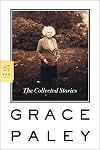
Paley evokes the postwar New York Jewish demographic with such pathos, intimacy and irony. She very unassumingly gets under your skin, burrowing deeper with each successive story, with surprising metaphors and turns of phrases that make you pause and reread.
What struck me the most about this collection was the messy earthiness of its characters, - its network of decidedly rough and unpolished lower/-middle class women, who are knowingly or unknowingly swept up by the feminist waves of their show more times -, whose collective motherhood turns out to be a source of social change. A compelling contrast, compounded by Paley's (occasionally-brutally) minimalist prose.
Contains three collections: The Little Disturbances of Man, Enormous Changes at the Last Minute, and Later the Same Day.
Further media: Click here to listen to Nell Freudenberger discusses Grace Paley's short story "Somewhere Else" with The New Yorker's fiction editor, Deborah Treisman. The podcast includes a reading of the story by Barbara Rosenblatt. "Somewhere Else" was published in The New Yorker on October 23, 1978. show less
What struck me the most about this collection was the messy earthiness of its characters, - its network of decidedly rough and unpolished lower/-middle class women, who are knowingly or unknowingly swept up by the feminist waves of their show more times -, whose collective motherhood turns out to be a source of social change. A compelling contrast, compounded by Paley's (occasionally-brutally) minimalist prose.
Contains three collections: The Little Disturbances of Man, Enormous Changes at the Last Minute, and Later the Same Day.
Further media: Click here to listen to Nell Freudenberger discusses Grace Paley's short story "Somewhere Else" with The New Yorker's fiction editor, Deborah Treisman. The podcast includes a reading of the story by Barbara Rosenblatt. "Somewhere Else" was published in The New Yorker on October 23, 1978. show less
Lists
Awards


You May Also Like


Associated Authors
Statistics
- Works
- 89
- Also by
- 75
- Members
- 3,502
- Popularity
- #7,264
- Rating
- 3.8
- Reviews
- 58
- ISBNs
- 98
- Languages
- 9
- Favorited
- 25
