
Meriol Trevor (1919–2000)
Author of The Crystal Snowstorm
About the Author
Meriol Trevor (1919-2000) was educated at St. Hugh's College, Oxford. One of the most prolific Catholic writers of the twentieth century, she wrote more than thirty novels, for adults and children, and several major biographies. She is best known for her comprehensive biography of Cardinal John show more Henry Newman published in the early sixties. In 1967, she was elected a fellow of the Royal Society for Literature in England. show less
Image credit: discerninghearts.com
Series
Works by Meriol Trevor
Merlin's Ring 4 copies
Hunt the King, Hide the Fox 3 copies
The forest and the kingdom 3 copies
Four odd ones 2 copies
A Narrow Place 1 copy
The New People 1 copy
Newman. 1 copy
Midsummer,midwinter 1 copy
New man’s journey 1 copy
Associated Works
Tagged
Common Knowledge
- Legal name
- Trevor, Lucy Meriol
- Birthdate
- 1919-04-15
- Date of death
- 2000-01-12
- Gender
- female
- Education
- Perse School for Girls, Cambridge, England
St Hugh's College, Oxford - Occupations
- novelist
biographer
children's writer
relief worker - Organizations
- Catholic Church
- Awards and honors
- Royal Society of Literature (Fellow)
- Nationality
- UK
- Birthplace
- London, England, UK
- Places of residence
- Bath, Somerset, England, UK
- Associated Place (for map)
- England, UK
Members
Reviews

Allegory is, to put it mildly, not my cup of tea. However, I found this one quite bearable. The characters were vivid and well-rounded, so although many of them represented some type or other - it was more of an archetype than a mere trait or idea. Still. The son of the High King, sent to win back the kingdom, raised by a shepherd in humble circumstances, etc. and so forth. Just a wee bit too obvious.
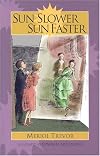
Thirteen-year-old Cecelia Morne was staying at Welston Manor for a time (not long after World War II ended) while her parents were out of the country. This family estate in the countryside near Bristol, England, was owned by her uncle, Ambrose Morne. Ambrose had a great-nephew, Richard, who was also staying there. Cecelia ("Cecil") soon become good friends with Rickie and his tutor, Dominic. One day Dominic showed Cecil and Rickie a small room hidden in a wall of the old manor. A little show more later, the two children entered the room. It had a door on each wall. As a game, Cecil and Rickie spun each other around and opened one of the doors. They were surprised to find themselves in Victorian times - but still in the same house, and dressed appropriately.
During the course of their visit to Welston, the children make frequent visits to the past - each one a little further back in history. Although each visit is rather short, the details of the story are quite interesting - the kinds of names used, the way people speak and dress, and other historical details about specific places and events. On the whole, it is a fun and suspenseful adventure story that whets the appetite for further research into history.
A number of topic threads run through the story (including interesting details of the ups and downs of life around Bristol since Roman times); but the most significant thread is that of the Catholic Church and, more specifically, the Holy Mass. Cecil and Rickie meet priests on the run during Elizabethan times and under the persecution of the Romans and also get a taste of life when the Catholic faith was status quo. The story contains many beautiful explanations of various parts of the Faith in an accessible fashion. During the course of the story, both children come to appreciate and embrace the Catholic faith. The reader is also left with the sense that every age struggles with its particular evils and vices, but good and truth endures by the grace of God and the courage and faith of good people.
The story does contain some criticisms of the Catholic Church - both by a few characters in the story who don't know better and some experiences of the children in their travels. One scene in particular might be a little disturbing: the children come upon a Franciscan friar with a flirtatious girl on his lap (The word they use is "sluttish"- parents today might consider this an inappropriate word, but I think the connotations were slightly different 50 years ago in England. Also, this is an obscure word for children and the concept might go over their heads.). This scene is followed up later in the story by a wonderful explanation of the struggles of the Church and religious orders and how they both tend to be stronger during times of persecution than during "easy times." My daughter, who was reading the book alongside me, didn't notice the particular reference, but did understand the overall concept within the story of the presence of fallen nature within Catholics and non-Catholics alike. Although I do think it very important for children to be exposed to some of the evils that have made their way into the Church over the centuries (I might even call it "inoculation"), I believe this book will be most appropriate for children ages 12 and up for independent reading, but suitable for younger children as a read-aloud. Appropriateness will vary according to the thoughtfulness of the child and how well-read they are on historic matters. It is important to note that this aspect of the book is not a weakness in any sense - just a somewhat mature topic. The story is much more meaningful and the conversions are much more complete and believable because a fuller picture of life, the Church and human nature is presented.
Some of the geographical terms might be a little unfamiliar to American children, but my 11 year old daughter (who was familiar with some terms and places from sources such as Pride and Prejudice and Rick Steve's Travel Shows) really enjoyed reading the book and now considers it one of her favorites. show less
During the course of their visit to Welston, the children make frequent visits to the past - each one a little further back in history. Although each visit is rather short, the details of the story are quite interesting - the kinds of names used, the way people speak and dress, and other historical details about specific places and events. On the whole, it is a fun and suspenseful adventure story that whets the appetite for further research into history.
A number of topic threads run through the story (including interesting details of the ups and downs of life around Bristol since Roman times); but the most significant thread is that of the Catholic Church and, more specifically, the Holy Mass. Cecil and Rickie meet priests on the run during Elizabethan times and under the persecution of the Romans and also get a taste of life when the Catholic faith was status quo. The story contains many beautiful explanations of various parts of the Faith in an accessible fashion. During the course of the story, both children come to appreciate and embrace the Catholic faith. The reader is also left with the sense that every age struggles with its particular evils and vices, but good and truth endures by the grace of God and the courage and faith of good people.
The story does contain some criticisms of the Catholic Church - both by a few characters in the story who don't know better and some experiences of the children in their travels. One scene in particular might be a little disturbing: the children come upon a Franciscan friar with a flirtatious girl on his lap (The word they use is "sluttish"- parents today might consider this an inappropriate word, but I think the connotations were slightly different 50 years ago in England. Also, this is an obscure word for children and the concept might go over their heads.). This scene is followed up later in the story by a wonderful explanation of the struggles of the Church and religious orders and how they both tend to be stronger during times of persecution than during "easy times." My daughter, who was reading the book alongside me, didn't notice the particular reference, but did understand the overall concept within the story of the presence of fallen nature within Catholics and non-Catholics alike. Although I do think it very important for children to be exposed to some of the evils that have made their way into the Church over the centuries (I might even call it "inoculation"), I believe this book will be most appropriate for children ages 12 and up for independent reading, but suitable for younger children as a read-aloud. Appropriateness will vary according to the thoughtfulness of the child and how well-read they are on historic matters. It is important to note that this aspect of the book is not a weakness in any sense - just a somewhat mature topic. The story is much more meaningful and the conversions are much more complete and believable because a fuller picture of life, the Church and human nature is presented.
Some of the geographical terms might be a little unfamiliar to American children, but my 11 year old daughter (who was familiar with some terms and places from sources such as Pride and Prejudice and Rick Steve's Travel Shows) really enjoyed reading the book and now considers it one of her favorites. show less

More of a realistic view of marriage between a young couple who enter into it for love and expectations. Shows the relationship 8 years later after circumstances of selfishness, destructive behavior on Caroline part and reserve,control and trying to make a go of it on Rowlands part. Not a happy ever after story and I respect the author for it.

Author dealt with the internment of civilian English in a town in France during Napoleonic Wars.This is more a character driven story though the pacing and telling in my opinion is well done. She shows human nature in various forms no sugar coating or grand nobility here just peoples motives.
Lists
Awards

You May Also Like


Associated Authors
Statistics
- Works
- 55
- Also by
- 3
- Members
- 1,073
- Popularity
- #23,963
- Rating
- 3.7
- Reviews
- 8
- ISBNs
- 59
- Languages
- 2
- Favorited
- 2