
Bianca Bradbury (1908–1982)
Author of Two on an Island
About the Author
Works by Bianca Bradbury
Tagged
Common Knowledge
Members
Reviews

This was a terrible little book. The author has written one of my favorite YA books, A New Penny (also later published in paperback as Love Is Never Enough). Like that book, this one is also about the problems of young marriage, or in this case, young engagement. In A New Penny, Hank and Carey "have to" get married because she's pregnant, and she drops out of high school, so the book is mainly about her realizing that this life will work better for them if she goes back to school and tries show more to be more of a partner in the marriage.
In Mixed-Up Summer, Gay has taken a year after high school to work as a aide in a nursing home, to see if she likes that kind of work well enough to go to nursing school instead of regular college. She is semi-engaged to Tom, a serious young man who had a rough life (his deceased father was and his still living mother is an alcoholic), but who has worked hard to start an appliance repair business. Gay can't make up her mind if she loves Tom enough to marry him, especially because he doesn't seem to have much empathy for people. Gay loves her job, but Tom constantly nags her to quit, saying that it's a nasty place and that most of the residents are losers.
Unlike most such books, I honestly didn't know if Gay would decide to marry Tom or not. And at points I couldn't decide if I wanted her to marry Tom or not. His childhood was difficult, but I'm disgusted that instead of being proud of Gay for doing such difficult, important, and caring work, he hates that she works in the nursing home. I was also kind of disgusted by Gay's parents. Clearly, they're meant to be portrayed as supportive, but I kind of think they were also idiots at times. Gay's mother is a nurse, and there's nothing more she would like than to see Gay follow in her footsteps. Yet when Gay complains that Tom nags her to leave her job, Gay's mother doesn't seem to think that's a big deal, and even accuses Gay of trying to change Tom and of being too hard on him. If Tom's attitude about her job weren't bad enough, he also admits that he thinks Gay's own father is a bit of a loser because he can no longer afford to farm his land, and ended up taking a regular job.
And what parents tell their daughter that it's just dandy for her to get married at 19 -- they'll still pay for her college anyway! Different times, I know, but .... To be fair, this isn't the first book I've read from roughly that time period (1970s), or maybe a little earlier, where the idea was put forth that college might actually be easier if you get married first, because you'll be all "settled down" and it will be easier to study. As if!
I'm also reminded of how many times in modern romantic comedies, the heroine is about to marry a nice but absolutely wrong-for-her guy that she doesn't love. How do these heroines get that close to the altar when they either don't love the guy, or aren't sure if they do? And I'm also astounded by stories of people who need serious relationship counseling before getting married. If it needs that much work before the pressures of marriage, the changes aren't good that it will last. Sigh... show less
In Mixed-Up Summer, Gay has taken a year after high school to work as a aide in a nursing home, to see if she likes that kind of work well enough to go to nursing school instead of regular college. She is semi-engaged to Tom, a serious young man who had a rough life (his deceased father was and his still living mother is an alcoholic), but who has worked hard to start an appliance repair business. Gay can't make up her mind if she loves Tom enough to marry him, especially because he doesn't seem to have much empathy for people. Gay loves her job, but Tom constantly nags her to quit, saying that it's a nasty place and that most of the residents are losers.
Unlike most such books, I honestly didn't know if Gay would decide to marry Tom or not. And at points I couldn't decide if I wanted her to marry Tom or not. His childhood was difficult, but I'm disgusted that instead of being proud of Gay for doing such difficult, important, and caring work, he hates that she works in the nursing home. I was also kind of disgusted by Gay's parents. Clearly, they're meant to be portrayed as supportive, but I kind of think they were also idiots at times. Gay's mother is a nurse, and there's nothing more she would like than to see Gay follow in her footsteps. Yet when Gay complains that Tom nags her to leave her job, Gay's mother doesn't seem to think that's a big deal, and even accuses Gay of trying to change Tom and of being too hard on him. If Tom's attitude about her job weren't bad enough, he also admits that he thinks Gay's own father is a bit of a loser because he can no longer afford to farm his land, and ended up taking a regular job.
And what parents tell their daughter that it's just dandy for her to get married at 19 -- they'll still pay for her college anyway! Different times, I know, but .... To be fair, this isn't the first book I've read from roughly that time period (1970s), or maybe a little earlier, where the idea was put forth that college might actually be easier if you get married first, because you'll be all "settled down" and it will be easier to study. As if!
I'm also reminded of how many times in modern romantic comedies, the heroine is about to marry a nice but absolutely wrong-for-her guy that she doesn't love. How do these heroines get that close to the altar when they either don't love the guy, or aren't sure if they do? And I'm also astounded by stories of people who need serious relationship counseling before getting married. If it needs that much work before the pressures of marriage, the changes aren't good that it will last. Sigh... show less

LFL find. Wow. Still, unfortunately, all too relevant. And true... esp. true to how Corry feels, and how she learns, along with the rest of this comfortable little New England town, what it means to be 'colorblind' and to be integrated... and to be racist without being a member of the KKK.
Very few people here are hateful, but too many are ignorant. Just like a lot of people are nowadays. (Esp. those who would ban books.) Corry, her family, and the others learn, for example, that 'not seeing show more color' isn't quite right... seeing Lucinda as a person first & primarily is good, but of course the color of her skin does inform every aspect of her life, whether she's home in the South, or getting this better education in the North. "You can't separate me from my color."
Bradbury also addresses the White Savior issue. Right near the beginning she reminds Corry that the family is not opening their home to this girl to save her, or because they want to feel noble. They have to "resist" the notion that they have "halos" around their heads.
I like other details, too. I'm reading this as the fall colors are in 'bloom' and love that the mother "says she has to store up the look of autumn, to keep her warm through the winter."
The ending is rather abrupt, and feels a bit exploitive. Otherwise this would be a five star book.
I want to read more by the author. And I want others to read this. Esp. those who have read books like [b:The Black Friend: On Being a Better White Person|48589165|The Black Friend On Being a Better White Person|Frederick Joseph|https://i.gr-assets.com/images/S/compressed.photo.goodreads.com/books/1596481359l/48589165._SX50_.jpg|73925121]. This is free online, as archived on openlibrary.org. Or, if you prefer paperback and live in the US, I can mail this little old Scholastic to you. show less
Very few people here are hateful, but too many are ignorant. Just like a lot of people are nowadays. (Esp. those who would ban books.) Corry, her family, and the others learn, for example, that 'not seeing show more color' isn't quite right... seeing Lucinda as a person first & primarily is good, but of course the color of her skin does inform every aspect of her life, whether she's home in the South, or getting this better education in the North. "You can't separate me from my color."
Bradbury also addresses the White Savior issue. Right near the beginning she reminds Corry that the family is not opening their home to this girl to save her, or because they want to feel noble. They have to "resist" the notion that they have "halos" around their heads.
I like other details, too. I'm reading this as the fall colors are in 'bloom' and love that the mother "says she has to store up the look of autumn, to keep her warm through the winter."
The ending is rather abrupt, and feels a bit exploitive. Otherwise this would be a five star book.
I want to read more by the author. And I want others to read this. Esp. those who have read books like [b:The Black Friend: On Being a Better White Person|48589165|The Black Friend On Being a Better White Person|Frederick Joseph|https://i.gr-assets.com/images/S/compressed.photo.goodreads.com/books/1596481359l/48589165._SX50_.jpg|73925121]. This is free online, as archived on openlibrary.org. Or, if you prefer paperback and live in the US, I can mail this little old Scholastic to you. show less
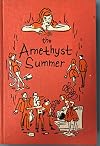
How do you manage a big house, keep three brothers and your father properly nourished when they all seem to have hollow legs, and have a life of your own if you're sixteen years old and inexperienced to say the least? How do you make it clear to your brothers and their friends that you no longer intend to be the pal who is always ready to catch a ball, hold a wrench and gererally make yourself agreeable and useful as a chum? That, in fact, you intend to try for a more glamourous role in show more their lives?
Bayley confronts all these problems and more one summer when her mother leaves to take care of an ailing relative. Bayley soons realizes she is in over her head but she learns how to manage a house, serve an acceptable meal and get her social life where she wants it. show less
Bayley confronts all these problems and more one summer when her mother leaves to take care of an ailing relative. Bayley soons realizes she is in over her head but she learns how to manage a house, serve an acceptable meal and get her social life where she wants it. show less

Shannon's gift horse brings about mixed reactions from the neighbors, the interest of the Zoning Commission, and a town meeting to decide the fate of all pet horses.
Lists
Comfort Reads (1)
Awards


You May Also Like


Associated Authors
Statistics
- Works
- 43
- Members
- 502
- Popularity
- #49,319
- Rating
- 3.6
- Reviews
- 8
- ISBNs
- 28
- Languages
- 1