
David Bellavia
Author of House to House: An Epic Memoir of War
About the Author
Works by David Bellavia
Associated Works
War Is...: Soldiers, Survivors and Storytellers Talk about War (2008) — Contributor — 146 copies, 8 reviews
Tagged
Common Knowledge
- Birthdate
- 1975-11-19
- Gender
- male
- Nationality
- USA
- Associated Place (for map)
- USA
Members
Reviews
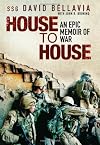
2.5 stars. I’m not normally one to give any combat grunt, let alone a CMH recipient, fewer than 3 stars for an honest book about the realities of combat, because we owe an incalculable debt to our combat veterans - no matter where they’ve been sent, or how wisely. But this book made me want to. If you like your war stories mixed in with plentiful doses of arrogance, self aggrandizement, chest thumping, homophobic language and intermittent Christian crusaderism, leavened with serious show more unresolved daddy issues, you’ll love it. This was an audible freebie, and I’d suggest library or freebie if you want to hear the story, elements of which are genuinely compelling despite all of the above. show less
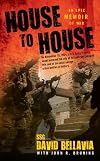
"Gripping" is the best word to describe a book that brilliantly captures the horrors of combat. Bellavia's book is stunning in every respect. The narrative grabs readers by the eyeballs in the earliest chapters and doesn't release its grip until the final touching pages. In the interest of full disclosure, Bellavia's wife was one of my communications students back in the mid 1990s. But we haven't kept in touch except for an occasional Facebook exchange. When Deanna suggested that I read show more "House to House," my low tolerance for war epics made me hesitant. But I can honestly say this is one of the best books I've read in the past couple years. The graphic accounts of the fighting in Fallujah are brilliantly told. Even readers who know little about modern warfare will be drawn into a story that speaks volumes about loyalty and unity. "House to House" is written in a way that allows to readers to get into the minds of soliders as they grapple with some harrowing experiences that most of us can barely fathom. It's even laced with humor. One of my favorite passages of any book I've read in years comes at the beginning of Chapter 17 when Bellavia laments: "You know things are not right with the world when you share a spiritual moment with a damn journalist." In summary, many of the searing vignettes in this book will stay with me for years. show less
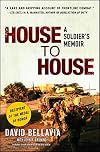
Focused mainly on the U.S.–Iraqi offensive of November 2004, including a lengthy detailed hand-to-hand denouement, this is a compelling modern war memoir. The author details the techniques and tactics (including insurgents made nearly unstoppable by epinephrine and other drugs) in a narrative story that works in the very human interior experience. The depth of this reflection surfaces rage and panic, faith and fear, missteps and hallucinations. With a second life as a journalist embed, a show more lengthy epilogue covers the cost to family life and a decision to turn from warrior to father-husband. show less
House to House is a frank, personal account by a sergeant of the 1st US Infantry Division (the Big Red One) of small-unit urban warfare during the Second Battle of Fallujah, a punishing expedition started just after the US election in November 2004. The First Battle of Fallujah ended in a draw when the increasing number of US casualties and the devastation caused by US arms turned into a PR disaster. With the election safely out of the way, the US forces could resume their mission of show more destruction ("pacification" in the Roman sense). The book contains no background on Fallujah, the war and politics. The book is short on reflection and, despite looming realization about the futility of the Iraq War, big on regurgitating propaganda. The author is stuck in a cognitive dissonance of proclaiming to fight a noble war (bringing freedom to the Iraqis, killing terrorists) and the realization of the destruction, cost and horror caused thereby.
SSG Bellavia ("Beautiful Life" in Italian) from Buffalo, NY, is brutally open. I am not sure whether he doesn't notice or doesn't care that he comes across as a mix between Beavis and The Office's Michael Scott. His enlisted men's world is peopled by the lower levels of the US society. He is an equal-opportunity insulter, though: Both his comrades and his opponents are addressed as "shitheads" and "retards".
Like Michael Scott, he is a horrible leader who uses his position to bully his men, go on wild goose chases and torture his men with his lame jokes. It is usually his competent colleague SSG Fitts who has to bring his mind back to the mission and redeem his mistakes. Bellavia makes quite a number of interesting observations but connecting the dots is not his forte: Part of his motivation to join the army was helplessly having to watch thugs rob his home in New York. That the Iraqis might have similar feelings about his actions does not enter his mind. Ranting about the REMF (rear echelon mother fuckers), he writes about the insurgents: "The young (insurgents) were more committed. They have been indoctrinated since childhood and are radicalized beyond reason. They will go willingly when (sic! probably: while) their leaders stay back and order them to their deaths." He then continues his rant about the uncaring photo opportunity visit of his general - without noting that his prior sentence might apply to his men too (apart from the fact that the radicalization of the Iraqis only started when the US occupation went south).
The book features quite a few good battle vignettes. As the US platoons usually face but a handful of Iraqi opponents, the action tends to be one-sided, a tale of supreme US firepower handled by morons. US effectiveness is shattered by miserable coordination from top to bottom. Having had more than five months to plan the operations, Army and Marine units use the same entry point, fire on each other, use interfering frequencies and shatter their night-vision with flares. If these guys had been in command on D-Day, they would never have left the beaches. In the climactic scene, Bellavia abandons his leader role to play Rambo, a stupid action that will bite him in a special place.
Readers even slightly familiar with the topic of urban warfare will not learn much from this book. Bellavia's insights are mostly of a type to question the quality of US army training (A bombarded city does no longer look like its pre-bombardment pictures. Foyer doorways are dangerous places to stay in ... D'oh!). Its glimpses at what is wrong with the current US army could serve as a basis to build the post-Iraq US army. show less
SSG Bellavia ("Beautiful Life" in Italian) from Buffalo, NY, is brutally open. I am not sure whether he doesn't notice or doesn't care that he comes across as a mix between Beavis and The Office's Michael Scott. His enlisted men's world is peopled by the lower levels of the US society. He is an equal-opportunity insulter, though: Both his comrades and his opponents are addressed as "shitheads" and "retards".
Like Michael Scott, he is a horrible leader who uses his position to bully his men, go on wild goose chases and torture his men with his lame jokes. It is usually his competent colleague SSG Fitts who has to bring his mind back to the mission and redeem his mistakes. Bellavia makes quite a number of interesting observations but connecting the dots is not his forte: Part of his motivation to join the army was helplessly having to watch thugs rob his home in New York. That the Iraqis might have similar feelings about his actions does not enter his mind. Ranting about the REMF (rear echelon mother fuckers), he writes about the insurgents: "The young (insurgents) were more committed. They have been indoctrinated since childhood and are radicalized beyond reason. They will go willingly when (sic! probably: while) their leaders stay back and order them to their deaths." He then continues his rant about the uncaring photo opportunity visit of his general - without noting that his prior sentence might apply to his men too (apart from the fact that the radicalization of the Iraqis only started when the US occupation went south).
The book features quite a few good battle vignettes. As the US platoons usually face but a handful of Iraqi opponents, the action tends to be one-sided, a tale of supreme US firepower handled by morons. US effectiveness is shattered by miserable coordination from top to bottom. Having had more than five months to plan the operations, Army and Marine units use the same entry point, fire on each other, use interfering frequencies and shatter their night-vision with flares. If these guys had been in command on D-Day, they would never have left the beaches. In the climactic scene, Bellavia abandons his leader role to play Rambo, a stupid action that will bite him in a special place.
Readers even slightly familiar with the topic of urban warfare will not learn much from this book. Bellavia's insights are mostly of a type to question the quality of US army training (A bombarded city does no longer look like its pre-bombardment pictures. Foyer doorways are dangerous places to stay in ... D'oh!). Its glimpses at what is wrong with the current US army could serve as a basis to build the post-Iraq US army. show less
Lists
Iraq (1)
You May Also Like


Associated Authors
Statistics
- Works
- 3
- Also by
- 1
- Members
- 536
- Popularity
- #46,471
- Rating
- 4.1
- Reviews
- 23
- ISBNs
- 25
- Languages
- 1
- Favorited
- 1