
Tom Nelson (1)
Author of Work Matters: Connecting Sunday Worship to Monday Work
For other authors named Tom Nelson, see the disambiguation page.
About the Author
Tom Nelson (DMin, Trinity Evangelical Divinity School) is president of Made to Flourish. He has also served as senior pastor of Christ Community Church in Kansas City for over thirty years. A council member for The Gospel Coalition, Tom is the author of several books, including Work Matters and The show more Economics of Neighborly Love. show less
Works by Tom Nelson
The Economics of Neighborly Love: Investing in Your Community's Compassion and Capacity (2017) 154 copies, 1 review
The Flourishing Pastor: Recovering the Lost Art of Shepherd Leadership (Made to Flourish Resources) (2021) 132 copies, 1 review
Tagged
Common Knowledge
There is no Common Knowledge data for this author yet. You can help.
Members
Reviews
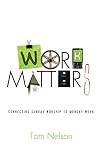
There is a tendency for Christianity in some circles to be a leisure activity. We are encouraged to pray, evangelise, worship, study our Bibles in our spare time. Sadly, the 40 hours per week, for forty or so years don't seem to matter - or at least if you looked at the content of most Sunday sermons from the pulpit. It has long been my contention that pastors should every seven years or so take a sabbatical and work in an office, educational establishment, retail outlet or such like. This show more will help them connect with the everyday pressure those in full-time work experience. Hopefully, it will help them in their discipleship programmes and in what they preach.
Christianity is a whole life activity, despite the implicit denial of this from many pulpits. This book, however, provides a refreshing look at whole life Christianity. It's key message is that work does matter.
Nelson uses many everyday experiences - including discussions in coffee shops and vignettes from those who have considered how Christianity impacts their work life.
Illustrations come from films such as Narnia, WALL-E and Mr Holland's Opus. He also draws upon a wide range of sources Paul Marshall, Os Guinness, Tim Keller, Tom Wright, Miroslav Volf, Luther and Gideon Strauss are all mentioned. He utilises the neo-Calvinist/ Kuyperian framework of creation, fall and redemption to good effect.
At the end of each chapter is a short prayer and then several questions for reflection and discussion which makes this book ideal for church small groups.
The final chapter 'The church at work' is particularly good. Here he draws upon Lesslie Newbigin's notion that 'the congregation has to be the place where its members are trained, supported, and nourished in the exercise of their parts of the priestly ministry in the world'. he offers some excellent ideas and suggestions how this can be developed. The role of church leaders is to 'prepare the saints for work of service' (Eph 4:12) Too often this gets narrowed down to church-related activities, here Nelson shows with examples that it doesn't have to be that way. Ideas include 'embracing a new vocational paradigm' as he puts it:
A primary work of the church is the church at work. Our work not only forms us spiritually; in and through our work, Christ's gospel mission is advanced in the world. (p. 190)
Many churches employ youth workers and ministers - maybe one day we'll also see work and vocation ministers too. That will certainly need a paradigm shift. Nelson's eminently readable and accessible book may well help towards that. show less
Christianity is a whole life activity, despite the implicit denial of this from many pulpits. This book, however, provides a refreshing look at whole life Christianity. It's key message is that work does matter.
Nelson uses many everyday experiences - including discussions in coffee shops and vignettes from those who have considered how Christianity impacts their work life.
Illustrations come from films such as Narnia, WALL-E and Mr Holland's Opus. He also draws upon a wide range of sources Paul Marshall, Os Guinness, Tim Keller, Tom Wright, Miroslav Volf, Luther and Gideon Strauss are all mentioned. He utilises the neo-Calvinist/ Kuyperian framework of creation, fall and redemption to good effect.
At the end of each chapter is a short prayer and then several questions for reflection and discussion which makes this book ideal for church small groups.
The final chapter 'The church at work' is particularly good. Here he draws upon Lesslie Newbigin's notion that 'the congregation has to be the place where its members are trained, supported, and nourished in the exercise of their parts of the priestly ministry in the world'. he offers some excellent ideas and suggestions how this can be developed. The role of church leaders is to 'prepare the saints for work of service' (Eph 4:12) Too often this gets narrowed down to church-related activities, here Nelson shows with examples that it doesn't have to be that way. Ideas include 'embracing a new vocational paradigm' as he puts it:
A primary work of the church is the church at work. Our work not only forms us spiritually; in and through our work, Christ's gospel mission is advanced in the world. (p. 190)
Many churches employ youth workers and ministers - maybe one day we'll also see work and vocation ministers too. That will certainly need a paradigm shift. Nelson's eminently readable and accessible book may well help towards that. show less
There is a tendency for Christianity in some circles to be a leisure activity. We are encouraged to pray, evangelise, worship, study our Bibles in our spare time. Sadly, the 40 hours per week, for forty or so years don't seem to matter - or at least if you looked at the content of most Sunday sermons from the pulpit. It has long been my contention that pastors should every seven years or so take a sabbatical and work in an office, educational establishment, retail outlet or such like. This show more will help them connect with the everyday pressure those in full-time work experience. Hopefully, it will help them in their discipleship programmes and in what they preach.
Christianity is a whole life activity, despite the implicit denial of this from many pulpits. This book, however, provides a refreshing look at whole life Christianity. It's key message is that work does matter.
Nelson uses many everyday experiences - including discussions in coffee shops and vignettes from those who have considered how Christianity impacts their work life.
Illustrations come from films such as Narnia, WALL-E and Mr Holland's Opus. He also draws upon a wide range of sources Paul Marshall, Os Guinness, Tim Keller, Tom Wright, Miroslav Volf, Luther and Gideon Strauss are all mentioned. He utilises the neo-Calvinist/ Kuyperian framework of creation, fall and redemption to good effect.
At the end of each chapter is a short prayer and then several questions for reflection and discussion which makes this book ideal for church small groups.
The final chapter 'The church at work' is particularly good. Here he draws upon Lesslie Newbigin's notion that 'the congregation has to be the place where its members are trained, supported, and nourished in the exercise of their parts of the priestly ministry in the world'. he offers some excellent ideas and suggestions how this can be developed. The role of church leaders is to 'prepare the saints for work of service' (Eph 4:12) Too often this gets narrowed down to church-related activities, here Nelson shows with examples that it doesn't have to be that way. Ideas include 'embracing a new vocational paradigm' as he puts it:
A primary work of the church is the church at work. Our work not only forms us spiritually; in and through our work, Christ's gospel mission is advanced in the world. (p. 190)
Many churches employ youth workers and ministers - maybe one day we'll also see work and vocation ministers too. That will certainly need a paradigm shift. Nelson's eminently readable and accessible book may well help towards that. show less
Christianity is a whole life activity, despite the implicit denial of this from many pulpits. This book, however, provides a refreshing look at whole life Christianity. It's key message is that work does matter.
Nelson uses many everyday experiences - including discussions in coffee shops and vignettes from those who have considered how Christianity impacts their work life.
Illustrations come from films such as Narnia, WALL-E and Mr Holland's Opus. He also draws upon a wide range of sources Paul Marshall, Os Guinness, Tim Keller, Tom Wright, Miroslav Volf, Luther and Gideon Strauss are all mentioned. He utilises the neo-Calvinist/ Kuyperian framework of creation, fall and redemption to good effect.
At the end of each chapter is a short prayer and then several questions for reflection and discussion which makes this book ideal for church small groups.
The final chapter 'The church at work' is particularly good. Here he draws upon Lesslie Newbigin's notion that 'the congregation has to be the place where its members are trained, supported, and nourished in the exercise of their parts of the priestly ministry in the world'. he offers some excellent ideas and suggestions how this can be developed. The role of church leaders is to 'prepare the saints for work of service' (Eph 4:12) Too often this gets narrowed down to church-related activities, here Nelson shows with examples that it doesn't have to be that way. Ideas include 'embracing a new vocational paradigm' as he puts it:
A primary work of the church is the church at work. Our work not only forms us spiritually; in and through our work, Christ's gospel mission is advanced in the world. (p. 190)
Many churches employ youth workers and ministers - maybe one day we'll also see work and vocation ministers too. That will certainly need a paradigm shift. Nelson's eminently readable and accessible book may well help towards that. show less
In Work Matters: Connecting Sunday Worship to Monday Work, pastor Tom Nelson offers a new perspective on work, providing a look at God’s purposes for work in a way that is both practical and theologically based. He helps readers to make the most of their God-given vocations and to treat their work as God intended, as acts of worship.
I really enjoyed this book and was truly blessed by it. Nelson gives a look at this important topic that is both refreshing and convicting. He is not afraid to show more debunk common myths nor to reveal his own shortcomings and he uses biblical accounts as well as modern-day stories to deliver his message. He covers topics such as why work is more important than we commonly believe and how to make the most of our “mundane” work and many, many more.
If you would like a fresh perspective on a healthy work ethic for Christians, I highly recommend this book.
Disclosure of Material Connection: I received an advance reading copy of this book free from Crossway via netGalley. I was not required to write a positive review. The opinions I have expressed are my own. I am disclosing this in accordance with the Federal Trade Commission’s 16 CFR, Part 255: “Guides Concerning the Use of Endorsements and Testimonials in Advertising.” show less
I really enjoyed this book and was truly blessed by it. Nelson gives a look at this important topic that is both refreshing and convicting. He is not afraid to show more debunk common myths nor to reveal his own shortcomings and he uses biblical accounts as well as modern-day stories to deliver his message. He covers topics such as why work is more important than we commonly believe and how to make the most of our “mundane” work and many, many more.
If you would like a fresh perspective on a healthy work ethic for Christians, I highly recommend this book.
Disclosure of Material Connection: I received an advance reading copy of this book free from Crossway via netGalley. I was not required to write a positive review. The opinions I have expressed are my own. I am disclosing this in accordance with the Federal Trade Commission’s 16 CFR, Part 255: “Guides Concerning the Use of Endorsements and Testimonials in Advertising.” show less
The Flourishing Pastor – Recovering the Lost Art of Shepherd Leadership (Made to Flourish Resources) by Tom Nelson
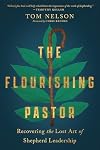
Overall, very helpful and much to think about. Often it's very perceptive and convicting. Some chapters are less so, perhaps due to the context Tom writes from. It also includes a helpful discussion guide that would make it suitable for use by ministry teams/ministers fraternals.
Lists
Awards

You May Also Like


Associated Authors
Statistics
- Works
- 10
- Members
- 743
- Popularity
- #34,184
- Rating
- 3.8
- Reviews
- 9
- ISBNs
- 34
- Languages
- 1