
Kevin DeYoung
Author of Just Do Something: A Liberating Approach to Finding God's Will
About the Author
Kevin DeYoung (PhD, University of Leicester) is the senior pastor at Christ Covenant Church in Matthews, North Carolina, and assistant professor of systematic theology at Reformed Theological Seminary, Charlotte. He serves as board chairman of the Gospel Coalition and blogs at DeYoung, Restless, show more and Reformed He is the author of several books, including Just Do Something; Crazy Busy; and The Biggest Story. Kevin and his wife, Trisha, have nine children. show less
Works by Kevin DeYoung
Taking God At His Word: Why the Bible Is Knowable, Necessary, and Enough, and What That Means for You and Me (2014) 1,607 copies, 9 reviews
What Is the Mission of the Church?: Making Sense of Social Justice, Shalom, and the Great Commission (2011) 1,475 copies, 8 reviews
The Hole in Our Holiness: Filling the Gap between Gospel Passion and the Pursuit of Godliness (2012) 1,360 copies, 11 reviews
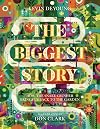
The Biggest Story: How the Snake Crusher Brings Us Back to the Garden (2015) 1,010 copies, 10 reviews
Why We Love the Church: In Praise of Institutions and Organized Religion (2009) 724 copies, 3 reviews
The Good News We Almost Forgot: Rediscovering the Gospel in a 16th Century Catechism (2010) 697 copies, 2 reviews
The Ten Commandments: What They Mean, Why They Matter, and Why We Should Obey Them (Foundational Tools for Our Faith) (2018) 408 copies
Grace Defined and Defended: What a 400-Year-Old Confession Teaches Us about Sin, Salvation, and the Sovereignty of God (2019) 364 copies, 1 review
Do Not Be True to Yourself: Countercultural Advice for the Rest of Your Life (2023) 327 copies, 1 review
Impossible Christianity: Why Following Jesus Does Not Mean You Have to Change the World, Be an Expert in Everything, Accept Spiritual Failure, and Feel Miserable Pretty Much All… (2023) 221 copies, 1 review
The Lord's Prayer: Learning from Jesus on What, Why, and How to Pray (Foundational Tools for Our Faith) (2022) 149 copies, 1 review
The Nicene Creed: What You Need to Know about the Most Important Creed Ever Written (Foundational Tools for Our Faith) (2025) 133 copies, 1 review
Levando Deus a Sério: Por que a Bíblia Incompreensível, necessária e suficiente, e o que isso significa para você! (Portuguese Edition) (2017) 13 copies
The Religious Formation of John Witherspoon: Calvinism, Evangelicalism, and the Scottish Enlightenment (Routledge Studies in Evangelicalism) (2020) 4 copies
Hombres y mujeres en la iglesia: Una introducción bíblica y práctica (Spanish Edition) (2021) 4 copies
La Bonne Nouvelle presque oubliée: Redécouvrir l'Évangile dans le Catéchisme de Heidelberg (French Edition) (2022) 3 copies
Doe iets! 3 copies
MOS JI VETVETJA 2 copies
Taking God At His Word Study Guide 2 copies
God is Still Holy and What You Learned in Sunday School is Still True: A Review of 'Love Wins' 1 copy, 1 review
CRISTIANISMO IMPOSSÍVEL 1 copy
Easter Stories 1 copy
Cristianismo imposible 1 copy
God op zijn Woord vertrouwen 1 copy
Chúa thật như Lời: Tại sao Kinh Thánh lại rất dễ hiểu, cần thiết và đầy ... gì cho bạn và tôi (Vietnamese Edition) (2022) 1 copy
Homosexuality -- Study Guide 1 copy
Sin 1 copy
Faith on Trial: Psalm 73 1 copy
Crazy Busy-short version 1 copy
Associated Works
Cross: Unrivaled Christ, Unstoppable Gospel, Unreached Peoples, Unending Joy (2015) — Contributor — 104 copies
Religion, Duty, and Liberty (Graduate Essays on the Effect of Religion on Liberty) (2001) — Contributor — 4 copies
Tagged
Common Knowledge
- Other names
- 凱文.狄昂
- Birthdate
- 1977
- Gender
- male
- Education
- Hope College
Gordon-Conwell Theological Seminary (MDiv)
University of Leicester (PhD|Early Modern History) - Occupations
- pastor
- Birthplace
- South Holland, Illinois, USA
- Places of residence
- East Lansing, Michigan, USA
Matthews, North Carolina, USA
Jenison, Michigan, USA - Map Location
- USA
Members
Reviews
This review was also posted here - https://cavetothecross.com/blog/biggest-story/
As Christian parents of young children, we are always trying to incorporate the Gospel presentation to our children as they are our number one outreach audience we want to see come to salvation in Jesus Christ. And with young children, using pictures and stories is a big help in communicating that message. For the most part, young children's Christian literature involves the fun stories without the consequences. show more We get the small Ark with the giraffes' heads poking out but we don't get the reason for the Flood to have occurred and being tied to God's judgment. We get David facing off against Goliath but after the rock knocks out the giant, we don't see David ending the confrontation with a beheading. The stories of Jesus healing and feeding people and letting the little children come to Him are there but the cross seems to be missing from the stories. We remove death and judgment and the outcomes of sin from the stories to our children and wonder why there's no drive from them to see Jesus as anything other than our friend. Why see Him as a Savior if we're not showing them what He's saving us from - apart from an apple with a bite taken from it?
But then we'll read to our young children stories of swashbuckling pirates, wizards in battle with orcs, monsters being defeated by knights, or hereos of might. Works of fiction we'll communicate the hero's journey, but in the ultimate Hero's journey we remove the conflict and make the brave One feckless and just another hippie lost to an era long ago.
The Biggest Story from the cover offers the hero's journey - "The Snake Crusher Brings Us Back To The Garden" and the cover offers a literal path to follow. Here's a story that recognizes God as a Storyteller and His story being not just the hero winning in the end but offering redemption unable to be realized in a world without the pain and suffering to be redeemed from.
There is judgment, there is death, and there is the Cross - put into their proper context and designed from there the parent to limit or expand upon as needed depending on the age of the child. Yes, there are no lopped-off heads in here but failure by man, judgment, death, and the snake loom around every rock - but so is the God of life and hope and salvation. There is the Cross AND the empty tomb.
The pictures are going to be the big seller of the book and cannot be separated for why this is a good story. The style is that of symbolism and shape and form. There's almost too much on some pages but done so for a purpose. This isn't going to Picasso's cubism as a way of denying reality but in showing the epic nature of the story we exist in and travel in today. The mood is one that feels almost esoteric in weirdness and cosmic in grandeur. Again, one done with a purpose.
The story doesn't conclude at the empty tomb or with Jesus just smiling after coming back to life as we might see in other books. The story continues because we're in the midst of the story. The one drawback is I would have liked to seen maybe one page or a few talking about the role of the church in history and the people who have made it up to continue but the story goes to where the title promised us - "back to the Garden". However, this story shows the grandeur of God's plan even with the Fall and the salvation of HIs people. This is a resource and tool that should be a gift to all parents who have been given the Gift of New Life - Final Grade - A+ show less
As Christian parents of young children, we are always trying to incorporate the Gospel presentation to our children as they are our number one outreach audience we want to see come to salvation in Jesus Christ. And with young children, using pictures and stories is a big help in communicating that message. For the most part, young children's Christian literature involves the fun stories without the consequences. show more We get the small Ark with the giraffes' heads poking out but we don't get the reason for the Flood to have occurred and being tied to God's judgment. We get David facing off against Goliath but after the rock knocks out the giant, we don't see David ending the confrontation with a beheading. The stories of Jesus healing and feeding people and letting the little children come to Him are there but the cross seems to be missing from the stories. We remove death and judgment and the outcomes of sin from the stories to our children and wonder why there's no drive from them to see Jesus as anything other than our friend. Why see Him as a Savior if we're not showing them what He's saving us from - apart from an apple with a bite taken from it?
But then we'll read to our young children stories of swashbuckling pirates, wizards in battle with orcs, monsters being defeated by knights, or hereos of might. Works of fiction we'll communicate the hero's journey, but in the ultimate Hero's journey we remove the conflict and make the brave One feckless and just another hippie lost to an era long ago.
The Biggest Story from the cover offers the hero's journey - "The Snake Crusher Brings Us Back To The Garden" and the cover offers a literal path to follow. Here's a story that recognizes God as a Storyteller and His story being not just the hero winning in the end but offering redemption unable to be realized in a world without the pain and suffering to be redeemed from.
There is judgment, there is death, and there is the Cross - put into their proper context and designed from there the parent to limit or expand upon as needed depending on the age of the child. Yes, there are no lopped-off heads in here but failure by man, judgment, death, and the snake loom around every rock - but so is the God of life and hope and salvation. There is the Cross AND the empty tomb.
The pictures are going to be the big seller of the book and cannot be separated for why this is a good story. The style is that of symbolism and shape and form. There's almost too much on some pages but done so for a purpose. This isn't going to Picasso's cubism as a way of denying reality but in showing the epic nature of the story we exist in and travel in today. The mood is one that feels almost esoteric in weirdness and cosmic in grandeur. Again, one done with a purpose.
The story doesn't conclude at the empty tomb or with Jesus just smiling after coming back to life as we might see in other books. The story continues because we're in the midst of the story. The one drawback is I would have liked to seen maybe one page or a few talking about the role of the church in history and the people who have made it up to continue but the story goes to where the title promised us - "back to the Garden". However, this story shows the grandeur of God's plan even with the Fall and the salvation of HIs people. This is a resource and tool that should be a gift to all parents who have been given the Gift of New Life - Final Grade - A+ show less
The Hole in Our Holiness: Filling the Gap between Gospel Passion and the Pursuit of Godliness (Paperback Edition) by Kevin DeYoung

This was quite the book! I’ve never read one quite so focused on holiness before, and while some of the concepts talked about here were ones I’ve heard before, I appreciated the way DeYoung tackled the subject with a lot of grace and personal experience.
I thought this book might have a condemning tone, because of the subject matter; instead, it came off as encouraging and (gasp!) practical, even applicable to my life! He gave language to a tension I’ve felt for a long time but show more couldn’t put into words—how faith and works work together—and somehow, he did it without coming across as legalistic or with a free-grace attitude.
As a bit of a side topic, he also gave one of the best arguments for pure, godly dating relationships that I’ve ever seen. Somehow, he brought all the muddled thoughts I’ve had on the subject down to one or two clear, concise paragraphs—I loved that!
If you want to grow in holiness, or even just want to know what the Bible has to say about the topic (and how it applies in the 21st century), I’d recommend you check this book out. It is from a Reformed perspective, in case that means anything to you, and even though I’m not from that particular branch of Christianity, I found it helpful and inspiring. show less
I thought this book might have a condemning tone, because of the subject matter; instead, it came off as encouraging and (gasp!) practical, even applicable to my life! He gave language to a tension I’ve felt for a long time but show more couldn’t put into words—how faith and works work together—and somehow, he did it without coming across as legalistic or with a free-grace attitude.
As a bit of a side topic, he also gave one of the best arguments for pure, godly dating relationships that I’ve ever seen. Somehow, he brought all the muddled thoughts I’ve had on the subject down to one or two clear, concise paragraphs—I loved that!
If you want to grow in holiness, or even just want to know what the Bible has to say about the topic (and how it applies in the 21st century), I’d recommend you check this book out. It is from a Reformed perspective, in case that means anything to you, and even though I’m not from that particular branch of Christianity, I found it helpful and inspiring. show less
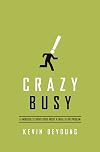
I set out to read this just to say I had read it, I am familiar with the trap of busyness and the necessary boundaries that we need to set up to protect ourselves and be effective, but this proved to be a very challenging read that helped me along a good bit in my thinking. Kevin writes, not from a teaching position, but from the position of someone who struggles with this topic and is writing to grow. This book is very short and concise, written for people who are busy and already show more overbooked. Kevin shares some pitfalls avoid and suggests several reasons why we may find ourselves crazy busy. I enjoyed the layout of the book because there was no ten step formula or start to finish game plan, he simply lays out some things to consider and share out of his own struggles. I'll be recommending this one for sure. show less
We read one section of this book per day to our kids (5yo & 3yo). We loved the writing and the way it showed how the Bible all points to Jesus. The sections are just the right length to make a decent little devotional each morning before we start homeschool. Before we started each morning, we reviewed what we’d already read in previous days. The lessons were straightforward enough that both of my small children could remember and understand the progression.
The only criticisms we have are show more that a) the illustrations, while beautiful and vibrant, are a little too abstract for younger children (I imagine they would be even up to 7-8yo), and b) there are no accompanying scripture references. The lack of scripture references may be due to the fact that each day covers a sizable swath of the biblical timeline. It still would’ve been nice to have some scripture quotes or references.
All that said, we recommend this book! show less
The only criticisms we have are show more that a) the illustrations, while beautiful and vibrant, are a little too abstract for younger children (I imagine they would be even up to 7-8yo), and b) there are no accompanying scripture references. The lack of scripture references may be due to the fact that each day covers a sizable swath of the biblical timeline. It still would’ve been nice to have some scripture quotes or references.
All that said, we recommend this book! show less
Lists
Awards


You May Also Like


Associated Authors
Statistics
- Works
- 83
- Also by
- 2
- Members
- 17,663
- Popularity
- #1,249
- Rating
- 4.2
- Reviews
- 129
- ISBNs
- 199
- Languages
- 10
- Favorited
- 6