
Kent Stetson
Author of The World Above the Sky
Works by Kent Stetson
Tagged
Common Knowledge
- Gender
- male
- Occupations
- playwright
- Awards and honors
- Order of Canada
- Nationality
- Canada
- Places of residence
- Montréal, Québec, Canada
- Associated Place (for map)
- Québec, Canada
Members
Reviews
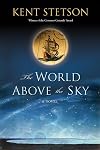
I received this free e-book from NetGalley.
‘And the soul of the world was the sea.’ (p.ix)
Six Worlds and three parts / acts:
First part: Eugainia St Clare Delacroix, living Holy Grail, is escaping to the New World from her old husband, Lord Ard. Fleet commander is Prince Henry Sinclair, Eugainia’s protector, who has a objective: the Templar dream of establish a new Arcadia. The party reaches the Atlantic coast of Canada but soon a battle starts against the Skrelings (indigenous people show more of North America and Greenland).
Second part: the party becomes friend of two indigenouses: Mimkitawo’qu’sk, a young man and chief; and his aunt Keswalqw. Most of the second part tells of the love story, terrestrial and celestial, between Eugainia and Mimkitawo’qu’sk.
Third part: Eugainia and Mimtikawo’qu’sk, after living alone for a while, come back to the village. The party, reunited, starts the search for the Holy Grail, but a fleet is coming from the sea …
The World above the Sky is bonded to a legendary Venetian document published in 1558. Nicolo` and Antonio Zeno, Venetian navigators, wrote a series of letters and maps, called the Zeno’s maps. The Zeno’s describe a voyage of exploration, throughout the North Atlantic, under the command of a Prince named Zichmni (associated to Henry Sinclair). Henry Sinclair was a Scotland’s Earl of Orkney in the late 1300. The legend says he made land in the Canadian Maritime one century before Columbus, although Zeno brothers’ document tells that he landed in Greenland and not in Canada.
Zeno’s legend is the background of The World above the Sky.
Accordingly to Stetson: ‘no one owns tales, nephew. Only the Creator. Maybe we taught them, long ago. Maybe they taught us, long ago. No matter. So long as we learn we live. I should say their tale is similar to our tale. Not exactly the same. Similar.’ (p. 65)
I liked the first and last part of the book.
The second part, unfortunately the longest, suggests an idea of inaction. Maybe Stetson’s idea was to give the impression of Humans bond to action and Gods to inaction. Or maybe an unhappy reconsideration of a play in a novel.
The Sturm und Drang of the first part is fascinating for the high style of narration, like epic stories, and reminding, of course, Wolfram von Eschenbach’s Parzival.
In the last part when other Europeans are coming to land in the New World, Stetson ‘invents’ to stop the world, so to prevent the landing. The solution comes from Jules Verne’s A Journey to the Center of the Earth; but apart from the connection between the books, I found
this part enjoyable.
I don’t recommend this book for a general audience, it is enjoyable for readers of epic story and literature written in high style.
Useful the last pages of the book with the Pronunciation Guide and Mi’kmaq Dictionary.
‘It will comfort you to know we’re all subject to folly. No one truth shapes and re-revises every mote and twitch of the living cosmos: nothing, small or large, is set in stone. Chaos rules. Order emerges, brief and impermanent. Revision is endless; certainty breeds contradictions; peace depends upon war; night exists not to counter the day alone, but to reveal the stars, which mimic the working of the waking mind.’ (p. 144) show less
‘And the soul of the world was the sea.’ (p.ix)
Six Worlds and three parts / acts:
First part: Eugainia St Clare Delacroix, living Holy Grail, is escaping to the New World from her old husband, Lord Ard. Fleet commander is Prince Henry Sinclair, Eugainia’s protector, who has a objective: the Templar dream of establish a new Arcadia. The party reaches the Atlantic coast of Canada but soon a battle starts against the Skrelings (indigenous people show more of North America and Greenland).
Second part: the party becomes friend of two indigenouses: Mimkitawo’qu’sk, a young man and chief; and his aunt Keswalqw. Most of the second part tells of the love story, terrestrial and celestial, between Eugainia and Mimkitawo’qu’sk.
Third part: Eugainia and Mimtikawo’qu’sk, after living alone for a while, come back to the village. The party, reunited, starts the search for the Holy Grail, but a fleet is coming from the sea …
The World above the Sky is bonded to a legendary Venetian document published in 1558. Nicolo` and Antonio Zeno, Venetian navigators, wrote a series of letters and maps, called the Zeno’s maps. The Zeno’s describe a voyage of exploration, throughout the North Atlantic, under the command of a Prince named Zichmni (associated to Henry Sinclair). Henry Sinclair was a Scotland’s Earl of Orkney in the late 1300. The legend says he made land in the Canadian Maritime one century before Columbus, although Zeno brothers’ document tells that he landed in Greenland and not in Canada.
Zeno’s legend is the background of The World above the Sky.
Accordingly to Stetson: ‘no one owns tales, nephew. Only the Creator. Maybe we taught them, long ago. Maybe they taught us, long ago. No matter. So long as we learn we live. I should say their tale is similar to our tale. Not exactly the same. Similar.’ (p. 65)
I liked the first and last part of the book.
The second part, unfortunately the longest, suggests an idea of inaction. Maybe Stetson’s idea was to give the impression of Humans bond to action and Gods to inaction. Or maybe an unhappy reconsideration of a play in a novel.
The Sturm und Drang of the first part is fascinating for the high style of narration, like epic stories, and reminding, of course, Wolfram von Eschenbach’s Parzival.
In the last part when other Europeans are coming to land in the New World, Stetson ‘invents’ to stop the world, so to prevent the landing. The solution comes from Jules Verne’s A Journey to the Center of the Earth; but apart from the connection between the books, I found
this part enjoyable.
I don’t recommend this book for a general audience, it is enjoyable for readers of epic story and literature written in high style.
Useful the last pages of the book with the Pronunciation Guide and Mi’kmaq Dictionary.
‘It will comfort you to know we’re all subject to folly. No one truth shapes and re-revises every mote and twitch of the living cosmos: nothing, small or large, is set in stone. Chaos rules. Order emerges, brief and impermanent. Revision is endless; certainty breeds contradictions; peace depends upon war; night exists not to counter the day alone, but to reveal the stars, which mimic the working of the waking mind.’ (p. 144) show less
"This," he gestured, "is the Earth World. Below us, the World Below the Earth. Over our heads, the World Above th Earth, also called the Sky World. Above that - The World Above the Sky."
It is 1398. Seventeen-year-old Eugainia St Clare Delacroix - the Living Holy Grail - is transported from certain death at the hands of her enemies in Europe to the safety of the New World by her protector, fleet commander Prince Henry Sinclair: Baron of Rosslyn, Earl of Orkney and Liegeman to the Prince of show more Norway. Prince Henry's quest: to locate the Well of Baphomet and the Stone Grail that are believed to have been brought over to New Arcadia 100 years earlier by a band of Knights Templar and to establish the Grail Castle with the young Goddess Eugainia enthroned there as befitting the royal and holy blood that flows through her veins. Arriving in the New World, they are met by The People, a clan of Mi'kmaq Indians.
Loosely based upon Stetson's play New Archadia: A Grail Romance, Stetson has merged here the history, myths and legends of the Middle Ages of Europe with that of the First Nations Indians of North America in a beautiful blending of descriptive prose, magical mysticism and political/religious/mystical intrigue. The Atlantic coast of Canada is captured in a wealth of abundance. The focus of the story is an examination of the interaction between the two cultures and a growing awareness of the similarities both possess as the newcomers learn of the Mi'kmaqs ways and survive a starving winter.
The mystical elements of the Goddess exhibited some of the qualities I recall from reading the the Mists of Avalon. The inclusion of the mystical folklore of the Mi'kmaqs, as well as the balance of strong male and female characters and the trials each one of them face over the course of the story, made for interesting reading. While Stetson does a good job capturing the essence of the Mi'kmaq characters Mimkitawo'qu'sk and Keswalqw, I felt the plot was weak and the dialogue of the newcomers was out of sync with the 1398 time period, and tended to jar me back to the present, just as I was settling into the time period.
Overall, a decent tale of journeys and quests but lacking in the descriptive historical detail of the Knights Templar and the grail quest. It is assumed by Stetson that the reader is conversant in this history and focuses all his energy describing the rituals and beliefs of the Mi'kmaq people. Apparently, this is supposed to be the first book in a trilogy, so I can only hope that the second and third books are better. show less
It is 1398. Seventeen-year-old Eugainia St Clare Delacroix - the Living Holy Grail - is transported from certain death at the hands of her enemies in Europe to the safety of the New World by her protector, fleet commander Prince Henry Sinclair: Baron of Rosslyn, Earl of Orkney and Liegeman to the Prince of show more Norway. Prince Henry's quest: to locate the Well of Baphomet and the Stone Grail that are believed to have been brought over to New Arcadia 100 years earlier by a band of Knights Templar and to establish the Grail Castle with the young Goddess Eugainia enthroned there as befitting the royal and holy blood that flows through her veins. Arriving in the New World, they are met by The People, a clan of Mi'kmaq Indians.
Loosely based upon Stetson's play New Archadia: A Grail Romance, Stetson has merged here the history, myths and legends of the Middle Ages of Europe with that of the First Nations Indians of North America in a beautiful blending of descriptive prose, magical mysticism and political/religious/mystical intrigue. The Atlantic coast of Canada is captured in a wealth of abundance. The focus of the story is an examination of the interaction between the two cultures and a growing awareness of the similarities both possess as the newcomers learn of the Mi'kmaqs ways and survive a starving winter.
The mystical elements of the Goddess exhibited some of the qualities I recall from reading the the Mists of Avalon. The inclusion of the mystical folklore of the Mi'kmaqs, as well as the balance of strong male and female characters and the trials each one of them face over the course of the story, made for interesting reading. While Stetson does a good job capturing the essence of the Mi'kmaq characters Mimkitawo'qu'sk and Keswalqw, I felt the plot was weak and the dialogue of the newcomers was out of sync with the 1398 time period, and tended to jar me back to the present, just as I was settling into the time period.
Overall, a decent tale of journeys and quests but lacking in the descriptive historical detail of the Knights Templar and the grail quest. It is assumed by Stetson that the reader is conversant in this history and focuses all his energy describing the rituals and beliefs of the Mi'kmaq people. Apparently, this is supposed to be the first book in a trilogy, so I can only hope that the second and third books are better. show less
I received this free e-book from NetGalley.
‘And the soul of the world was the sea.’ (p.ix)
Six Worlds and three parts / acts:
First part: Eugainia St Clare Delacroix, living Holy Grail, is escaping to the New World from her old husband, Lord Ard. Fleet commander is Prince Henry Sinclair, Eugainia’s protector, who has a objective: the Templar dream of establish a new Arcadia. The party reaches the Atlantic coast of Canada but soon a battle starts against the Skrelings (indigenous people show more of North America and Greenland).
Second part: the party becomes friend of two indigenouses: Mimkitawo’qu’sk, a young man and chief; and his aunt Keswalqw. Most of the second part tells of the love story, terrestrial and celestial, between Eugainia and Mimkitawo’qu’sk.
Third part: Eugainia and Mimtikawo’qu’sk, after living alone for a while, come back to the village. The party, reunited, starts the search for the Holy Grail, but a fleet is coming from the sea …
The World above the Sky is bonded to a legendary Venetian document published in 1558. Nicolo` and Antonio Zeno, Venetian navigators, wrote a series of letters and maps, called the Zeno’s maps. The Zeno’s describe a voyage of exploration, throughout the North Atlantic, under the command of a Prince named Zichmni (associated to Henry Sinclair). Henry Sinclair was a Scotland’s Earl of Orkney in the late 1300. The legend says he made land in the Canadian Maritime one century before Columbus, although Zeno brothers’ document tells that he landed in Greenland and not in Canada.
Zeno’s legend is the background of The World above the Sky.
Accordingly to Stetson: ‘no one owns tales, nephew. Only the Creator. Maybe we taught them, long ago. Maybe they taught us, long ago. No matter. So long as we learn we live. I should say their tale is similar to our tale. Not exactly the same. Similar.’ (p. 65)
I liked the first and last part of the book.
The second part, unfortunately the longest, suggests an idea of inaction. Maybe Stetson’s idea was to give the impression of Humans bond to action and Gods to inaction. Or maybe an unhappy reconsideration of a play in a novel.
The Sturm und Drang of the first part is fascinating for the high style of narration, like epic stories, and reminding, of course, Wolfram von Eschenbach’s Parzival.
In the last part when other Europeans are coming to land in the New World, Stetson ‘invents’ to stop the world, so to prevent the landing. The solution comes from Jules Verne’s A Journey to the Center of the Earth; but apart from the connection between the books, I found
this part enjoyable.
I don’t recommend this book for a general audience, it is enjoyable for readers of epic story and literature written in high style.
Useful the last pages of the book with the Pronunciation Guide and Mi’kmaq Dictionary.
‘It will comfort you to know we’re all subject to folly. No one truth shapes and re-revises every mote and twitch of the living cosmos: nothing, small or large, is set in stone. Chaos rules. Order emerges, brief and impermanent. Revision is endless; certainty breeds contradictions; peace depends upon war; night exists not to counter the day alone, but to reveal the stars, which mimic the working of the waking mind.’ (p. 144) show less
‘And the soul of the world was the sea.’ (p.ix)
Six Worlds and three parts / acts:
First part: Eugainia St Clare Delacroix, living Holy Grail, is escaping to the New World from her old husband, Lord Ard. Fleet commander is Prince Henry Sinclair, Eugainia’s protector, who has a objective: the Templar dream of establish a new Arcadia. The party reaches the Atlantic coast of Canada but soon a battle starts against the Skrelings (indigenous people show more of North America and Greenland).
Second part: the party becomes friend of two indigenouses: Mimkitawo’qu’sk, a young man and chief; and his aunt Keswalqw. Most of the second part tells of the love story, terrestrial and celestial, between Eugainia and Mimkitawo’qu’sk.
Third part: Eugainia and Mimtikawo’qu’sk, after living alone for a while, come back to the village. The party, reunited, starts the search for the Holy Grail, but a fleet is coming from the sea …
The World above the Sky is bonded to a legendary Venetian document published in 1558. Nicolo` and Antonio Zeno, Venetian navigators, wrote a series of letters and maps, called the Zeno’s maps. The Zeno’s describe a voyage of exploration, throughout the North Atlantic, under the command of a Prince named Zichmni (associated to Henry Sinclair). Henry Sinclair was a Scotland’s Earl of Orkney in the late 1300. The legend says he made land in the Canadian Maritime one century before Columbus, although Zeno brothers’ document tells that he landed in Greenland and not in Canada.
Zeno’s legend is the background of The World above the Sky.
Accordingly to Stetson: ‘no one owns tales, nephew. Only the Creator. Maybe we taught them, long ago. Maybe they taught us, long ago. No matter. So long as we learn we live. I should say their tale is similar to our tale. Not exactly the same. Similar.’ (p. 65)
I liked the first and last part of the book.
The second part, unfortunately the longest, suggests an idea of inaction. Maybe Stetson’s idea was to give the impression of Humans bond to action and Gods to inaction. Or maybe an unhappy reconsideration of a play in a novel.
The Sturm und Drang of the first part is fascinating for the high style of narration, like epic stories, and reminding, of course, Wolfram von Eschenbach’s Parzival.
In the last part when other Europeans are coming to land in the New World, Stetson ‘invents’ to stop the world, so to prevent the landing. The solution comes from Jules Verne’s A Journey to the Center of the Earth; but apart from the connection between the books, I found
this part enjoyable.
I don’t recommend this book for a general audience, it is enjoyable for readers of epic story and literature written in high style.
Useful the last pages of the book with the Pronunciation Guide and Mi’kmaq Dictionary.
‘It will comfort you to know we’re all subject to folly. No one truth shapes and re-revises every mote and twitch of the living cosmos: nothing, small or large, is set in stone. Chaos rules. Order emerges, brief and impermanent. Revision is endless; certainty breeds contradictions; peace depends upon war; night exists not to counter the day alone, but to reveal the stars, which mimic the working of the waking mind.’ (p. 144) show less
Awards


You May Also Like
Associated Authors
Statistics
- Works
- 3
- Members
- 20
- Popularity
- #589,234
- Rating
- 2.5
- Reviews
- 3
- ISBNs
- 5