
Tom Holt (1) (1961–)
Author of The Portable Door
For other authors named Tom Holt, see the disambiguation page.
Tom Holt (1) has been aliased into K. J. Parker.
Series
Works by Tom Holt
Works have been aliased into K. J. Parker.
Lucia and the Diplomatic Incident: A Short Story based on the Novels of E.F. Benson (Tom Holt's Mapp and Lucia Series Book 3) (2013) 12 copies
The Jerk Who Fell to Earth 2 copies
Brownian Emotion 2 copies
Without Fire 1 copy
A Good Report Of The Worm 1 copy
Associated Works
Works have been aliased into K. J. Parker.
Subterranean Magazine Summer 2010 — Contributor — 2 copies
Xenofilkia #054 — Contributor — 2 copies
Tagged
Common Knowledge
- Canonical name
- Holt, Tom
- Legal name
- Holt, Thomas Charles Louis
- Other names
- Parker, K. J. (pseudonym)
- Birthdate
- 1961-09-13
- Gender
- male
- Education
- University of Oxford
- Occupations
- solicitor
novelist
fantasy writer - Awards and honors
- Guest of Honour, Eastercon, UK (1999)
- Relationships
- Holt, Hazel (Mother)
- Short biography
- Tom Holt was born in London in 1961. At Oxford he studied bar billiards, ancient Greek agriculture and the care and feeding of small, temperamental Japanese motor engines; interests which led him, perhaps inevitably, to qualify as a solicitor and emigrate to Somerset, where he specialized in death and taxes for seven years before going straight in 1995. Now a full-time writer, he lives in Chard, Somerset, with his wife, one daughter and the unmistakable scent of blood, wafting in on the breeze from the local meat-packing plant. [from The Portable Door (2005)]
- Nationality
- UK
- Birthplace
- London, England, UK
- Places of residence
- Chard, Somerset, UK
London, England, UK - Map Location
- England, UK
Members
Reviews
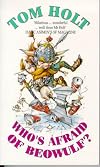
An impulse purchase, I can't believe I've not read Holt before. The surmise is simple, the execution deft, the result great fun.
Hildy Frederiksen is an archaeology student who is brought in to investigate a suspected Norse barrow burial. Only instead of finding bones, she discovers that the Norse crew of the boat burial are just waking up form a rather long snooze, 1200 years, or thereabouts. The culture shock impact of waking into the late 20th century is excellently played, with all the show more culture shock and incongruity you would expect. It was fast, fun, varied, yet had emotion and feeling. Great fun all round.
I sometimes struggle with fantasy, most noticeably when the fantasy seems to rely on illogical progressions, I like my fantasy to ask me to accept one illogical step, but that the remainder of the book follows logically form there. This seems, to me, to achieve that. show less
Hildy Frederiksen is an archaeology student who is brought in to investigate a suspected Norse barrow burial. Only instead of finding bones, she discovers that the Norse crew of the boat burial are just waking up form a rather long snooze, 1200 years, or thereabouts. The culture shock impact of waking into the late 20th century is excellently played, with all the show more culture shock and incongruity you would expect. It was fast, fun, varied, yet had emotion and feeling. Great fun all round.
I sometimes struggle with fantasy, most noticeably when the fantasy seems to rely on illogical progressions, I like my fantasy to ask me to accept one illogical step, but that the remainder of the book follows logically form there. This seems, to me, to achieve that. show less

I first came across the work of Tom Holt with his first novel, Expecting Someone Taller, which was a comic fantasy based on Wagner's Ring cycle. Over the years, I read more of his work, but I found myself getting into a frame of mind where I only found every other one of his novels actually funny. Others reported this too, though I cannot say whether their "every other book" was the same as mine. Eventually, the act of keeping track of 'funny/not funny' became too much and I stopped reading show more Holt's books. In recent years, I have come across another of his literary identities - K.J. Parker - and read and enjoyed his Sixteen Ways to defend a walled City. I read that before I was aware that Parker and Holt were one and the same, so I cannot say I was influenced.
Somehow, I had avoided reading Flying Dutch, though. It was Holt's third novel, and - as the title suggests - it, too, is based around Wagnerian myth; in this case, that of the Flying Dutchman, the sailor cursed by the Devil to sail the seas endlessly until redeemed by love. Holt takes this story and pulls it apart, giving it a new rationale (and undoing most of the Wagnerian connections, although the composer has a cameo appearance). Having pulled the story apart, Holt then re-assembles it with a slightly less fantastical, secular underpinning involving an alchemist with an Elixir of Life, and a life insurance policy never designed for immortals.
The book was first published in 1991, and it shows. There are a lot of things in this book that we no longer have - fax machines, phone cards and High Street bank branches to name but three. There is a bank called the National Lombard, though you had to be around in the 1990s to remember that 'Lombard' was yuppie slang for "Lots Of Money But A Real Dickhead". There is a lot of knowing humour, and the whole thing is very clever. But funny? I wouldn't go that far. There is quite of lot of comedy born out of ignorance, which is quite a common thing across the whole spectrum of humour. Most jokes about aspects of modern life, such as bureaucracy or accountancy, are created by people with little direct knowledge of those things. Their jokes then fall flat when bureaucrats or accountants hear them, but that's not because accountants and bureaucrats have no sense of humour. Rather, it's because the view from inside shows up where the funny or ridiculous things really are; most bureaucrats or accountants reckon they could do as well in the comic writing arena. That more do not just goes to show how difficult comedy really is.
Anyway, I was distinctly unimpressed by this book up to around the 40% mark, at which point the plot got into its stride and my interest was engaged by how Holt would make all this come right, and whether the comedy was actually working for me took second place. That actually lasted to the end of the book, much to my surprise.
So in the end, a reasonable outcome. I want to explore K.J. Parker's work further, but I shall probably not look to bring myself up to date with Tom Holt's output (though I may make an exception for one of his books entitled Snow White and the Seven Samurai, mainly because that's a title I wish I'd thought of first.) (Actually, the radical British comedian Alexei Sayle got there before either of us, but never mind.) But as for Flying Dutch, I'm happy to allow it house room for the foreseeable future. show less
Somehow, I had avoided reading Flying Dutch, though. It was Holt's third novel, and - as the title suggests - it, too, is based around Wagnerian myth; in this case, that of the Flying Dutchman, the sailor cursed by the Devil to sail the seas endlessly until redeemed by love. Holt takes this story and pulls it apart, giving it a new rationale (and undoing most of the Wagnerian connections, although the composer has a cameo appearance). Having pulled the story apart, Holt then re-assembles it with a slightly less fantastical, secular underpinning involving an alchemist with an Elixir of Life, and a life insurance policy never designed for immortals.
The book was first published in 1991, and it shows. There are a lot of things in this book that we no longer have - fax machines, phone cards and High Street bank branches to name but three. There is a bank called the National Lombard, though you had to be around in the 1990s to remember that 'Lombard' was yuppie slang for "Lots Of Money But A Real Dickhead". There is a lot of knowing humour, and the whole thing is very clever. But funny? I wouldn't go that far. There is quite of lot of comedy born out of ignorance, which is quite a common thing across the whole spectrum of humour. Most jokes about aspects of modern life, such as bureaucracy or accountancy, are created by people with little direct knowledge of those things. Their jokes then fall flat when bureaucrats or accountants hear them, but that's not because accountants and bureaucrats have no sense of humour. Rather, it's because the view from inside shows up where the funny or ridiculous things really are; most bureaucrats or accountants reckon they could do as well in the comic writing arena. That more do not just goes to show how difficult comedy really is.
Anyway, I was distinctly unimpressed by this book up to around the 40% mark, at which point the plot got into its stride and my interest was engaged by how Holt would make all this come right, and whether the comedy was actually working for me took second place. That actually lasted to the end of the book, much to my surprise.
So in the end, a reasonable outcome. I want to explore K.J. Parker's work further, but I shall probably not look to bring myself up to date with Tom Holt's output (though I may make an exception for one of his books entitled Snow White and the Seven Samurai, mainly because that's a title I wish I'd thought of first.) (Actually, the radical British comedian Alexei Sayle got there before either of us, but never mind.) But as for Flying Dutch, I'm happy to allow it house room for the foreseeable future. show less
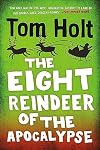
Wonderfully madcap. Tom Holt is a master at taking broad concepts like myths and lore and scientific innovation, then waving a hand to dismiss all the boring bits before shoving it all into a blender and forgetting to put the lid on ahead of pushing “purée.” You can never quite anticipate what will happen, and it’s just more fun to strap in and see where you wind up.
So many characters to love, and by that I don’t necessarily mean to endorse or support, because fully everyone show more involved is extremely human (even the deities). They’re petty, vindictive, occasionally violent, selfish to unreason, and yet somehow still enjoyable to watch. Even the monkey. Especially the disembodied hair. When the Queen of the Night is giving angels (quite brief) existence to demand a coworker’s whereabouts, and God is following Santa down a chimney, and shapeshifting junior sorcerors flirt with accountants by transforming into office products…there’s no room to get hung up on logic. Very, very satisfying. show less
So many characters to love, and by that I don’t necessarily mean to endorse or support, because fully everyone show more involved is extremely human (even the deities). They’re petty, vindictive, occasionally violent, selfish to unreason, and yet somehow still enjoyable to watch. Even the monkey. Especially the disembodied hair. When the Queen of the Night is giving angels (quite brief) existence to demand a coworker’s whereabouts, and God is following Santa down a chimney, and shapeshifting junior sorcerors flirt with accountants by transforming into office products…there’s no room to get hung up on logic. Very, very satisfying. show less

I love Tom Holt because reading his books doesn’t seem like work. There’s a fatigue that comes with stories written by someone who is visibly exerting themselves. When every word and sentence bears weight, when each paragraph and chapter fits neatly into a larger structure, to read quickly is a sin. It’s the same obligation for attention that follows a lot of what we consider “high culture,” literature and visual arts and music, the idea that you must sit still and appreciate to show more get the most out of something. Consuming media this way certainly has much to recommend it, and provides many rewards, but it is not the only way to do things. After a day of work, when collapsed on the couch, I don’t look at a book for a spiritual experience; I look at it for a good time. And I never regret it, with Tom Holt.
I’m not familiar with Wagner, much less this opera, so I believe I was starting on something of an even footing with Jane, the protagonist, the accountant who meets Julius Vanderdecker, the immortal captain whose life insurance policy provides the basis for the plot. It’s a good story! I loved reading it, and I love the way that Holt connects things, the way he ties everything in, the way he makes everything seem like a bit of a conspiracy and then instead of flat-earthing you, shows that it’s best in even the most exceptional circumstances not to lose one’s head.
If I keep writing, I would love to know how to make things like this. The world has enough manifestos, enough poetic masterworks. Maybe life should be lived like a great work, and entertainment can be appreciated and adored as it is instead of having to serve some great moral purpose. show less
I’m not familiar with Wagner, much less this opera, so I believe I was starting on something of an even footing with Jane, the protagonist, the accountant who meets Julius Vanderdecker, the immortal captain whose life insurance policy provides the basis for the plot. It’s a good story! I loved reading it, and I love the way that Holt connects things, the way he ties everything in, the way he makes everything seem like a bit of a conspiracy and then instead of flat-earthing you, shows that it’s best in even the most exceptional circumstances not to lose one’s head.
If I keep writing, I would love to know how to make things like this. The world has enough manifestos, enough poetic masterworks. Maybe life should be lived like a great work, and entertainment can be appreciated and adored as it is instead of having to serve some great moral purpose. show less
Lists
Awards


You May Also Like
Associated Authors
Statistics
- Works
- 67
- Also by
- 17
- Members
- 15,210
- Popularity
- #1,500
- Rating
- 3.5
- Reviews
- 322
- ISBNs
- 320
- Languages
- 5
- Favorited
- 4