
Wole Talabi
Author of Shigidi and the Brass Head of Obalufon
About the Author
Works by Wole Talabi
Asimov's Science Fiction: Vol. 45, No. 9 & 10 [September/October 2021] (2021) — Contributor — 7 copies
A Dream of Electric Mothers 7 copies
Wednesday's Story {story} 2 copies
The Regression Test {story} 2 copies
An Arc Of Electric Skin 1 copy
Incompleteness Theories 1 copy
i, Shigidi 1 copy
Ganger 1 copy
Blowout 1 copy
Parse. Error. Reset. 1 copy
Associated Works
Sauúti Terrors: Short Stories from the Unique Universe Created by Contemporary African Writers (2026) — Contributor — 9 copies, 1 review
Redemption song and other stories : The Caine Prize for African Writing 2018 (2018) — Contributor — 7 copies
Omenana to Infinity — Contributor — 6 copies
Event Horizon 2017 — Contributor — 4 copies
Omenana to Infinity: Speculative Fiction Anthology — Contributor, some editions — 1 copy
WIRED(ワイアード)VOL.50 — Contributor — 1 copy
Tagged
Common Knowledge
- Birthdate
- 20th century
- Gender
- male
- Occupations
- engineer
writer
editor - Organizations
- African Speculative Fiction Society
Sauúti Collective - Nationality
- Nigeria
- Birthplace
- Warri, Nigeria
- Places of residence
- Kuala Lumpur, Malaysia
- Associated Place (for map)
- Nigeria
Members
Reviews

The first novel by Nigerian author Wole Talabi is a rational fantasy with the orisha Shigidi as the protagonist, and his succubus partner Nneoma receiving at least as much attention. In pacing and tone, it reminded me a little of Charles Stross' Laundry books, although its presentation of the supernatural is of course somewhat different.
The orishas are organized in a quasi-commercial "spirit company," and the story suggests that the same is true for deities of other cultures. Shigidi's show more understanding of the cosmos relates to an Isese creation narrative. Nneoma meanwhile is preoccupied with an originary Fall.
There are some rough edges to the writing, which overall tends in a somewhat cinematic direction. It stumbles a bit with parliamentary jargon in the board meeting of the Orisha Spirit Company. The instances of explicit sex are written tastefully and effectively.
I was surprised on page 87 to discover that Aleister Crowley is a key and persistent supporting character. The characterization is reasonably well-handled and features Victor Neuburg also. Strangely, a couple of references to Samuel Liddell Mathers changed him to "Samuel Albus Dell" (90, 183) just as the Hermetic Order of the Golden Dawn is called "the Third Dawn."
On the strength of this book, I might well try other stories by Talabi. show less
The orishas are organized in a quasi-commercial "spirit company," and the story suggests that the same is true for deities of other cultures. Shigidi's show more understanding of the cosmos relates to an Isese creation narrative. Nneoma meanwhile is preoccupied with an originary Fall.
There are some rough edges to the writing, which overall tends in a somewhat cinematic direction. It stumbles a bit with parliamentary jargon in the board meeting of the Orisha Spirit Company. The instances of explicit sex are written tastefully and effectively.
I was surprised on page 87 to discover that Aleister Crowley is a key and persistent supporting character. The characterization is reasonably well-handled and features Victor Neuburg also. Strangely, a couple of references to Samuel Liddell Mathers changed him to "Samuel Albus Dell" (90, 183) just as the Hermetic Order of the Golden Dawn is called "the Third Dawn."
On the strength of this book, I might well try other stories by Talabi. show less
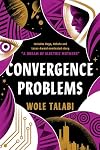
Regarding the name of his latest short story collection, Wole Talabi writes about the challenges of making complex models, whether in mathematics or envisioning the future. "When re-imagining the world, thinking about the potential of some wondrous new scientific discovery or technology, some new social structure or what the world would be like if some mythical power truly existed, it is almost impossible not to see all the problems that could arise. Things will go wrong. There will be show more difficulties. Adjustments will have to be made. Challenges will come with any version of reality we imagine, no matter how optimistic. In other words, convergence problems will be experienced. Hence the title of this collection."
What follows are fifteen short stories and one novella, generally set in the future or some sort of alternate reality, many of which explore that razor's edge, the hopes and challenges that come with technology or human nature, or both. Talabi's range is impressive, and while I liked some stories more than others, I was never bored. My favorites were the final two stories. "Comments on Your Provisional Patent Application for an Eternal Spirit Core" was a unique format, essentially the file for this patent application someone had, and her brother's comments responding to what she was doing. "A Dream of Electric Mothers" was a Nebula Award–nominated novelette that was also included in Africa Risen and imagines a place where the collective wisdom of the ancestors is available through technological breakthroughs. Recommended. show less
What follows are fifteen short stories and one novella, generally set in the future or some sort of alternate reality, many of which explore that razor's edge, the hopes and challenges that come with technology or human nature, or both. Talabi's range is impressive, and while I liked some stories more than others, I was never bored. My favorites were the final two stories. "Comments on Your Provisional Patent Application for an Eternal Spirit Core" was a unique format, essentially the file for this patent application someone had, and her brother's comments responding to what she was doing. "A Dream of Electric Mothers" was a Nebula Award–nominated novelette that was also included in Africa Risen and imagines a place where the collective wisdom of the ancestors is available through technological breakthroughs. Recommended. show less
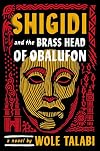
Shigidi is one of the minor Yoruba deities, a short, ugly god of nightmares who specializes in playing on people's fears and scaring them to death as they sleep. He works for the Orisha Spirit Company -- Talabi here conceives of the various deities as part of a corporate bureaucracy -- and doesn't enjoy his work very much.
Things change when he meets the gorgeous succubus Nneoma, who convinces Shigidi to leave Orisha, go independent, and team up with her on various demonic enterprises; in show more exchange, she'll transform him into a tall, powerful hunk and teach him to use all of the power he never knew he had.
But the elder gods at Orisha aren't done with Shigidi, and they rope him and Nneoma into doing One Last Job -- a heist in which they must recover a stolen artifact from the British Museum.
That's a marvelous premise, but I'm afraid it doesn't live up to its potential. The novel bounces around in time with every chapter. It gets hard to keep track of where/when we are, and Talabi often steps on his own big moments by revealing their eventual outcomes before actually showing us the events.
And the climactic gods-vs-gods battle has the same problem that has led to growing exhaustion with the Marvel Cinematic Universe and other superhero stories. When the characters are this powerful, their fights aren't all that interesting. Bash bash rip off an arm smash crush stab the giant beat hit thrash. Yawn. The characters are so powerful, so close to omnipotence, that it's hard for me as a mere mortal to feel like there are any real stakes. Even when Talabi finds a way to put one of his gods at risk of something like death, it never feels like an actual threat; we know there's going to be some godly loophole of salvation.
As lively and colorful as Talabi's god characters are, I wanted a bigger touch of humanity. There's only one significant human among the supporting players (their identity is one of the book's more unexpected revelations), and even they have already cheated death at least once.
I liked the energy Talabi brings to the story, his characters are vivid, and some of the set pieces are filled with great energy. I will certainly be interested to see what he might do in a second novel (and there are already two collections of short stories that might be worth a look). But this one didn't quite work for me. show less
Things change when he meets the gorgeous succubus Nneoma, who convinces Shigidi to leave Orisha, go independent, and team up with her on various demonic enterprises; in show more exchange, she'll transform him into a tall, powerful hunk and teach him to use all of the power he never knew he had.
But the elder gods at Orisha aren't done with Shigidi, and they rope him and Nneoma into doing One Last Job -- a heist in which they must recover a stolen artifact from the British Museum.
That's a marvelous premise, but I'm afraid it doesn't live up to its potential. The novel bounces around in time with every chapter. It gets hard to keep track of where/when we are, and Talabi often steps on his own big moments by revealing their eventual outcomes before actually showing us the events.
And the climactic gods-vs-gods battle has the same problem that has led to growing exhaustion with the Marvel Cinematic Universe and other superhero stories. When the characters are this powerful, their fights aren't all that interesting. Bash bash rip off an arm smash crush stab the giant beat hit thrash. Yawn. The characters are so powerful, so close to omnipotence, that it's hard for me as a mere mortal to feel like there are any real stakes. Even when Talabi finds a way to put one of his gods at risk of something like death, it never feels like an actual threat; we know there's going to be some godly loophole of salvation.
As lively and colorful as Talabi's god characters are, I wanted a bigger touch of humanity. There's only one significant human among the supporting players (their identity is one of the book's more unexpected revelations), and even they have already cheated death at least once.
I liked the energy Talabi brings to the story, his characters are vivid, and some of the set pieces are filled with great energy. I will certainly be interested to see what he might do in a second novel (and there are already two collections of short stories that might be worth a look). But this one didn't quite work for me. show less
My expectation going into this novel was that I was going to be reading a kind of modern-day "sword and sorcery" type epic, and there is some of that as it's definitely a caper book and it's very hard-boiled; the main characters are far from nice and individual motivations tend to be "transactional" and expedient. That said, the characters grew on me and I thought that the flashback structure of the book worked, as it all eventually coalesces down to a really good climax of emotional and show more personal transcendence for the main characters. If Talabi intends to set more novels in this milieu I'll be happy to give them a try.
As for who I think might like this book, assuming you're coming to Talabi cold (I've had no exposure to his short fiction), if you've been reading Ben Aaronovitch ("Rivers of London") and Charlie Stross ('The Laundry"), this might scratch the same itch. show less
As for who I think might like this book, assuming you're coming to Talabi cold (I've had no exposure to his short fiction), if you've been reading Ben Aaronovitch ("Rivers of London") and Charlie Stross ('The Laundry"), this might scratch the same itch. show less
Lists
Awards


You May Also Like
Associated Authors
Statistics
- Works
- 19
- Also by
- 25
- Members
- 354
- Popularity
- #67,647
- Rating
- 3.7
- Reviews
- 12
- ISBNs
- 21
- Languages
- 2
