
Laurie Wallmark
Author of Grace Hopper: Queen of Computer Code
About the Author
Image credit: via author's website
Works by Laurie Wallmark
Code Breaker, Spy Hunter: How Elizebeth Friedman Changed the Course of Two World Wars (2021) 92 copies, 2 reviews
Tagged
Common Knowledge
- Gender
- female
- Education
- Vermont College of Fine Arts (MFA|Writing for Children and Young Adults)
- Occupations
- writer of children's books
teacher - Organizations
- Raritan Valley Community College
- Agent
- Liza Fleissig (Liza Royce Agency)
Ginger Harris-Dontzin (Liza Royce Agency) - Nationality
- USA
- Places of residence
- Ringoes, New Jersey, USA
- Associated Place (for map)
- New Jersey, USA
Members
Reviews
Hedy Lamarr's Double Life: Hollywood Legend and Brilliant Inventor (People Who Shaped Our World) by Laurie Wallmark

I remember being shocked to find out Hedy Lamarr was more than the glamorous actress I remembered from the movie “Samson and Delilah.” It was Hedy Lamarr who invented the radio guidance system used for torpedos and the frequency hopping technology that we call upon today to keep cell phone messages private and defend computers from hacking.
Hedy was born as Hedwig Eva Maria Kiesler on November 9, 1914 in Austria. Her personal life was quite interesting (albeit not detailed in this book). show more
Her parents were Jewish, but Hedy’s mother converted to Catholicism hoping to avoid the anti-Semitism of Europe. As a child, Hedy was fascinated by acting and had the most important qualification for it: at the age of 12, she won a beauty contest in Vienna.
When Hedy was 18, she married a 33-year-old Austrian military arms merchant and munitions manufacturer who was reputedly the third-richest man in Austria. Unfortunately, her new husband Friedrich Mandl had ties to the Italian fascist leader Benito Mussolini and later to Adolf Hitler. She later described Mandl as an extremely controlling husband who prevented her from pursuing her acting career. She claimed she was kept a virtual prisoner in their castle home, where Mussolini and Hitler both attended parties thrown by her husband.
In 1933 she left her husband and moved to Paris. While traveling to London, she met MGM studio head Louis B. Mayer, who offered her a seven-year movie contract in Hollywood. Mayer also encouraged her to change her name to Hedy Lamarr. She starred in a number of films to great acclaim, but as the author writes:
“The Hollywood legend had no interest in a glitzy lifestyle. Her passion was science and engineering.”
Nevertheless, as Hedy later lamented, “People seem to think because I have a pretty face I’m stupid . . . I have to work twice as hard as anyone else to convince people I have something resembling a brain.”
At a Hollywood party, Hedy met George Antheil, then a composer of music but previously a weapons inspector. The two decided to combine their talents and address the vulnerability of torpedo guidance systems to enemy interference. Hedy came up with the basics of a fix, and George figured out how to implement it. They received a patent for the idea on August 11, 1942. When they took it to the U.S. Navy, however, the Navy not only refused to develop it but classified it as secret, so no one else could use it either. It was not until 1962, at the time of the Cuban missile crisis, that an updated version of their design at last appeared on Navy ships.
Hedy retired from acting after twenty movies. Meanwhile, it took forty years before the military finally declassified her frequency-hopping technology. The patent had expired, so anyone could use it and no one had to credit Hedy or George. The author writes:
“Companies raced to include frequency hopping in their own devices. This technology can be found inside many of today’s most popular electronics.”
Finally, in 1997, the two inventors received recognition for their significant contribution to computers; the principles of their work are incorporated into Bluetooth technology. Hedy remarked, “It’s about time.” She died three years later. In 2014, Lamarr and Antheil were posthumously inducted into the National Inventors Hall of Fame.
The book concludes with a timeline, selected bibliography, and a guide to additional reading about other women in STEM. The back endpaper also lists Hedy Lamarr’s films.
The author is well-qualified to bring this STEM story to children. Laurie Wallmark has degrees in Biochemistry from Princeton University, Information Systems from Goddard College, and Writing for Children and Young Adults from the Vermont College of Fine Arts. She has received a number of awards for her other books on women in science.
Katy Wu’s bright illustrations employ an appealing cartoon style, and incorporate some of Hedy’s own quotes in large font. She also features easy-to-understand diagrams showing what Hedy’s inventions were all about.
Evaluation: It’s wonderful to see so many new picture books highlighting the achievements of outstanding women. This one includes a message quite similar to that stressed by Jennifer Donnelly in her young adult fairytale retelling of Cinderella called Stepsister : i.e., “pretty” can be a noose: it takes courage and perseverance to escape the tyranny of society’s fixation on looks and seek other ways to define yourself. show less
Hedy was born as Hedwig Eva Maria Kiesler on November 9, 1914 in Austria. Her personal life was quite interesting (albeit not detailed in this book). show more
Her parents were Jewish, but Hedy’s mother converted to Catholicism hoping to avoid the anti-Semitism of Europe. As a child, Hedy was fascinated by acting and had the most important qualification for it: at the age of 12, she won a beauty contest in Vienna.
When Hedy was 18, she married a 33-year-old Austrian military arms merchant and munitions manufacturer who was reputedly the third-richest man in Austria. Unfortunately, her new husband Friedrich Mandl had ties to the Italian fascist leader Benito Mussolini and later to Adolf Hitler. She later described Mandl as an extremely controlling husband who prevented her from pursuing her acting career. She claimed she was kept a virtual prisoner in their castle home, where Mussolini and Hitler both attended parties thrown by her husband.
In 1933 she left her husband and moved to Paris. While traveling to London, she met MGM studio head Louis B. Mayer, who offered her a seven-year movie contract in Hollywood. Mayer also encouraged her to change her name to Hedy Lamarr. She starred in a number of films to great acclaim, but as the author writes:
“The Hollywood legend had no interest in a glitzy lifestyle. Her passion was science and engineering.”
Nevertheless, as Hedy later lamented, “People seem to think because I have a pretty face I’m stupid . . . I have to work twice as hard as anyone else to convince people I have something resembling a brain.”
At a Hollywood party, Hedy met George Antheil, then a composer of music but previously a weapons inspector. The two decided to combine their talents and address the vulnerability of torpedo guidance systems to enemy interference. Hedy came up with the basics of a fix, and George figured out how to implement it. They received a patent for the idea on August 11, 1942. When they took it to the U.S. Navy, however, the Navy not only refused to develop it but classified it as secret, so no one else could use it either. It was not until 1962, at the time of the Cuban missile crisis, that an updated version of their design at last appeared on Navy ships.
Hedy retired from acting after twenty movies. Meanwhile, it took forty years before the military finally declassified her frequency-hopping technology. The patent had expired, so anyone could use it and no one had to credit Hedy or George. The author writes:
“Companies raced to include frequency hopping in their own devices. This technology can be found inside many of today’s most popular electronics.”
Finally, in 1997, the two inventors received recognition for their significant contribution to computers; the principles of their work are incorporated into Bluetooth technology. Hedy remarked, “It’s about time.” She died three years later. In 2014, Lamarr and Antheil were posthumously inducted into the National Inventors Hall of Fame.
The book concludes with a timeline, selected bibliography, and a guide to additional reading about other women in STEM. The back endpaper also lists Hedy Lamarr’s films.
The author is well-qualified to bring this STEM story to children. Laurie Wallmark has degrees in Biochemistry from Princeton University, Information Systems from Goddard College, and Writing for Children and Young Adults from the Vermont College of Fine Arts. She has received a number of awards for her other books on women in science.
Katy Wu’s bright illustrations employ an appealing cartoon style, and incorporate some of Hedy’s own quotes in large font. She also features easy-to-understand diagrams showing what Hedy’s inventions were all about.
Evaluation: It’s wonderful to see so many new picture books highlighting the achievements of outstanding women. This one includes a message quite similar to that stressed by Jennifer Donnelly in her young adult fairytale retelling of Cinderella called Stepsister : i.e., “pretty” can be a noose: it takes courage and perseverance to escape the tyranny of society’s fixation on looks and seek other ways to define yourself. show less
Hedy Lamarr's Double Life: Hollywood Legend and Brilliant Inventor (People Who Shaped Our World) by Laurie Wallmark
Hollywood glamour meets scientific brains in a way to inspire kids that even more interesting dreams can come true.
Hedy Lamarr was a famous actress, known for her films with the biggest stars, but she had a lesser known side to her life too. Hedy was a curious person with an inventive touch. Noticing things which could be improved around her, she created various inventions in her free time. Most were never patented. But one invention of hers was quite ingenious and is now used in daily life show more today.
While many young readers might not know who Hedy Lamarr is, this read still is an inspiring read which is sure to grab their interest. It begins with the Hedy Lamarr as a star in Hollywood, allowing young readers to see how successful and glamorous she was. Even if the actors and actresses don't ring a bell with every young reader, the message comes across loud and clear. After this, the book turns to Hedy's past and childhood in Austria. It shows her as a young girl doing average things, but with the twist of the interests she held. Young listeners can easily identify with her and see that she might not be so different than them. Then, the book turns to Hedy the inventor and explains how she came up with an invention which is still used today.
All of this is told in a interesting way and never runs into the danger of growing boring. When the second half of the book dives into her 'important' invention, time and care are taken to make sure the reader understands the theory behind her discovery. It covers frequencies, a concept which might seem high for young listeners, but the author does an amazing job at bringing the concept across in an easy and understandable way.
The illustrations have a nice flair, fitting to Hedy's time period but still holding enough similarity to modern illustrations to keep readers' interest. The illustrations also hold extra information next to the text, making the two work hand in hand as Hedy's life is explained. Hedy's own sayings from during her life are also mixed in with a more colorful text form, adding more of her personality.
At the end of the book, there is a timeline which outlines the more important moments of Hedy's life; a couple of pages summarizes the Secrets of the Secret Communications System; a Bibliography; additional sources to learn about other woman who centered toward STEM; and a list and timeline of the films Hedy was in. show less
Hedy Lamarr was a famous actress, known for her films with the biggest stars, but she had a lesser known side to her life too. Hedy was a curious person with an inventive touch. Noticing things which could be improved around her, she created various inventions in her free time. Most were never patented. But one invention of hers was quite ingenious and is now used in daily life show more today.
While many young readers might not know who Hedy Lamarr is, this read still is an inspiring read which is sure to grab their interest. It begins with the Hedy Lamarr as a star in Hollywood, allowing young readers to see how successful and glamorous she was. Even if the actors and actresses don't ring a bell with every young reader, the message comes across loud and clear. After this, the book turns to Hedy's past and childhood in Austria. It shows her as a young girl doing average things, but with the twist of the interests she held. Young listeners can easily identify with her and see that she might not be so different than them. Then, the book turns to Hedy the inventor and explains how she came up with an invention which is still used today.
All of this is told in a interesting way and never runs into the danger of growing boring. When the second half of the book dives into her 'important' invention, time and care are taken to make sure the reader understands the theory behind her discovery. It covers frequencies, a concept which might seem high for young listeners, but the author does an amazing job at bringing the concept across in an easy and understandable way.
The illustrations have a nice flair, fitting to Hedy's time period but still holding enough similarity to modern illustrations to keep readers' interest. The illustrations also hold extra information next to the text, making the two work hand in hand as Hedy's life is explained. Hedy's own sayings from during her life are also mixed in with a more colorful text form, adding more of her personality.
At the end of the book, there is a timeline which outlines the more important moments of Hedy's life; a couple of pages summarizes the Secrets of the Secret Communications System; a Bibliography; additional sources to learn about other woman who centered toward STEM; and a list and timeline of the films Hedy was in. show less
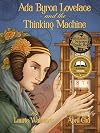
"Two hundred years after her birth in 1815, the world is finally beginning to pay attention to Ada Byron Lovelace, considered by many to be the inventor of computer programming.
Computer scientist and debut author Wallmark introduces her subject as a child fascinated by numbers, lucky enough to be born to a geometry-loving mother with the means and inclination to nurture her daughter’s talents. She focuses on her subject’s adolescence, choosing details that highlight Lovelace’s show more development as a mathematical genius. The girl sketches models for flying machines, works endless calculations to compute the wings’ power—young readers will sympathize as they hear how “writing for so long made her fingers hurt”—and studies a toy boat to see how minute adjustments to its sails affect its speed. A bout of measles that leaves her temporarily blind and paralyzed serves to further hone her brilliance, as her mother drills her with math problems. She is perfectly positioned for her fateful meeting with Charles Babbage, whose proposed Analytical Engine prompts her to write the algorithm (described as “a set of mathematical instructions”) that becomes the world’s very first computer program. Chu’s illustrations, digitally colored in a deep, jewel-toned palette, accompany the lively prose. Lovelace is a Pre-Raphaelite beauty set against a backdrop of teeming Victorian interiors littered with diagrams and pages of figures; children will enjoy spotting the girl’s loyal cat.
A splendidly inspiring introduction to an unjustly overlooked woman. (author’s note, timeline, bibliography) (Picture book/biography. 5-8)" From Kirkus, www.kirkusreviews.com show less
Computer scientist and debut author Wallmark introduces her subject as a child fascinated by numbers, lucky enough to be born to a geometry-loving mother with the means and inclination to nurture her daughter’s talents. She focuses on her subject’s adolescence, choosing details that highlight Lovelace’s show more development as a mathematical genius. The girl sketches models for flying machines, works endless calculations to compute the wings’ power—young readers will sympathize as they hear how “writing for so long made her fingers hurt”—and studies a toy boat to see how minute adjustments to its sails affect its speed. A bout of measles that leaves her temporarily blind and paralyzed serves to further hone her brilliance, as her mother drills her with math problems. She is perfectly positioned for her fateful meeting with Charles Babbage, whose proposed Analytical Engine prompts her to write the algorithm (described as “a set of mathematical instructions”) that becomes the world’s very first computer program. Chu’s illustrations, digitally colored in a deep, jewel-toned palette, accompany the lively prose. Lovelace is a Pre-Raphaelite beauty set against a backdrop of teeming Victorian interiors littered with diagrams and pages of figures; children will enjoy spotting the girl’s loyal cat.
A splendidly inspiring introduction to an unjustly overlooked woman. (author’s note, timeline, bibliography) (Picture book/biography. 5-8)" From Kirkus, www.kirkusreviews.com show less
Who knew that the romantic poet, Lord Byron, was married to a woman who had a passion for geometry, such that she was nicknamed “the Princess of Parallelograms,” and who new that numbers, not words would capture the imagination of his daughter, Ada. Ada Byron, was not raised by her father, however; rather to escape the scandals of her husband, Lady Byron fled in the night to stay with her parents. Often alone as a child, Ada created flying machines and went out in a storm to launch a show more model sailboat just to see the effect of the sails on the boat’s speed. After an attack of measles, she was blind and paralyzed for a period but ultimately recovered. Much later, she met Charles Babbage, mathematician and inventor. Much impressed by his mathematical experiments and calculations, she built on his theoretical models and by age 27, in 1843, she had written the world’s first computer program. For teachers in mathematics who want and need to incorporate history of math, this book is a perfect read aloud for grades 4-12 (yes, I said high school. Teens who are reading Byron in English classes will love this connection). Since it’s probably unlikely that math teachers will find and be willing to share this book, English teachers can steal eight minutes away from a lesson on Byron to share this book. I wouldn’t be surprised if it will trigger the students to Google Byron to discover just what the “scandalous” behavior was. show less
Lists
Awards


Hedy Lamarr's Double Life: Hollywood Legend and Brilliant Inventor (Honor Title – Ages 08-10 – 2022)
Hedy Lamarr's Double Life: Hollywood Legend and Brilliant Inventor (Hall of Fame Title – Ages 08-10 – 2015-2025)
Code Breaker, Spy Hunter: How Elizebeth Friedman Changed the Course of Two World Wars (Honor Title – Ages 08-10 – 2023)


You May Also Like


Associated Authors
Statistics
- Works
- 11
- Members
- 865
- Popularity
- #29,594
- Rating
- 4.3
- Reviews
- 55
- ISBNs
- 27
- Languages
- 1
- Favorited
- 1