
Kristen Radtke
Author of Seek You: A Journey Through American Loneliness
About the Author
Image credit: Author Kristen Radtke at the 2017 Texas Book Festival. By Larry D. Moore, CC BY-SA 4.0, https://commons.wikimedia.org/w/index.php?curid=63920601
Works by Kristen Radtke
Imagine Wanting Only This 1 copy
Associated Works
Tagged
Common Knowledge
- Birthdate
- 1987-06-25
- Gender
- female
- Education
- University of Iowa (MFA)
- Nationality
- USA
- Birthplace
- Green Bay, Wisconsin, USA
- Places of residence
- Brooklyn, New York, USA
Chicago, Illinois, USA
Iowa City, Iowa, USA
Green Bay, Wisconsin, USA - Associated Place (for map)
- USA
Members
Reviews
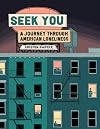
Exquisite. Radtke's talent is evident on every single page, not only in the amazing drawings, but in the thoughtful text that is simultaneously self-revelatory and thoroughly researched. The topic, loneliness, is one that everyone can relate to, but few have examined in such depth. Starting with the clever transformation of her title from the ham radio reach out, "CQ" (say it out loud), she looks at the ways we strive to connect with others and the consequences of that not happening. "A CQ show more call is a reaching outward, an attempt to make a connection across a wavelength with someone you've never met. It means, essentially, 'Is there anyone out there?' and invites anyone listening to answer." (19) So timely, but really timeless as she notes that this is not a new problem, but perhaps one that is reaching a crescendo. Though she covers the topic in broad strokes, the places she chooses to focus are enlightening: the laugh track of TV sitcoms was developed to cue people watching alone that something was funny, since humor tends to be a communal experience. She posits: "Perhaps we see loneliness in others simply to feel less lonely ourselves." (37). She looks at the rise of city living - close proximity, but no connection, and technology of course is examined, though not entirely blamed. She incorporates research from the controversial U of WI mastermind Harry Harlow whose isolation of monkeys and attachment experiments could nearly be called torture, yet revolutionized the second half of the 20th century's parenting techniques. show less
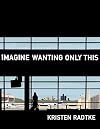
Here I am, having finished another graphic non-novel, Imagine Wanting Only This, by Kristen Radtke, which was her first book. I recently read her latest book, Seek You: A Journey Through American Loneliness, as I find her work fascinating. This book is being labelled by some a memoir … would that be a graphic memoir? [Sorry, as a bookseller, I’ve always had a beef with the label of graphic novel for everything done in that form.] She tells about a boyfriend she almost married, the show more schools she went to, a trip to the Philippines with a girlfriend, but the book is mostly about how forgotten, decaying cities and ghost towns have simply completely captured her interest. As Eula Biss says of the book, “Cities, ambitions, romances, and bodies come to ruin before our eye, as Kristen Radtke invites us, in her beautifully understated way, to be disturbed, fascinated, and yes, even attracted to that ruin.”
At one point she is interviewing an older woman about an abandon mining town the woman once lived in, asking why they moved away. “Mine shutdown, we moved on to the next one.” It seemed that Radtke was expecting something more exotic and nuanced, but had to settle for something mundanely practical.
She often includes side stories and tangents to her story, and one got into a horrible fire in Wisconsin that happened just as the big fire in Chicago grabbed all the headlines—taking up all the oxygen in the room. This fire spread so quickly and devastatingly, that the military came in to study it for how they could cause the most destruction with their bombing raids. Their studies and experimenting paid off with the later horrendous bombings of Dresden and Tokyo. She also tells us about her heart problems—something that runs throughout her family—including the death of her very favorite relative, her Uncle Donnie. Reading this book, one can easily see how the feelings of loneliness that surface throughout it, led her to her second book, Seek You: A Journey Through American Loneliness.
I am very taken by both her writing and artwork. There’s both a sensitivity and a boldness to both, as she relates a real sorrow to the reader. She has a true love of ruins, human, personal, as well as a tour of Detroit and the rust belt, and the ancient sites in other parts of the world.
My late wife Vicky and I were always drawn to old architecture, especially when looking for locations for our bookstores. Often when a passing train was shaking the old cracked walls of our converted rice mill/bookstore in Woodland, it didn’t seem like a wild stretch of imagination to think of it eventually becoming a ruin … a mixture of books and bricks, bricks and books. I think Kristen Radtke would appreciate that. show less
At one point she is interviewing an older woman about an abandon mining town the woman once lived in, asking why they moved away. “Mine shutdown, we moved on to the next one.” It seemed that Radtke was expecting something more exotic and nuanced, but had to settle for something mundanely practical.
She often includes side stories and tangents to her story, and one got into a horrible fire in Wisconsin that happened just as the big fire in Chicago grabbed all the headlines—taking up all the oxygen in the room. This fire spread so quickly and devastatingly, that the military came in to study it for how they could cause the most destruction with their bombing raids. Their studies and experimenting paid off with the later horrendous bombings of Dresden and Tokyo. She also tells us about her heart problems—something that runs throughout her family—including the death of her very favorite relative, her Uncle Donnie. Reading this book, one can easily see how the feelings of loneliness that surface throughout it, led her to her second book, Seek You: A Journey Through American Loneliness.
I am very taken by both her writing and artwork. There’s both a sensitivity and a boldness to both, as she relates a real sorrow to the reader. She has a true love of ruins, human, personal, as well as a tour of Detroit and the rust belt, and the ancient sites in other parts of the world.
My late wife Vicky and I were always drawn to old architecture, especially when looking for locations for our bookstores. Often when a passing train was shaking the old cracked walls of our converted rice mill/bookstore in Woodland, it didn’t seem like a wild stretch of imagination to think of it eventually becoming a ruin … a mixture of books and bricks, bricks and books. I think Kristen Radtke would appreciate that. show less
(Full disclosure: I received a free e-ARC for review through Edelweiss. Content warning for animal abuse and discussions of mental health.)
-- 3.5 stars --
I want us to use loneliness - yours, and mine - to find our way back to one another.
Social distancing. Quarantine. Zoom calls. Air hugs and masked faces. Two million, six hundred and sixty thousand dead - and counting! - many buried without a proper funeral. As we observe the one-year birthday of the coronavirus pandemic, few among us can show more say that we're strangers to loneliness. Yet, when Radtke began this book waaay back in 2016, America was already in the grip of a loneliness epidemic.
https://www.flickr.com/photos/smiteme/51043122563/
Using her own history with loneliness as a backdrop, Radtke delves into the science, philosophy, and everyday experience of loneliness. Her discussion is far-reaching and eclectic; she touches upon topics as varied as laugh tracks, attachment theory, romantic comedies, sexual harassment, traffic congestion, the cowboy archetype, Las Vegas, conspiracy theories and paranoia, robots, elder care, mass shootings, banishment, Mad Men, gossiping and storytelling, social engineering, touch therapy and cuddle parties, Casey Kasum, American gun culture, and - of course! - social media. The section on Princess Diana is especially moving.
https://www.flickr.com/photos/smiteme/51043945977/
Naturally, a survey of isolation and loneliness wouldn't be complete without a look at psychologist Harry Harlow and his infamous studies of maternal attachment, social isolation, and dependency, conducted on rhesus monkeys in the 1950s and '60s. Second only to the author, Harlow is the MC of SEEK YOU, as Radtke returns to his work time and again, for better or worse (spoiler alert: it's always worse).
I've got to give props to psychologist and animal activist pattrice jones for eschewing animal research in her own writing, as difficult an exercise as it can be. Harlow's research might have been seminal, but was also sadistic and depraved, even for the times. Reading about it made my stomach churn (and my heart grow stabby). Thankfully, Radtke doesn't pull any punches, correctly identifying Harlow's studies as torture and quoting contemporaries who believed he went too far - but she also seems to give him a bit of a pass, attributing his heartlessness to his own personal tragedies (his second wife, Margaret Kuenne, died of cancer, and during this time Harlow sought treatment for depression) and ending with "one cannot study love without acknowledging its darkness."
Okay, sure, but does that really justify building rape racks and a pit of despair?
https://www.flickr.com/photos/smiteme/51043945967/
Harlow's cruelty aside, SEEK YOU is a thoughtful and aching exploration of loneliness - one that's added yet another worry to my bottomless pile. If loneliness is correlated with a shortened life span, what does this mean for a forty-something widow like me, who lives alone and has spent most of the past 365 days with two only somewhat social nonhumans for company?
Of course, loneliness does not equal being alone; you can be in a room full of partygoers and still feel lonely. I'm shy, and an introvert, and have social anxiety: humans generally trigger my fight or flight response, I don't know how to talk to most of them, and even when I do, I end up exhausted after a twenty-minute interaction. In many ways, I'm well-suited for the pandemic; I don't mind being alone, can occupy myself endlessly, and mostly prefer being left to my own devices. My social anxiety has even improved since I lost my husband, as he's no longer around to shield me from the social interactions I'd rather avoid. Go figure.
All of which is just a long-winded way of saying that loneliness is in the eye of the beholder. show less
-- 3.5 stars --
I want us to use loneliness - yours, and mine - to find our way back to one another.
Social distancing. Quarantine. Zoom calls. Air hugs and masked faces. Two million, six hundred and sixty thousand dead - and counting! - many buried without a proper funeral. As we observe the one-year birthday of the coronavirus pandemic, few among us can show more say that we're strangers to loneliness. Yet, when Radtke began this book waaay back in 2016, America was already in the grip of a loneliness epidemic.
https://www.flickr.com/photos/smiteme/51043122563/
Using her own history with loneliness as a backdrop, Radtke delves into the science, philosophy, and everyday experience of loneliness. Her discussion is far-reaching and eclectic; she touches upon topics as varied as laugh tracks, attachment theory, romantic comedies, sexual harassment, traffic congestion, the cowboy archetype, Las Vegas, conspiracy theories and paranoia, robots, elder care, mass shootings, banishment, Mad Men, gossiping and storytelling, social engineering, touch therapy and cuddle parties, Casey Kasum, American gun culture, and - of course! - social media. The section on Princess Diana is especially moving.
https://www.flickr.com/photos/smiteme/51043945977/
Naturally, a survey of isolation and loneliness wouldn't be complete without a look at psychologist Harry Harlow and his infamous studies of maternal attachment, social isolation, and dependency, conducted on rhesus monkeys in the 1950s and '60s. Second only to the author, Harlow is the MC of SEEK YOU, as Radtke returns to his work time and again, for better or worse (spoiler alert: it's always worse).
I've got to give props to psychologist and animal activist pattrice jones for eschewing animal research in her own writing, as difficult an exercise as it can be. Harlow's research might have been seminal, but was also sadistic and depraved, even for the times. Reading about it made my stomach churn (and my heart grow stabby). Thankfully, Radtke doesn't pull any punches, correctly identifying Harlow's studies as torture and quoting contemporaries who believed he went too far - but she also seems to give him a bit of a pass, attributing his heartlessness to his own personal tragedies (his second wife, Margaret Kuenne, died of cancer, and during this time Harlow sought treatment for depression) and ending with "one cannot study love without acknowledging its darkness."
Okay, sure, but does that really justify building rape racks and a pit of despair?
https://www.flickr.com/photos/smiteme/51043945967/
Harlow's cruelty aside, SEEK YOU is a thoughtful and aching exploration of loneliness - one that's added yet another worry to my bottomless pile. If loneliness is correlated with a shortened life span, what does this mean for a forty-something widow like me, who lives alone and has spent most of the past 365 days with two only somewhat social nonhumans for company?
Of course, loneliness does not equal being alone; you can be in a room full of partygoers and still feel lonely. I'm shy, and an introvert, and have social anxiety: humans generally trigger my fight or flight response, I don't know how to talk to most of them, and even when I do, I end up exhausted after a twenty-minute interaction. In many ways, I'm well-suited for the pandemic; I don't mind being alone, can occupy myself endlessly, and mostly prefer being left to my own devices. My social anxiety has even improved since I lost my husband, as he's no longer around to shield me from the social interactions I'd rather avoid. Go figure.
All of which is just a long-winded way of saying that loneliness is in the eye of the beholder. show less
A surprisingly deep and moving look at the topic of loneliness: what causes it, how it manifests, how it effects us, and how we can help combat its debilitating consequences on individuals, communities, and societies. The drawings are often quite empathetic and affecting, though at other times rather cool and removed (which perhaps is appropriate). The text can get a bit wonky, but overall this was a great meditation on isolation, and a good companion to [b:Together: Why Social Connection show more Holds the Key to Better Health, Higher Performance, and Greater Happiness|43309159|Together Why Social Connection Holds the Key to Better Health, Higher Performance, and Greater Happiness|Vivek H. Murthy|https://i.gr-assets.com/images/S/compressed.photo.goodreads.com/books/1569893285l/43309159._SY75_.jpg|67210974] by Vivek H. Murthy. show less
Lists
Awards


You May Also Like


Associated Authors
Statistics
- Works
- 6
- Also by
- 2
- Members
- 706
- Popularity
- #35,870
- Rating
- 3.7
- Reviews
- 35
- ISBNs
- 11
- Languages
- 3
- Favorited
- 1