
Andrew Louth
Author of Genesis 1-11 (Ancient Christian Commentary on Scripture: Old Testament, Volume I)
About the Author
Andrew Louth is professor emeritus of Patristic and Byzantine studies at Durham University, England. He is also a priest of the Russian Orthodox Diocese of Sourozh (Moscow Patriarchate), serving the parish in Durham. His recent publications include Maximus the Confessor (Routledge) and The Origins show more of the Christian Mystical Tradition (OUP). He is editor of Genesis 1-11 in the Ancient Christian Commentary on Scripture series (IVP). show less
Image credit: http://fortnightlyreview.co.uk
Series
Works by Andrew Louth
Genesis 1-11 (Ancient Christian Commentary on Scripture: Old Testament, Volume I) (2001) — Editor — 577 copies, 1 review
The Origins of the Christian Mystical Tradition: From Plato to Denys (1981) — Author — 220 copies, 2 reviews
Discerning the Mystery: An Essay on the Nature of Theology (Clarendon Paperbacks) (1983) 107 copies, 1 review
Abba: The Tradition of Orthodoxy in the West (Festschrift for Bishop Kallistos of Diokleia) (2003) 70 copies
The Way of a Pilgrim: Candid Tales of a Wanderer to His Spiritual Father (2019) — Editor, some editions — 43 copies, 1 review
Mary and the mystery of the Incarnation : an essay on the Mother of God in the theology of Karl Barth (1977) 11 copies
Byzantine orthodoxies : papers from the thirty-sixth Spring Symposium of Byzantine Studies, University of Durham, 23-25 March 2002 (2006) — Editor — 9 copies
Associated Works
The History of the Church: From Christ to Constantine (0321) — Editor, some editions — 5,085 copies, 30 reviews
Early Christian Writings: The Apostolic Fathers (1968) — Editor, some editions; Translator, some editions — 1,821 copies, 9 reviews
Five Views on the Extent of the Atonement (Counterpoints: Bible and Theology) (2019) — Contributor — 83 copies, 1 review
Original Sin and the Fall: Five Views (Spectrum Multiview Book Series) (2020) — Contributor — 54 copies, 2 reviews
Ressourcement: A Movement for Renewal in Twentieth-Century Catholic Theology (2012) — Contributor — 46 copies
On the Absence and Unknowability of God : Heidegger and the Areopagite (2004) — Editor — 33 copies, 1 review
The Spirit in Creation and New Creation: Science and Theology in Western and Orthodox Realms (2012) — Contributor — 16 copies
Encounter Between Eastern Orthodoxy and Radical Orthodoxy: Transfiguring the World Through the Word (2009) — Contributor — 13 copies
Lancelot Andrewes, the Preacher (1555-1626): The Origins of the Mystical Theology of the Church of England (1555-1626 : the Origins of the Mystical Theology of the Church of… (1986) — Translator, some editions — 10 copies
Byzantine Style, Religion and Civilization: In Honour of Sir Steven Runciman (2006) — Contributor — 8 copies
A Companion to Gregory the Great (Brill's Companions to the Christian Tradition) (2013) — Contributor — 6 copies
Texts and Culture in Late Antiquity: Inheritance, Authority, and Change (2007) — Contributor — 5 copies
FROM AMMIANUS MARCLLINUS TO EUSEBIUS OF CAESAREA (ANEJOS EXEMPLARIA CLASSICA) (2017) — Contributor — 2 copies
Porphyrogenita: Essays on the History and Literature of Byzantium and the Latin East in Honour of Julian Chrysostomides (2003) — Contributor — 1 copy
Tagged
Common Knowledge
- Canonical name
- Louth, Andrew
- Birthdate
- 1944-11-11
- Gender
- male
- Education
- University of Cambridge
University of Edinburgh - Occupations
- university professor emeritus
cleric - Organizations
- Russian Orthodox Church
Durham University
Oxford University - Nationality
- UK
- Birthplace
- Lincolnshire, England
- Places of residence
- Durham, England, United Kingdom
- Associated Place (for map)
- Durham, England, United Kingdom
Members
Reviews
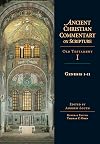
Unfortunately, reading books like this makes it harder to find a church. A book like this forces you to take the Bible, its context, proper hermeneutics, and interpretation seriously; something seriously lacking in the modern evangelical churches focused on cults of personality and narcissistic isogesis. However, not one to be swayed by popular opinion, I enjoyed reading and understanding how men like Augustine, Origin, Gregory of Nyssa, Ambrose, Basil, Chrysostom, Justin Martyr, et al. show more approached these passages - Gen 1 - 11. Highly recommended but not likely fare for modern Sunday mornings. If you know of a pastor that has read this or any of the ancient commentaries recently, let me know. Just an informal poll. Pastors around here mostly play golf during the week. It appears frowned upon now for pastors to spend time studying scripture for Sunday.... show less
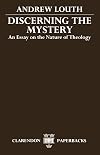
Before reviewing this book I should tell you not to buy this edition. I purchased this for around $50(147 pages, paperback), because I needed it for a class. After purchasing it I discovered that Eighth day books had their own published edition for half the price. Pagination was exactly the same. I would like to think my version has higher quality paper and uses more expensive glue in the binding, though I can't be sure. On to the review:
This book provides an excellent critique on where the show more Enlightenment has brought us in terms of its bastardization of truth and the glorification of scientific method over other ways of knowing. Louth points out that tradition and subjective ways of knowing are marginalized by the scientific method. This is no less true in biblical studies where the historical criticism applies the scientific method to reading the Bible. Louth argues that rather than getting our hermeneutic from the sciences, the humanities provide a better framework. This is because the humanities leave room for mystery while the sciences are directed at problem solving. Furthermore, Louth argues for a re-engagement with the tradition, and traditional forms of exegesis (allegory) in interpretation.
There is much to be commended in Louth's analysis. But I wonder if Louth is overstating his case somewhat. Clearly the practice of historical critical method has produced some useful knowledge (which Louth only half concedes). Louth is arguing for a more holistic look at truth but seems to be going to the other extreme. This is understandable as Louth states that he is not asking for agreement so much as promoting discussion. show less
This book provides an excellent critique on where the show more Enlightenment has brought us in terms of its bastardization of truth and the glorification of scientific method over other ways of knowing. Louth points out that tradition and subjective ways of knowing are marginalized by the scientific method. This is no less true in biblical studies where the historical criticism applies the scientific method to reading the Bible. Louth argues that rather than getting our hermeneutic from the sciences, the humanities provide a better framework. This is because the humanities leave room for mystery while the sciences are directed at problem solving. Furthermore, Louth argues for a re-engagement with the tradition, and traditional forms of exegesis (allegory) in interpretation.
There is much to be commended in Louth's analysis. But I wonder if Louth is overstating his case somewhat. Clearly the practice of historical critical method has produced some useful knowledge (which Louth only half concedes). Louth is arguing for a more holistic look at truth but seems to be going to the other extreme. This is understandable as Louth states that he is not asking for agreement so much as promoting discussion. show less
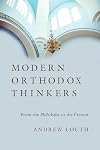
Summary: Biographical sketches and theological summaries of some of the leading thinkers in the modern Orthodox Church from Russia to Paris to Mount Athos to England and the US, and the significant role the Philokalia has played in Orthodox thought and piety.
Very simply, this is a "Who's Who" among Orthodox thinkers. In twenty-one chapters, Andrew Louth, professor emeritus of patristic and Byzantine studies and an Orthodox priest, gives us sketches of the lives and theological contributions show more of twenty-eight significant thinkers within the Orthodox Church.
There are several things that keep this from simply being a disconnected collection of biographies. Foremost, perhaps is Louth's appraisal of the significance of the Philokalia, a collection of texts published in Greek in 1782, translated first into "church Slavonic" in 1793, later into Russian in 1877, and more recently into English. The Philokalia represent teachings of a number of the early Church Fathers concerning contemplative prayer that provides the groundwork for the "hesychast" (quietness) movement. Louth states:
"It is my contention that the publication of the Philokalia in 1782 can be seen as marking a turning point in Orthodox theology, a move away from the defensiveness of early modern Orthodox theology – the theology of the so-called ‘Symbolic Books’ – to a more confident style of theology, based on the authentic sources of Orthodox theology, namely the Fathers of the Church. This movement of renewal had deep roots and led the Orthodox Churches out of the problems that dogged them at the end of the eighteenth century. It is difficult not to see St Nikodimos as preparing the Greek Church under the Ottoman Empire for the independence it was to achieve in the course of the nineteenth century, providing it with what was needed for its spiritual, liturgical and canonical or structural well-being. The path before it was to be long and hard, and there is still much to be done, as we shall see."
This book begins with the publication of the Philokalia and a discussion of its significance and concludes with a chapter on Metropolitan Kallistos (Timothy Ware), one of the major translators of the Philokalia into English, and one of the most significant translators of Orthodoxy for Westerners.
The organization of the book is roughly chronological, but also follows a course through several countries as well as topics. Louth begins in Russia with poet and thinker Vladimir Solov'ev. Then he follows two generations of emigrés to Paris following the Revolution, the first including Florensky, Bulgakov, Berdayaev, Florovsky, Myrrha Lot-Borodine and Maria Skobtsova. The second generation included Paul Evdokimov, John Meyendorff, and Alexander Schmemann, the latter two key in the development of modern Orthodoxy in America when they left Paris to take positions at St. Vladimir's Orthodox Seminary. The trail goes on to Romania, Serbia, Greece and England.
Along the way Louth also explores thinkers significant in Orthodox dogmatic theology (Staniloe and Popovic') Neo-Palamism (Meyendorff), liturgical theology (Schmemann, Foundoulis, and Vasileios), patristics (Zizioulas and Romanides), the rich tradition of lay theologians (Sherrard, Koutroubis, Yannaras, Ramfos, Behr-Sigel, and Clèment) and the spiritual elders.
One of the things that is striking is the number of women included in the narrative and the other is the number of lay figures who play a major role in Orthodox thought, particularly Philip Sherrard, who in partnership with Metropolitan Kallistos helped translate the Philokalia into English. In many ways, the Revolution, far from destroying Orthodoxy, created a diaspora that resulted both in the missionary spread of Orthodoxy and the theological flourishing of Orthodox thought.
One thing that might have been helpful would have been a glossary of Orthodox terms. Non-Orthodox readers may find themselves at a loss confronting terms like "hesychia" or "Archimandrite" or "Palamite." Louth does include a helpful bibliography following the chapters of the book including books both by and about the different thinkers. This, and his chapters on each thinker, provides a doorway to further exploring the makers of modern Orthodoxy.
This review summary makes this sound like just so many names, but what Louth does is bring these people to life, with photographs, biographies, and a focus on their distinctive theological contributions, often given to us in their own words. The Orthodox would contend that it is really the rest of us who have split off from them and that they represent a Christianity connected to both conciliar and patristic Christianity. The book acquaints us with how these modern Orthodox thinkers have appropriated these sources, including the collection of writings that make up the Philokalia, to address the spiritual concerns of modern men and women. In recent years, both Protestants and Catholics have been rediscovering these sources as well. Might the Orthodox have something to teach us of the love of God and neighbor, of how God might be encountered afresh in liturgy, in silence, and in life? Louth's book might help us discover some of those to whom we may listen. show less
Very simply, this is a "Who's Who" among Orthodox thinkers. In twenty-one chapters, Andrew Louth, professor emeritus of patristic and Byzantine studies and an Orthodox priest, gives us sketches of the lives and theological contributions show more of twenty-eight significant thinkers within the Orthodox Church.
There are several things that keep this from simply being a disconnected collection of biographies. Foremost, perhaps is Louth's appraisal of the significance of the Philokalia, a collection of texts published in Greek in 1782, translated first into "church Slavonic" in 1793, later into Russian in 1877, and more recently into English. The Philokalia represent teachings of a number of the early Church Fathers concerning contemplative prayer that provides the groundwork for the "hesychast" (quietness) movement. Louth states:
"It is my contention that the publication of the Philokalia in 1782 can be seen as marking a turning point in Orthodox theology, a move away from the defensiveness of early modern Orthodox theology – the theology of the so-called ‘Symbolic Books’ – to a more confident style of theology, based on the authentic sources of Orthodox theology, namely the Fathers of the Church. This movement of renewal had deep roots and led the Orthodox Churches out of the problems that dogged them at the end of the eighteenth century. It is difficult not to see St Nikodimos as preparing the Greek Church under the Ottoman Empire for the independence it was to achieve in the course of the nineteenth century, providing it with what was needed for its spiritual, liturgical and canonical or structural well-being. The path before it was to be long and hard, and there is still much to be done, as we shall see."
This book begins with the publication of the Philokalia and a discussion of its significance and concludes with a chapter on Metropolitan Kallistos (Timothy Ware), one of the major translators of the Philokalia into English, and one of the most significant translators of Orthodoxy for Westerners.
The organization of the book is roughly chronological, but also follows a course through several countries as well as topics. Louth begins in Russia with poet and thinker Vladimir Solov'ev. Then he follows two generations of emigrés to Paris following the Revolution, the first including Florensky, Bulgakov, Berdayaev, Florovsky, Myrrha Lot-Borodine and Maria Skobtsova. The second generation included Paul Evdokimov, John Meyendorff, and Alexander Schmemann, the latter two key in the development of modern Orthodoxy in America when they left Paris to take positions at St. Vladimir's Orthodox Seminary. The trail goes on to Romania, Serbia, Greece and England.
Along the way Louth also explores thinkers significant in Orthodox dogmatic theology (Staniloe and Popovic') Neo-Palamism (Meyendorff), liturgical theology (Schmemann, Foundoulis, and Vasileios), patristics (Zizioulas and Romanides), the rich tradition of lay theologians (Sherrard, Koutroubis, Yannaras, Ramfos, Behr-Sigel, and Clèment) and the spiritual elders.
One of the things that is striking is the number of women included in the narrative and the other is the number of lay figures who play a major role in Orthodox thought, particularly Philip Sherrard, who in partnership with Metropolitan Kallistos helped translate the Philokalia into English. In many ways, the Revolution, far from destroying Orthodoxy, created a diaspora that resulted both in the missionary spread of Orthodoxy and the theological flourishing of Orthodox thought.
One thing that might have been helpful would have been a glossary of Orthodox terms. Non-Orthodox readers may find themselves at a loss confronting terms like "hesychia" or "Archimandrite" or "Palamite." Louth does include a helpful bibliography following the chapters of the book including books both by and about the different thinkers. This, and his chapters on each thinker, provides a doorway to further exploring the makers of modern Orthodoxy.
This review summary makes this sound like just so many names, but what Louth does is bring these people to life, with photographs, biographies, and a focus on their distinctive theological contributions, often given to us in their own words. The Orthodox would contend that it is really the rest of us who have split off from them and that they represent a Christianity connected to both conciliar and patristic Christianity. The book acquaints us with how these modern Orthodox thinkers have appropriated these sources, including the collection of writings that make up the Philokalia, to address the spiritual concerns of modern men and women. In recent years, both Protestants and Catholics have been rediscovering these sources as well. Might the Orthodox have something to teach us of the love of God and neighbor, of how God might be encountered afresh in liturgy, in silence, and in life? Louth's book might help us discover some of those to whom we may listen. show less
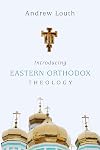
I think that as a westerner I was expecting more of a systematic theology book. Instead, what I found was a totally new way of thinking about humanity and our relationships with each other, the world, the church, and our creator. All of these relationships seem to be interconnected, putting much less emphasis on our selves, and more on those particular relationships. It's a very refreshing view, and instead of concentrating on my personal sin and how to deal with it, this new way of thinking show more helps me to concentrate more on Christ.
There were some parts of the book where I felt my mind wandering. I have never been a fan of philosophy, and it seems that Orthodox theology draws from philosophy. But even so, reading this book was a rewarding experience. show less
There were some parts of the book where I felt my mind wandering. I have never been a fan of philosophy, and it seems that Orthodox theology draws from philosophy. But even so, reading this book was a rewarding experience. show less
Lists
You May Also Like


Associated Authors
Statistics
- Works
- 28
- Also by
- 31
- Members
- 2,031
- Popularity
- #12,653
- Rating
- 3.9
- Reviews
- 11
- ISBNs
- 72
- Languages
- 1
- Favorited
- 1