
Bao Ninh
Author of The sorrow of war
About the Author
Works by Bao Ninh
The Sorrow of War 1 copy
Than Phan Cua Tinh Yeu 1 copy
Thân Phận Của Tình Yêu 1 copy
Những truyện ngắn 1 copy
Associated Works
The Other Side of Heaven: Post-War Fiction by Vietnamese and American Writers (1995) — Contributor — 43 copies
Tagged
Common Knowledge
- Legal name
- Phương, Hoàng Ấu
- Birthdate
- 1952-10-18
- Gender
- male
- Nationality
- Vietnam
- Places of residence
- Vietnam
- Associated Place (for map)
- Vietnam
Members
Reviews
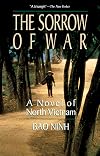
The Sorrow of War is Vietnam's counterpart to the works of Tim O'Brien. Bao Ninh was one of ten survivors from the 500 men who went south with the Glorious 27th Youth Brigade in 1969. His narrator, Kien, is clearly an alter ego. In this non-linear, densely woven story, Kien moves through collecting the dead and missing in the Forest of Screaming Souls just after the armistice is signed, years of desperate and horrifying combat with a scout platoon, and the alcoholic shadow of a life in Hanoi show more driven by the external power of a Novel inside him.
The counterweight to Kien's story is that of Phoung, his childhood sweetheart who's innocence is taken forever by the war, the person who Kien is first complicit in destroying, and who he cannot ever save. The Sorrow of War is a strange, tough, sentimental novel. It's genius and popularity in Communist Vietnam is proof enough that even the victorious walk away deeply wounded. This is an important book for anyone curious about how the Vietnamese saw their 'American War'. show less
The counterweight to Kien's story is that of Phoung, his childhood sweetheart who's innocence is taken forever by the war, the person who Kien is first complicit in destroying, and who he cannot ever save. The Sorrow of War is a strange, tough, sentimental novel. It's genius and popularity in Communist Vietnam is proof enough that even the victorious walk away deeply wounded. This is an important book for anyone curious about how the Vietnamese saw their 'American War'. show less
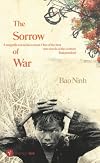
During the Viet Nam War, Bao Ninh served in the Glorious 27th Youth Brigade of the North Vietnamese Army, and of the five hundred members who went to war in 1969, he is one of ten that survived. This author knows the pain of war, the hopelessness of war, The Sorrow of War. Yet, I found this a difficult book to become overly connected to. The writing is beautiful and the emotion runs deep, but is elusive. It’s non-linear style required my concentrated attention, but that also had a show more disconnecting effect. The basic story is about Kien who now that the war is over, is responsible for the retrieval and identification of the fallen but comes across more as a series of reflections or flashbacks about the horrors that he experienced during the war.
As if through a veil we are given glimpses of a survivor’s guilt as we learn of the events that Kien lived through. At times very dark and bleak, but at others you get a glimpse of the black humor that helped these soldiers hold it together. And through it all runs the remoteness and distance that enables a person to go on when the terror and violence seem never ending.
The Sorrow of War was an uncomfortable read yet this book does a good job of pointing out that soldiers everywhere share these feelings regardless of politics, religion or race. As this short and powerful book ably points out no one survives a war intact. show less
As if through a veil we are given glimpses of a survivor’s guilt as we learn of the events that Kien lived through. At times very dark and bleak, but at others you get a glimpse of the black humor that helped these soldiers hold it together. And through it all runs the remoteness and distance that enables a person to go on when the terror and violence seem never ending.
The Sorrow of War was an uncomfortable read yet this book does a good job of pointing out that soldiers everywhere share these feelings regardless of politics, religion or race. As this short and powerful book ably points out no one survives a war intact. show less

It is 1975 and the American War has been won as this tragic and stunning novel begins, yet Kien, a veteran of ten years of fighting, is still in the Vietnamese army, in the Missing In Action Remains-Gathering Team, and the team is on the edge of the Jungle of Screaming Souls, an area he knows well, because it was the site of vicious fighting in 1969 from which only ten members of his battalion survived. Here soldiers see ghosts, of Vietnamese and Americans, of animals and humans, souls that show more have not yet found the peace of death. And the Jungle of Screaming Souls is in a way a metaphor for the rest of this book, whose Vietnamese title means "My Destiny of Love," as Kien relentlessly searches his memories, of war and love, to try to understand the past, the present, and maybe the future.
The book moves somewhat haphazardly between Kien's life in the present as a writer trying to write a novel about the war and his life, his life during the war in the midst of horrifying fighting, and his life before the war, especially his love for his neighbor and schoolmate, the beautiful Phuong. And yet, there is a method to the haphazardness, because as the book (both Ninh's and Kien's) progresses Kien delves deeper into his memories and reveals more of the trauma he and Phuong experienced at the beginning of the war. It is as if he is spiraling deeper and deeper into his own soul and memories. What Ninh is doing grows on the reader as the book goes on.
Clearly, this book exists on several levels. Without a doubt, as all the blurbs on my copy say, it is an indictment of the horror (and sorrow) of war, and war scenes are rendered in great and disturbing detail. According to Wikipedia, Ninh was a member of something called the Glorious 27th Youth Brigade: of the 500 young men and women originally in it, only ten survived, and of these I read elsewhere (sorry, forget where) six committed suicide. At points, Ninh's writing about Kien's postwar experiences sound exactly like what we now know as post-traumatic stress syndrome. What does it mean to kill? What does it mean to survive when others die, even sacrifice themselves? In the way it describes the nitty gritty of war and how soldiers cope, it is a counterpart to the also brilliant Matterhorn by Karl Marlantes.
At the same time, it is a portrait of life in Hanoi, both pre- and postwar, and an illustration of the differences, found around the world, between city dwellers and country dwellers who find themselves thrown together. It is a story about the role of art in various forms: music and painting, as well as writing. It is in a way a coming-of-age story, as Kien reflects on his and Phuong's parents, although a coming-of-age by fire. And it is a tale of young love and of innocence shattered.
But maybe most of all, it is a novel about memory - what we remember, how we remember it, how with effort (in Kien's case through writing and, perhaps, alcohol; with others, perhaps, through therapy) we can access the very things that disturb us the most and that we keep hidden even from ourselves. And the novel explores the meaning of the past. At one point, early in the book, Kien muses:
"My life seems little different from that of a sampan pushed upstream towards the past. The future lied to us, there long ago in the past. There is no new life, no new era, nor is it hope for a beautiful future that now drives me on, but rather the opposite. The hope is contained in the beautiful prewar past." p. 47
Ninh's book was controversial, and was was published in English long before being widely available in Vietnam. Ninh worked with a translator and an Australian author/translator/war correspondent (who is listed as "editor") to produce the English version (per Wikipedia). Here's an example of what might have annoyed the censors, although much is more subtle than this:
After 1975, all that had quieted. The wind of war had stopped. The branches of conflict had stopped rustling. As we had won, Kien thought, then that meant justice had won; that had been some consolation. Or had it? Think carefully; look at your own existence. Look carefully now at the peace we have, painful, bitter, and sad. And look at who won the war.
To win, martyrs had sacrificed their lives in order that others might survive. Not a new phenomenon, true. But for those still living to know that the kindest, most worthy people have all fallen away, or even been tortured, humiliated before being killed, or buried and wiped away by the machinery of war, then this beautiful landscape of calm and peace is an appalling paradox. Justice may have won, but cruelty, death, and inhuman violence have also won." p. 193
I haven't really touched on Phuong's story, but it's an important component of the novel, as is her own wartime trauma and response. It is seen through Kien's eyes, but he gradually comes to understand her better, although he is still heartbroken about her leaving him.
This is a disturbing and eye-opening, yet beautiful book. show less
The book moves somewhat haphazardly between Kien's life in the present as a writer trying to write a novel about the war and his life, his life during the war in the midst of horrifying fighting, and his life before the war, especially his love for his neighbor and schoolmate, the beautiful Phuong. And yet, there is a method to the haphazardness, because as the book (both Ninh's and Kien's) progresses Kien delves deeper into his memories and reveals more of the trauma he and Phuong experienced at the beginning of the war. It is as if he is spiraling deeper and deeper into his own soul and memories. What Ninh is doing grows on the reader as the book goes on.
Clearly, this book exists on several levels. Without a doubt, as all the blurbs on my copy say, it is an indictment of the horror (and sorrow) of war, and war scenes are rendered in great and disturbing detail. According to Wikipedia, Ninh was a member of something called the Glorious 27th Youth Brigade: of the 500 young men and women originally in it, only ten survived, and of these I read elsewhere (sorry, forget where) six committed suicide. At points, Ninh's writing about Kien's postwar experiences sound exactly like what we now know as post-traumatic stress syndrome. What does it mean to kill? What does it mean to survive when others die, even sacrifice themselves? In the way it describes the nitty gritty of war and how soldiers cope, it is a counterpart to the also brilliant Matterhorn by Karl Marlantes.
At the same time, it is a portrait of life in Hanoi, both pre- and postwar, and an illustration of the differences, found around the world, between city dwellers and country dwellers who find themselves thrown together. It is a story about the role of art in various forms: music and painting, as well as writing. It is in a way a coming-of-age story, as Kien reflects on his and Phuong's parents, although a coming-of-age by fire. And it is a tale of young love and of innocence shattered.
But maybe most of all, it is a novel about memory - what we remember, how we remember it, how with effort (in Kien's case through writing and, perhaps, alcohol; with others, perhaps, through therapy) we can access the very things that disturb us the most and that we keep hidden even from ourselves. And the novel explores the meaning of the past. At one point, early in the book, Kien muses:
"My life seems little different from that of a sampan pushed upstream towards the past. The future lied to us, there long ago in the past. There is no new life, no new era, nor is it hope for a beautiful future that now drives me on, but rather the opposite. The hope is contained in the beautiful prewar past." p. 47
Ninh's book was controversial, and was was published in English long before being widely available in Vietnam. Ninh worked with a translator and an Australian author/translator/war correspondent (who is listed as "editor") to produce the English version (per Wikipedia). Here's an example of what might have annoyed the censors, although much is more subtle than this:
After 1975, all that had quieted. The wind of war had stopped. The branches of conflict had stopped rustling. As we had won, Kien thought, then that meant justice had won; that had been some consolation. Or had it? Think carefully; look at your own existence. Look carefully now at the peace we have, painful, bitter, and sad. And look at who won the war.
To win, martyrs had sacrificed their lives in order that others might survive. Not a new phenomenon, true. But for those still living to know that the kindest, most worthy people have all fallen away, or even been tortured, humiliated before being killed, or buried and wiped away by the machinery of war, then this beautiful landscape of calm and peace is an appalling paradox. Justice may have won, but cruelty, death, and inhuman violence have also won." p. 193
I haven't really touched on Phuong's story, but it's an important component of the novel, as is her own wartime trauma and response. It is seen through Kien's eyes, but he gradually comes to understand her better, although he is still heartbroken about her leaving him.
This is a disturbing and eye-opening, yet beautiful book. show less
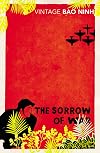
Life is a battlefield. And what sticks with me most from Bao Ninh's amazing book, whose original Vietnamese title translates as "The Destiny of Love", it's the sheer power of life and love, that wonderful Asian committedness with which our young cadres bask in the long sun of youth and embrace life, magnificent, dedicated, ready to build something deep and real. And the power of total war, the kind that kills 4-6 million of your countrymen (sources vary, but 10% or more), to grind that into show more dust. They are young and strong and smart and brave! How can they die! But they do. They ALL do, and protagonist Kien is the only survivor of his unit. Phuong and Kien's love is potent, like a draught of chrysanthemum wine! How can it fail? But it does.
This is a story about the glory of youth and peace, the costs of victory, the breaking of a people, and the things that nobody can handle. The next time an American tries to present Vietnam as a story about the loss of America's innocence and the Vietnamese as gibbering, sneaky and cruel, I'm going to kick a bald eagle in the nards. show less
This is a story about the glory of youth and peace, the costs of victory, the breaking of a people, and the things that nobody can handle. The next time an American tries to present Vietnam as a story about the loss of America's innocence and the Vietnamese as gibbering, sneaky and cruel, I'm going to kick a bald eagle in the nards. show less
Lists
Awards


You May Also Like


Associated Authors
Statistics
- Works
- 8
- Also by
- 3
- Members
- 1,232
- Popularity
- #20,834
- Rating
- 3.9
- Reviews
- 20
- ISBNs
- 36
- Languages
- 7
- Favorited
- 1
