

Pramoedya Ananta Toer (1925–2006)
Author of This Earth of Mankind
About the Author
One of Indonesia's most prominent authors, Toer spent most of his adult life in prison; his works have frequently been banned by the government. Toer's first novel, The Fugitive (1950), was written during his internment by the Dutch. Toer became a leading figure in the Marxist literary group Lekra show more and was again incarcerated after the 1965 overthrow of Sukarno, joining thousands of other left-wing artists on the prison island of Buru. The author of over 30 works of fiction and nonfiction, Toer is best known for his Buru tetralogy, which traces the birth of nationalism in Indonesia. Most of the work was composed as narration to fellow prisoners, then later recorded and published after Toer's release in 1979. Although the events of the tetralogy take place in the past, they must be understood in the context of his experiences at Buru. In 1988 Toer received the PEN Freedom-to-Write Award. (Bowker Author Biography) show less
Image credit: Pramoedya Ananta Toer
Series
Works by Pramoedya Ananta Toer
Sang pemula dan Karya-karya non-fiksi(jurnalistik),fiksi(cerpen, novel) RM.Tirto Adhi Soerjo 2 copies
Nyanyi Sunyi Seorang Bisu 1 2 copies
Nyanyi Sunyi Seorang Bisu 2 1 copy
Jantera Bianglala 1 copy
Rumah Kaca 1 copy
Child of All Nations 1 copy
පලායන්නා 1 copy
Mereka jang dilumpuhkan 1 copy
Perburuan 1 copy
Nyanyi sunyi seorang bisu II 1 copy
Buru Quartet (4 Book Series) 1 copy
Kenali bahasa Indonesiamu 1 copy
Tjerita dari Blora 1 copy
Associated Works
Tagged
Common Knowledge
- Canonical name
- Toer, Pramoedya Ananta
- Legal name
- Toer, Pramoedya Ananta
Tur, Pramudya Ananta - Birthdate
- 1925-02-06
- Date of death
- 2006-04-30
- Gender
- male
- Occupations
- novelist
short story writer - Awards and honors
- PEN/Barbara Goldsmith Freedom to Write Award (1988)
The Fund for Free Expression Award, New York, USA (1989)
English P.E.N Centre Award, Great Britain (1992)
Stichting Wertheim Award, Netherland (1992)
Ramon Magsaysay Award for Journalism, Literature, and Creative Communication Arts (1995)
Honorary Doctorate (University of Michigan, 1999) (show all 11)
Chancellor's Distinguished Honor Award from the University of California, Berkeley (1999)
Chevalier de l'Ordre des Arts et des Lettres Republic of France (2000)
11th Fukuoka Asian Culture Prize (2000)
Norwegian Authors' Union award for his contribution to world literature and his continuous struggle for the right to freedom of expression (2004)
Global Intellectuals Poll by the Prospect (2005) - Nationality
- Indonesia
- Birthplace
- Blora, Java, Nederlandsch-Indië
- Places of residence
- Blora, Java, Dutch East Indies (birth ∙ now Indonesia)
- Place of death
- Jakarta, Indonesia
- Map Location
- Indonesia
Members
Reviews

Tulisan maha dahsyat tentang kekejaman Jepang merenggut masa depan para perawan remaja Hindia Belanda dengan menipu mereka untuk belajar saat ternyata mereka dijadikan jugun ianfu. Saat sudah merdeka, nasib mereka dilupakan keluarga dan negara mereka sendiri, menjadi satu dan terlupakan di Pulau Buru, menjadi istri yang tidak lebih hanya sebuah komoditas terikat dengan adat suku Alfuru dan sumpah Buru yang menghapus semua kebebasan mereka.

Set in colonised Indonesia, we follow Minke as he navigates two worlds - his own home and culture and the new views and culture he is being exposed to (and starts to accept) at his Eurocentric school (where he is the only Native student) and his realisations after about how tenuous his position as one of the "acceptable" ones is.
Although the actual events of the story were just okay in my opinion, I really enjoyed the setting. There were some beautiful descriptions and I loved getting an show more insight into what the climate of the region was at the time. I enjoyed the inclusion of culture and the impacts of colonisation, which I feel was the strongest part of the book. I'm not sure if I will be diving into the next book or not but I'm glad that I read this one. show less
Although the actual events of the story were just okay in my opinion, I really enjoyed the setting. There were some beautiful descriptions and I loved getting an show more insight into what the climate of the region was at the time. I enjoyed the inclusion of culture and the impacts of colonisation, which I feel was the strongest part of the book. I'm not sure if I will be diving into the next book or not but I'm glad that I read this one. show less
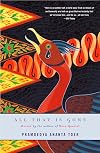
All That Is Gone - Pramoedya Ananta Toer
This book of short stories surprised me. Toer has a great voice (I’d prefer taking a stab at reading in the original Indonesian language because parts of the translation didn’t sound right). The short story Acceptance was a sad and brutal tale of civil unrest and fighting between the Indonesian Republicans and Communist idealists. He put into words some of the most realistic descriptions of war brutality I’ve ever read… simple, unexplainable show more wrath that led people (masses) to inflict extreme torture on their own people. He wrote it so convincingly I felt I was standing in the crowd watching unable to stop the madness.
The short piece The Rewards of Marriage was a joy to read… fun, a touch of experimental, with a screwdriver-twisted-in-the-heart ending… though it was a trick screwdriver. Here’s a small portion of the ‘love story’ part of the tale…
“She wanted to embrace this man so tightly that their two bodies became one and inseparable. However, she was a woman and he was a man and between the two of them stood public sensibilities. That said, the love between a man and a woman is not something new to this world and, therefore, because this interlude about the love of Tijah and Soleiman might become boring if it were continued, it is better to end it here and allow the reader to finish it in accord with his own imagination and wishes.”
… now that’s my kind of love story. show less
This book of short stories surprised me. Toer has a great voice (I’d prefer taking a stab at reading in the original Indonesian language because parts of the translation didn’t sound right). The short story Acceptance was a sad and brutal tale of civil unrest and fighting between the Indonesian Republicans and Communist idealists. He put into words some of the most realistic descriptions of war brutality I’ve ever read… simple, unexplainable show more wrath that led people (masses) to inflict extreme torture on their own people. He wrote it so convincingly I felt I was standing in the crowd watching unable to stop the madness.
The short piece The Rewards of Marriage was a joy to read… fun, a touch of experimental, with a screwdriver-twisted-in-the-heart ending… though it was a trick screwdriver. Here’s a small portion of the ‘love story’ part of the tale…
“She wanted to embrace this man so tightly that their two bodies became one and inseparable. However, she was a woman and he was a man and between the two of them stood public sensibilities. That said, the love between a man and a woman is not something new to this world and, therefore, because this interlude about the love of Tijah and Soleiman might become boring if it were continued, it is better to end it here and allow the reader to finish it in accord with his own imagination and wishes.”
… now that’s my kind of love story. show less

I read the entire (four-volume) Buru Quartet about seven or eight years ago and found it a tour de force. It has taken me all these years to return to his works in the form of this collection. These tales, written in the late ‘40s and early 50s, are dramatic, often intense, glimpses of the lives of the underclass as the Dutch are finally thrown out and Indonesia struggles to govern itself. (A useful introduction, by the way, explains how the book was a project of a translation collective show more and why the individual pieces are called “tales” and not “short stories.”) These tales, although not without humor, relate the misery and hopelessness of the poorest classes. My favorite stories included “Houseboy+Maid" (about a brother and sister, descended from a long line of servants, whose only aim in life is to become Dutch. A scathing critique of colonialism); “Stranded Fish"(friends who fought the Japanese but who have become ignored and bypassed by society—and thus the title); “News from Kebayoran" (the life of a prostitute whose initially promising life goes awry); “No Resolution" (the tale of a woman who served the Japanese during the war and her “revenge”); and “Gambir” (about revenge). Insightful, informative, depressing. show less
Lists
Awards


You May Also Like


Associated Authors
Statistics
- Works
- 76
- Also by
- 4
- Members
- 2,945
- Popularity
- #8,683
- Rating
- 4.0
- Reviews
- 61
- ISBNs
- 207
- Languages
- 16
- Favorited
- 9
