
Jacques Pépin (1) (1935–)
Author of The Apprentice: My Life in the Kitchen
For other authors named Jacques Pépin, see the disambiguation page.
About the Author
He served as the personal chef to Charles de Gualle. He earned his degrees in 18th-century French literature at Columbia University. He lives in Madison, Connecticut. (Publisher Provided) Jacques Pépin (born December 18, 1935) is an internationally recognized French chef, television personality, show more and author working in the United States. Since the late 1980s, he has appeared on French and American television and written an array of cookbooks that have become bestsellers. (Bowker Author Biography) show less
Image credit: Christopher Hirsheimer
Series
Works by Jacques Pépin
Essential Pépin: More Than 700 All-Time Favorites from My Life in Food (2011) — Author — 375 copies, 4 reviews
La Technique: An Illustrated Guide to the Fundamental Techniques of Cooking (1976) 301 copies, 6 reviews
Jacques Pépin Art Of The Chicken: A Master Chef's Paintings, Stories, and Recipes of the Humble Bird (2022) — Author — 128 copies, 6 reviews
La Methode: An Illustrated Guide to the Fundamental Techniques of Cooking (1979) — Author — 100 copies, 2 reviews
Today's gourmet II: Light and healthy cooking for the '90s (Jacques Pepin's Today's Gourmet) (1992) 48 copies
Jacques Pépin Cooking My Way: Recipes and Techniques for Economical Cooking (2023) 34 copies, 2 reviews
The Art of Jacques Pépin: Favorite Recipes and Paintings from My Life in the Kitchen (2025) 22 copies, 1 review
A fare for the heart : a Cleveland Clinic cookbook : low sodium, low fat, low cholesterol (1988) 2 copies
DVD- Jacques Pepin: Egg Demo 1 copy
Associated Works
The Book That Changed My Life: 71 Remarkable Writers Celebrate the Books That Matter Most to Them (2006) — Contributor — 411 copies, 18 reviews
The Secrets of Baking: Simple Techniques for Sophisticated Desserts (2003) — Foreword, some editions — 212 copies, 1 review
My Last Supper: 50 Great Chefs and Their Final Meals / Portraits, Interviews, and Recipes (2007) — Contributor — 207 copies, 4 reviews
The Best Bread Ever: Great Homemade Bread Using your Food Processor (1997) — Foreword, some editions — 93 copies, 1 review
Monday Night at Narsai's: An International Menu Cookbook from the Legendary Restaurant (1987) — Foreword — 36 copies
The New York Times Seafood Cookbook: 250 Recipes for More than 70 Kinds of Fish and Shellfish (2003) — Contributor — 35 copies
In My Mother's Kitchen: 25 Writers on Love, Cooking, and Family (2006) — Contributor — 35 copies, 2 reviews
Ruth and Skitch Henderson's Seasons in the Country: Good Food from Family and Friends (1990) — Foreword — 17 copies
Tagged
Common Knowledge
- Canonical name
- Pépin, Jacques
- Legal name
- Pépin, Jacques
- Birthdate
- 1935-12-18
- Gender
- male
- Education
- Columbia University (BA|1970)
Columbia University (MA, French Literature|1972) - Occupations
- chef
television personality - Awards and honors
- Chevalier de l'Ordre des Arts et des Lettres (1997)
Chevalier de l'Ordre du Mérite Agricole, France (1992)
Légion d'Honneur (2004) - Relationships
- Pépin, Claudine (daughter)
Pépin, Gloria (wife) - Nationality
- France
- Birthplace
- Bourg-en-Bresse, France
- Places of residence
- Madison, Connecticut, USA
Paris, Île-de-France, France
New York, New York, USA - Associated Place (for map)
- France
Members
Reviews
Jacques Pépin Art Of The Chicken: A Master Chef's Paintings, Stories, and Recipes of the Humble Bird by Jacques Pépin
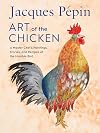
What a treat this was! Part professional memoir, part art book, and part foodie fodder in a handsome volume that will stay in my permanent collection. I have always enjoyed watching Jacques Pepin cook, but I never realized that for several years during my childhood, I was the beneficiary of his craftsmanship in the kitchen. For most of the 1960s, shortly after coming to the US, he was assistant to another French chef, Pierre Franey, working in the industrial kitchen of Howard Johnson's, show more developing the recipes that would be used in HoJo's restaurants around the country. Whenever my family traveled on vacation, we stayed and ate at Howard Johnson's motels and restaurants a LOT. I fondly remember the fried clams, Southern fried chicken, and chicken pot pies...well, thank you Jacques and Pierre, because their skill and talent perfected those items and more, making HoJo's consistently, reliably, palatable fare for ordinary folks like us. Incidentally, Pepin turned down an opportunity to cook for the Kennedy White House to take that job--having already served as chef for General and Madame DeGaulle, he felt he'd done the "presidential routine", and wanted a new challenge! Along with the fascinating stories of his professional cooking adventures, Pepin gives us general descriptions of innumerable ways to prepare chicken (including ALL its parts) and eggs, but no actual recipes. He maintains that for much of his career (industrial kitchen duties excepted) and most of his home based food preparations, he did not use them...hence one definition of the "art". The other aspect of the art of the chicken is...well, real Art. That is, painting. Pepin's chicken portraits are simply delightful, and this book is full of color plates of his imaginative renderings, from the fairly representational to the abstract to the downright whimsical.
As I said, the whole thing is a treat. show less
As I said, the whole thing is a treat. show less
The Art of Jacques Pépin: A Life in Recipes and Paintings (Timeless Recipes and Signature Artworks of the Celebrated Chef) by Jacques Pépin
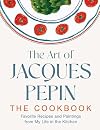
The best of Jacques Pépin! Recipes, paintings, musings. Nudes and dogs grace the pages of the soups and salads. Fish, vegetables, fruits, and the ubiquitous chickens are mixed in with the recipes for eggs, pasta, and vegetables. How about some lovely landscapes with your fish and shellfish? Poultry and Meats are paired with his more modern and abstract artwork. And finally the delicious desserts are complimented by stunning florals and beautiful birds. This man has more talent in his little show more finger than most of us can hope for in our lifetime and he is still such a genuine, humble, and gentle man. He makes cooking even the most difficult dish seem surprisingly simple. I heard about Jacques from my father who watched him on PBS many, many years ago and became a fan of his cooking and his personality. One of his wonderful memories was getting to see Jacques speak and cook live and then getting to meet him afterward and give him a pen to autograph other's cookbooks. When I asked him why he hadn't gotten one of his own cookbooks signed, he said that he didn't want to because then he wouldn't want to use the cookbook any more for fear of ruining the signature. My dad made me a Jacques Pépin fan and I wish he were still around for me to buy him a copy of this wonderful book that's part cookbook and part coffee table art book. show less

Ah, this is a keeper! A memoir full of interesting bits of history (it begins with his childhood during WWII in France), lots of food stories and insights into the people who played a role in his life and career. Reading this felt like sitting around a table after dinner with a glass of wine and reminiscing with an old friend. He was not shy of telling some unflattering tales, but also not focused on them. Learning about what it took to become a chef, and how it has changed, along with how show more cooking has changed, was absorbing. In addition to all of that, he includes a recipe at the end of each chapter, his charming sepia ink drawings, and some great photos. show less
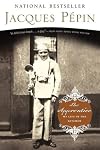
This is one of the most engaging memoirs I have read in a long time. I didn’t know anything about Jacques Pepin’s personal life, his childhood or training in the culinary industry. After reading this book I know so much about him and enjoyed each and every chapter. The funniest story, ok it was a little gross too, was about the calf’s heads. Actually there were many amusing stories in this book so it’s hard to pick just one.
Sometimes memoirs can be dry, a bit on the boring side. Not show more this one. I found myself reading some passages aloud to my husband.
As a child he worked in his mother’s restaurants and loved the hectic pace. His younger brother Bichon was the same way while older brother Roland felt it was slavery. As Jacques moved to an apprentice position in his first real job you learned how the new kid was “initiated” by running a fool’s errand for the chef.
He was sent off to a neighboring restaurant to get a heavy kitchen appliance where it had supposedly been loaned. Oh no, they had loaned it to another restaurant and so, off he ran. He was sent on to other places until he secured the item, making his way back across the village with a heavy load strapped to his back. It was just a load of bricks but it showed the drive and initiative of the young apprentice.
As he gained more experience he moved to larger restaurants and more responsibility. Learning to cook by observing and making a dish over and over and over was the teaching method. No recipes, no measurements.
The most surprising thing to me was he was in on the ground floor of Howard Johnson’s restaurants learning to reproduce good quality food that would be consistent in any of the HJ restaurants. He turned down a chance to work as a white house chef under the Kennedy administration to pursue his initial (American) career at HoJos. The standards were higher back then and you didn’t get sub-quality foods. That changed over the years, particularly after Howard Deering Johnson died. Subsequent owners concerned themselves with cutting costs at the expensive of good dining.
Reading about the differences in French and American cultures as seen through young Pepin’s eyes was interesting. Can you imagine being mocked for asking a question in a college class?
That was another good chapter where Pepin saw a startling difference between the two nations. Showing up for a dinner and patiently awaiting the bread and wine to arrive, only to realize the American hosts were tucking into their roast beef, potatoes and carrots without a thought of wine. Many more examples are detailed and I don’t want to ruin some of these stories for anyone who has not read the book.
You’ll meet Pierre Franey, Craig Claiborne and Julia Child in this book and hear of their good times and business involvements. You’ll learn about hunting wild mushrooms, his military service, working for de Gaulle and his first experiences arriving in America.
Recipes follow each chapter so there are many to select and drool over. French cooking doesn’t have to be complicated. Any of the French cookbooks I own call for absolute simplicity and this is what Pepin delivers.
Semi-Dry Tomatoes and Mozzarella Salad
1 ½ pounds plum tomatoes (about 6) cut lengthwise into halves
¾ teaspoon salt
10 ounces mozzarella cheese, cut into ½ inch slices
2 tablespoons drained capers
½ teaspoon ground pepper
1 teaspoon chopped garlic
3 tablespoons extra-virgin olive oil
½ teaspoon grated lemon rind
About 1 cup loose basil leaves
Method
Preheat oven to 250 F. Line a cookie sheet with foil. Arrange tomato halves cut side up on the sheet and sprinkle ½ teaspoon of the salt on top. Bake 4 hours. For a shortcut you can heat the oven up to 400 F and put the tomatoes in then turn off the oven. I do this as an overnight method sometimes.
Now remove tomatoes from the oven and place in a serving bowl. Let them cool then add mozzarella, capers, remaining salt, pepper, garlic, olive oil and lemon rind. Mix gently to combine.
Drop basil leaves into boiling water and cook about 10 seconds. Drain and cool under cold running water. Press basil between your palms to remove most of the water, then chop finely. Add to salad and toss well.
Let’s have a toast to Jacques Pepin! show less
Sometimes memoirs can be dry, a bit on the boring side. Not show more this one. I found myself reading some passages aloud to my husband.
As a child he worked in his mother’s restaurants and loved the hectic pace. His younger brother Bichon was the same way while older brother Roland felt it was slavery. As Jacques moved to an apprentice position in his first real job you learned how the new kid was “initiated” by running a fool’s errand for the chef.
He was sent off to a neighboring restaurant to get a heavy kitchen appliance where it had supposedly been loaned. Oh no, they had loaned it to another restaurant and so, off he ran. He was sent on to other places until he secured the item, making his way back across the village with a heavy load strapped to his back. It was just a load of bricks but it showed the drive and initiative of the young apprentice.
As he gained more experience he moved to larger restaurants and more responsibility. Learning to cook by observing and making a dish over and over and over was the teaching method. No recipes, no measurements.
The most surprising thing to me was he was in on the ground floor of Howard Johnson’s restaurants learning to reproduce good quality food that would be consistent in any of the HJ restaurants. He turned down a chance to work as a white house chef under the Kennedy administration to pursue his initial (American) career at HoJos. The standards were higher back then and you didn’t get sub-quality foods. That changed over the years, particularly after Howard Deering Johnson died. Subsequent owners concerned themselves with cutting costs at the expensive of good dining.
Reading about the differences in French and American cultures as seen through young Pepin’s eyes was interesting. Can you imagine being mocked for asking a question in a college class?
That was another good chapter where Pepin saw a startling difference between the two nations. Showing up for a dinner and patiently awaiting the bread and wine to arrive, only to realize the American hosts were tucking into their roast beef, potatoes and carrots without a thought of wine. Many more examples are detailed and I don’t want to ruin some of these stories for anyone who has not read the book.
You’ll meet Pierre Franey, Craig Claiborne and Julia Child in this book and hear of their good times and business involvements. You’ll learn about hunting wild mushrooms, his military service, working for de Gaulle and his first experiences arriving in America.
Recipes follow each chapter so there are many to select and drool over. French cooking doesn’t have to be complicated. Any of the French cookbooks I own call for absolute simplicity and this is what Pepin delivers.
Semi-Dry Tomatoes and Mozzarella Salad
1 ½ pounds plum tomatoes (about 6) cut lengthwise into halves
¾ teaspoon salt
10 ounces mozzarella cheese, cut into ½ inch slices
2 tablespoons drained capers
½ teaspoon ground pepper
1 teaspoon chopped garlic
3 tablespoons extra-virgin olive oil
½ teaspoon grated lemon rind
About 1 cup loose basil leaves
Method
Preheat oven to 250 F. Line a cookie sheet with foil. Arrange tomato halves cut side up on the sheet and sprinkle ½ teaspoon of the salt on top. Bake 4 hours. For a shortcut you can heat the oven up to 400 F and put the tomatoes in then turn off the oven. I do this as an overnight method sometimes.
Now remove tomatoes from the oven and place in a serving bowl. Let them cool then add mozzarella, capers, remaining salt, pepper, garlic, olive oil and lemon rind. Mix gently to combine.
Drop basil leaves into boiling water and cook about 10 seconds. Drain and cool under cold running water. Press basil between your palms to remove most of the water, then chop finely. Add to salad and toss well.
Let’s have a toast to Jacques Pepin! show less
Lists
Awards


You May Also Like


Associated Authors
Statistics
- Works
- 56
- Also by
- 13
- Members
- 6,352
- Popularity
- #3,871
- Rating
- 4.0
- Reviews
- 65
- ISBNs
- 118
- Languages
- 2