
Harry Connolly (1)
Author of Child of Fire
For other authors named Harry Connolly, see the disambiguation page.
Series
Works by Harry Connolly
Associated Works
HELP FUND MY ROBOT ARMY!!! and Other Improbable Crowdfunding Projects (2014) — Contributor — 82 copies, 4 reviews
Tagged
Common Knowledge
Members
Reviews
This originally appeared at The Irresponsible Reader.
---
“My name is Ray Lilly,” I said to the empty room.
There it was. I’d remembered my name, and with it came the realization that I had come to this place, whatever this place was, to find someone—no idea who at the moment—and kill them.
SETTING THE STAGE
It's been a while since the last Twenty Palaces fiction was published (a novella 5 years ago, a novel more than twice that), let me give a quick review.
Magic is in the world, show more people who come across a book of it run the risk of opening a gate to another dimension and letting monsters (called predators) into our world. Once in, they won't stop until our reality is gone.
Standing in the way is the Twenty Palaces Society—their peers track down the books and those who are using them and stop them. Almost always this is a lethal stopping. Annalise has been a peer for quite a while now, she gets the job done without really worrying too much about what stands between her and the target.
Ray Lilly is her wooden man. His job is to be a distraction, getting the attention of the troublemakers (human) and the predators focused on him, so Annalise can dispatch them. He's not supposed to survive for long, but somehow he's both lived and proven pretty effective when helping Annalise. Before this, he was a criminal—a car thief, freshly released from prison and trying to live a better life for the sake of the relatives who supported him.
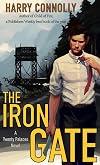
WHAT'S THE IRON GATE ABOUT?
Annalise sends Ray into a building in a small coastal town to do some recon. They know a predator is in the building, but before she does something (probably destroying the building) he goes in—something happens and his ghost knife (the one spell Ray possesses) lands at her feet. Ray's been taken by that predator but is still alive. She cancels the "apocalyptic tsunami of magic" she had planned for the building to wait for Ray to either die (which would get that tsunami rescheduled) or to escape.
Meanwhile, Ray finds himself in an Everytown, USA. Everyone calls him "Carl" and...ugh, I'm just going to copy and paste from the book description, because it's more concise (and better) than what I've come up with:
[Ray] realizes that for some time now he’s been living as a puppet, his body and mind under the complete domination of an unknown power, and the townsfolk think this puppet is his real identity.
And that power can still seize control of Ray’s body at any time, forcing him and the people around him to playact in nonsense stories that center around a mysterious boy and his monster dog.
The town and its people shift and change, but only Ray seems to notice.
While she waits to find out what's going on with Ray, Annalise devotes her time, energy, and money into keeping other people from getting access to that building. The last thing she wants is anyone else feeding that monster.
IT'S THE LITTLE THINGS
Ray's Ghost Knife could easily be the MVP of this series. Despite being a simple spell—and Ray's version of it screams "bargain basement" in an endearing and charming way—is a surprisingly effective and reliable piece of magic. It turns out to be as versatile as a certain someone's Sonic Screwdriver.
The way it's utilized in this book is completely different than we've seen before, and is probably responsible for me spending more time thinking about it than I would've otherwise (although it's always been a favorite thing in each book/story). As much as I enjoy the whole world and magic system that Connolly has given us, it might really be this tiny element—which almost seems to be a forgettable gadget when we first saw it—that could be his masterstroke. Just for what it's allowed him to do in each setting.
CHARACTER GROWTH
There are certain characters you run into in novels/series that are formed. They don't display a lot of growth and development and that's fine, they don't need to. Most of the time, that's a flaw in the writing/character design—but sometimes the character just is who they are and that's good. Everyone around them changes and grows, but they remain a rock. Like a rock that Marcus Aurelias would talk about amidst the raging waves.
Annalise Powliss has always seemed like one of those characters to me—Ray and the civilians they were around would change, and Annalise would remain pretty much the same (maybe relaxing a bit and trusting Ray, but that's it). But man, over the course of this novel, things happen to change her. The Annalise who drives away from this is not the one we met in Child of Fire.
I've liked her since the beginning, but this version takes less effort. More than that, I enjoyed watching the transformation (and how much she hated it when she noticed it happening, yet she rolled with it).
SO, WHAT DID I THINK ABOUT THE IRON GATE?
This book is everything I've thought this series could be—not that I thought the previous novels, novellas, short stories, etc. lacked anything, but this seemed to be a slightly better version of them. That's probably because Connolly's a better novelist now than he was when he started the series.
Given the set-up for this series, that extra-dimensional powers are about to break into this reality and devour everything—there's an inherent darkness to the books. Ray, Annalise, and the rest of the Twenty Palaces are the equivalent of the proverbial little Dutch Boy, and they might be running out of fingers to hold back the destruction. There's a sense of futility to what they're about, every victory is Pyrrhic. That doesn't take away from the gripping nature of the storytelling or the entertainment value of the novels—but you don't shake the feeling of impending loss. I didn't feel that this time—I have a few theories to explain it, but most feel inadequate, so I'm not going to share them. I don't know if that's a tweak Connolly's making to the series, something tied to The Iron Gate's events, or if he's setting us up for something. I'll buy any of those explanations—or a combination.
I wonder a little bit if that makes this a more commercial novel than the previous ones. Hopefully—and hopefully word gets out about this book and it finds the audience it deserves.
There's so much in this book to celebrate—the way Ray figures out what's going on and how he tries to address it, everything Annalise gets up to, the way things wrap up, and the promise of the last chapter for what's to come. Connolly is firing on all cylinders here, and it's great to see. You've got unique magic, great action, flawed protagonists, unexpected humor, and a couple of compelling intertwined plots—what more can you ask for?
This would be a good jumping-on point for this series, Connolly gives you enough to get your footing in this world and overarching story while immersing you in this book's plot (actually, he probably made this as accessible for new readers as the first book was). This is an Urban Fantasy for those who want something out-of-the norm, and is well worth your time. show less
---
“My name is Ray Lilly,” I said to the empty room.
There it was. I’d remembered my name, and with it came the realization that I had come to this place, whatever this place was, to find someone—no idea who at the moment—and kill them.
SETTING THE STAGE
It's been a while since the last Twenty Palaces fiction was published (a novella 5 years ago, a novel more than twice that), let me give a quick review.
Magic is in the world, show more people who come across a book of it run the risk of opening a gate to another dimension and letting monsters (called predators) into our world. Once in, they won't stop until our reality is gone.
Standing in the way is the Twenty Palaces Society—their peers track down the books and those who are using them and stop them. Almost always this is a lethal stopping. Annalise has been a peer for quite a while now, she gets the job done without really worrying too much about what stands between her and the target.
Ray Lilly is her wooden man. His job is to be a distraction, getting the attention of the troublemakers (human) and the predators focused on him, so Annalise can dispatch them. He's not supposed to survive for long, but somehow he's both lived and proven pretty effective when helping Annalise. Before this, he was a criminal—a car thief, freshly released from prison and trying to live a better life for the sake of the relatives who supported him.
WHAT'S THE IRON GATE ABOUT?
Annalise sends Ray into a building in a small coastal town to do some recon. They know a predator is in the building, but before she does something (probably destroying the building) he goes in—something happens and his ghost knife (the one spell Ray possesses) lands at her feet. Ray's been taken by that predator but is still alive. She cancels the "apocalyptic tsunami of magic" she had planned for the building to wait for Ray to either die (which would get that tsunami rescheduled) or to escape.
Meanwhile, Ray finds himself in an Everytown, USA. Everyone calls him "Carl" and...ugh, I'm just going to copy and paste from the book description, because it's more concise (and better) than what I've come up with:
[Ray] realizes that for some time now he’s been living as a puppet, his body and mind under the complete domination of an unknown power, and the townsfolk think this puppet is his real identity.
And that power can still seize control of Ray’s body at any time, forcing him and the people around him to playact in nonsense stories that center around a mysterious boy and his monster dog.
The town and its people shift and change, but only Ray seems to notice.
While she waits to find out what's going on with Ray, Annalise devotes her time, energy, and money into keeping other people from getting access to that building. The last thing she wants is anyone else feeding that monster.
IT'S THE LITTLE THINGS
Ray's Ghost Knife could easily be the MVP of this series. Despite being a simple spell—and Ray's version of it screams "bargain basement" in an endearing and charming way—is a surprisingly effective and reliable piece of magic. It turns out to be as versatile as a certain someone's Sonic Screwdriver.
The way it's utilized in this book is completely different than we've seen before, and is probably responsible for me spending more time thinking about it than I would've otherwise (although it's always been a favorite thing in each book/story). As much as I enjoy the whole world and magic system that Connolly has given us, it might really be this tiny element—which almost seems to be a forgettable gadget when we first saw it—that could be his masterstroke. Just for what it's allowed him to do in each setting.
CHARACTER GROWTH
There are certain characters you run into in novels/series that are formed. They don't display a lot of growth and development and that's fine, they don't need to. Most of the time, that's a flaw in the writing/character design—but sometimes the character just is who they are and that's good. Everyone around them changes and grows, but they remain a rock. Like a rock that Marcus Aurelias would talk about amidst the raging waves.
Annalise Powliss has always seemed like one of those characters to me—Ray and the civilians they were around would change, and Annalise would remain pretty much the same (maybe relaxing a bit and trusting Ray, but that's it). But man, over the course of this novel, things happen to change her. The Annalise who drives away from this is not the one we met in Child of Fire.
I've liked her since the beginning, but this version takes less effort. More than that, I enjoyed watching the transformation (and how much she hated it when she noticed it happening, yet she rolled with it).
SO, WHAT DID I THINK ABOUT THE IRON GATE?
This book is everything I've thought this series could be—not that I thought the previous novels, novellas, short stories, etc. lacked anything, but this seemed to be a slightly better version of them. That's probably because Connolly's a better novelist now than he was when he started the series.
Given the set-up for this series, that extra-dimensional powers are about to break into this reality and devour everything—there's an inherent darkness to the books. Ray, Annalise, and the rest of the Twenty Palaces are the equivalent of the proverbial little Dutch Boy, and they might be running out of fingers to hold back the destruction. There's a sense of futility to what they're about, every victory is Pyrrhic. That doesn't take away from the gripping nature of the storytelling or the entertainment value of the novels—but you don't shake the feeling of impending loss. I didn't feel that this time—I have a few theories to explain it, but most feel inadequate, so I'm not going to share them. I don't know if that's a tweak Connolly's making to the series, something tied to The Iron Gate's events, or if he's setting us up for something. I'll buy any of those explanations—or a combination.
I wonder a little bit if that makes this a more commercial novel than the previous ones. Hopefully—and hopefully word gets out about this book and it finds the audience it deserves.
There's so much in this book to celebrate—the way Ray figures out what's going on and how he tries to address it, everything Annalise gets up to, the way things wrap up, and the promise of the last chapter for what's to come. Connolly is firing on all cylinders here, and it's great to see. You've got unique magic, great action, flawed protagonists, unexpected humor, and a couple of compelling intertwined plots—what more can you ask for?
This would be a good jumping-on point for this series, Connolly gives you enough to get your footing in this world and overarching story while immersing you in this book's plot (actually, he probably made this as accessible for new readers as the first book was). This is an Urban Fantasy for those who want something out-of-the norm, and is well worth your time. show less
This originally appeared at The Irresponsible Reader.
---
The death of a single child is like the end of the world.
I'd preordered this last year and somehow kept not reading it—largely between tours, pub dates, library due dates, and whatnot, it kept being pushed back. I don't know if anyone ever reads the column to the right, but this has been listed "On Deck" for most of 2020. But finally, finally, I made some room in my schedule, and boy, am I glad I did. Even if that above line tells show more you just how dark things are going to get.
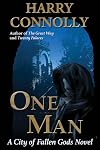
What's One Man About??
On the day after the summer solstice in the year 403 of the New Calendar, Kyrionik ward-Safroy defe-Safroy admir-Safroy hold-Safroy attended his own funeral.
Sure, attending your own funeral is something that's been done by a range of characters from Tom Sawyer to Percy Jackson, but that's still a gripping opening line. Kyrionik is now calling himself Kyrioc, child of No One. He's living in obscurity after a calamity struck an expedition he was on years before, leaving him assumed dead. Born to one of the city's leading families, potentially destined to highest office, he's now living in an impoverished neighborhood working (and living) in a pawnshop. He's sort of befriended a little girl, Riliska, who lives in the same building as the pawnshop with her mother. He's a quiet, obviously injured, loner that no one knows anything about. He's called The Broken Man by his neighbors—and their assumption is pretty much right about that.
Riliska's mother, Rulenya, is a mess. She's bouncing from job to job, and man to man, unable (or unwilling) to keep either because she's far more interested in feeding her addiction. She's not that interested in being a mother and shows almost no interest in or affection for her daughter (who adores her mother, of course). Exhibit A is the fact that she calls Riliska (to her face!) The Long Hangover, "a headache she's had for years." Riliska's a pickpocket and shoplifter, who sells what she steals to Kyrioc—who will frequently give her more than it's worth so she can buy food.
Rulenya steals something from a high-ranking criminal during an exchange. After a day or two of searching, they find her, kidnapping both mother and child. Kyrioc goes off on a search for Riliska—and won't let anything stand in his way. Criminals. Magical creatures. Gangs. Constables. Bureaucrats. More criminals. What no one realizes about the Broken Man is that he's a world-class fighter, a one-man army, like John Wick or Jack Reacher with a magical secret. By the time they realize this, it's too late for anyone.
What Rulenya, Kyrioc, and Riliska don't realize (although Rulena has a little bit of a clue) is that her robbery is in the middle of a giant web of organized criminal activity, a power struggle amongst the gangs of the city, and a couple of overlapping investigations into that organized crime. The robbery sets off events that bring the city to the brink of a War between the gangs with the constables trying to pick them all off. Throw in the wild card of one nearly unstoppable man on a mission to save a little girl (although no one believes that's what he's up to)—and what will happen next is anybody's guess.
It's exciting, it's thrilling, is impossible to predict—it's very much not the kind of story you're used to reading in a Fantasy setting. But it works. It works so, so well.
The Strengths of the Novel
The city of Koh-Salash is constructed within the bones of a dead god. Over the centuries, various layers of the city have been built, taking advantage of the bones—and the characteristics of some of them. I love this idea. I'd have loved it more if I hadn't seen it in Michael R. Underwood's Shield and Crocus in 2014. I'm also pretty sure that I've seen a reference to at least one other fantasy novel using the same kind of city. This is not a rhetorical question: is this a Fantasy trope that I've missed? Are there dozens of books out there with this kind of setting and I've only run into two (and a possible reference to a third)? Both Underwood and Connolly used the god skeletons differently and creatively (I'd argue Connolly took more advantage of it)—so I' not complaining in any sense about this. It just struck me as strange that two widely different works had similar settings.*
* Oddly enough, both had a very contemporary-style story set in a Fantasy world.
The city is just part of the fantastic world-building (no pun intended). There's an epic history of the world, a geopolitical structure, and a rich magic system at work. Connolly keeps most of that to himself, only giving the reader enough to understand what's going on in this story, with the occasional tease to make you want to know more. Even the little bit of slang that you pick up is pretty creative, I was so glad to see that Connolly had made the effort to do that.
Make no mistake—this is a dark novel. There's one character who can largely function as comic relief—and a few lighter moments, some hints of hope. But by and large, this is a man on a suicide mission, not sure he'll accomplish his goal, but who is sure he'll take a lot of people down with him. Of those he faces, some just know they'll die because of their lifestyle—that someone will "take the point" to them—some are resigned to a hopeless life, and some who look forward to death because it will release them from the choices they've made. All in all, you're not going to find optimists in Koh-Salash.
This has one of the best and most consistently interesting casts of characters that I've read this year—I started to say that I only really got invested in two, maybe three, characters (Kyrioc, Riliska, and maybe Kyrioc's younger brother). But as I thought about it some more, I realized that wasn't true—maybe I was more invested in them, but there are several others that I cared about—and there's a looming threat to the city as a whole that bothered me more than I'd think it would after so brief a time. Connolly's provided really well-rounded and developed characters—broken, fallible, smart—but not smart enough that they can't make a mistake—with wildly divergent (and frequently contradictory) interests and desires. In fact, if we get other City of Fallen Gods novels, I have a list of characters I'd like him to focus on.
A Caveat or Two
There were a couple of things I couldn't quite get excited about. Both of whom are very possibly just me. First of all, are the character names—some are just garden-variety Fantasy names, but others were just obnoxious (the name in the quotation above is a mild example of this). There seemed to be a well-thought-out naming convention based on social class and family—but I just had the hardest time connecting names with characters for the longest time, and spent a lot of time flipping back in the text to decide who the name was associated with. Yes, I eventually became acclimatized, but simpler (and more pronounceable) names would've helped.
The second was the pacing—I think this one is very likely all about my energy level as I read this, and is probably actually well-done. So this isn't a critique, it's a "know what you're getting into." Connolly spends so much time setting up his dominoes that I grew impatient. The story is really so intricate, with so many moving parts, that after a very strong opening, things slow down so he can make sure the reader gets the full lay of the land. It was all really interesting, and well worth the effort, but I felt like I was wading through molasses. That said, once the dominoes started falling? All that went out the window, everything had been so well set up that I had no trouble following it all and remained on the edge of my seat.
So what did I think about One Man?
They were in a little storeroom or front office, with a counter and shelves full of wooden dolls with skull- like faces and outstretched arms, as though the tiny figure of Death was asking for a hug.
In Kyrioc’s experience, when death came, it was often very, very small: A breaking stair, the vapor from a cough, the edge of a knife like the one he was holding. A tiny figure was exactly the right size for Death, as far as he was concerned.
It's simplistic to say this, but One Man feels like Connolly took the strengths of his Epic Fantasy novels and the strengths of his Urban Fantasy novels and combined them into this novel. That's more accurate than it should be, and it's good enough for my purposes here. There's a rich world, well-conceived and well-realized here. The characters are so strong, so well done. And a story that we're all familiar enough with but told in a way that's fresh enough that you can appreciate both the way it's familiar and surprising. There's really little to complain about and much to commend about One Man. It's set up in such a way that Connolly could come back to the city if he wants, or he can leave it as a very satisfying stand-alone. Either way, I strongly recommend this to your attention. show less
---
The death of a single child is like the end of the world.
I'd preordered this last year and somehow kept not reading it—largely between tours, pub dates, library due dates, and whatnot, it kept being pushed back. I don't know if anyone ever reads the column to the right, but this has been listed "On Deck" for most of 2020. But finally, finally, I made some room in my schedule, and boy, am I glad I did. Even if that above line tells show more you just how dark things are going to get.
What's One Man About??
On the day after the summer solstice in the year 403 of the New Calendar, Kyrionik ward-Safroy defe-Safroy admir-Safroy hold-Safroy attended his own funeral.
Sure, attending your own funeral is something that's been done by a range of characters from Tom Sawyer to Percy Jackson, but that's still a gripping opening line. Kyrionik is now calling himself Kyrioc, child of No One. He's living in obscurity after a calamity struck an expedition he was on years before, leaving him assumed dead. Born to one of the city's leading families, potentially destined to highest office, he's now living in an impoverished neighborhood working (and living) in a pawnshop. He's sort of befriended a little girl, Riliska, who lives in the same building as the pawnshop with her mother. He's a quiet, obviously injured, loner that no one knows anything about. He's called The Broken Man by his neighbors—and their assumption is pretty much right about that.
Riliska's mother, Rulenya, is a mess. She's bouncing from job to job, and man to man, unable (or unwilling) to keep either because she's far more interested in feeding her addiction. She's not that interested in being a mother and shows almost no interest in or affection for her daughter (who adores her mother, of course). Exhibit A is the fact that she calls Riliska (to her face!) The Long Hangover, "a headache she's had for years." Riliska's a pickpocket and shoplifter, who sells what she steals to Kyrioc—who will frequently give her more than it's worth so she can buy food.
Rulenya steals something from a high-ranking criminal during an exchange. After a day or two of searching, they find her, kidnapping both mother and child. Kyrioc goes off on a search for Riliska—and won't let anything stand in his way. Criminals. Magical creatures. Gangs. Constables. Bureaucrats. More criminals. What no one realizes about the Broken Man is that he's a world-class fighter, a one-man army, like John Wick or Jack Reacher with a magical secret. By the time they realize this, it's too late for anyone.
What Rulenya, Kyrioc, and Riliska don't realize (although Rulena has a little bit of a clue) is that her robbery is in the middle of a giant web of organized criminal activity, a power struggle amongst the gangs of the city, and a couple of overlapping investigations into that organized crime. The robbery sets off events that bring the city to the brink of a War between the gangs with the constables trying to pick them all off. Throw in the wild card of one nearly unstoppable man on a mission to save a little girl (although no one believes that's what he's up to)—and what will happen next is anybody's guess.
It's exciting, it's thrilling, is impossible to predict—it's very much not the kind of story you're used to reading in a Fantasy setting. But it works. It works so, so well.
The Strengths of the Novel
The city of Koh-Salash is constructed within the bones of a dead god. Over the centuries, various layers of the city have been built, taking advantage of the bones—and the characteristics of some of them. I love this idea. I'd have loved it more if I hadn't seen it in Michael R. Underwood's Shield and Crocus in 2014. I'm also pretty sure that I've seen a reference to at least one other fantasy novel using the same kind of city. This is not a rhetorical question: is this a Fantasy trope that I've missed? Are there dozens of books out there with this kind of setting and I've only run into two (and a possible reference to a third)? Both Underwood and Connolly used the god skeletons differently and creatively (I'd argue Connolly took more advantage of it)—so I' not complaining in any sense about this. It just struck me as strange that two widely different works had similar settings.*
* Oddly enough, both had a very contemporary-style story set in a Fantasy world.
The city is just part of the fantastic world-building (no pun intended). There's an epic history of the world, a geopolitical structure, and a rich magic system at work. Connolly keeps most of that to himself, only giving the reader enough to understand what's going on in this story, with the occasional tease to make you want to know more. Even the little bit of slang that you pick up is pretty creative, I was so glad to see that Connolly had made the effort to do that.
Make no mistake—this is a dark novel. There's one character who can largely function as comic relief—and a few lighter moments, some hints of hope. But by and large, this is a man on a suicide mission, not sure he'll accomplish his goal, but who is sure he'll take a lot of people down with him. Of those he faces, some just know they'll die because of their lifestyle—that someone will "take the point" to them—some are resigned to a hopeless life, and some who look forward to death because it will release them from the choices they've made. All in all, you're not going to find optimists in Koh-Salash.
This has one of the best and most consistently interesting casts of characters that I've read this year—I started to say that I only really got invested in two, maybe three, characters (Kyrioc, Riliska, and maybe Kyrioc's younger brother). But as I thought about it some more, I realized that wasn't true—maybe I was more invested in them, but there are several others that I cared about—and there's a looming threat to the city as a whole that bothered me more than I'd think it would after so brief a time. Connolly's provided really well-rounded and developed characters—broken, fallible, smart—but not smart enough that they can't make a mistake—with wildly divergent (and frequently contradictory) interests and desires. In fact, if we get other City of Fallen Gods novels, I have a list of characters I'd like him to focus on.
A Caveat or Two
There were a couple of things I couldn't quite get excited about. Both of whom are very possibly just me. First of all, are the character names—some are just garden-variety Fantasy names, but others were just obnoxious (the name in the quotation above is a mild example of this). There seemed to be a well-thought-out naming convention based on social class and family—but I just had the hardest time connecting names with characters for the longest time, and spent a lot of time flipping back in the text to decide who the name was associated with. Yes, I eventually became acclimatized, but simpler (and more pronounceable) names would've helped.
The second was the pacing—I think this one is very likely all about my energy level as I read this, and is probably actually well-done. So this isn't a critique, it's a "know what you're getting into." Connolly spends so much time setting up his dominoes that I grew impatient. The story is really so intricate, with so many moving parts, that after a very strong opening, things slow down so he can make sure the reader gets the full lay of the land. It was all really interesting, and well worth the effort, but I felt like I was wading through molasses. That said, once the dominoes started falling? All that went out the window, everything had been so well set up that I had no trouble following it all and remained on the edge of my seat.
So what did I think about One Man?
They were in a little storeroom or front office, with a counter and shelves full of wooden dolls with skull- like faces and outstretched arms, as though the tiny figure of Death was asking for a hug.
In Kyrioc’s experience, when death came, it was often very, very small: A breaking stair, the vapor from a cough, the edge of a knife like the one he was holding. A tiny figure was exactly the right size for Death, as far as he was concerned.
It's simplistic to say this, but One Man feels like Connolly took the strengths of his Epic Fantasy novels and the strengths of his Urban Fantasy novels and combined them into this novel. That's more accurate than it should be, and it's good enough for my purposes here. There's a rich world, well-conceived and well-realized here. The characters are so strong, so well done. And a story that we're all familiar enough with but told in a way that's fresh enough that you can appreciate both the way it's familiar and surprising. There's really little to complain about and much to commend about One Man. It's set up in such a way that Connolly could come back to the city if he wants, or he can leave it as a very satisfying stand-alone. Either way, I strongly recommend this to your attention. show less
Making your way in the world today takes everything you got... Making my way through the UF canon takes everything I got...
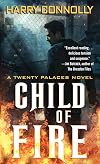
[a:Jim Butcher|10746|Jim Butcher|http://d202m5krfqbpi5.cloudfront.net/authors/1205261964p2/10746.jpg] and [a:Laurell K. Hamilton|9550|Laurell K. Hamilton|http://d202m5krfqbpi5.cloudfront.net/authors/1352276598p2/9550.jpg] have a lot to answer for, specifically, for achieving a level of commercial success that has spawned a host of imitators. Child of Fire is one of the show more later entries into the urban fantasy field, first in a short-lived series of three books.
Dresden is the obvious comparison here, but not for the reasons you might think. On the surface, not too much is similar between main characters. Harry Dresden, wizard for hire; Ray Lilly, ex-convict. Harry, practicing wizard; Ray, strictly normal, no magic but a stolen glyph made into a knife. Harry, connected to a community; Ray, isolated in service to Annalise. But the basic characterization reminds me of early Dresden in the eye-rolling chivalry, the emotional over-emphasis on "innocents," particularly children, the mental/verbal reluctance to fight that never seems to translate into preventing violence. Ever notice how often they always say "I was pushed into it"? The token guilt at causing violence and death? ("They made me!") It's a clear emotional resonance.
On the positive side, there was a creepy Stepford town, an under-powered hero, an intimidating woman (made oh-so-vulnerable), a cool knife and interesting villains. Well, not the cats' paws; the real powers behind them were fascinating. Connolly does a decent job of developing a tone of dread in a remote Washington town and it's strange inhabitants, and the background magic seems interesting.
Plotting moves along in fits and starts. It felt a little uneven--although Ray and Annalise are heading into town to investigate and remove the source of the illicit magic, the pair barrel into situations without forethought, letting it sort itself out. Ray eventually comes up with an insufficient cover story that only serves to heighten townies' suspicions. The poorly conceived strategy doesn't really work for either characters' motivation, Ray's theory of protecting innocents or Annalise's intention to destroy evil, but whatever, I guess. I've been told not to be so picky. Further picky notes include a supposed 'secret society' that seems to think nothing of mass murder and a 'burn it all down' mentality. No reader explanations needed! The narrator himself admits he "doesn't know how it all happened." Convenient! And, as long as I'm being picky...
Characterization also felt uninspired. Our hero was poor and abused! The cops are jerks and abuse power! A sinning preacher! A relentless newspaperman! A scary madam with lots of power disproportionate to real life! A guy that does evil with the intention of doing good! Henchman that may or may not be able to use guns! Even important characters are puzzling. There's a lady that stalks the narrator--but Ray might be a little turned on. He's been in prison, after all! Annalise orders him to sleep with her. He doesn't want to now that he's ordered to! But the lady initiates, so he does! But then the lady says, not again--it was too intense! Wow! So he's left with the residue of hot, intensive sex and no future entanglements! Honestly, I'm not sure what purpose it played in the narrative. Her character was just whatever the author wanted. But it did maybe make his boss just a little jealous!
But I still can't stop reading UF! Or using exclamation points! I read even when this felt like a first book! Trope-heavy with prosaic peripheral characters and writing that is focused on action scenes, which seems to be where Connolly's vision is the clearest. After finishing, I discovered Connolly intentionally refrained from filling out a number of details regarding the Twenty Palaces Society and general world building, but unfortunately, I'm not sure he manages to intrigue as much as convince us that the side of the angels is a bunch of jerks that don't deserve our attention.
Recommendations are always hard for me, given that I want to play match-maker and fit the right read to the right person. I certainly won't add it to my shelves, but if you liked early Dresden and don't mind an uneven, action-focused writing style, you might enjoy it.
Two and a half to three standard stars.
Cross posted at http://clsiewert.wordpress.com/2013/09/22/child-of-fire-by-harry-connolly/ show less
[a:Jim Butcher|10746|Jim Butcher|http://d202m5krfqbpi5.cloudfront.net/authors/1205261964p2/10746.jpg] and [a:Laurell K. Hamilton|9550|Laurell K. Hamilton|http://d202m5krfqbpi5.cloudfront.net/authors/1352276598p2/9550.jpg] have a lot to answer for, specifically, for achieving a level of commercial success that has spawned a host of imitators. Child of Fire is one of the show more later entries into the urban fantasy field, first in a short-lived series of three books.
Dresden is the obvious comparison here, but not for the reasons you might think. On the surface, not too much is similar between main characters. Harry Dresden, wizard for hire; Ray Lilly, ex-convict. Harry, practicing wizard; Ray, strictly normal, no magic but a stolen glyph made into a knife. Harry, connected to a community; Ray, isolated in service to Annalise. But the basic characterization reminds me of early Dresden in the eye-rolling chivalry, the emotional over-emphasis on "innocents," particularly children, the mental/verbal reluctance to fight that never seems to translate into preventing violence. Ever notice how often they always say "I was pushed into it"? The token guilt at causing violence and death? ("They made me!") It's a clear emotional resonance.
On the positive side, there was a creepy Stepford town, an under-powered hero, an intimidating woman (made oh-so-vulnerable), a cool knife and interesting villains. Well, not the cats' paws; the real powers behind them were fascinating. Connolly does a decent job of developing a tone of dread in a remote Washington town and it's strange inhabitants, and the background magic seems interesting.
Plotting moves along in fits and starts. It felt a little uneven--although Ray and Annalise are heading into town to investigate and remove the source of the illicit magic, the pair barrel into situations without forethought, letting it sort itself out. Ray eventually comes up with an insufficient cover story that only serves to heighten townies' suspicions. The poorly conceived strategy doesn't really work for either characters' motivation, Ray's theory of protecting innocents or Annalise's intention to destroy evil, but whatever, I guess. I've been told not to be so picky. Further picky notes include a supposed 'secret society' that seems to think nothing of mass murder and a 'burn it all down' mentality. No reader explanations needed! The narrator himself admits he "doesn't know how it all happened." Convenient! And, as long as I'm being picky...
Characterization also felt uninspired. Our hero was poor and abused! The cops are jerks and abuse power! A sinning preacher! A relentless newspaperman! A scary madam with lots of power disproportionate to real life! A guy that does evil with the intention of doing good! Henchman that may or may not be able to use guns! Even important characters are puzzling. There's a lady that stalks the narrator--but Ray might be a little turned on. He's been in prison, after all! Annalise orders him to sleep with her. He doesn't want to now that he's ordered to! But the lady initiates, so he does! But then the lady says, not again--it was too intense! Wow! So he's left with the residue of hot, intensive sex and no future entanglements! Honestly, I'm not sure what purpose it played in the narrative. Her character was just whatever the author wanted. But it did maybe make his boss just a little jealous!
But I still can't stop reading UF! Or using exclamation points! I read even when this felt like a first book! Trope-heavy with prosaic peripheral characters and writing that is focused on action scenes, which seems to be where Connolly's vision is the clearest. After finishing, I discovered Connolly intentionally refrained from filling out a number of details regarding the Twenty Palaces Society and general world building, but unfortunately, I'm not sure he manages to intrigue as much as convince us that the side of the angels is a bunch of jerks that don't deserve our attention.
Recommendations are always hard for me, given that I want to play match-maker and fit the right read to the right person. I certainly won't add it to my shelves, but if you liked early Dresden and don't mind an uneven, action-focused writing style, you might enjoy it.
Two and a half to three standard stars.
Cross posted at http://clsiewert.wordpress.com/2013/09/22/child-of-fire-by-harry-connolly/ show less

Harry Connolly is the uncrowned king of the elevator pitch: After “Epic Fantasy without the boring bits” for his Epic Fantasy Trilogy The Great Way, now it’s “Pacifist Urban Fantasy” for his most recent offering, the (you guessed it) Urban Fantasy novel A Key, An Egg, An Unfortunate Remark (and he’s really good with snappy titles, too).
Urban or (as I prefer) Paranormal Fantasy a genre is pretty much defined as being about “badass heroes or heroines kicking lots of ass”; and show more even though there have been some more beta protagonists recently (in the excellent series by Rachel Aaron and M.V. Brennan), “pacifist Urban Fantasy” still sounds almost like a contradiction in terms. And Connolly is not just mouthing off, but actually holds true to his premise – while there is some violence it is all on the side of the baddies (you do have to build up a convincing threat after all), while our protagonists do not even retaliate after several attempts on their lives but invariably try for (and eventually achieve) a peaceful solution, using brains (and some magic) rather than brawns.
This might sound boring to the seasoned reader of Paranormal Fantasy who is used to lots of ass being kicked but on the other hand the genre is so choked by clichés by now that they might experience as a fresh breeze. For my part, I’m firmly in the second camp – while A Key, An Egg, An Unfortunate Remark might not be as compulsive reading as some of the better representatives of the genre out there, or even Connolly’s own Great Way (I still have to read his Paranormal Twenty Palaces series) it still makes for a highly entertaining read. The plot is kept moving by a murder mystery and follows the investigation of the death of deeply unsympathetic lawyer Aloysius Pierce by his aunt Marley Jacobs and his half-brother Albert. While the question of who killed Aloyisius and why is what keeps events moving forward, it’s not really what keeps the reader turning the pages – the main appeal of the novel is not its plot, but its characters, and more precisely its main protagonist Marley Jacobs.
Even though we mostly view her through the eyes of her nephew Albert – a former soldier who lost half his right hand in Afghanistan and in the course of the novel slides into a new job as his aunt’s assistant – Marley is clearly the heroine of A Key, An Egg, An Unfortunate Remark, and here Connolly deviates even more from genre expectations than with his pacifistic premise. For she is no leather-clad twenty-year old, not even a slacker in jeans and sneakers, but a nice elderly lady who appears completely harmless. Of course, even if somewhat less obvious, she is also the protector of Seattle – where the novel takes place – and an experienced magician, which makes for a fun combination, especially with the way Connolly envisions magic here as something that is not ruled by any system but capricious, whimsical, apparently random and generally a delight to read about.
“Delightful” is in fact how I would characterize A Key, An Egg, An Unfortunate Remark – again, not exactly the most likely epithet for a Paranormal Fantasy novel, but a great part of this novel’s pleasure stems precisely from its unlikeness. It apparently came into being as a stretch goal for Connolly’s Epic Fantasy Kickstarter project, and that is probably the reason why it’s a bit rough around some of its edges and not nearly as polished as the novels that made up The Great Way. But it gives the impression that its author had a lot of fun writing it, and at least this reader greatly enjoyed it reading it. show less
Urban or (as I prefer) Paranormal Fantasy a genre is pretty much defined as being about “badass heroes or heroines kicking lots of ass”; and show more even though there have been some more beta protagonists recently (in the excellent series by Rachel Aaron and M.V. Brennan), “pacifist Urban Fantasy” still sounds almost like a contradiction in terms. And Connolly is not just mouthing off, but actually holds true to his premise – while there is some violence it is all on the side of the baddies (you do have to build up a convincing threat after all), while our protagonists do not even retaliate after several attempts on their lives but invariably try for (and eventually achieve) a peaceful solution, using brains (and some magic) rather than brawns.
This might sound boring to the seasoned reader of Paranormal Fantasy who is used to lots of ass being kicked but on the other hand the genre is so choked by clichés by now that they might experience as a fresh breeze. For my part, I’m firmly in the second camp – while A Key, An Egg, An Unfortunate Remark might not be as compulsive reading as some of the better representatives of the genre out there, or even Connolly’s own Great Way (I still have to read his Paranormal Twenty Palaces series) it still makes for a highly entertaining read. The plot is kept moving by a murder mystery and follows the investigation of the death of deeply unsympathetic lawyer Aloysius Pierce by his aunt Marley Jacobs and his half-brother Albert. While the question of who killed Aloyisius and why is what keeps events moving forward, it’s not really what keeps the reader turning the pages – the main appeal of the novel is not its plot, but its characters, and more precisely its main protagonist Marley Jacobs.
Even though we mostly view her through the eyes of her nephew Albert – a former soldier who lost half his right hand in Afghanistan and in the course of the novel slides into a new job as his aunt’s assistant – Marley is clearly the heroine of A Key, An Egg, An Unfortunate Remark, and here Connolly deviates even more from genre expectations than with his pacifistic premise. For she is no leather-clad twenty-year old, not even a slacker in jeans and sneakers, but a nice elderly lady who appears completely harmless. Of course, even if somewhat less obvious, she is also the protector of Seattle – where the novel takes place – and an experienced magician, which makes for a fun combination, especially with the way Connolly envisions magic here as something that is not ruled by any system but capricious, whimsical, apparently random and generally a delight to read about.
“Delightful” is in fact how I would characterize A Key, An Egg, An Unfortunate Remark – again, not exactly the most likely epithet for a Paranormal Fantasy novel, but a great part of this novel’s pleasure stems precisely from its unlikeness. It apparently came into being as a stretch goal for Connolly’s Epic Fantasy Kickstarter project, and that is probably the reason why it’s a bit rough around some of its edges and not nearly as polished as the novels that made up The Great Way. But it gives the impression that its author had a lot of fun writing it, and at least this reader greatly enjoyed it reading it. show less
Lists
Awards


You May Also Like


Associated Authors
Statistics
- Works
- 21
- Also by
- 4
- Members
- 1,983
- Popularity
- #12,965
- Rating
- 3.7
- Reviews
- 96
- ISBNs
- 40
- Languages
- 3
- Favorited
- 1