
Max Gladstone
Author of This Is How You Lose the Time War
About the Author
Series
Works by Max Gladstone
Associated Works
From a Certain Point of View: 40 Stories Celebrating 40 Years of Return of the Jedi (2023) — Contributor — 214 copies, 6 reviews
Worlds Seen in Passing: Ten Years of Tor.com Short Fiction (2018) — Contributor — 161 copies, 1 review
The Long List Anthology: More Stories From the Hugo Award Nomination List (2015) — Contributor — 126 copies, 6 reviews
The Long List Anthology Volume 4: More Stories from the Hugo Award Nomination List (2018) — Contributor — 59 copies
The Best Science Fiction and Fantasy of the Year, Volume 12 (2018) — Contributor — 47 copies, 2 reviews
Sunspot Jungle: Volume Two: The Ever Expanding Universe of Fantasy and Science Fiction (2018) — Contributor — 22 copies
BSFA Awards 2019: Featuring All the Nominated Short Stories and Non-Fiction for the 2019 BSFA Awards (2020) — Contributor — 2 copies
Tagged
Common Knowledge
- Birthdate
- 1984-05-28
- Gender
- male
- Education
- Yale University
- Occupations
- writer
game designer - Organizations
- Berkman Center for Internet and Society, Harvard University
- Agent
- DongWon Song
- Nationality
- USA
- Birthplace
- Concord, Massachusetts, USA
- Places of residence
- Cambridge, Massachusetts, USA
Somerset, Massachusetts, USA - Associated Place (for map)
- Massachusetts, USA
Members
Reviews

Red and Blue are on opposite sides of a war throughout time. They jump back and forth, in and out of different timelines to engineer the future their side wants, or foil their enemy’s plan to do the same. They start exchanging letters, first to taunt each other, but then they fall in love and must decide what future they would really like to have, and what they’re willing to do to get it.
A very sweet and short novel. I loved the format, which is a few pages about when in time the show more character is on their mission, how they find the latest letter from the other character, and then the text of the letter. The perspective of the first half of the chapter is fairly detached 3rd person and then the text of the letter is so intimate you can feel it in your bones. I don’t think the text supported these two people falling so in love through just a few letters but the letters make you feel it’s true anyway. Because we never see Red or Blue writing the letters, only receiving them, it’s not so much a story about falling deeply in love as it is about being deeply loved. Not a lot happens through most of the book, since Red and Blue eventually jump out of any timeline they’re in, until the end, which is very satisfying. The vibe really reminds me of the Marvel tv show Loki, if you’re into that. show less
A very sweet and short novel. I loved the format, which is a few pages about when in time the show more character is on their mission, how they find the latest letter from the other character, and then the text of the letter. The perspective of the first half of the chapter is fairly detached 3rd person and then the text of the letter is so intimate you can feel it in your bones. I don’t think the text supported these two people falling so in love through just a few letters but the letters make you feel it’s true anyway. Because we never see Red or Blue writing the letters, only receiving them, it’s not so much a story about falling deeply in love as it is about being deeply loved. Not a lot happens through most of the book, since Red and Blue eventually jump out of any timeline they’re in, until the end, which is very satisfying. The vibe really reminds me of the Marvel tv show Loki, if you’re into that. show less
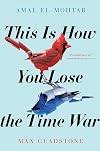
Two agents in the time war encounter each other again and again in different strands of time, upthread and downthread, and go from being enemy rivals to falling in love. But neither Blue's Garden nor Red's Commandant of the Agency will allow their best agents to be compromised - can they find a way to be together? They leave each other ingeniously hidden, coded letters - in tea, in feathers, in entrails - and play a dangerous game of hide and seek through strands of time.
Quotes
Not every show more battle's grand, not every weapon fierce. Even we who fight wars through time forget the value of a word in the right moment, a rattle in the right car engine, a nail in the right horseshoe....It's so easy to crush a planet that you may overlook the value of a whisper to a snowbank. (Red to Blue, 13)
Some days Blue wonders why anyone ever bothered making numbers so small; other days she supposes even infinity needs to start somewhere. (39)
We treat the past as trellis... (Blue to Red, 70)
Thinking builds patterns in the brain, and those patterns can be read by one sufficiently determined.... (Red to Blue, 81)
All good stories travel from the outside in. (Blue to Red, 119)
I want to meet you in every place I have ever loved. (Blue to Red, 142)
It is always too late to say what must be said. I cannot stop you now. I cannot save you. Love is what we have, against time and death, against all the powers ranged to crush us down. (Red to Blue, 165) show less
Quotes
Not every show more battle's grand, not every weapon fierce. Even we who fight wars through time forget the value of a word in the right moment, a rattle in the right car engine, a nail in the right horseshoe....It's so easy to crush a planet that you may overlook the value of a whisper to a snowbank. (Red to Blue, 13)
Some days Blue wonders why anyone ever bothered making numbers so small; other days she supposes even infinity needs to start somewhere. (39)
We treat the past as trellis... (Blue to Red, 70)
Thinking builds patterns in the brain, and those patterns can be read by one sufficiently determined.... (Red to Blue, 81)
All good stories travel from the outside in. (Blue to Red, 119)
I want to meet you in every place I have ever loved. (Blue to Red, 142)
It is always too late to say what must be said. I cannot stop you now. I cannot save you. Love is what we have, against time and death, against all the powers ranged to crush us down. (Red to Blue, 165) show less
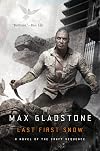
It’s not a kissing book.
I feel I have to mention that because both people who saw me reading it at work said the title sounded like a romance. Since one was reading A Game of Thrones, I was a bit surprised at her lack of knowledge about Gladstone’s standout fantasy series, The Craft Sequence. It deserves far more recognition among fantasy and sci-fi fans than it currently receives. My best guess is that Gladstone is such an unusual writer, he travels above and below the average radar. show more The series has a setting that feels vaguely urban fantasy, language that reminds me of Kay, and complicated concepts found more often in conceptual science fiction. Honestly, his writing hits so many of my satisfaction points that I’m resisting skipping my review in favor of starting a series re-read.
“There would always be a spider who bargained with a fly, there would always be two sisters who played ball with demons, there would always be monsters who tried to eat the sun, even if marrow and majesty seeped out from the myths.“
It is a book about relationships in the most philosophical sense of the word, the ways of faith, money, fidelity and love and the agreements made between them. Oh, and a bit of revolution, urban decay, gentrification and the aftermath of war. One of the main characters is Temoc, warrior high priest of a god banished from the city during the god wars forty years ago. Without sacrifice and followers–a contract of belief, if you will–the gods lie dormant, and weak. Temoc has been practicing a peaceful way of life, living in the Skittersill district with his academic wife and his pre-teen son Caleb. It also follows Elayne, a Craftswoman, magically skilled in a secular form of power that has risen to prominence after the god wars.
In the poor district of the city, the Skittersill, god-created protections are decaying, leaving the district vulnerable from fire, pestilence and disease. Elayne is trying to negotiate an acceptable contract between the Red King Consolidated and the merchants that want to buy and raze the Skittersill. Elayne has a eye out for trouble and tries to warn both parties: “‘You’ve not accounted for all the factors.’ ‘Between the King in Red and Tan Batac’s merchant collective, we control property use rights in the Skittersill. Who else is there?’” How about the residents who want to prevent their homes from becoming unaffordable? Temoc becomes involved by believers in the district, and by his old enmity with the Red King. The powers that come from his belief could be all that stands against a successful resolution–or that creates one.
If you’ve been following the series to this point, you’ll recognize both Temoc and Caleb, a good ten years earlier than the events in Two Serpents Rise, (my review) and Elayne from Three Parts Dead (my review). It is worth taking a moment to admire Gladstone’s writing genius. These people are going to survive, because we’ve seen them in their future, yet the certainty does not lessen the tension of Last First Snow. I’d compare it to hearing a story from my father about Vietnam: I know the ending–I know he’s here, and the general kind of person he is now, but that doesn’t make hearing about the experience less tense or less interesting (insert carol’s rant about the concept of spoilers).
Narrative is third person omniscient focused on a handful of characters; Temoc, the priest; Elayne, the Craftswoman; Chel, a dockhand in the Skittersill, with the occasional thoughts from a few others. Elayne is particularly admirable as she tried to find the balance between legal responsibilities and ethical principles. As a Craftswoman, she’s destined for existence beyond the flesh, but instead of giving her arrogance, it leaves her grasping at compassion: “Elayne was still human enough to give the other woman space, to let her stand and watch the blood and read the letter with her hand clenched around the railing. Elayne was still human enough to leave.”
Both Elayne and Temoc fought in the wars forty years ago, and both reflect on their reactions now versus their actions then. In some ways, it is a book grounded on the dilemmas that come with maturity; once you have lost the righteousness of youthful activism, how do you navigate the obligations of real life–family, profession–with passion, belief and ethics? Temoc, technically part of the ‘losing’ side of the war, recognizes that the history of a place he has known intimately has grown into a modern presence: “Temoc had not left his city. His city left him, replaced by another. He been born scant miles from the spot, yet felt a half a world away from everything he knew.”
When the scale is a revolution, it’s easy to lose humanity, and perspective. A little judicious humor occasionally lightens the mood:
“Air filters be damned: in Dresediel Lex, to run was to invite the city into your lungs, and the city was a drunken guest who like to trash the place.”
“Elayne briefly considered gutting the man, and decided against it. In her experience spraying a Court hallway with blood and other humors was rarely a good idea. That one time in Iskar had been a special case.”
There are a few shortcomings, but honestly, I think that’s because I’m comparing Gladstone to the greats in literary fantasy. No mere beach read, this one engaged my brain as much as my heart, and I was vaguely anxious as the events cascaded.
Immensely engrossing, what I really wanted after finishing was to go home and read the series from the beginning again, just so I could see the echos from Temoc, Elayne and the events of the Skittersill reverberate through the earlier books. At least my Game of Thrones friend related to that feeling. show less
I feel I have to mention that because both people who saw me reading it at work said the title sounded like a romance. Since one was reading A Game of Thrones, I was a bit surprised at her lack of knowledge about Gladstone’s standout fantasy series, The Craft Sequence. It deserves far more recognition among fantasy and sci-fi fans than it currently receives. My best guess is that Gladstone is such an unusual writer, he travels above and below the average radar. show more The series has a setting that feels vaguely urban fantasy, language that reminds me of Kay, and complicated concepts found more often in conceptual science fiction. Honestly, his writing hits so many of my satisfaction points that I’m resisting skipping my review in favor of starting a series re-read.
“There would always be a spider who bargained with a fly, there would always be two sisters who played ball with demons, there would always be monsters who tried to eat the sun, even if marrow and majesty seeped out from the myths.“
It is a book about relationships in the most philosophical sense of the word, the ways of faith, money, fidelity and love and the agreements made between them. Oh, and a bit of revolution, urban decay, gentrification and the aftermath of war. One of the main characters is Temoc, warrior high priest of a god banished from the city during the god wars forty years ago. Without sacrifice and followers–a contract of belief, if you will–the gods lie dormant, and weak. Temoc has been practicing a peaceful way of life, living in the Skittersill district with his academic wife and his pre-teen son Caleb. It also follows Elayne, a Craftswoman, magically skilled in a secular form of power that has risen to prominence after the god wars.
In the poor district of the city, the Skittersill, god-created protections are decaying, leaving the district vulnerable from fire, pestilence and disease. Elayne is trying to negotiate an acceptable contract between the Red King Consolidated and the merchants that want to buy and raze the Skittersill. Elayne has a eye out for trouble and tries to warn both parties: “‘You’ve not accounted for all the factors.’ ‘Between the King in Red and Tan Batac’s merchant collective, we control property use rights in the Skittersill. Who else is there?’” How about the residents who want to prevent their homes from becoming unaffordable? Temoc becomes involved by believers in the district, and by his old enmity with the Red King. The powers that come from his belief could be all that stands against a successful resolution–or that creates one.
If you’ve been following the series to this point, you’ll recognize both Temoc and Caleb, a good ten years earlier than the events in Two Serpents Rise, (my review) and Elayne from Three Parts Dead (my review). It is worth taking a moment to admire Gladstone’s writing genius. These people are going to survive, because we’ve seen them in their future, yet the certainty does not lessen the tension of Last First Snow. I’d compare it to hearing a story from my father about Vietnam: I know the ending–I know he’s here, and the general kind of person he is now, but that doesn’t make hearing about the experience less tense or less interesting (insert carol’s rant about the concept of spoilers).
Narrative is third person omniscient focused on a handful of characters; Temoc, the priest; Elayne, the Craftswoman; Chel, a dockhand in the Skittersill, with the occasional thoughts from a few others. Elayne is particularly admirable as she tried to find the balance between legal responsibilities and ethical principles. As a Craftswoman, she’s destined for existence beyond the flesh, but instead of giving her arrogance, it leaves her grasping at compassion: “Elayne was still human enough to give the other woman space, to let her stand and watch the blood and read the letter with her hand clenched around the railing. Elayne was still human enough to leave.”
Both Elayne and Temoc fought in the wars forty years ago, and both reflect on their reactions now versus their actions then. In some ways, it is a book grounded on the dilemmas that come with maturity; once you have lost the righteousness of youthful activism, how do you navigate the obligations of real life–family, profession–with passion, belief and ethics? Temoc, technically part of the ‘losing’ side of the war, recognizes that the history of a place he has known intimately has grown into a modern presence: “Temoc had not left his city. His city left him, replaced by another. He been born scant miles from the spot, yet felt a half a world away from everything he knew.”
When the scale is a revolution, it’s easy to lose humanity, and perspective. A little judicious humor occasionally lightens the mood:
“Air filters be damned: in Dresediel Lex, to run was to invite the city into your lungs, and the city was a drunken guest who like to trash the place.”
“Elayne briefly considered gutting the man, and decided against it. In her experience spraying a Court hallway with blood and other humors was rarely a good idea. That one time in Iskar had been a special case.”
There are a few shortcomings, but honestly, I think that’s because I’m comparing Gladstone to the greats in literary fantasy. No mere beach read, this one engaged my brain as much as my heart, and I was vaguely anxious as the events cascaded.
Immensely engrossing, what I really wanted after finishing was to go home and read the series from the beginning again, just so I could see the echos from Temoc, Elayne and the events of the Skittersill reverberate through the earlier books. At least my Game of Thrones friend related to that feeling. show less

This is one of the most original novels I've ever read, and it's definitely the best romance novel I've ever read. I'm not a huge fan of these, but if people write more like this one, I may just change my opinion.
Content warnings:
- self-harm
Representation:
- both protagonists are sapphic
- one of the protagonists is a person of color
Two sides fight a war using time and potential futures, trying to win the best possible future for themselves. What begins as an agent from one side writing a show more mocking letter to another on the opposite side ends with both of them falling in love. But in this war in which winning means losing a love, is it possible to find a happy outcome?
I don't think I've ever read an epistolary novel … it gets a bit tedious, to be honest, but perhaps that's just because I'm not used to it. That said, I fell in love with the writing style(s) at the very first line. And there are some absolutely gorgeous lines, too — my favorite being "I want to meet you in every place I ever loved." The main characters also give us information about things, even about themselves, at a very satisfyingly slow rate. It's a good way to keep the interest up.
Another interesting thing about this book is the lack of any described setting, or not much of it. Another reviewer said it very well (and I can't remember who it was, sorry!): "We never get a setting, because the setting doesn't matter. This is, in essence, a pure romance book." What matters is not the war around them, but the relationship developing between these two agents themselves.
I do wish, however, that the two leads had more distinct voices. I don't doubt that they're two different people, Red being a robot or cyborg who's kind of stiff and not used to being social, and Blue being an organic shape-shifting creature with a sense of humor and a love for pop culture. But very little of this comes through the actual language of the letters themselves. I don't think I could tell their voices apart if I was shown an example (which is funny, because each author wrote a different character — they work really well together!).
Afterthoughts: after sitting on this for a couple months, I think one of the reasons people love this book so much is that apart from 2-3 character traits, the MCs don't really have fully fleshed personalities to distinguish them. In this way, it's easy to project onto them as a sort of wish fulfillment. And this isn't a criticism. Because this book is so unique, I think it works here. show less
Content warnings:
- self-harm
Representation:
- both protagonists are sapphic
- one of the protagonists is a person of color
Two sides fight a war using time and potential futures, trying to win the best possible future for themselves. What begins as an agent from one side writing a show more mocking letter to another on the opposite side ends with both of them falling in love. But in this war in which winning means losing a love, is it possible to find a happy outcome?
I don't think I've ever read an epistolary novel … it gets a bit tedious, to be honest, but perhaps that's just because I'm not used to it. That said, I fell in love with the writing style(s) at the very first line. And there are some absolutely gorgeous lines, too — my favorite being "I want to meet you in every place I ever loved." The main characters also give us information about things, even about themselves, at a very satisfyingly slow rate. It's a good way to keep the interest up.
Another interesting thing about this book is the lack of any described setting, or not much of it. Another reviewer said it very well (and I can't remember who it was, sorry!): "We never get a setting, because the setting doesn't matter. This is, in essence, a pure romance book." What matters is not the war around them, but the relationship developing between these two agents themselves.
I do wish, however, that the two leads had more distinct voices. I don't doubt that they're two different people, Red being a robot or cyborg who's kind of stiff and not used to being social, and Blue being an organic shape-shifting creature with a sense of humor and a love for pop culture. But very little of this comes through the actual language of the letters themselves. I don't think I could tell their voices apart if I was shown an example (which is funny, because each author wrote a different character — they work really well together!).
Afterthoughts: after sitting on this for a couple months, I think one of the reasons people love this book so much is that apart from 2-3 character traits, the MCs don't really have fully fleshed personalities to distinguish them. In this way, it's easy to project onto them as a sort of wish fulfillment. And this isn't a criticism. Because this book is so unique, I think it works here. show less
Lists
QLAP (1)
Sapph-Lit (1)
Favourite Books (1)
Female Author (1)
Pride Wishlist (1)
My Library (1)
Overdue Podcast (1)
Simon & Schuster (1)
At the Library (1)
Nebula Award (1)
Literary SF/F (1)
Books to Read (1)
Awards


You May Also Like


Associated Authors
Statistics
- Works
- 49
- Also by
- 23
- Members
- 13,373
- Popularity
- #1,740
- Rating
- 3.9
- Reviews
- 655
- ISBNs
- 143
- Languages
- 11
- Favorited
- 9