

Robert Jackson Bennett
Author of Foundryside
About the Author
Series
Works by Robert Jackson Bennett
Associated Works
Tagged
Common Knowledge
- Legal name
- Bennett, Robert Jackson
- Birthdate
- 1984-06-22
- Gender
- male
- Education
- University of Texas
- Occupations
- speculative fiction writer
- Nationality
- USA
- Birthplace
- Baton Rouge, Louisiana, USA
- Places of residence
- Austin, Texas, USA
- Map Location
- Louisiana, USA
Members
Reviews

Second verse same as the first? In many ways City of Blades, the second book in Robert Jackson Bennet's Divine Cities trilogy, feels a lot like City of Stairs. Stylistically both books are ultra slow burns where the author takes his time setting the stage while introducing us to an all new set of characters and fleshing out Mulaghesh who was only part of the supporting cast in the first book. We are given enough information that theoretically you could read this book before City of Stairs, show more though you'd miss out on some nods to the first book. Where the stories differ is in theme. City of Blades is a soldiers tale about war, promises both broken and kept and, oddly enough, love.
Welcome to Voortyashtan! Once home to the god of war and the birthplace of fearsome supernatural sentinels, the city is mostly in ruins and a place where rebels hide, plotting and enacting frequent uprisings. Its only redeeming feature is a harbor that, if it can be restored, will unlock trade for the whole continent and bring wealth back to the city. General Turyin Mulaghesh has been drinking her way to an early grave in her retirement. Before she can fully self destruct, Mulaghesh is called to serve the Empire one last time and take a "tour" of Voortyashtan if she wishes to keep her pension. It's just one last undercover mission to investigate some worryingly miraculous... things... happening near the city.
I admit I was a tad disappointed when I first started the book and found out it had both a 5 year time jump from the previous story and a new main character. That disappointment didn't last long. Mulaghesh was an interesting supporting character in the first book and she's a fantastic lead in this one. I'm impressed at the depth of character building Bennett is able to do in his stories. Mulaghesh is bitter and cynical and tired of war, yet she seems to be constantly forced to revisit that part of her past and solve problems others don't want to. The supporting cast is just as interesting, especially Signe Harkvaldsson. I think I would read a short story about Signe's college days and how she got to be in her role in charge of the harbor project.
Same goes for Bennett's world building. The history and depth Bennett is able to give to Voortyashtan makes me feel like I'm there in the streets with Mulaghesh. The city feels just as alive as Bulikov did.
RJB sure knows how to write exciting endings. The final third of the book is one heck of a roller coaster ride. All the slow and steady story telling builds up to one surprising conclusion. The story is all wrapped up by the end, though one supporting character has an unknown fate that I think is the hook for the final book.
As much as I enjoyed Mulaghesh's story, I found myself missing Shara. I hope some day the author writes a short story or two of what Shara was up to between books. show less
Welcome to Voortyashtan! Once home to the god of war and the birthplace of fearsome supernatural sentinels, the city is mostly in ruins and a place where rebels hide, plotting and enacting frequent uprisings. Its only redeeming feature is a harbor that, if it can be restored, will unlock trade for the whole continent and bring wealth back to the city. General Turyin Mulaghesh has been drinking her way to an early grave in her retirement. Before she can fully self destruct, Mulaghesh is called to serve the Empire one last time and take a "tour" of Voortyashtan if she wishes to keep her pension. It's just one last undercover mission to investigate some worryingly miraculous... things... happening near the city.
I admit I was a tad disappointed when I first started the book and found out it had both a 5 year time jump from the previous story and a new main character. That disappointment didn't last long. Mulaghesh was an interesting supporting character in the first book and she's a fantastic lead in this one. I'm impressed at the depth of character building Bennett is able to do in his stories. Mulaghesh is bitter and cynical and tired of war, yet she seems to be constantly forced to revisit that part of her past and solve problems others don't want to. The supporting cast is just as interesting, especially Signe Harkvaldsson. I think I would read a short story about Signe's college days and how she got to be in her role in charge of the harbor project.
Same goes for Bennett's world building. The history and depth Bennett is able to give to Voortyashtan makes me feel like I'm there in the streets with Mulaghesh. The city feels just as alive as Bulikov did.
RJB sure knows how to write exciting endings. The final third of the book is one heck of a roller coaster ride. All the slow and steady story telling builds up to one surprising conclusion. The story is all wrapped up by the end, though one supporting character has an unknown fate that I think is the hook for the final book.
As much as I enjoyed Mulaghesh's story, I found myself missing Shara. I hope some day the author writes a short story or two of what Shara was up to between books. show less

I am still reeling. So, you thought that book 1 was dark at times, full of blood and gore? This book: “Hold my beer.”
This story is more complicated, full of evil secrets revealed, horrible choices past and present, and horrific consequences. Haven’t you dreamt of remaking the world? Making it a better place? How far would you go, if you had superpowers? How much collateral damage would you justify? Kudos to the author for writing about an ancient, terrifying evil that simply wants to show more help humanity. It’s all for a “noble cause”.
As the book sprinted along, the magic was getting ever more wild, weird, and interesting. I did think that the characters’ magic problem-solving skills were too good at times (it made more sense by the end, though). I am willing to look past that, because I was in a nail-biting mode for most of the book. The characters are still too thin for my liking, but I did like what the author did with them. Some of the plot twists were not unexpected… and then there was an additional twist that made my jaw drop and my heart break a little. (How often do you feel sorry for the villain in books!?)
The ending is a cliffhanger, naturally, with a very obvious setup for the final instalment. I am game. show less
This story is more complicated, full of evil secrets revealed, horrible choices past and present, and horrific consequences. Haven’t you dreamt of remaking the world? Making it a better place? How far would you go, if you had superpowers? How much collateral damage would you justify? Kudos to the author for writing about an ancient, terrifying evil that simply wants to show more help humanity. It’s all for a “noble cause”.
As the book sprinted along, the magic was getting ever more wild, weird, and interesting. I did think that the characters’ magic problem-solving skills were too good at times (it made more sense by the end, though). I am willing to look past that, because I was in a nail-biting mode for most of the book. The characters are still too thin for my liking, but I did like what the author did with them. Some of the plot twists were not unexpected… and then there was an additional twist that made my jaw drop and my heart break a little. (How often do you feel sorry for the villain in books!?)
The ending is a cliffhanger, naturally, with a very obvious setup for the final instalment. I am game. show less

This originally appeared at The Irresponsible Reader.
---
WHAT'S A DROP OF CORRUPTION ABOUT?
Dinios Kol arrives (as is his custom) in the canton of Yarrowdale, ahead of his boss, Ana Dolabra. They've been assigned to investigate the disappearance of a Treasury officer. This officer—and the rest of the Treasury delegation—is in Yarrowdale to negotiate with the King the final steps of Yarrowdale fully joining the Empire once and for all.
Right now, Yarrowdale is (rightly or wrongly) considered show more a backwater territory, valuable for one thing only—it's a place that the leviathans do not travel to, so their corpses can be moved there and harvested for the copious near-magical substances used by the Empire. (incidentally, I found this whole aspect just tremendously cool. I won't say more than that, but if we only got a novella about this part, I'd have been satisfied). This is the only place where this is safely done, so it's hard to understate the strategic importance of Yarrowdale.
So one of the Empire's chief negotiators going missing is no small thing—so Dolabra is assigned to find him.
Not at all shockingly (to any reader), the corpse of the officer is quickly located once Kol arrives. Its condition raises eyebrows and concerns—and that's just the beginning, the more they investigate the circumstances around this killing the less sense things make, and the greatness of the mind behind it is seen. Dolabra is excited by the challenge, while everyone around her becomes more and more apprehensive with each discovery or conclusion she makes.
I won't go on much beyond this—I'd love to summarize the whole book for you, but why? More victims are found, more questions are raised, the stakes keep climbing higher, and the implications for the future of the Empire are great.
DOLABRA AND KOL
When I talked about The Tainted Cup , I didn't really talk about the primary characters. I hesitate to start now because I'm going to have a hard time stopping. But let me try to dip my toe into it.
Ana Dolabra is a brilliant investigator for the Empire—being sent to the trickiest investigations and given almost unlimited authority to get the answers she seeks. Due to some physical (and psychological) limitations—and the fact that she has zero interpersonal skills (and that's being generous)—she requires a deputy to handle most of the actual investigating, bringing her the evidence and testimony that she needs to solve the crimes.
Which is where Dinios Kol comes in. He's been altered to have a perfect memory—sights, sounds, smells, conversation...you name it, he remembers it all (even if he doesn't want to). So he's the perfect assistant for someone who will not interact with people of her own volition. There are jobs he'd rather perform—and places he'd rather perform them. But his family needs money to pay medical debt, and this is the surest way for him to accomplish that. He escapes into drink, drugs (I think it's more like tobacco than anything, but I'm prepared to be shown that I'm wrong), and sex as often as he can. But is reliable when the chips are down—he has to be.
Ana Dolabra is very much in the Nero Wolfe mold—purposefully so. But she breaks the mold in all the right ways—her reasons for relying on someone else to interact with the outside world are different and less self-imposed. Her ego is as large (I wasn't sure that was possible), and she takes some of these crimes as a personal attack on her and her genius (like Wolfe occasionally does). But she relishes the challenge—and talks openly about enjoying this case compared to the boring murders and whatnot she's solved recently. She has a strange relationship with eating so that sometimes she sounds like her antecedent and other times the complete opposite.
Most people will not care about this (and I assure you, that paragraph could be longer)—but I'm incapable of reading any section featuring Dolabra without pausing to contrast her to Wolfe. She never comes out bad in these comparisons—just different in a creative way.
Her Archie Goodwin, Dinios Kol, can be compared and contrasted in the same way. I started to say he's less like Archie, and I really want to. But I can really think of one major difference—what drives them. Kol's motivation for the work (at this point, anyway, it may be shifting toward the end) is different. So he behaves with a little less loyalty. This makes him more interesting and makes up for his lack of humor. Ah, look there—I found another notable difference. Kol is far too serious to really be an Archie, but I wouldn't want to change a thing about him.
BUILDING ON THE WORLDBUILDING
In The Tainted Cup, Bennett introduced us to a fascinating and complex world of kaiju-esque monsters, magic-feeling science, and a massive empire that's keeping humanity alive. it was both awesome and strange. In A Drop of Corruption, it's almost as if Bennet tells the reader, "So you've seen the typical in this world, but you ain't ready for this." As strange and terrible as we thought things were...ha.
We get to see new augmentations, we get to see how outsiders (or semi-outsiders) regard the Empire, we learn a whole lot of history about the Empire, the monsters, the science behind the augmentations, and so much more. I'm having trouble expressing it all.
In both books so far Bennett can bring the unbelievable and indescribable to life. Din will start a sentence by saying something like, "Words cannot express ___" or "It's too incredible to explain" or something like that—and then will falteringly describe it in such a way that the reader comes away with a pretty good idea of what Din saw. Even when he's not calling his shot like that, item after item, phenomenon after phenomenon, creature after creature that really shouldn't make sense when written about comes through with a level of detail that leads the reader to think they're imagining what Bennett imagined.
Sure....it's likely that no two readers will have similar mental images. But that's not important—you'll think you do.
THE AUTHOR'S NOTE
The Author's Note (largely an Acknowledgement section, but a little bit more) is a must-read. I don't know if you're prone to reading them—particularly if they feel more like an Acknowledgment than anything else. But make an exception for this one. It's worth your time.
SO, WHAT DID I THINK ABOUT A DROP OF CORRUPTION?
I was blown away by The Tainted Cup, and so I was apprehensive about this one—could it live up to it? I'm pleased to say that it did. I very likely enjoyed this much more—because I was ready for the strangeness and could just let it build on what the prior book did.
I feel bad saying I had fun reading about all the trauma that these victims went through, but I really did. Kol and Dolabra—and Kol's new local acquaintances are just so well-conceived and vividly drawn, that it'd be harder to be disinterested than captivated.
The mystery kept me guessing until the end (except for the time I thought I'd figured it out, and I was very wrong). There was even a point where I wrote in my notes, "Could this be a redder herring?" and it was anything but. I won't go into details so you can be fooled like I was, but man... The only thing I like more than the smug satisfaction of figuring out a mystery before a brilliant detective is an author who can fool me into that smugness only to pull the rug out from under me. Not to get elitist or anything, but a fantasy writer should be worse at this than a mystery writer. Bennett didn't get that memo.
I do think you could read this book without the first in the series—but don't do that to yourself. Buy a copy of this now (or get on your Library's waitlist), but get The Tainted Cup at the same time. If I'm right about where this series is going (or even almost close to right), you're going to want to be ready for it. This is just dynamite.
This book deserves more compliments from me—but who has the time? (not the guy who meant to post this a week or so ago). A great mystery novel, a great fantasy novel, with characters that you'd want to read about even if the plots weren't worth the time or trouble.
Disclaimer: I received this eARC from Random House Publishing Group - Del Rey, Random House Worlds, Inklore via NetGalley in exchange for this post which contains my honest opinion—thanks to both for this. show less
---
WHAT'S A DROP OF CORRUPTION ABOUT?
Dinios Kol arrives (as is his custom) in the canton of Yarrowdale, ahead of his boss, Ana Dolabra. They've been assigned to investigate the disappearance of a Treasury officer. This officer—and the rest of the Treasury delegation—is in Yarrowdale to negotiate with the King the final steps of Yarrowdale fully joining the Empire once and for all.
Right now, Yarrowdale is (rightly or wrongly) considered show more a backwater territory, valuable for one thing only—it's a place that the leviathans do not travel to, so their corpses can be moved there and harvested for the copious near-magical substances used by the Empire. (incidentally, I found this whole aspect just tremendously cool. I won't say more than that, but if we only got a novella about this part, I'd have been satisfied). This is the only place where this is safely done, so it's hard to understate the strategic importance of Yarrowdale.
So one of the Empire's chief negotiators going missing is no small thing—so Dolabra is assigned to find him.
Not at all shockingly (to any reader), the corpse of the officer is quickly located once Kol arrives. Its condition raises eyebrows and concerns—and that's just the beginning, the more they investigate the circumstances around this killing the less sense things make, and the greatness of the mind behind it is seen. Dolabra is excited by the challenge, while everyone around her becomes more and more apprehensive with each discovery or conclusion she makes.
I won't go on much beyond this—I'd love to summarize the whole book for you, but why? More victims are found, more questions are raised, the stakes keep climbing higher, and the implications for the future of the Empire are great.
DOLABRA AND KOL
When I talked about The Tainted Cup , I didn't really talk about the primary characters. I hesitate to start now because I'm going to have a hard time stopping. But let me try to dip my toe into it.
Ana Dolabra is a brilliant investigator for the Empire—being sent to the trickiest investigations and given almost unlimited authority to get the answers she seeks. Due to some physical (and psychological) limitations—and the fact that she has zero interpersonal skills (and that's being generous)—she requires a deputy to handle most of the actual investigating, bringing her the evidence and testimony that she needs to solve the crimes.
Which is where Dinios Kol comes in. He's been altered to have a perfect memory—sights, sounds, smells, conversation...you name it, he remembers it all (even if he doesn't want to). So he's the perfect assistant for someone who will not interact with people of her own volition. There are jobs he'd rather perform—and places he'd rather perform them. But his family needs money to pay medical debt, and this is the surest way for him to accomplish that. He escapes into drink, drugs (I think it's more like tobacco than anything, but I'm prepared to be shown that I'm wrong), and sex as often as he can. But is reliable when the chips are down—he has to be.
Ana Dolabra is very much in the Nero Wolfe mold—purposefully so. But she breaks the mold in all the right ways—her reasons for relying on someone else to interact with the outside world are different and less self-imposed. Her ego is as large (I wasn't sure that was possible), and she takes some of these crimes as a personal attack on her and her genius (like Wolfe occasionally does). But she relishes the challenge—and talks openly about enjoying this case compared to the boring murders and whatnot she's solved recently. She has a strange relationship with eating so that sometimes she sounds like her antecedent and other times the complete opposite.
Most people will not care about this (and I assure you, that paragraph could be longer)—but I'm incapable of reading any section featuring Dolabra without pausing to contrast her to Wolfe. She never comes out bad in these comparisons—just different in a creative way.
Her Archie Goodwin, Dinios Kol, can be compared and contrasted in the same way. I started to say he's less like Archie, and I really want to. But I can really think of one major difference—what drives them. Kol's motivation for the work (at this point, anyway, it may be shifting toward the end) is different. So he behaves with a little less loyalty. This makes him more interesting and makes up for his lack of humor. Ah, look there—I found another notable difference. Kol is far too serious to really be an Archie, but I wouldn't want to change a thing about him.
BUILDING ON THE WORLDBUILDING
In The Tainted Cup, Bennett introduced us to a fascinating and complex world of kaiju-esque monsters, magic-feeling science, and a massive empire that's keeping humanity alive. it was both awesome and strange. In A Drop of Corruption, it's almost as if Bennet tells the reader, "So you've seen the typical in this world, but you ain't ready for this." As strange and terrible as we thought things were...ha.
We get to see new augmentations, we get to see how outsiders (or semi-outsiders) regard the Empire, we learn a whole lot of history about the Empire, the monsters, the science behind the augmentations, and so much more. I'm having trouble expressing it all.
In both books so far Bennett can bring the unbelievable and indescribable to life. Din will start a sentence by saying something like, "Words cannot express ___" or "It's too incredible to explain" or something like that—and then will falteringly describe it in such a way that the reader comes away with a pretty good idea of what Din saw. Even when he's not calling his shot like that, item after item, phenomenon after phenomenon, creature after creature that really shouldn't make sense when written about comes through with a level of detail that leads the reader to think they're imagining what Bennett imagined.
Sure....it's likely that no two readers will have similar mental images. But that's not important—you'll think you do.
THE AUTHOR'S NOTE
The Author's Note (largely an Acknowledgement section, but a little bit more) is a must-read. I don't know if you're prone to reading them—particularly if they feel more like an Acknowledgment than anything else. But make an exception for this one. It's worth your time.
SO, WHAT DID I THINK ABOUT A DROP OF CORRUPTION?
I was blown away by The Tainted Cup, and so I was apprehensive about this one—could it live up to it? I'm pleased to say that it did. I very likely enjoyed this much more—because I was ready for the strangeness and could just let it build on what the prior book did.
I feel bad saying I had fun reading about all the trauma that these victims went through, but I really did. Kol and Dolabra—and Kol's new local acquaintances are just so well-conceived and vividly drawn, that it'd be harder to be disinterested than captivated.
The mystery kept me guessing until the end (except for the time I thought I'd figured it out, and I was very wrong). There was even a point where I wrote in my notes, "Could this be a redder herring?" and it was anything but. I won't go into details so you can be fooled like I was, but man... The only thing I like more than the smug satisfaction of figuring out a mystery before a brilliant detective is an author who can fool me into that smugness only to pull the rug out from under me. Not to get elitist or anything, but a fantasy writer should be worse at this than a mystery writer. Bennett didn't get that memo.
I do think you could read this book without the first in the series—but don't do that to yourself. Buy a copy of this now (or get on your Library's waitlist), but get The Tainted Cup at the same time. If I'm right about where this series is going (or even almost close to right), you're going to want to be ready for it. This is just dynamite.
This book deserves more compliments from me—but who has the time? (not the guy who meant to post this a week or so ago). A great mystery novel, a great fantasy novel, with characters that you'd want to read about even if the plots weren't worth the time or trouble.
Disclaimer: I received this eARC from Random House Publishing Group - Del Rey, Random House Worlds, Inklore via NetGalley in exchange for this post which contains my honest opinion—thanks to both for this. show less
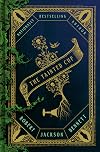
I’ve come to expect mind-blowing originality from Bennett, but this book exceeded my high expectations. It’s an intricate murder mystery set in a fantasy world with hints of Ancient Rome and a whole lot of innovative magic as people struggle to survive in a setting with aggressive worms, plants, and city-sized titans. The politics are about as nasty as the monstrous elements, too. Quite honestly, this is one of the best books I’ve read this year.
Lists
Awards


You May Also Like


Associated Authors
Statistics
- Works
- 23
- Also by
- 5
- Members
- 13,615
- Popularity
- #1,703
- Rating
- 4.1
- Reviews
- 806
- ISBNs
- 177
- Languages
- 11
- Favorited
- 15
