
Rob Sanders (3)
Author of Pride: The Story of Harvey Milk and the Rainbow Flag
For other authors named Rob Sanders, see the disambiguation page.
About the Author
Image credit: Rob Sanders
Works by Rob Sanders
The Mother of a Movement: Jeanne Manford--Ally, Activist, and Founder of PFLAG (2022) 40 copies, 2 reviews
The Fighting Infantryman: The Story of Albert D. J. Cashier, Transgender Civil War Soldier (2020) 24 copies, 2 reviews
Tagged
Common Knowledge
- Gender
- male
- Occupations
- teacher
writer
editorial manager (formerly, in religious educational publishing) - Agent
- Rubin Pfeffer
- Nationality
- USA
- Birthplace
- Springfield, Missouri, USA
- Places of residence
- Texas, USA
Alabama, USA
Tennessee, USA
Brandon, Florida, USA - Associated Place (for map)
- USA
Members
Reviews
“My story is a fairy tale.”
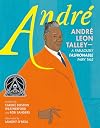
So opens this empowering biography of trailblazing style maker André Leon Talley (1948-2022), the first Black man to serve as Vogue’s editor-at-large, creative director, and fashion news director. But this fantasy wasn’t born from lucky happenstance or serendipitous privilege; Talley’s talent and tenacity conjured the magic that colors his story. Growing up in Jim Crow–era North Carolina, Talley endured racism, homophobia, and sexual abuse, all the show more while shrouded in his grandmother’s unconditional love. Fashion offered escape, and Talley took it, doggedly pursuing the work that would eventually land him an (unpaid) gig under Diana Vreeland, former editor for Vogue. Talley rose to prominence, setting trends, challenging convention, and standing tall against hatred; as he put it, he “scorched the earth” with his singular vision, forever transforming the fashion industry with gifts cultivated under his grandmother’s care. Weatherford and Sanders’ text, interspersed with Talley’s own words, renders a detailed portrait of the legendary figure, offering extensive proof of his initiative and resilience. The beauty of Blackness is named explicitly throughout, but Talley’s sexual identity is broached only obliquely; while the subtlety may elude younger readers, this ambiguity will allow others to recognize their own experiences. O’Neal cleverly evokes sewing patterns of yore, a visual boon. And while both authors and illustrator pay homage to similarly magical myths—among them Cinderella and Little Red Riding Hood—the narrative roughs out a real-life road map for readers who see themselves in the hero.
Affirming and important. (authors' note, information on people referenced, glossary, note about HIV/AIDS, sources for quotes, bibliography) (Picture-book biography. 9-12)
-Kirkus Review show less
So opens this empowering biography of trailblazing style maker André Leon Talley (1948-2022), the first Black man to serve as Vogue’s editor-at-large, creative director, and fashion news director. But this fantasy wasn’t born from lucky happenstance or serendipitous privilege; Talley’s talent and tenacity conjured the magic that colors his story. Growing up in Jim Crow–era North Carolina, Talley endured racism, homophobia, and sexual abuse, all the show more while shrouded in his grandmother’s unconditional love. Fashion offered escape, and Talley took it, doggedly pursuing the work that would eventually land him an (unpaid) gig under Diana Vreeland, former editor for Vogue. Talley rose to prominence, setting trends, challenging convention, and standing tall against hatred; as he put it, he “scorched the earth” with his singular vision, forever transforming the fashion industry with gifts cultivated under his grandmother’s care. Weatherford and Sanders’ text, interspersed with Talley’s own words, renders a detailed portrait of the legendary figure, offering extensive proof of his initiative and resilience. The beauty of Blackness is named explicitly throughout, but Talley’s sexual identity is broached only obliquely; while the subtlety may elude younger readers, this ambiguity will allow others to recognize their own experiences. O’Neal cleverly evokes sewing patterns of yore, a visual boon. And while both authors and illustrator pay homage to similarly magical myths—among them Cinderella and Little Red Riding Hood—the narrative roughs out a real-life road map for readers who see themselves in the hero.
Affirming and important. (authors' note, information on people referenced, glossary, note about HIV/AIDS, sources for quotes, bibliography) (Picture-book biography. 9-12)
-Kirkus Review show less
A hope-filled ode to the rainbow flag, the LGBTQ rights movement’s most prominent symbol.
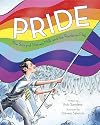
The flag’s story begins with Harvey Milk, a young man with a “dream” for equality. In 1977, Milk becomes one of the first openly gay people to be elected to U.S. political office. As Milk marches toward his dream through protests and rallies, he works with artist Gilbert Baker to come up with a unifying symbol for the movement. In 1978, the rainbow flag makes its debut in San Francisco. Later show more that year, Milk is assassinated, but the flag continues to unify, sending his message of hope to LGBTQ individuals all over the world. Milk’s flag becomes “a dream for us all.” Though he mentions Baker, Sanders spotlights Milk instead as the flag’s mastermind. The text mentions some iterations of the flag but stops short of including those revisions that match identities often excluded from the movement. Still, the visual references to important LGBTQ milestones will make supporters cheer. Salerno’s retro style—detailed but fluid drawings of figures set against paisley-patterned backgrounds—gives fitting, ’70s-era bohemian undertones. The crowds Milk addresses are largely as white as he is, but later illustrations nod to diversity within the LGBTQ population. Photographs of Milk, Baker, and other moments in the movement are appended.
A biography LGBTQ rights activists and allies can proudly share with children. (biographical notes, timeline, bibliography) (Picture book/biography. 4-9) show less
The flag’s story begins with Harvey Milk, a young man with a “dream” for equality. In 1977, Milk becomes one of the first openly gay people to be elected to U.S. political office. As Milk marches toward his dream through protests and rallies, he works with artist Gilbert Baker to come up with a unifying symbol for the movement. In 1978, the rainbow flag makes its debut in San Francisco. Later show more that year, Milk is assassinated, but the flag continues to unify, sending his message of hope to LGBTQ individuals all over the world. Milk’s flag becomes “a dream for us all.” Though he mentions Baker, Sanders spotlights Milk instead as the flag’s mastermind. The text mentions some iterations of the flag but stops short of including those revisions that match identities often excluded from the movement. Still, the visual references to important LGBTQ milestones will make supporters cheer. Salerno’s retro style—detailed but fluid drawings of figures set against paisley-patterned backgrounds—gives fitting, ’70s-era bohemian undertones. The crowds Milk addresses are largely as white as he is, but later illustrations nod to diversity within the LGBTQ population. Photographs of Milk, Baker, and other moments in the movement are appended.
A biography LGBTQ rights activists and allies can proudly share with children. (biographical notes, timeline, bibliography) (Picture book/biography. 4-9) show less

A new picture-book exploration of the story of gay rights activist and community leader Harvey Milk, and the creation of the iconic Gay Pride Flag, this title for younger children introduces some very ungentle realities - chief amongst them, that Milk was assassinated, together with San Francisco mayor George Moscone, in November of 1978 - in a fairly gentle way. Beginning with the famous Milk quotation about giving people hope, the text here discusses its titular hero's desire for a more show more equal world, one in which gay people would be accepted for who they were. It briefly outlines Milk's political career, as one of the first openly gay people to be elected to public office in the United States, covers his involvement in the genesis of the rainbow flag - it was Milk who suggested to flag creator Gilbert Baker that the gay community needed a symbol to give them hope and pride - and then mentions his murder. The final pages of the book are given over to a history of the flag, after Milk's death, how it grew as a symbol, and was adopted by activists around the country and the world. The book concludes with a biographical note about Milk, and two timelines devoted to Milk and the flag.
Although I tend to agree with those online reviewers who have found Pride: The Story of Harvey Milk and the Rainbow Flag insufficient, as a biography of Milk, I still think the book has great value, in introducing a moment in American history, and the power of the symbol created in that moment. I too would like a more in-depth exploration of Milk's life story - his childhood, his relationships, the people who influenced him, his ideas and beliefs - but I think Rob Sanders' title was intended more as an exploration of his role in one specific historical circumstance (i.e.: the creation of the Pride Flag), than as a full biography. In that sense, it accomplishes exactly what it set out to do, showing Milk's influence on the flag's creator, Gilbert Baker, and the influence of his death on the adoption of that flag by LGBT people. The artwork by Steven Salerno is vibrantly (and appropriately) colorful, creating an immediacy in the illustrations that is striking and powerful. All in all, I think this is an engaging first book for younger children, about the struggle of LGBT people to win full civil rights for themselves, and would recommend it to anyone looking for picture-books about Pride, and the LGBT community and its history. show less
Although I tend to agree with those online reviewers who have found Pride: The Story of Harvey Milk and the Rainbow Flag insufficient, as a biography of Milk, I still think the book has great value, in introducing a moment in American history, and the power of the symbol created in that moment. I too would like a more in-depth exploration of Milk's life story - his childhood, his relationships, the people who influenced him, his ideas and beliefs - but I think Rob Sanders' title was intended more as an exploration of his role in one specific historical circumstance (i.e.: the creation of the Pride Flag), than as a full biography. In that sense, it accomplishes exactly what it set out to do, showing Milk's influence on the flag's creator, Gilbert Baker, and the influence of his death on the adoption of that flag by LGBT people. The artwork by Steven Salerno is vibrantly (and appropriately) colorful, creating an immediacy in the illustrations that is striking and powerful. All in all, I think this is an engaging first book for younger children, about the struggle of LGBT people to win full civil rights for themselves, and would recommend it to anyone looking for picture-books about Pride, and the LGBT community and its history. show less
A hope-filled ode to the rainbow flag, the LGBTQ rights movement’s most prominent symbol.
The flag’s story begins with Harvey Milk, a young man with a “dream” for equality. In 1977, Milk becomes one of the first openly gay people to be elected to U.S. political office. As Milk marches toward his dream through protests and rallies, he works with artist Gilbert Baker to come up with a unifying symbol for the movement. In 1978, the rainbow flag makes its debut in San Francisco. Later show more that year, Milk is assassinated, but the flag continues to unify, sending his message of hope to LGBTQ individuals all over the world. Milk’s flag becomes “a dream for us all.” Though he mentions Baker, Sanders spotlights Milk instead as the flag’s mastermind. The text mentions some iterations of the flag but stops short of including those revisions that match identities often excluded from the movement. Still, the visual references to important LGBTQ milestones will make supporters cheer. Salerno’s retro style—detailed but fluid drawings of figures set against paisley-patterned backgrounds—gives fitting, ’70s-era bohemian undertones. The crowds Milk addresses are largely as white as he is, but later illustrations nod to diversity within the LGBTQ population. Photographs of Milk, Baker, and other moments in the movement are appended.
A biography LGBTQ rights activists and allies can proudly share with children. (biographical notes, timeline, bibliography) (Picture book/biography. 4-9) show less
The flag’s story begins with Harvey Milk, a young man with a “dream” for equality. In 1977, Milk becomes one of the first openly gay people to be elected to U.S. political office. As Milk marches toward his dream through protests and rallies, he works with artist Gilbert Baker to come up with a unifying symbol for the movement. In 1978, the rainbow flag makes its debut in San Francisco. Later show more that year, Milk is assassinated, but the flag continues to unify, sending his message of hope to LGBTQ individuals all over the world. Milk’s flag becomes “a dream for us all.” Though he mentions Baker, Sanders spotlights Milk instead as the flag’s mastermind. The text mentions some iterations of the flag but stops short of including those revisions that match identities often excluded from the movement. Still, the visual references to important LGBTQ milestones will make supporters cheer. Salerno’s retro style—detailed but fluid drawings of figures set against paisley-patterned backgrounds—gives fitting, ’70s-era bohemian undertones. The crowds Milk addresses are largely as white as he is, but later illustrations nod to diversity within the LGBTQ population. Photographs of Milk, Baker, and other moments in the movement are appended.
A biography LGBTQ rights activists and allies can proudly share with children. (biographical notes, timeline, bibliography) (Picture book/biography. 4-9) show less
Lists
Awards


You May Also Like


Associated Authors
Statistics
- Works
- 19
- Members
- 1,203
- Popularity
- #21,349
- Rating
- 4.1
- Reviews
- 61
- ISBNs
- 120
- Languages
- 5