
M. T. Anderson
Author of Feed
About the Author
Disambiguation Notice:
Wikipedia and Kids Encyclopedia Facts list Bug Out by the same author as books for young and young-adult readers.
Image credit: photo by Erin Thompson
Series
Works by M. T. Anderson
The Astonishing Life of Octavian Nothing, Traitor to the Nation, Volume I: The Pox Party (2006) 3,139 copies, 162 reviews
The Astonishing Life of Octavian Nothing, Traitor to the Nation, Volume II: The Kingdom on the Waves (2008) 927 copies, 34 reviews
Symphony for the City of the Dead: Dmitri Shostakovich and the Siege of Leningrad (2015) 755 copies, 53 reviews
Watch and Wake [short story] 2 copies
The Gray Boy's Work 1 copy
Associated Works
The Chronicles of Harris Burdick: Fourteen Amazing Authors Tell the Tales (2011) — Contributor — 980 copies, 48 reviews
Steampunk! An Anthology of Fantastically Rich and Strange Stories (2011) — Contributor — 759 copies, 26 reviews
The Year's Best Fantasy and Horror: Eighteenth Annual Collection (2005) — Contributor — 231 copies, 5 reviews
The Restless Dead: Ten Original Stories of the Supernatural (2009) — Contributor — 213 copies, 13 reviews
The Year's Best Fantasy and Horror 2008: 21st Annual Collection (2008) — Contributor — 176 copies, 5 reviews
Twice Told: Original Stories Inspired by Original Artwork (2006) — Contributor — 123 copies, 4 reviews
No Such Thing as the Real World: Stories about Growing Up and Getting a Life (2009) — Contributor — 74 copies, 4 reviews
Open Your Eyes: Extraordinary Experiences in Faraway Places (2003) — Contributor — 46 copies, 2 reviews
Tagged
Common Knowledge
- Legal name
- Anderson, Matthew Tobin
- Birthdate
- 1968-11-04
- Gender
- male
- Education
- Harvard College
University of Cambridge
Syracuse University - Occupations
- author
disc jockey
instructor - Organizations
- Vermont College of Fine Arts
National Children's Book and Literacy Alliance - Nationality
- USA
- Birthplace
- Cambridge, Massachusetts, USA
- Places of residence
- Stow, Massachusetts, USA
Cambridge, Massachusetts, USA - Disambiguation notice
- Wikipedia and Kids Encyclopedia Facts list Bug Out by the same author as books for young and young-adult readers.
- Associated Place (for map)
- Massachusetts, USA
Members
Reviews

This illustrated novel for young people reads quickly and engagingly -- I polished it off easily in just a couple of hours. The reason for that is one of the book's most interesting features: interstitial chapters that consist entirely of illustrations and move the story along in fascinating and sometimes contradictory ways. How fast you move through the book may depend on how long you linger on the images, more than how fast you read; Yelchin's artistic style is as intriguing as the prose show more and we follow the path of a certain elfin ambassador to the goblin kingdom from different points of view in each mode.
The attentive adult reader will probably see the book's lesson coming from the very first interaction between prose chapter and illustrated chapter -- this is a book about political misunderstandings and the perceptions two cultures hold about each other and anyone in tune with the current moment knows how relevant such a topic might be just now -- and each set shows us that elves and goblins can have very different takes on the same event. The plot is classic folklore/fantasy, with some quite pointed updates that make it feel fresh and pertinent. Anderson and Yelchin share a sharp sense of humor, which reveals itself verbally and visually throughout.
While I don't know that such a book will be the thing that many children select off the shelf for themselves, it is well worth reading and well worth handing to the smart kid in your life, so that they can learn the lesson within, and handing to the grown-ups in life so that they can be reminded of what they should have learned long ago. show less
The attentive adult reader will probably see the book's lesson coming from the very first interaction between prose chapter and illustrated chapter -- this is a book about political misunderstandings and the perceptions two cultures hold about each other and anyone in tune with the current moment knows how relevant such a topic might be just now -- and each set shows us that elves and goblins can have very different takes on the same event. The plot is classic folklore/fantasy, with some quite pointed updates that make it feel fresh and pertinent. Anderson and Yelchin share a sharp sense of humor, which reveals itself verbally and visually throughout.
While I don't know that such a book will be the thing that many children select off the shelf for themselves, it is well worth reading and well worth handing to the smart kid in your life, so that they can learn the lesson within, and handing to the grown-ups in life so that they can be reminded of what they should have learned long ago. show less
 This review was written for LibraryThing Early Reviewers.
M. T. Anderson-- my favorite working YA writer-- has a new book out, The Assassination of Brangwain Spurge. It gives equal billing to its illustrator, Eugene Yelchin, and this is because it's a story where words and images are of equal importance. Sometimes the images offer a different set of events than the words; at other times, the images convey events not directly indicated in the text at all. It's about two scholars from warring nations, a goblin and an elf. The text gives the goblin's show more perspective as he accommodates an elfin guest; the images show the spy reports the elf is sending back to HQ. (There's also occasional letters from an elfin spymaster to their king.)
It's clever, though given it's by M. T. Anderson, I kind of wanted it to be cleverer; by the book's end, it's clear that the text is usually accurate and the illustrations not, and I would have appreciated more ambiguity. It's also a bit lightweight. Which isn't a problem, I don't think Anderson was aiming for the kind of depth of character he went for in Feed or Octavian Nothing or even Landscape with Invisible Hand. It's a cute idea, well executed, with some decent jokes, and you do come to like this odd couple by the novel's end. (The way they achieve their joint comeuppance over the military through scholarly debate is quite nice.)
The art and book design are excellent. Yelchin's style makes me think of medieval art, it's all grotesque, and delightful in its grotesqueries. Really unique, and perfectly suited to the project, given it's an elf's understanding of a goblin civilization. Lots of imagination.
For any other writer, this would probably be a high watermark; for Anderson, it's just another pretty good book. show less
It's clever, though given it's by M. T. Anderson, I kind of wanted it to be cleverer; by the book's end, it's clear that the text is usually accurate and the illustrations not, and I would have appreciated more ambiguity. It's also a bit lightweight. Which isn't a problem, I don't think Anderson was aiming for the kind of depth of character he went for in Feed or Octavian Nothing or even Landscape with Invisible Hand. It's a cute idea, well executed, with some decent jokes, and you do come to like this odd couple by the novel's end. (The way they achieve their joint comeuppance over the military through scholarly debate is quite nice.)
The art and book design are excellent. Yelchin's style makes me think of medieval art, it's all grotesque, and delightful in its grotesqueries. Really unique, and perfectly suited to the project, given it's an elf's understanding of a goblin civilization. Lots of imagination.
For any other writer, this would probably be a high watermark; for Anderson, it's just another pretty good book. show less
This review was written for LibraryThing Early Reviewers.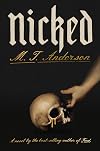
Real Rating: 4.75* of five
The Publisher Says: From the award-winning and bestselling author of Feed comes a raucous and slyly funny adult fiction debut, about the quest to steal the mystical bones of a long-dead saint
The year is 1087, and a pox is sweeping through the Italian port city of Bari. When a lowly monk is visited by Saint Nicholas in his dreams, he interprets the vision as a call to action. But his superiors, and the power brokers they serve, have different plans for the show more tender-hearted Brother Nicephorus.
Enter Tyun, a charismatic treasure hunter renowned for “liberating” holy relics from their tombs. The seven-hundred-year-old bones of Saint Nicholas rest in distant Myra, Tyun explains, and they’re rumored to weep a mysterious liquid that can heal the sick. For the humble price of a small fortune, Tyun will steal the bones and deliver them to Bari, curing the plague and restoring glory to the fallen city. And Nicephorus, the “dreamer,” will be his guide.
What follows is a heist for the ages, as Nicephorus is swept away on strange tides—and alongside even stranger bedfellows—to commit an act of sacrilege. Based on real historical accounts, Nicked is a wildly imaginative, genre-defying, and delightfully queer adventure, full of romance, intrigue, and wide-eyed wonder at the world that awaits beyond our own borders.
I RECEIVED A DRC FROM THE PUBLISHER VIA NETGALLEY. THANK YOU.
My Review: I seem to be on an historical-queerness religion-themed heist novels jag. Remember RECITAL OF THE DARK VERSES?...now this fascinating, also ripped-from-the-history-books tale of Saint Nicholas of Myra's hajj to Bari, Italy. Y'know, the Chamber of Commerce never really changes, "bring on the punters and their gelt!" is their mantra no matter the language or the time period. "King Arthur" at Glastonbury? Heck, they needed a new roof and GoFundMe wasn't a thing yet. Now add the attraction of Octavian Nothing's author writing for adults for the first time, and I'm gaffed through the gills.
I loved the Octavian Nothing duology, so it wasn't like I had some hill of ignorance, or resistance, to climb. Author Anderson's got a deft way with words and a sharp eye for the telling detail (the dog-headed man who's actually dog-headed is a great start). The seamless way he weaves the medieval world-view into the actions and conversations of the characters; the unstressed way they assume things like miracles and visions are remarkable but unsurprising; the effectively limned but never foregrounded way the quest to steal the saint's relics gets justified, all make perfect sense despite being quite mad.
By twenty-first century standards.
Sexuality is part of the picture so limned, but there's no sex to speak of. It wouldn't have added a thing to the story. It's not glued on awkwardly to tick a box, and it does have a bearing on how the innocent and quite trusting Brother Nicephorus deals with the way his vision is, erm, repurposed by the roguish dashing thief Tyun, but it is not made up out of nothing. I like thngs like this to make sense, and it does. Our Brother, who sets the plot in motion, rides the waves of others' needs and actions. He changes, he learns about his god-given nature, and he changes those he must surround himself with. And it is, for a wonder, all really fun and funny to read.
The wonders of comedy applied to matters of great religious import are many...the idea of a miracle is, inherently to me anyway, funny. The nature of the "pox" afflicting Bari, and the purported miraculous excretions from Saint Nicholas's bones intended to cure it...well, comedy gold! Resurrection, which we see, just...well...I've had surgeries enough to know that there's a lot involved in resurrection and none of it is supernatural. People can and do wake up when it's supposedly impossible. The way Author Anderson does it is, honestly, so affirming, and so full of the joy of being alive inside a body, that I nearly cried several times. "Never forget that your life is a wonder...Never forget that there are miracles everywhere, and you are only present in this world to see them once." This is exactly true, though the miracles aren't religious in nature.
I'd be remiss if I didn't point out how much fun with wordplay there is. Start with the title: Nick (as in Nicephorus, "bringer of victory"), to nick, Old Nick, Saint Nick...you can find more. These grace notes and the general vocabulary Author Anderson uses all flavor the read with an old-fashioned, yeasty head of foam on this draft of literary ale.
Delighted me; will delight anyone who liked Our Flag Means Death, the Locked Tomb series, and Ocean's Eight and its sequels. show less
The Publisher Says: From the award-winning and bestselling author of Feed comes a raucous and slyly funny adult fiction debut, about the quest to steal the mystical bones of a long-dead saint
The year is 1087, and a pox is sweeping through the Italian port city of Bari. When a lowly monk is visited by Saint Nicholas in his dreams, he interprets the vision as a call to action. But his superiors, and the power brokers they serve, have different plans for the show more tender-hearted Brother Nicephorus.
Enter Tyun, a charismatic treasure hunter renowned for “liberating” holy relics from their tombs. The seven-hundred-year-old bones of Saint Nicholas rest in distant Myra, Tyun explains, and they’re rumored to weep a mysterious liquid that can heal the sick. For the humble price of a small fortune, Tyun will steal the bones and deliver them to Bari, curing the plague and restoring glory to the fallen city. And Nicephorus, the “dreamer,” will be his guide.
What follows is a heist for the ages, as Nicephorus is swept away on strange tides—and alongside even stranger bedfellows—to commit an act of sacrilege. Based on real historical accounts, Nicked is a wildly imaginative, genre-defying, and delightfully queer adventure, full of romance, intrigue, and wide-eyed wonder at the world that awaits beyond our own borders.
I RECEIVED A DRC FROM THE PUBLISHER VIA NETGALLEY. THANK YOU.
My Review: I seem to be on an historical-queerness religion-themed heist novels jag. Remember RECITAL OF THE DARK VERSES?...now this fascinating, also ripped-from-the-history-books tale of Saint Nicholas of Myra's hajj to Bari, Italy. Y'know, the Chamber of Commerce never really changes, "bring on the punters and their gelt!" is their mantra no matter the language or the time period. "King Arthur" at Glastonbury? Heck, they needed a new roof and GoFundMe wasn't a thing yet. Now add the attraction of Octavian Nothing's author writing for adults for the first time, and I'm gaffed through the gills.
I loved the Octavian Nothing duology, so it wasn't like I had some hill of ignorance, or resistance, to climb. Author Anderson's got a deft way with words and a sharp eye for the telling detail (the dog-headed man who's actually dog-headed is a great start). The seamless way he weaves the medieval world-view into the actions and conversations of the characters; the unstressed way they assume things like miracles and visions are remarkable but unsurprising; the effectively limned but never foregrounded way the quest to steal the saint's relics gets justified, all make perfect sense despite being quite mad.
By twenty-first century standards.
Sexuality is part of the picture so limned, but there's no sex to speak of. It wouldn't have added a thing to the story. It's not glued on awkwardly to tick a box, and it does have a bearing on how the innocent and quite trusting Brother Nicephorus deals with the way his vision is, erm, repurposed by the roguish dashing thief Tyun, but it is not made up out of nothing. I like thngs like this to make sense, and it does. Our Brother, who sets the plot in motion, rides the waves of others' needs and actions. He changes, he learns about his god-given nature, and he changes those he must surround himself with. And it is, for a wonder, all really fun and funny to read.
The wonders of comedy applied to matters of great religious import are many...the idea of a miracle is, inherently to me anyway, funny. The nature of the "pox" afflicting Bari, and the purported miraculous excretions from Saint Nicholas's bones intended to cure it...well, comedy gold! Resurrection, which we see, just...well...I've had surgeries enough to know that there's a lot involved in resurrection and none of it is supernatural. People can and do wake up when it's supposedly impossible. The way Author Anderson does it is, honestly, so affirming, and so full of the joy of being alive inside a body, that I nearly cried several times. "Never forget that your life is a wonder...Never forget that there are miracles everywhere, and you are only present in this world to see them once." This is exactly true, though the miracles aren't religious in nature.
I'd be remiss if I didn't point out how much fun with wordplay there is. Start with the title: Nick (as in Nicephorus, "bringer of victory"), to nick, Old Nick, Saint Nick...you can find more. These grace notes and the general vocabulary Author Anderson uses all flavor the read with an old-fashioned, yeasty head of foam on this draft of literary ale.
Delighted me; will delight anyone who liked Our Flag Means Death, the Locked Tomb series, and Ocean's Eight and its sequels. show less

Summary: In the dystopian future of Feed, most Americans are connected to the internet by means of a chip set directly into their brain. Information is instantaneously available, chatting with friends takes the form of telepathy, and advertisers have direct access to your user profile... and your brain itself. While on an otherwise lame spring break trip to the moon, Titus meets the odd but charming Violet, who is unlike any of his other friends. When they're hijacked by a radical group at a show more nightclub, they're taken for medical treatment to have their feeds reset. However, Violet's treatment doesn't go quite right, and Titus finds himself caught between the girl he might really like, and the life and friends and thought processes he's always known.
Review: I have to admit, I found this book kind of terrifying. It's even more so given the fact that it was published in 2002, well before the advent of the Facebook news feed, targeted Google ads based on your search history, and customer profiles so refined that Target knows you're pregnant whether you want them to or not. The fact that Feed was dead-on right about all of that makes me wonder how prescient it might be about other stuff... and that's a seriously disquieting thought. Anderson's world-building is spot-on, creating a universe that's so over the top that you want to find it silly, but plausible enough that you can't.
The story itself was a surprise to me; based on the world-building, and the whole first section with the kids' feeds getting hacked, I was expecting a more Little Brother-ish techno-thriller. It turns out that the feed-hacking has very little bearing on the plot, and that the story is mostly focused on Titus and Violet's relationship. A sizable part of their relationship's evolution does deal with their differing attitudes towards the technology in their heads, but I was still surprised how much the focus was on the people. That had its positives and its negatives; Titus behaved and thought very much like a typical teenaged boy (I would assume, never having been inside the head of a typical teenaged boy), but that meant that there were definitely times I didn't like him as a protagonist very much. I also didn't entirely buy in to the language of the book. Obviously future teenagers are not going to talk like current teenagers, but I think authors trying to predict the evolution of teenage slang always come off sounding kind of self-conscious and silly; Anderson makes it feel more organic to his world than a lot of other books I've read, but it's still not all the way there. 4 out of 5 stars.
Recommendation: Recommended to fans of YA dystopian novels, particularly those interested in individuality and privacy in the face of an increasingly corporate world. show less
Review: I have to admit, I found this book kind of terrifying. It's even more so given the fact that it was published in 2002, well before the advent of the Facebook news feed, targeted Google ads based on your search history, and customer profiles so refined that Target knows you're pregnant whether you want them to or not. The fact that Feed was dead-on right about all of that makes me wonder how prescient it might be about other stuff... and that's a seriously disquieting thought. Anderson's world-building is spot-on, creating a universe that's so over the top that you want to find it silly, but plausible enough that you can't.
The story itself was a surprise to me; based on the world-building, and the whole first section with the kids' feeds getting hacked, I was expecting a more Little Brother-ish techno-thriller. It turns out that the feed-hacking has very little bearing on the plot, and that the story is mostly focused on Titus and Violet's relationship. A sizable part of their relationship's evolution does deal with their differing attitudes towards the technology in their heads, but I was still surprised how much the focus was on the people. That had its positives and its negatives; Titus behaved and thought very much like a typical teenaged boy (I would assume, never having been inside the head of a typical teenaged boy), but that meant that there were definitely times I didn't like him as a protagonist very much. I also didn't entirely buy in to the language of the book. Obviously future teenagers are not going to talk like current teenagers, but I think authors trying to predict the evolution of teenage slang always come off sounding kind of self-conscious and silly; Anderson makes it feel more organic to his world than a lot of other books I've read, but it's still not all the way there. 4 out of 5 stars.
Recommendation: Recommended to fans of YA dystopian novels, particularly those interested in individuality and privacy in the face of an increasingly corporate world. show less
Lists
King Arthur (1)
Boy Protagonists (1)
Gateway Horror (1)
Same Title (1)
Best Dystopias (1)
Graphic Novels (1)
Best Young Adult (3)
Bullies (1)
Five star books (2)
Great Audiobooks (1)
Epistolary Books (1)
Absolute Power (1)
B-B to Get (1)
Awards


You May Also Like
Associated Authors
Statistics
- Works
- 38
- Also by
- 20
- Members
- 16,985
- Popularity
- #1,308
- Rating
- 3.8
- Reviews
- 1,006
- ISBNs
- 332
- Languages
- 7
- Favorited
- 32


