
Alexandra Oliva
Author of The Last One
Works by Alexandra Oliva
Tagged
Common Knowledge
- Other names
- Oliva, Ali (nickname)
- Gender
- female
- Education
- Yale University (BA, History)
New School (MA, Creative Writing) - Nationality
- USA
- Places of residence
- New York, USA
- Associated Place (for map)
- New York, USA
Members
Reviews
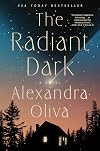
This is an ambitious novel that attempts to combine two very different narratives: a multigenerational family saga and a science-fiction story about humanity's first contact with an alien species. While both strands explore themes of connection across time and distance, they do not contribute equally to the novel's success. The family story is engaging and emotionally resonant; the first-contact narrative feels less developed and often seems appended to provide additional dramatic stakes show more rather than serving as an essential component of the novel.
At its heart, The Radiant Dark is the story of the Girard family, particularly the women who shape its history. Carol and her daughter Ro emerge as the novel's central figures, their complicated relationship driving much of the emotional narrative. Oliva excels at portraying the tensions that define families and communities: love and estrangement, ambition and jealousy, guilt and forgiveness, the longing for home, and the ways generations remain connected even when separated by years, geography, or personal choices. The conflict between Carol and Ro feels authentic and earned, reflecting the painful misunderstandings that can persist between parents and children for decades.
One of the novel's greatest strengths is its characterizations. Oliva creates believable, deeply flawed individuals whom she treats with empathy rather than judgment. Even when her characters make questionable choices, their actions arise from recognizable human desires and fears. The focus remains largely on the women of the Girard family. Male characters—including Michael, Jake, Hector, and Charles—play important but generally supportive roles, functioning more as influences on the protagonists than as fully independent centers of the narrative.
The science-fiction elements are less compelling. Oliva imagines a plausible and scientifically grounded scenario for first contact, exploring the immense challenges such an encounter would present: communication across vast distances, the difficulties of establishing shared language and meaning, cultural misunderstanding, fear, belief, and the realities of interstellar travel. The scientific details are often credible and engaging. Yet the alien narrative never achieves the emotional weight of the family story. Carol and Ro's lifelong fixation on extraterrestrial life sometimes strains credibility, and Carol's motivations for abandoning aspects of her former life—particularly her relationship with Jake—remain frustratingly underexplored.
The novel's most prominent motif is light. It appears everywhere: in the aliens' attempts at communication, in the measurement of interstellar distances, in Carol's involvement with a light-centered spiritual movement, and in Ro's scientific understanding of light itself. The title, “The Radiant Dark,” encapsulates a duality. Throughout the novel, light symbolizes connection, knowledge, communication, and transcendence. Yet it exists against a backdrop of darkness—loss, isolation, uncertainty, grief, and the unknowable vastness of space. The title's paradox—radiance existing within darkness—strikes me as the key to understanding the book. The aliens, the family relationships, and even the scientific discussions of light all point toward the same idea: connection is precious because separation and uncertainty are the default condition of existence. That theme is ultimately more important than the mechanics of first contact, which may explain why the family saga feels like the novel's true subject.
The settings, particularly those in New York State and the Pacific Northwest, are vividly rendered and feel authentic. Oliva has a strong sense of place, using landscape not merely as backdrop but as an extension of her characters' emotional lives. The mood throughout is often somber, even bleak, though occasional moments of hope and tenderness prevent the novel from becoming oppressive.
Despite its strengths, the narrative frequently feels plodding. The plot unfolds with relatively few surprises, and the first-contact storyline never develops enough momentum to justify the attention it receives. This imbalance becomes especially apparent in the epilogue. After carefully building an intimate emotional portrait of the Girard family over multiple generations, Oliva shifts focus to provide additional closure regarding the alien encounter. Rather than enhancing the novel, the epilogue weakens its emotional impact. It feels as though Oliva became concerned that the science-fiction plot required resolution, when in fact the family story had already supplied the novel's most meaningful conclusions.
Ultimately, “The Radiant Dark” succeeds far more as a meditation on family than as a first-contact novel. Its strongest moments emerge from its compassionate portrayal of flawed people struggling to remain connected across years, distances, and misunderstandings. The science-fiction framework provides an interesting lens through which to examine those themes, but it never becomes as emotionally compelling as the human story at the novel's center. The result is an intelligent, thoughtful novel whose ambitions exceed its execution, but whose empathy and characterizations are memorable. show less
At its heart, The Radiant Dark is the story of the Girard family, particularly the women who shape its history. Carol and her daughter Ro emerge as the novel's central figures, their complicated relationship driving much of the emotional narrative. Oliva excels at portraying the tensions that define families and communities: love and estrangement, ambition and jealousy, guilt and forgiveness, the longing for home, and the ways generations remain connected even when separated by years, geography, or personal choices. The conflict between Carol and Ro feels authentic and earned, reflecting the painful misunderstandings that can persist between parents and children for decades.
One of the novel's greatest strengths is its characterizations. Oliva creates believable, deeply flawed individuals whom she treats with empathy rather than judgment. Even when her characters make questionable choices, their actions arise from recognizable human desires and fears. The focus remains largely on the women of the Girard family. Male characters—including Michael, Jake, Hector, and Charles—play important but generally supportive roles, functioning more as influences on the protagonists than as fully independent centers of the narrative.
The science-fiction elements are less compelling. Oliva imagines a plausible and scientifically grounded scenario for first contact, exploring the immense challenges such an encounter would present: communication across vast distances, the difficulties of establishing shared language and meaning, cultural misunderstanding, fear, belief, and the realities of interstellar travel. The scientific details are often credible and engaging. Yet the alien narrative never achieves the emotional weight of the family story. Carol and Ro's lifelong fixation on extraterrestrial life sometimes strains credibility, and Carol's motivations for abandoning aspects of her former life—particularly her relationship with Jake—remain frustratingly underexplored.
The novel's most prominent motif is light. It appears everywhere: in the aliens' attempts at communication, in the measurement of interstellar distances, in Carol's involvement with a light-centered spiritual movement, and in Ro's scientific understanding of light itself. The title, “The Radiant Dark,” encapsulates a duality. Throughout the novel, light symbolizes connection, knowledge, communication, and transcendence. Yet it exists against a backdrop of darkness—loss, isolation, uncertainty, grief, and the unknowable vastness of space. The title's paradox—radiance existing within darkness—strikes me as the key to understanding the book. The aliens, the family relationships, and even the scientific discussions of light all point toward the same idea: connection is precious because separation and uncertainty are the default condition of existence. That theme is ultimately more important than the mechanics of first contact, which may explain why the family saga feels like the novel's true subject.
The settings, particularly those in New York State and the Pacific Northwest, are vividly rendered and feel authentic. Oliva has a strong sense of place, using landscape not merely as backdrop but as an extension of her characters' emotional lives. The mood throughout is often somber, even bleak, though occasional moments of hope and tenderness prevent the novel from becoming oppressive.
Despite its strengths, the narrative frequently feels plodding. The plot unfolds with relatively few surprises, and the first-contact storyline never develops enough momentum to justify the attention it receives. This imbalance becomes especially apparent in the epilogue. After carefully building an intimate emotional portrait of the Girard family over multiple generations, Oliva shifts focus to provide additional closure regarding the alien encounter. Rather than enhancing the novel, the epilogue weakens its emotional impact. It feels as though Oliva became concerned that the science-fiction plot required resolution, when in fact the family story had already supplied the novel's most meaningful conclusions.
Ultimately, “The Radiant Dark” succeeds far more as a meditation on family than as a first-contact novel. Its strongest moments emerge from its compassionate portrayal of flawed people struggling to remain connected across years, distances, and misunderstandings. The science-fiction framework provides an interesting lens through which to examine those themes, but it never becomes as emotionally compelling as the human story at the novel's center. The result is an intelligent, thoughtful novel whose ambitions exceed its execution, but whose empathy and characterizations are memorable. show less
I received a galley of this book from the publisher via NetGalley.
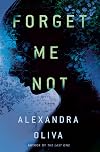
Forget Me Not is a thriller with a very heavy near-future science fiction basis. The tension begins right from the start, based on sheer social anxiety as we experience the discomfort Linda endures in her life in Seattle. The details of why this is emerge gradually, sometimes too gradually: Linda is now in her 20s, and as a child was abandoned by her mother to live wild on an isolated forest estate for a decade. She is a show more subject of derision on social media, dubbed "Clone Girl," though she wasn't really a clone--but she was conceived to replace the 'perfect' child her parents lost to a tragic accident. Linda could never live up to those expectations.
The worldbuilding is deep and intriguing. Social media and virtual reality play major roles in the plot, and there's an eerie plausibility to the development of tech. The people, though, are what really make the book work. Even as action escalates through the book, human psychology is where the drama truly lies--in Linda's struggles to adapt, in her wealthy father's haphazard efforts to help her, in Linda's new friendship with her neighbor, and most of all, in the wrecked mind of Linda's mother. It probably goes without saying, but this isn't a book for anyone who is triggered by child abuse or abusive families.
Without getting into spoilers, though, I will say that the overall arc of the book is a positive one. Linda is a character to relate to and cheer for, and I enjoyed being part of her journey, tense and scary as it was at times. show less
Forget Me Not is a thriller with a very heavy near-future science fiction basis. The tension begins right from the start, based on sheer social anxiety as we experience the discomfort Linda endures in her life in Seattle. The details of why this is emerge gradually, sometimes too gradually: Linda is now in her 20s, and as a child was abandoned by her mother to live wild on an isolated forest estate for a decade. She is a show more subject of derision on social media, dubbed "Clone Girl," though she wasn't really a clone--but she was conceived to replace the 'perfect' child her parents lost to a tragic accident. Linda could never live up to those expectations.
The worldbuilding is deep and intriguing. Social media and virtual reality play major roles in the plot, and there's an eerie plausibility to the development of tech. The people, though, are what really make the book work. Even as action escalates through the book, human psychology is where the drama truly lies--in Linda's struggles to adapt, in her wealthy father's haphazard efforts to help her, in Linda's new friendship with her neighbor, and most of all, in the wrecked mind of Linda's mother. It probably goes without saying, but this isn't a book for anyone who is triggered by child abuse or abusive families.
Without getting into spoilers, though, I will say that the overall arc of the book is a positive one. Linda is a character to relate to and cheer for, and I enjoyed being part of her journey, tense and scary as it was at times. show less

I stayed up to 2am to finish this. Enthralling book. I loved the contrast between the chapters - how the media editors dehumanize the people in the TV show to create narrative versus how the character wandering alone blocks reality and dehumanizes the victims by believing that it is created by the media. I almost wish the book had ended at chapter 22 or 23 because that would be maximum messed-up-ness, but it does tie up (most of) the loose ends so I can respect that too. Our main character show more is going to be supremely messed up after all this anyway. show less
I am a HUGE fan of Alexandra Oliva’s debut novel “The Last One”, and I was thrilled that I was chosen to read her follow up novel. This is an author who hasn’t succumbed to the “sophomore slump”.
ust like her debut novel, Alexandra Oliva gives us a unique story with deeply developed characters and illustrative prose. You can feel Linda’s pain and anxiety, and easily imagine the lush yet desolate woods she called home.
I also enjoyed the themes and questions this book raised show more about identity, legacy, science, morality, mental health, and forgiveness. show less
ust like her debut novel, Alexandra Oliva gives us a unique story with deeply developed characters and illustrative prose. You can feel Linda’s pain and anxiety, and easily imagine the lush yet desolate woods she called home.
I also enjoyed the themes and questions this book raised show more about identity, legacy, science, morality, mental health, and forgiveness. show less
Lists
Awards


You May Also Like


Associated Authors
Statistics
- Works
- 3
- Members
- 990
- Popularity
- #26,013
- Rating
- 3.7
- Reviews
- 99
- ISBNs
- 42
- Languages
- 11