
Ray Jayawardhana
Author of Strange New Worlds: The Search for Alien Planets and Life beyond Our Solar System
About the Author
Ray Jayawardhana is the dean of science and a professor of physics and astronomy at York University in Toronto. His discoveries have been featured in Newsweek, The Washington Post, The New York Time, The Globe and Mail (Toronto), and The Sydney Morning Herald, and on the BBC, NPR, and CBC, and have show more led to accolades such as a Guggenheim Fellowship, the Steacie Prize, and the Rutherford Medal. He is an award-winning writer whose articles have appeared in The Economist, The New York Times, Scientific American, Astronomy, and elsewhere. He is the author of Strange New Worlds. Follow him on Twitter at @DrRayJay and on the Web at www.rayjay.net. show less
Works by Ray Jayawardhana
Strange New Worlds: The Search for Alien Planets and Life beyond Our Solar System (2011) 141 copies, 5 reviews
Neutrino Hunters: The Thrilling Chase for a Ghostly Particle to Unlock the Secrets of the Universe (2013) 128 copies, 5 reviews
Tagged
Common Knowledge
- Gender
- male
- Education
- Yale University (BS, Astronomy and Physics)
Harvard University (PhD, Astronomy) - Occupations
- professor
astronomer - Organizations
- Cornell University
Johns Hopkins University
York University
University of Toronto
University of Michigan
University of California, Berkeley (show all 7)
Alfred P. Sloan Foundation - Nationality
- Sri Lanka
- Associated Place (for map)
- Sri Lanka
Members
Reviews
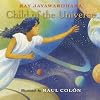
Achild “made up of stars” finds their place in the universe.
“The universe conspired to make you,” a father tells his child as they gaze out at the moon one night from the child’s bed. As the father goes on to wax poetic about his love, the art takes readers on an intergalactic journey. Nebulae, galaxies, planets, and stars populate breathtaking, high-contrast double-page spreads that feature the curly-haired, brown-skinned child out in the universe. One spread depicts a silhouette show more of the child while the text reads, “The iron in your blood, the calcium in your bones, / are made up of stars that lived long ago.” Another, wordless spread depicts the child at the center of a giant atom. Astrophysicist Jayawardhana’s picture-book debut effectively and eloquently affirms the importance of a single life amid the vastness of the universe—a small lesson under the blanket of parental love. Though framed by the child’s first-person narration, the story is primarily driven by the father’s monologue. Colón’s art, created in his signature scratched–colored pencil technique, revels in the details. The soft, cool tones of the Earth scenes provide a wow of a page turn as the colors explode with warmth in subsequent spreads. Gold foil stars speckle the cover. There’s hardly room—or need—for white space in a book this grand and glorious.
Out of this world. (author’s note, bibliography) (Picture book. 4-8)
-Kirkus Review show less
“The universe conspired to make you,” a father tells his child as they gaze out at the moon one night from the child’s bed. As the father goes on to wax poetic about his love, the art takes readers on an intergalactic journey. Nebulae, galaxies, planets, and stars populate breathtaking, high-contrast double-page spreads that feature the curly-haired, brown-skinned child out in the universe. One spread depicts a silhouette show more of the child while the text reads, “The iron in your blood, the calcium in your bones, / are made up of stars that lived long ago.” Another, wordless spread depicts the child at the center of a giant atom. Astrophysicist Jayawardhana’s picture-book debut effectively and eloquently affirms the importance of a single life amid the vastness of the universe—a small lesson under the blanket of parental love. Though framed by the child’s first-person narration, the story is primarily driven by the father’s monologue. Colón’s art, created in his signature scratched–colored pencil technique, revels in the details. The soft, cool tones of the Earth scenes provide a wow of a page turn as the colors explode with warmth in subsequent spreads. Gold foil stars speckle the cover. There’s hardly room—or need—for white space in a book this grand and glorious.
Out of this world. (author’s note, bibliography) (Picture book. 4-8)
-Kirkus Review show less
Neutrino Hunters: The Thrilling Chase for a Ghostly Particle to Unlock the Secrets of the Universe by Ray Jayawardhana
Neutrinos are tiny subatomic particles with the notable property of being extremely unlikely to interact with other forms of matter. Indeed, trillions of them are passing through your body right now and having absolutely no effect on you at all.
But with sufficient ingenuity (and huge quantities of dry-cleaning fluid), it can be possible to detect these elusive particles in the rare instances when they do have an effect. So we know that they do exist. And their existence is important in a show more surprising number of ways. Learning about neutrinos tells us interesting things about how physics works, about what happens in the centers of stars, and even about the universe on a cosmic scale. Without them, we wouldn't even be here.
I already knew most of the science Jayawardhana covers here, since I was a physics major in college. Although he does talk about some interesting things that can be done with neutrinos, such as studying the interior of the Earth, which were new to me and rather fascinating. Anyway, since I already knew a lot of this stuff, I'm probably not the best person to judge whether he's talking about it in a way that makes sense to the layperson. But, while I have one or two small quibbles about how he puts certain things, it seems to me that he generally does a good job of being scientifically accurate without being overwhelmingly technical. And he breaks up the physics with little human-interest details about the scientists involved in making the discoveries he's describing. I've often seen popular science books taking this approach, and it frequently seems awkward or forced, or as if the author is trying to turn science into some kind of dramatic soap opera. But Jayawardhana manages to do it in a way that feels very smooth and natural and interesting.
So for me, at least, it was a very readable book, and I certainly feel a new sense of appreciation for neutrinos and the people who hunt them. I'm also impressed, after looking back at the history of our understanding of neutrinos, with the realization that less than a hundred years ago not only did we have no idea what a neutrino was, but the only particles we did know about were the proton and the electron. It's a bit dazzling to look back and realize just how far we've come in our understanding of the underlying nature of reality in such a very short amount of time. show less
But with sufficient ingenuity (and huge quantities of dry-cleaning fluid), it can be possible to detect these elusive particles in the rare instances when they do have an effect. So we know that they do exist. And their existence is important in a show more surprising number of ways. Learning about neutrinos tells us interesting things about how physics works, about what happens in the centers of stars, and even about the universe on a cosmic scale. Without them, we wouldn't even be here.
I already knew most of the science Jayawardhana covers here, since I was a physics major in college. Although he does talk about some interesting things that can be done with neutrinos, such as studying the interior of the Earth, which were new to me and rather fascinating. Anyway, since I already knew a lot of this stuff, I'm probably not the best person to judge whether he's talking about it in a way that makes sense to the layperson. But, while I have one or two small quibbles about how he puts certain things, it seems to me that he generally does a good job of being scientifically accurate without being overwhelmingly technical. And he breaks up the physics with little human-interest details about the scientists involved in making the discoveries he's describing. I've often seen popular science books taking this approach, and it frequently seems awkward or forced, or as if the author is trying to turn science into some kind of dramatic soap opera. But Jayawardhana manages to do it in a way that feels very smooth and natural and interesting.
So for me, at least, it was a very readable book, and I certainly feel a new sense of appreciation for neutrinos and the people who hunt them. I'm also impressed, after looking back at the history of our understanding of neutrinos, with the realization that less than a hundred years ago not only did we have no idea what a neutrino was, but the only particles we did know about were the proton and the electron. It's a bit dazzling to look back and realize just how far we've come in our understanding of the underlying nature of reality in such a very short amount of time. show less
Strange New Worlds: The Search for Alien Planets and Life beyond Our Solar System by Ray Jayawardhana
This is a general audience book about one of the most exciting astronomical developments of our time -- the emergence of our ability to detect the presence of planets outside our solar system. The search for extrasolar planets is one of those fields which has explosively bloomed in our lifetimes, just in the last decade. Jayawardhana gives a compact history of the methods and achievements of planet detection, pausing to explain in laymen's terms each method as it develops, with its drawbacks show more and its advantages.
A book about the search for extrasolar planets is a prime example of a book doomed to be out of date as soon as it hits the shelves, no matter when it hits the shelves. That, though, can also be what makes the book compelling -- the field is hot with new discoveries, new methods, new characters. Its time has come. There are currently over 700 confirmed expoplanet discoveries. Even though the book went to print just as the Kepler telescope mission began to bring in huge results Jayawardhana is able to put us in position to appreciate its discoveries and understand the need for their confirmation by other means. He supplies what we need in order to appreciate the announcements that come now on an almost weekly basis.
The search for extrasolar planets is inevitably bound up with the search for alien life, but Jayawardhana doesn't let the cart get in front of the horse. Our ability to detect planets runs far ahead of our ability to detect life, or to understand the conditions under which life may develop and flourish. While not ignoring the question, Jayawardhana presents himself neither as an unbridled enthusiast nor as a disinterested planetologist -- of course we'd love to know where to look, how to look, and what we're going to find, but it's going to take us a while to get to that point.
All in all, this is a very readable, relatively non-technical guide to a developing field that transcends the interests of professional scientists, that addresses truly mind-boggling questions about our place in nature. show less
A book about the search for extrasolar planets is a prime example of a book doomed to be out of date as soon as it hits the shelves, no matter when it hits the shelves. That, though, can also be what makes the book compelling -- the field is hot with new discoveries, new methods, new characters. Its time has come. There are currently over 700 confirmed expoplanet discoveries. Even though the book went to print just as the Kepler telescope mission began to bring in huge results Jayawardhana is able to put us in position to appreciate its discoveries and understand the need for their confirmation by other means. He supplies what we need in order to appreciate the announcements that come now on an almost weekly basis.
The search for extrasolar planets is inevitably bound up with the search for alien life, but Jayawardhana doesn't let the cart get in front of the horse. Our ability to detect planets runs far ahead of our ability to detect life, or to understand the conditions under which life may develop and flourish. While not ignoring the question, Jayawardhana presents himself neither as an unbridled enthusiast nor as a disinterested planetologist -- of course we'd love to know where to look, how to look, and what we're going to find, but it's going to take us a while to get to that point.
All in all, this is a very readable, relatively non-technical guide to a developing field that transcends the interests of professional scientists, that addresses truly mind-boggling questions about our place in nature. show less
A young girl’s father tells her she is made of stars. She lights up the world in the same way that the sun lights up the moon. Galaxies exist in her smile; like faraway planets, she is grand and marvelous and strong and mysterious. She is a part of everything; she is a child of the universe.
=========
This beautiful picture book pays homage to a parent’s love for his child even as it explains how everyone is connected, how everyone is part of the vastness of the universe. This is a perfect show more bedtime story, one to be appreciated and cherished, for both its stunning illustrations and for its wise message of love and unity.
This is one of several young reader books in this vein, but it is important to judge the book on its own merit, not in comparison to the others. There are times that the author "reaches" for a rhyme, but even Dr. Seuss missed an occasional rhyme and this "reaching" doesn't affect the flow of the story.
The focus on the treasuring of the child, of the father's obvious love for her, and the wonderful pictures make this a book to add to the child's collection of "you are star-stuff" books.
Highly recommended. show less
=========
This beautiful picture book pays homage to a parent’s love for his child even as it explains how everyone is connected, how everyone is part of the vastness of the universe. This is a perfect show more bedtime story, one to be appreciated and cherished, for both its stunning illustrations and for its wise message of love and unity.
This is one of several young reader books in this vein, but it is important to judge the book on its own merit, not in comparison to the others. There are times that the author "reaches" for a rhyme, but even Dr. Seuss missed an occasional rhyme and this "reaching" doesn't affect the flow of the story.
The focus on the treasuring of the child, of the father's obvious love for her, and the wonderful pictures make this a book to add to the child's collection of "you are star-stuff" books.
Highly recommended. show less
Lists
Awards


You May Also Like


Statistics
- Works
- 4
- Members
- 342
- Popularity
- #69,720
- Rating
- 3.7
- Reviews
- 17
- ISBNs
- 32
- Languages
- 1
