
Ignatius of Antioch
Author of The Epistles of St. Clement of Rome and St. Ignatius of Antioch
About the Author
Disambiguation Notice:
St. Ignatius, Bishop of Antioch, was the author of seven letters written on his way to Rome and martyrdom around AD 108. This is not the same person as the various Patriarchs of Antioch also named Ignatius, so please do not combine them.
Image credit: Byzantine Tile c. 10th century, Walters Art Museum via Wikipedia
Works by Ignatius of Antioch
The Epistles of St. Ignatius of Antioch: 7 Letters of an Apostolic Father to the Early Churches (Bilingual English-Greek Edition) (2024) 5 copies
Epistle to the Romans 2 copies
Sauver la creation ; suivi de trois essais sur la rencontre des eglises et des religions (1989) 1 copy
Cartes, vol. II 1 copy
Cartes, vol. I 1 copy
Unless the Grain Die. 1 copy
Epistles of St. Ignatius: Seven Letters: Ephesians, Magnesians, Trallians, Romans, Philadelphians, Smyrnaeans & Polycarp (2022) 1 copy
Cartas camino del martirio 1 copy
Associated Works
The Apostolic Fathers: Volume I (Translated by Bart D. Ehrman) (2003) — Contributor — 278 copies, 2 reviews
The Divine Office, Volume 1: Daily Prayer for Advent, Christmastide and Weeks 1-9 (1974) — Contributor — 197 copies, 1 review
The Liturgy of the Hours According to the Roman Rite (Volume II Lenten Season and Easter Season) (1974) — Contributor — 189 copies
The Liturgy of the Hours According to the Roman Rite (Volume III: The Weeks of the Year 6 - 34) (1974) — Contributor — 72 copies
The Roads from Bethlehem: Christmas Literature from Writers Ancient and Modern (1993) — Contributor — 34 copies, 1 review
Witness of the Saints: Patristic Readings in the Liturgy of the Hours (2012) — Contributor — 29 copies, 1 review
Tagged
Common Knowledge
- Other names
- Ignatius of Antioch
Ignatius Theophorus - Birthdate
- c. 35
- Date of death
- c. AD 108
- Gender
- male
- Occupations
- Bishop of Antioch
- Organizations
- Church of Antioch
- Short biography
- Ignatius of Antioch (Ancient Greek: Ἰγνάτιος Ἀντιοχείας, also known as Theophorus from Greek Θεοφόρος "God-bearer") ((c. 35 or 50) - (from 98 to 117)) was among the Apostolic Fathers, was the third Bishop of Antioch, and was a student of John the Apostle. En route to Rome, where according to Christian tradition he met his martyrdom by being fed to wild beasts, he wrote a series of letters which have been preserved as an example of very early Christian theology. Important topics addressed in these letters include ecclesiology, the sacraments, and the role of bishops. NB the dates given here are those of Eusebius. His actual dating is controversial, with some dating his death to the 130s and others to the 150s.
- Birthplace
- Province of Syria, Roman Empire
- Places of residence
- Antioch, Syria
- Place of death
- Rome, Italy
- Disambiguation notice
- St. Ignatius, Bishop of Antioch, was the author of seven letters written on his way to Rome and martyrdom around AD 108. This is not the same person as the various Patriarchs of Antioch also named Ignatius, so please do not combine them.
Members
Reviews
Why don't evangelical Christians study these historical texts more? There seems to be something taboo about quoting the early church fathers, yet nothing taboo about quoting 20th century sources, Puritans, or whomever else after, say, Calvin. These epistles from Ignatius Bishop of Antioch to the churches at Ephesus, Magnesia, Rome, Smyrna, Philadelphia, Tralles, and to fellow bishop Polycarp are great history. If you've ever asked "what happened next?" while reading Paul and Peter's show more epistles, read Ignatius.
I believe these works also help in determining whether we're interpreting a New Testament text correctly. How does Ignatius quote from the gospels and epistles? He's writing to Ephesus and others after Paul, Peter, and John did, knew their strengths and weaknesses. Ignatius is writing from Syria (Antioch). He came to be Bishop of Antioch around 67 A.D. knew Polycarp, would have known John and was likely discipled by him. He died a martyr in 108 A.D. Ignatius was the first to use the word "catholic" for the universal church, which was later given a capital "C" and that makes Protestants today uncomfortable.
I find Ignatius continues the concern found in Peter and Paul's epistles for orthodoxy. Ignatius comments on the eucharist, the body and the blood, remind many of transubstantiation and makes them uncomfortable. Without a commentary, I see him referring more to the danger of gnostic influences who denied that God took on flesh. I also am reminded that the order of succession was important to the early church; if you didn't get your teaching from either the circulating gospels or epistles, or from someone who knew and got their commission from the Apostles, then it was in error. I think this sheds light on his exhortation not to take the eucharist or be baptised apart from an elder.
He has similarly strong Pauline and Johannine concern about the influence of Judaizers: "For Christianity did not believe in Judaism, but Judaism in Christianity."
Ignatius wrote these epistles rather hastily, likely on his way to martyrdom. For early Christians, that was just a given reality-- Jesus, his disciples, and the next generation expected and met that end with joy and peace. But Ignatius wanted them to meet it holding fast to the right gospel as well.
"I am God's wheat, and I am to be ground by the teeth of wild beasts, so that I may become the pure bread of Christ."
5 stars. show less
I believe these works also help in determining whether we're interpreting a New Testament text correctly. How does Ignatius quote from the gospels and epistles? He's writing to Ephesus and others after Paul, Peter, and John did, knew their strengths and weaknesses. Ignatius is writing from Syria (Antioch). He came to be Bishop of Antioch around 67 A.D. knew Polycarp, would have known John and was likely discipled by him. He died a martyr in 108 A.D. Ignatius was the first to use the word "catholic" for the universal church, which was later given a capital "C" and that makes Protestants today uncomfortable.
I find Ignatius continues the concern found in Peter and Paul's epistles for orthodoxy. Ignatius comments on the eucharist, the body and the blood, remind many of transubstantiation and makes them uncomfortable. Without a commentary, I see him referring more to the danger of gnostic influences who denied that God took on flesh. I also am reminded that the order of succession was important to the early church; if you didn't get your teaching from either the circulating gospels or epistles, or from someone who knew and got their commission from the Apostles, then it was in error. I think this sheds light on his exhortation not to take the eucharist or be baptised apart from an elder.
He has similarly strong Pauline and Johannine concern about the influence of Judaizers: "For Christianity did not believe in Judaism, but Judaism in Christianity."
Ignatius wrote these epistles rather hastily, likely on his way to martyrdom. For early Christians, that was just a given reality-- Jesus, his disciples, and the next generation expected and met that end with joy and peace. But Ignatius wanted them to meet it holding fast to the right gospel as well.
"I am God's wheat, and I am to be ground by the teeth of wild beasts, so that I may become the pure bread of Christ."
5 stars. show less
01. The Epistles of St. Clement of Rome and St. Ignatius of Antioch (Ancient Christian Writers) by Clement of Alexandria
Where to even begin?
In the 7 Epistles written by Ignatius you can find the essence of the Catholic Church. He speaks of bishops, of the Eucharist, of confessions, of staying obedient to the clergy. He warns of the dangers of schism.
"They abstain from the Eucharist and from prayer because they confess not the Eucharist to be the flesh of our Saviour Jesus Christ...Those, therefore, who speak against this gift of God, incur death in the midst of their disputes. But it were better for them to show more treat it with respect, that they also might rise again." Ch.3 To the Smyrnaens. show less
In the 7 Epistles written by Ignatius you can find the essence of the Catholic Church. He speaks of bishops, of the Eucharist, of confessions, of staying obedient to the clergy. He warns of the dangers of schism.
"They abstain from the Eucharist and from prayer because they confess not the Eucharist to be the flesh of our Saviour Jesus Christ...Those, therefore, who speak against this gift of God, incur death in the midst of their disputes. But it were better for them to show more treat it with respect, that they also might rise again." Ch.3 To the Smyrnaens. show less
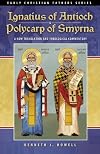
Ignatius of Antioch and Polycarp of Smyrna were two of the greatest leaders of Christianity in the first half of the second century. Both suffered martyrdom: Ignatius in Rome during the reign of Trajan, and Polycarp in Smyrna some time in the mid-century.
Lists
Western Canon (1)
You May Also Like


Associated Authors
Statistics
- Works
- 36
- Also by
- 10
- Members
- 486
- Popularity
- #50,827
- Rating
- 4.0
- Reviews
- 4
- ISBNs
- 27
- Languages
- 4