
Warren Berger
Author of A More Beautiful Question: The Power of Inquiry to Spark Breakthrough Ideas
About the Author
Works by Warren Berger
A More Beautiful Question: The Power of Inquiry to Spark Breakthrough Ideas (2014) 501 copies, 9 reviews
The Book of Beautiful Questions: The Powerful Questions That Will Help You Decide, Create, Connect, and Lead (2018) 145 copies, 3 reviews
CAD Monkeys, Dinosaur Babies, and T-Shaped People: Inside the World of Design Thinking and How It Can Spark Creativity and Innovation (2010) 32 copies
A Arte de Fazer Perguntas O Poder da interrogação na criação de ideias revolucionárias (2020) 3 copies
Uma Pergunta mais Bonita. As perguntas dos criadores de Airbnb Netflix e Google (Em Portugues do Brasil) (2019) 1 copy
Plato's Republic 1 copy
Associated Works
IMAGINE DESIGN CREATE: How Designers, Architects, and Engineers Are Changing Our World (2011) — Introduction — 45 copies
Tagged
Common Knowledge
- Gender
- male
Members
Reviews
The Book of Beautiful Questions: The Powerful Questions That Will Help You Decide, Create, Connect, and Lead by Warren Berger
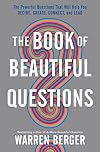
I have been a big fan of Warren Berger’s work after I first read his book: A More Beautiful Question when it first came out. I had picked it up at the venerable Politics and Prose Bookstore in Washington DC on a whim, the title just sounded interesting. It never occurred to me that this serendipitous act was going to change my perspective on many things: convinced me of the efficacy using questioning as a way to test my thinking; clear up how I perceive my thinking; and in many ways it show more made me look at my biases in a clearer manner.
I had awaited this new book with bated breath, and as I gladly found out, it is also potentially life transforming.
Even though this book came out in 2018, I did not fully finished the reading until recently, partly because of my schedule and partly because I took on a massive reading list, which was motivated by the questions I had generated for myself after reading the first book. Yes, Berger has questions in this book about procrastination too.
Berger collected a large amount of questions, over 500, that he felt were critical for vario
us aspects of life. Some were thoughtful and deep, while others were seemingly obvious, but not obvious enough as people are not consistently asking these questions. Berger thoughtfully placed all of these questions in a PDF and the document is available from his website. The list is actually an index, which refers to the parts of the book where he discusses and parses those questions. Very thoughtful indeed.
He covered many different areas and he grouped the questions under those areas, and this is how the chapters are organized. The introduction sets up the question of: Why Questions? Parts I-IV drills deep into the topics of: decision making, creativity, personal connection with others, and finally leadership. The last part of the book is titled Conclusion, but it is really a guide to setting up the reader’s inquiring life.
The beauty about this book is that the reader can select the sections that is most meaningful to him or her, or they can choose to read the book in order. The narrative guides the reader through the author’s thought process as he parses each of the topics as well digging into the purpose and rationale behind asking questions in a certain way. The reader can reason along with the author, which forces the reader to learn about the nuances that are possible from a simple question. It can be some rigorous mental gymnastics, which fortuitously results in clarity of thought.
My favorite parts were the parts on decision making and creativity. If I had to pick a least favorite chapter, it would be the one on leadership. I don’t argue with the questions, nor do I quibble with the philosophical thoughts cited regarding strong leaders. I do have issues with the way the author talks about the execution and mindset for leadership. It is inevitable that he takes the tack of a run of the mill business book because the book of the month approach that follows along in organization like the millions of other business books that populate the discount bins is what the marketplace demands. This book is much better than that and I think the message that he has regarding leadership is much deeper and thought provoking than those coming out of the mouths of the business gurus. I wish that he had invested in drilling deeper into history and the deeply ingrained leadership lessons from the ancients than the CEOs of modernity. The former is time tested and the latter is still a transient looking to settle down. It is all a matter of the time constant.
But that is a minor quibble in what is overall a very good read for those who relish being challenged intellectually and enjoy being a polymath in this culture of specialists. The habit of asking questions is what the author is seeking to evolve, the questions that he uses in the book are examples, a starter kit for those nascent questionologists. The list of questions are to be used to jump starting their thought processes.
I will be dissecting Berger’s list in the next few days and thinking about how I can best use his list of questions. Of course, I will be asking questions. Lots of questions. show less
I had awaited this new book with bated breath, and as I gladly found out, it is also potentially life transforming.
Even though this book came out in 2018, I did not fully finished the reading until recently, partly because of my schedule and partly because I took on a massive reading list, which was motivated by the questions I had generated for myself after reading the first book. Yes, Berger has questions in this book about procrastination too.
Berger collected a large amount of questions, over 500, that he felt were critical for vario
us aspects of life. Some were thoughtful and deep, while others were seemingly obvious, but not obvious enough as people are not consistently asking these questions. Berger thoughtfully placed all of these questions in a PDF and the document is available from his website. The list is actually an index, which refers to the parts of the book where he discusses and parses those questions. Very thoughtful indeed.
He covered many different areas and he grouped the questions under those areas, and this is how the chapters are organized. The introduction sets up the question of: Why Questions? Parts I-IV drills deep into the topics of: decision making, creativity, personal connection with others, and finally leadership. The last part of the book is titled Conclusion, but it is really a guide to setting up the reader’s inquiring life.
The beauty about this book is that the reader can select the sections that is most meaningful to him or her, or they can choose to read the book in order. The narrative guides the reader through the author’s thought process as he parses each of the topics as well digging into the purpose and rationale behind asking questions in a certain way. The reader can reason along with the author, which forces the reader to learn about the nuances that are possible from a simple question. It can be some rigorous mental gymnastics, which fortuitously results in clarity of thought.
My favorite parts were the parts on decision making and creativity. If I had to pick a least favorite chapter, it would be the one on leadership. I don’t argue with the questions, nor do I quibble with the philosophical thoughts cited regarding strong leaders. I do have issues with the way the author talks about the execution and mindset for leadership. It is inevitable that he takes the tack of a run of the mill business book because the book of the month approach that follows along in organization like the millions of other business books that populate the discount bins is what the marketplace demands. This book is much better than that and I think the message that he has regarding leadership is much deeper and thought provoking than those coming out of the mouths of the business gurus. I wish that he had invested in drilling deeper into history and the deeply ingrained leadership lessons from the ancients than the CEOs of modernity. The former is time tested and the latter is still a transient looking to settle down. It is all a matter of the time constant.
But that is a minor quibble in what is overall a very good read for those who relish being challenged intellectually and enjoy being a polymath in this culture of specialists. The habit of asking questions is what the author is seeking to evolve, the questions that he uses in the book are examples, a starter kit for those nascent questionologists. The list of questions are to be used to jump starting their thought processes.
I will be dissecting Berger’s list in the next few days and thinking about how I can best use his list of questions. Of course, I will be asking questions. Lots of questions. show less
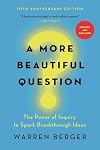
A More Beautiful Question is a flashy journey through the power of questioning to spark dialog, to bring people together, to upset the world, and too innovate. Berger synthesizes a lot of experience as journalist to look at the role that questioning plays in creativity, and develops a simple model based around "Why?-->What If?-->How?"
This book is best when it's selling ideas: Montessori schools as an antidote to how public schools beat questioning out of kids, the people at The Right show more Question Institute and IDEO. However, it commits the all-too-common error of assuming that because Silicon Valley people are rich, they are also wise. Berger tries to lay out a hagiographic account of heroically questioning tech founders, which doesn't match up with the actually process of innovation, or the very obvious limits to Silicon Valley ideology. Protip for Uber and AirBNB, wholesale violation of the law is not a business model. And likewise for Google and Facebook, advertising is not a human net good.
Also, questioning is hard. Trust me, as a PhD social scientist the most important part of a project is setting up your research question in a way that is both impactful and doable. Questioning is an action, but it also seems to be a behavior characteristic of a questioning mindset. Why do we stop asking questions? What if we never stopped? How do we ask questions again? This book says the answer is a kind of California zen. I'm less sure. show less
This book is best when it's selling ideas: Montessori schools as an antidote to how public schools beat questioning out of kids, the people at The Right show more Question Institute and IDEO. However, it commits the all-too-common error of assuming that because Silicon Valley people are rich, they are also wise. Berger tries to lay out a hagiographic account of heroically questioning tech founders, which doesn't match up with the actually process of innovation, or the very obvious limits to Silicon Valley ideology. Protip for Uber and AirBNB, wholesale violation of the law is not a business model. And likewise for Google and Facebook, advertising is not a human net good.
Also, questioning is hard. Trust me, as a PhD social scientist the most important part of a project is setting up your research question in a way that is both impactful and doable. Questioning is an action, but it also seems to be a behavior characteristic of a questioning mindset. Why do we stop asking questions? What if we never stopped? How do we ask questions again? This book says the answer is a kind of California zen. I'm less sure. show less
Glimmer : how design can transform your business, your life, and maybe even the world by Warren Berger
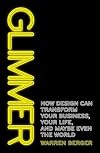
This is one of those books that has been written by a non-expert who has turned himself into an expert by interviewing multiple experts in the field. He even attended design school to better understand the field. I guess, that coming as an intelligent and observant outsider, actually has its advantages. He doesn't come with too many pre-conceived ideas and can be open to new experiences.
I found the book quite fascinating. A large part of it focuses on Bruce Mau....a design consultant ...who show more agreed to work with the author. The premise of the book is that design is applicable to just about any challenge and its principles are accessible to anyone. There is a "glimmer" movement which includes all sorts of input from outside and inside the design profession . What makes them all designers is that they just don't think about the things that are ripe of reinvention ....they act on it.
The book is built around ten principles of design which seem to be fairly common to all different kinds of design challenges. They are divided into four separate categories: Universal, Business, Social, and Personal.
And the principles are:
Universal....Ask stupid questions, Jump fences, Make hope visible
Business: ....Go Deep, Work the metaphor, Design what you do
Social:.....Face consequences, Embrace constraints
Personal:.....Design for emergence, Begin anywhere.
The best designers are T shaped people...deep knowledge of one skill (the vertical bar) then they branch out into many different areas of knowledge.
By relying on the ability to think about and picture what might be, designers can glimpse the possibilities that lie on the other side of the fence. They also connect ideas from one real with another, entirely separate realm. What if I take the sensor technology from a Segway and use in for a prosthetic arm socket?
Speculate first (wild ideas, scenarios, possible solutions)...and research later.
There is quite a long section on the $100 computer. Initially dismissed as a total pipe dream ....the first model came in at $188. Not what was aimed at but remarkable nevertheless. And later models pushed the price down further...to $75. It's interesting that just recently, I've read that the the kids who had the computers haven't really outperformed the other kids at maths and academic subjects. (Mainly because cheap computers get used ...like all other computers....mainly for games, social media, and watching porn). But really, the design company who developed this $100 computer changed the game.
Design, for some, is hope made visible...and sketching is a great tool to make it visible. It can be easier to show relationships (visually) than to describe them.
Bruce Mau curated a design show in Vancouver titled "the Massive Change exhibit"....With the idea that business, culture and nature were actually embraced by design...a kind of subset of design rather than the other way around. There were strong reactions (positive and negative) to the show but it seemed to resonate beyond the art museum world to city-design and business.
It's actually pretty useless asking people what they want because they usually just don't know. So design groups have been taking "deep dives" into the client's world and watching what they actually DO. In one case, adding a psychologist to the design team. (Just lost about an hour's work because I didn't save the review....this is really annoying with Library Thing that it doesn't have some sort of auto-save). A Chicago based consultancy firm has come up with a map for a single compelling human experience. There are five phases: attraction, entry, engagement, exit and extension. And, overlaying these there are six intensity based attributes which can be adjusted to make the experience more compelling: defined, fresh, immersive, accessible, significant, and transformative. They claim it can be applied to everything from visiting a hospital to building an educational class.
There is an interesting digression about the relationship between advertising and design. An example is given of Alex Bogusky who designed an anti-smoking campaign for teenagers in Florida. Basically they were not responding to ads like "Smoking kills" so Bogusky tried to find what the kids actually responded to. His answer: "Truth". So he designed a kind of movement ...with kids invading tobacco companies etc ....and it took on a life of its own. Smoking dropped by 38% in the target group.The claim is that if advertising is a promise: design is performance.
There is an interesting anecdote about a kid getting up at a Coca Cola conference and asking why (if coke is bad for health and bad for the environment) why don't they stop producing? Bruce Mau's response...I found vaguely unsatisfying: "You can't stop people doing what they like and I happen to like Coca Cola". That's the answer we have heard from the Tobacco Companies...who are now moving into different businesses. I think, maybe the kid had a point and Coca Cola does need to start thinking of health and environmental issues. With Pedigree dog food and Procter and Gamble, the design transformation was about changing the corporate culture ...making Pedigree a really dog focussed company and P&G more open and creative.
There is also an interesting segment on design for the developing world; Cheap housing, water purifiers etc. Design Activism...which seems to be taking off. However, there are some skeptics who have pointed out that previous utopian designer cities have not ended well. But there is also a recognition that it's not just sufficient to design a thing...you have to also figure out how to produce it, distribute it who pays for it, how to get people to use it etc.
Some of the constraints relate to the design cycle...whereby a product is designed, used and then junked...thus adding to the trash problem. Mau is pushing for a more integrated approach whereby the object instead of being junked is recycled as raw materials for the next iteration. An interesting design principle is to look at what the natural world has already developed via evolution.
Nor does one's personal life escape the designer's attention. After a health scare Mau looked at his life as a designer and redesigned his travel schedule and doesn't own a car. Designing for emergence is designing for the possibilities by also allowing for surprises along the way. In designing better lives for us the importance of social intersections has been recognised....this is a kind of US (or developed world) issue because many less developed societies have really strong and well developed villages and social life...even though they may not have great wealth in material possessions.
It is claimed the in terms of designing for happiness there needs to be a match between challenges and our creative skills...and if we are operating in the sweet spot here we will be engaged in meaningful activities which tend to keep us happy.
One of Mau's other principles about design is it doesn't really matter where you start: Start anywhere. Just start.
There are many other design methodologies. Warren Berger talks a little about the Stanford model: gaining expertise via empathy, 2. Framing the challenge, 3. generating options or ideas, 4. creating prototypes to test those ideas, 5. iterating or refining those prototypes based on feedback.
There is a lot of content in this book. And maybe it suffers from the fact that it's based a a series of interviews and then Bergen has had to try and pull all these disparate anecdotes into a coherent narrative. He does reasonably well at this but there is still the feeling that one is jumping around a lot. Nevertheless a fascinating book and one which has made me think a lot more about the place of design in our world. I've passed the book on to a young friend who intends making a career in design. Hopefully she will get something from it. show less
I found the book quite fascinating. A large part of it focuses on Bruce Mau....a design consultant ...who show more agreed to work with the author. The premise of the book is that design is applicable to just about any challenge and its principles are accessible to anyone. There is a "glimmer" movement which includes all sorts of input from outside and inside the design profession . What makes them all designers is that they just don't think about the things that are ripe of reinvention ....they act on it.
The book is built around ten principles of design which seem to be fairly common to all different kinds of design challenges. They are divided into four separate categories: Universal, Business, Social, and Personal.
And the principles are:
Universal....Ask stupid questions, Jump fences, Make hope visible
Business: ....Go Deep, Work the metaphor, Design what you do
Social:.....Face consequences, Embrace constraints
Personal:.....Design for emergence, Begin anywhere.
The best designers are T shaped people...deep knowledge of one skill (the vertical bar) then they branch out into many different areas of knowledge.
By relying on the ability to think about and picture what might be, designers can glimpse the possibilities that lie on the other side of the fence. They also connect ideas from one real with another, entirely separate realm. What if I take the sensor technology from a Segway and use in for a prosthetic arm socket?
Speculate first (wild ideas, scenarios, possible solutions)...and research later.
There is quite a long section on the $100 computer. Initially dismissed as a total pipe dream ....the first model came in at $188. Not what was aimed at but remarkable nevertheless. And later models pushed the price down further...to $75. It's interesting that just recently, I've read that the the kids who had the computers haven't really outperformed the other kids at maths and academic subjects. (Mainly because cheap computers get used ...like all other computers....mainly for games, social media, and watching porn). But really, the design company who developed this $100 computer changed the game.
Design, for some, is hope made visible...and sketching is a great tool to make it visible. It can be easier to show relationships (visually) than to describe them.
Bruce Mau curated a design show in Vancouver titled "the Massive Change exhibit"....With the idea that business, culture and nature were actually embraced by design...a kind of subset of design rather than the other way around. There were strong reactions (positive and negative) to the show but it seemed to resonate beyond the art museum world to city-design and business.
It's actually pretty useless asking people what they want because they usually just don't know. So design groups have been taking "deep dives" into the client's world and watching what they actually DO. In one case, adding a psychologist to the design team. (Just lost about an hour's work because I didn't save the review....this is really annoying with Library Thing that it doesn't have some sort of auto-save). A Chicago based consultancy firm has come up with a map for a single compelling human experience. There are five phases: attraction, entry, engagement, exit and extension. And, overlaying these there are six intensity based attributes which can be adjusted to make the experience more compelling: defined, fresh, immersive, accessible, significant, and transformative. They claim it can be applied to everything from visiting a hospital to building an educational class.
There is an interesting digression about the relationship between advertising and design. An example is given of Alex Bogusky who designed an anti-smoking campaign for teenagers in Florida. Basically they were not responding to ads like "Smoking kills" so Bogusky tried to find what the kids actually responded to. His answer: "Truth". So he designed a kind of movement ...with kids invading tobacco companies etc ....and it took on a life of its own. Smoking dropped by 38% in the target group.The claim is that if advertising is a promise: design is performance.
There is an interesting anecdote about a kid getting up at a Coca Cola conference and asking why (if coke is bad for health and bad for the environment) why don't they stop producing? Bruce Mau's response...I found vaguely unsatisfying: "You can't stop people doing what they like and I happen to like Coca Cola". That's the answer we have heard from the Tobacco Companies...who are now moving into different businesses. I think, maybe the kid had a point and Coca Cola does need to start thinking of health and environmental issues. With Pedigree dog food and Procter and Gamble, the design transformation was about changing the corporate culture ...making Pedigree a really dog focussed company and P&G more open and creative.
There is also an interesting segment on design for the developing world; Cheap housing, water purifiers etc. Design Activism...which seems to be taking off. However, there are some skeptics who have pointed out that previous utopian designer cities have not ended well. But there is also a recognition that it's not just sufficient to design a thing...you have to also figure out how to produce it, distribute it who pays for it, how to get people to use it etc.
Some of the constraints relate to the design cycle...whereby a product is designed, used and then junked...thus adding to the trash problem. Mau is pushing for a more integrated approach whereby the object instead of being junked is recycled as raw materials for the next iteration. An interesting design principle is to look at what the natural world has already developed via evolution.
Nor does one's personal life escape the designer's attention. After a health scare Mau looked at his life as a designer and redesigned his travel schedule and doesn't own a car. Designing for emergence is designing for the possibilities by also allowing for surprises along the way. In designing better lives for us the importance of social intersections has been recognised....this is a kind of US (or developed world) issue because many less developed societies have really strong and well developed villages and social life...even though they may not have great wealth in material possessions.
It is claimed the in terms of designing for happiness there needs to be a match between challenges and our creative skills...and if we are operating in the sweet spot here we will be engaged in meaningful activities which tend to keep us happy.
One of Mau's other principles about design is it doesn't really matter where you start: Start anywhere. Just start.
There are many other design methodologies. Warren Berger talks a little about the Stanford model: gaining expertise via empathy, 2. Framing the challenge, 3. generating options or ideas, 4. creating prototypes to test those ideas, 5. iterating or refining those prototypes based on feedback.
There is a lot of content in this book. And maybe it suffers from the fact that it's based a a series of interviews and then Bergen has had to try and pull all these disparate anecdotes into a coherent narrative. He does reasonably well at this but there is still the feeling that one is jumping around a lot. Nevertheless a fascinating book and one which has made me think a lot more about the place of design in our world. I've passed the book on to a young friend who intends making a career in design. Hopefully she will get something from it. show less
It took me a while to complete this book: despite it being relatively short and written in a very accessible style, it was dense with references and avenues for exploration, many of which I consulted as I read along.
Whereas questioning as a method may seem simplistic, it's an effective tool to look beyond accepted answers. While many of us do it instinctively, we tend to focus on the answers rather than on the quality of the question. Already I have started to apply this method at work and show more found it's given me new frameworks to work from, opening my curiosity and listening more carefully to what is being said around me.
I'm sure there's a lot more to be done in the strategic thinking realm, but this book is definitely an excellent first stop which will help to reframe and rethink the way we do business. show less
Whereas questioning as a method may seem simplistic, it's an effective tool to look beyond accepted answers. While many of us do it instinctively, we tend to focus on the answers rather than on the quality of the question. Already I have started to apply this method at work and show more found it's given me new frameworks to work from, opening my curiosity and listening more carefully to what is being said around me.
I'm sure there's a lot more to be done in the strategic thinking realm, but this book is definitely an excellent first stop which will help to reframe and rethink the way we do business. show less
Lists
Awards


You May Also Like


Associated Authors
Statistics
- Works
- 12
- Also by
- 2
- Members
- 837
- Popularity
- #30,526
- Rating
- 3.9
- Reviews
- 15
- ISBNs
- 32
- Languages
- 4