
Carol S. Dweck
Author of Mindset: The New Psychology of Success
About the Author
Carol S. Dweck is Professor of Psychology at Columbia University.
Works by Carol S. Dweck
Associated Works
Cultures of Growth: How the New Science of Mindset Can Transform Individuals, Teams, and Organizations (2024) — Foreword — 55 copies, 16 reviews
HBR's 10 Must Reads on Lifelong Learning (with bonus article "The Right Mindset for Success" with Carol Dweck) (2021) — Contributor — 21 copies
The Psychology of Group Perception: Perceived Variability, Entitativity, and Essentialism (2003) — Contributor — 5 copies
Tagged
Common Knowledge
- Birthdate
- 1948-10-17
- Gender
- female
- Education
- Yale University (PhD|Psychology)
Barnard College, Columbia University (BA|Psychology) - Occupations
- psychologist
university professor - Organizations
- Stanford University
- Nationality
- USA
- Birthplace
- New York, New York, USA
- Places of residence
- Palo Alto, California, USA
- Associated Place (for map)
- USA
Members
Reviews
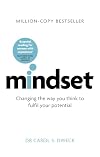
Dr Carol Dweck, 'widely regarded as one of the world's leading researchers in the field of personality, social psychology and developmental psychology', is the psychologist whose famous experiment on school children a few decades ago had led to a ground-breaking understanding of how crucial our beliefs and views about ourselves profoundly affect the way we lead our lives. She is the one, in fact, who has put forward the idea that, people can be roughly divided in two groups - whose with a show more fixed mindset and, and whose with a growth mindset; where, for the fixed mindset 'intelligence is static', whereas, on the contrary, for the growth mindset 'intelligence can be developed'. Thus, a fixed mindset 'leads to a desire to look smart and therefore a tendency to avoid challenges, get defensive or give up easily, see efforts as fruitless or worse, ignore useful negative feedbacks, feel threatened by the success of others', while, a growth mindset 'leads to a desire to learn and therefore a tendency to embrace challenges, persist in the face of setbacks, see efforts as the path to mastery, learn from criticism, find lessons and inspiration in the success of others'. Put even more bluntly: 'the fixed mindset makes you concerned with how you'll be judged; the growth mindset makes you concerned with improving.'
I am sure, we all can think of people fitting into one or the other type of mindset. Since challenging oneself requires efforts and taking risks, some will avoid it for fear of failure (that will question their self-esteem, either too high or too low) when, others on the contrary will embrace it (failure being an opportunity to learn, improve and progress). It's all down, in fact, to attitude:
'Those with the growth mindset found success in doing their best, in learning and improving.'
While:
'(...) in the fixed mindset, you don't take control of your abilities and motivation. You look for your talent to carry you through, and when it doesn't, well then, what else could you have done? You are not a work in progress, you're a finished product. And finished products have to protect themselves, lament and blame. Everything but take charge.'
Here's a fascinating take because, more than a divide defining how we perceive success and failures, our mindset appears to be a crucial key in determining if we will be able to unleash our potentials or not. Simplistic as it may sound (I personally see most people as being a mix of both -it's not either/ort but, more a kind of a spectrum and where one stands on that spectrum) such a view nevertheless had a big impact in various fields where individuals' self esteem is involved. That is actually where the book picks up; when the author illustrates her ideas with examples spanning from education to business and, sports to relationships and parenting.
Of course, addressing here a wide audience, Carole Dweck's 'Mindset' reads like an easy pop psychology book! But, very influential, her work remains serious and revealing. It is, indeed, a significant read for anyone interested in how our beliefs impact, not only on our attitudes but, also, our achievements. Insightful. show less
I am sure, we all can think of people fitting into one or the other type of mindset. Since challenging oneself requires efforts and taking risks, some will avoid it for fear of failure (that will question their self-esteem, either too high or too low) when, others on the contrary will embrace it (failure being an opportunity to learn, improve and progress). It's all down, in fact, to attitude:
'Those with the growth mindset found success in doing their best, in learning and improving.'
While:
'(...) in the fixed mindset, you don't take control of your abilities and motivation. You look for your talent to carry you through, and when it doesn't, well then, what else could you have done? You are not a work in progress, you're a finished product. And finished products have to protect themselves, lament and blame. Everything but take charge.'
Here's a fascinating take because, more than a divide defining how we perceive success and failures, our mindset appears to be a crucial key in determining if we will be able to unleash our potentials or not. Simplistic as it may sound (I personally see most people as being a mix of both -it's not either/ort but, more a kind of a spectrum and where one stands on that spectrum) such a view nevertheless had a big impact in various fields where individuals' self esteem is involved. That is actually where the book picks up; when the author illustrates her ideas with examples spanning from education to business and, sports to relationships and parenting.
Of course, addressing here a wide audience, Carole Dweck's 'Mindset' reads like an easy pop psychology book! But, very influential, her work remains serious and revealing. It is, indeed, a significant read for anyone interested in how our beliefs impact, not only on our attitudes but, also, our achievements. Insightful. show less

Repetitive, but not in a bad way. It's like a sermon or a motivational talk in that it's beneficial to explore core ideas through relatable, familiar stories. Are you more of a Fixed Mindset, or more of a Growth Mindset? The definitions of both are exactly what they seem, one being flexible and adaptive and the other being mentally stalled. Recognizing where you fall into the Fixed Mindset trap, and then working to transition to a Growth Mindset is the goal. Obviously, it's vastly easier show more said than done. show less
First half was very interesting with some excellent points for consideration. Second half was very repetitive - example after example after example.
I understand what the author was trying to do - to show how the different mindsets apply in a variety of use cases - but it came rather dull and I was rushing to get to the end. Whole book could have been about 50% shorter.
I understand what the author was trying to do - to show how the different mindsets apply in a variety of use cases - but it came rather dull and I was rushing to get to the end. Whole book could have been about 50% shorter.
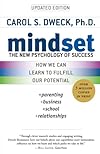
I was intrigued by the concepts of the different mindsets and it wasn’t hard to determine mine! After the initial explanation - the examples of the mindsets in business, sports, relationships, etc were somewhat redundant. I would’ve liked more info on steps to change your mindset - but I’ll take the info provided to work toward a growth mindset.
Lists
Awards

You May Also Like


Associated Authors
Statistics
- Works
- 11
- Also by
- 7
- Members
- 5,372
- Popularity
- #4,638
- Rating
- 3.9
- Reviews
- 98
- ISBNs
- 67
- Languages
- 16