
Mihály Csíkszentmihályi (1934–2021)
Author of Flow: The Psychology of Optimal Experience
About the Author
Mihaly Csikszentmihalyi (pronounced "ME-high CHICK-sent-me-high-ee) is a professor and former chairman of the Department of English at the University of Chicago. His writings have focused on models of enjoyment and how various people access their creative potential. The idea of creative potential, show more which Csikszentmihalyi terms "flow" has become increasingly popular in the public sector. His 1993 book, Flow, inspired Jimmy Johnson then coach of the World Champion Dallas Cowboys, and was the subject of a feature story during that year's Super Bowl television broadcast. His ideas have also been touted by President Clinton, who called Csikszentmihalyi one of his favorite authors, Newt Gingrich, who put his work on the reading list for a political planning committee, and corporations and cultural institutions, such as Volvo in Sweden and the Chicago Park District. He has published articles in a variety of magazines, including Psychology Today, The New York Times, Omni, and Wired and has made appearances on television in the U.S. and Europe. Csikszentmihalyi currently serves on boards and commissions for the U.S. Departments of Labor and Education, and the Social Science Research Council. He has held visiting professorships at universities in the United States, Canada, Brazil, Italy, and Finland. He received the1990 NRPA National Research (Roosevelt) Award, in addition to two Senior Fulbright Fellowships. Besides Flow, he has also written Beyond Boredom and Anxiety and Creativity: Flow and the Psychology of Discovery and Invention, in which he applies his "flow" theory to various inventors, scientists, and artists to determine how and why they achieve "flow." (Bowker Author Biography) show less
Series
Works by Mihály Csíkszentmihályi
Flow: The Psychology of Optimal Experience [Abridged Audiobook] (1994) — Author & Narrator — 40 copies, 4 reviews
Talented Teenagers: The Roots of Success and Failure (Cambridge Studies in Social & Emotional Development) (1993) 23 copies
Flow and the Foundations of Positive Psychology: The Collected Works of Mihaly Csikszentmihalyi (2014) 22 copies, 1 review
Flow - Edicao revista e atualizada - A psicologia do alto desempenho e da felicidade (Em Portugues do Brasil) (2019) 9 copies
Applications of Flow in Human Development and Education: The Collected Works of Mihaly Csikszentmihalyi (2014) 8 copies
Zanos, Psihologija optimalnega izkustva (Flow, The Psychology of Optimal Experience) 1 copy, 1 review
A descoberta do fluxo - A psicologia do envolvimento com a vida cotidiana - Lateral preta (esgotado) 1 copy
Att uppleva "flow" 1 copy
The Evolving Self 1 copy
Seguire il flow 1 copy
Laufen im Flow: Die Mentaltechnik für ein perfektes Lauferlebnis und maximale Leistung (2018) 1 copy
Flow 1 copy
Associated Works
What Is Your Dangerous Idea? Today's Leading Thinkers on the Unthinkable (2007) — Contributor — 668 copies, 8 reviews
The Next Fifty Years: Science in the First Half of the Twenty-first Century (2002) — Contributor — 410 copies, 10 reviews
Everyday Creativity and New Views of Human Nature: Psychological, Social, and Spiritual Perspectives (2007) — Foreword — 23 copies
Tagged
Common Knowledge
- Canonical name
- Csíkszentmihályi, Mihály
- Birthdate
- 1934-09-29
- Date of death
- 2021-10-20
- Gender
- male
- Education
- University of Chicago (BA|1960)
University of Chicago (PhD|psychology|1965) - Occupations
- professor
psychologist - Organizations
- University of Chicago
Claremont Graduate University
Lake Forest College
Hungarian Academy of Sciences
American Academy of Arts and Sciences - Awards and honors
- Clifton Strengths Prize (2009)
Széchenyi Prize (2011) - Nationality
- USA
Hungary (birth) - Birthplace
- Fiume, Italy (now Rijeka, Croatia)
- Places of residence
- Chicago, Illinois, USA
Claremont, California, USA - Place of death
- Claremont, California, USA
- Map Location
- USA
Members
Reviews

Mình đã nghe về khái niệm Dòng chảy này trước đó qua các giới thiệu của bác Trần Xuân Hải và một số bài viết trên mạng. Đây là công trình nghiên cứu của tác giả, đi sâu vào tâm lý của con người để tìm kiếm cái mà ông gọi là Trải nghiệm tối ưu cho cuộc sống con người.
Để dẫn nhập vào cuốn sách, tác giả đặt ra câu hỏi về hạnh phúc và quá trình kiếm tìm nó của con người. show more Tác giả lập luận rằng hạnh phúc không ở đâu xa mà là ngay chính những trải nghiệm bị lãng quên, những trải nghiệm mà tổ tiên chúng ta đã có từ xa xưa nhưng qua thời gian đã bị mai một do quá trình quá trình tiến hoá của xã hội.
Minh chứng cho lập luận của mình, tác giả định nghĩa thế nào là Dòng chảy và cách mà con người hiện đại có thể trải nghiệm dòng chảy đấy. Từ quan sát "dòng chảy" trong chính bản thân mỗi người, đến "dòng chảy" trong đời sống xã hội tương tác không ngừng, các mối quan hệ từ gia đình đến công việc.
Tuy nhiên, dòng chảy chỉ là một khoảnh khắc có giới hạn thời gian và ngữ cảnh. Phần cuối, tác giả đưa ra hướng dẫn của mình để kéo dài khoảnh khắc dòng chảy ấy, làm thế nào mà cuộc sống của mỗi người trở thành một dòng chảy vô tận. Hạnh phúc cũng sẽ từ đó mà được duy trì.
Cuốn sách không nặng tính khoa học hay hàn lâm, ngược lại, nó như một câu chuyện được dẫn dắt có đầu - đuôi. Thấp thoáng đâu đó tính chặt chẽ của người làm khoa học. Nó nhắc nhở chúng ta về những trải nghiệm mà chúng ta cho rằng hiển nhiên nhưng đó lại là khoảnh khắc hạnh phúc mà không dễ có được. Đây là một cuốn sách rất đáng đọc. show less
Để dẫn nhập vào cuốn sách, tác giả đặt ra câu hỏi về hạnh phúc và quá trình kiếm tìm nó của con người. show more Tác giả lập luận rằng hạnh phúc không ở đâu xa mà là ngay chính những trải nghiệm bị lãng quên, những trải nghiệm mà tổ tiên chúng ta đã có từ xa xưa nhưng qua thời gian đã bị mai một do quá trình quá trình tiến hoá của xã hội.
Minh chứng cho lập luận của mình, tác giả định nghĩa thế nào là Dòng chảy và cách mà con người hiện đại có thể trải nghiệm dòng chảy đấy. Từ quan sát "dòng chảy" trong chính bản thân mỗi người, đến "dòng chảy" trong đời sống xã hội tương tác không ngừng, các mối quan hệ từ gia đình đến công việc.
Tuy nhiên, dòng chảy chỉ là một khoảnh khắc có giới hạn thời gian và ngữ cảnh. Phần cuối, tác giả đưa ra hướng dẫn của mình để kéo dài khoảnh khắc dòng chảy ấy, làm thế nào mà cuộc sống của mỗi người trở thành một dòng chảy vô tận. Hạnh phúc cũng sẽ từ đó mà được duy trì.
Cuốn sách không nặng tính khoa học hay hàn lâm, ngược lại, nó như một câu chuyện được dẫn dắt có đầu - đuôi. Thấp thoáng đâu đó tính chặt chẽ của người làm khoa học. Nó nhắc nhở chúng ta về những trải nghiệm mà chúng ta cho rằng hiển nhiên nhưng đó lại là khoảnh khắc hạnh phúc mà không dễ có được. Đây là một cuốn sách rất đáng đọc. show less
Flow: The Classic Work on How to Achieve Happiness, with a new Introduction by the author by Mihály Csíkszentmihályi
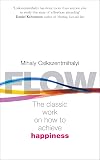
I read this expecting a serious book of psychological research into human happiness. Silly me! What I got was a self help book which might be renamed the Book of Platitudes based on a rehashing of popular philosophy with case studies attached.
A lot of it was common sense and might be useful to someone troubled who has not had an extensive education in the humanities but the unremittingly conservative ideology, geared to keeping people functioning within a broken system was wearing to say the show more least.
This is the type of book that has grown into a torrent since its publication in 1990 - consultants to the corporate sector trying to find a way to keep the wheels of the economic system whirring when so many people within it are struggling to find meaning in what can have no meaning.
The whole ethos is exemplified in the praise for a poor sap who gets flow out of being a cog on an assembly line - no doubt, by now, automated out of that small pleasure because his flow was no longer profitable to the people who hire consultants to tell them how to encourage flow.
Much of the advice is not bad, albeit from the Institute of the Bleeding Obvious, but it is buttressed by claims from the humanities and social science that often prove to be no more than dubious received wisdom designed to prove the basic thesis.
And what does that thesis come down to - that hoary old chestnut that we construct our happiness from within and that we can find happiness through a cod merging of ancient wisdoms and recent psychological research. Yeah, right! Not impressed ... show less
A lot of it was common sense and might be useful to someone troubled who has not had an extensive education in the humanities but the unremittingly conservative ideology, geared to keeping people functioning within a broken system was wearing to say the show more least.
This is the type of book that has grown into a torrent since its publication in 1990 - consultants to the corporate sector trying to find a way to keep the wheels of the economic system whirring when so many people within it are struggling to find meaning in what can have no meaning.
The whole ethos is exemplified in the praise for a poor sap who gets flow out of being a cog on an assembly line - no doubt, by now, automated out of that small pleasure because his flow was no longer profitable to the people who hire consultants to tell them how to encourage flow.
Much of the advice is not bad, albeit from the Institute of the Bleeding Obvious, but it is buttressed by claims from the humanities and social science that often prove to be no more than dubious received wisdom designed to prove the basic thesis.
And what does that thesis come down to - that hoary old chestnut that we construct our happiness from within and that we can find happiness through a cod merging of ancient wisdoms and recent psychological research. Yeah, right! Not impressed ... show less
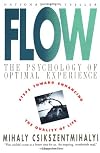
Today was a Saturday. I spent most of the day worrying about what to make for dinner, watching my toddler, and doing miscellaneous stuff. But I determined, in the late afternoon, to replace the flush valve in the bathroom. Even though I had put it off for a week, and wasn't looking forward to getting that up close and personal with my toilet, it was the quickest, most enjoyable hour of my day. What happened? Flow.
I've heard Csikszentmihalyi's work summarized multiple times(he's a big thing show more in the business world)*, but that doesn't mean that I heard it all. In fact, the summarization of his definition of "Flow" is just the beginning of what ends up being a powerful argument for meaning, accountability, and growth.
I, being me, would love a Chicago style of notes but the notes are definitely there in my non-preferred style. His chapters on others were really interesting. He would be an interesting soul to chat with.
*Simon Sinek has a lovely pronunciation guide of his name in one of his books. :) show less
I've heard Csikszentmihalyi's work summarized multiple times(he's a big thing show more in the business world)*, but that doesn't mean that I heard it all. In fact, the summarization of his definition of "Flow" is just the beginning of what ends up being a powerful argument for meaning, accountability, and growth.
I, being me, would love a Chicago style of notes but the notes are definitely there in my non-preferred style. His chapters on others were really interesting. He would be an interesting soul to chat with.
*Simon Sinek has a lovely pronunciation guide of his name in one of his books. :) show less
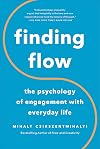
The more I read about psychology, the more I wonder how people can't smell the snake oil. I'm in a management development program and Csikszentmihalyi's work was recommended. Perhaps I got the wrong one. This was certainly a load of rubbish.
Opinions as fact, conclusions tailored to support the thesis, odd references to ESP and spirituality, the only thing I can recommend is he has a really cool name.
I pulled the thread on a few of the topics and felt my skin crawl reading up on "psychic show more entropy." I studied thermodynamics and can only feel sadness if these guys have to borrow terms from real science to legitimize the flimsiness of theirs.
Habitual readers of self-help tripe might like this book. Nuff said. show less
Opinions as fact, conclusions tailored to support the thesis, odd references to ESP and spirituality, the only thing I can recommend is he has a really cool name.
I pulled the thread on a few of the topics and felt my skin crawl reading up on "psychic show more entropy." I studied thermodynamics and can only feel sadness if these guys have to borrow terms from real science to legitimize the flimsiness of theirs.
Habitual readers of self-help tripe might like this book. Nuff said. show less
Lists
You May Also Like


Associated Authors
Statistics
- Works
- 49
- Also by
- 10
- Members
- 10,092
- Popularity
- #2,352
- Rating
- 3.9
- Reviews
- 121
- ISBNs
- 223
- Languages
- 22
- Favorited
- 12
