
Edward de Bono (1933–2021)
Author of Lateral Thinking: A Textbook of Creativity
About the Author
Edward De Bono is world famous in the field of creative thinking: he invented the concept of lateral thinking and his advice and ideas on thought and learning have been sought from world leaders and Nobel Laureates for over 50 years. He has written numerous bestsellers, including How to Have a show more Beautiful Mind and How to Have Creative Ideas. Together his books have sold over 1 million copies worldwide. show less
Series
Works by Edward de Bono
Serious Creativity: Using the Power of Lateral Thinking to Create New Ideas (1992) 387 copies, 3 reviews
I Am Right You Are Wrong: From This to the New Renaissance: From Rock Logic to Water Logic (1990) 357 copies, 1 review
Sur-Petition: Creating Value Monopolies When Everyone Else Is Merely Competing (1992) 109 copies, 1 review
Eureka! An Illustrated History of Inventions from the Wheel to the Computer (1974) 94 copies, 1 review
H (Plus) A New Religion?: How to Live Your Life Positively Through Happiness, Humour, Help, Hope, Health (2006) 68 copies
Der Klügere gibt nicht nach. Vom erstarrten zum fließenden Denken. ( ECON Sachbuch). (1992) 10 copies
Marketing without Money: How 20 Top Australian Entrepreneurs Crack Markets with Their Minds (2004) 7 copies
El pensamiento creativo: El poder del pensamiento lateral para la creación de nuevas ideas (Biblioteca Edward De Bono) (2016) 5 copies
Como atraer el interes de los demas / Attracting the Interest of Others (Spanish Edition) (1999) 3 copies
Uusi tapa ajatella 3 copies
Kuusi ajatteluhattua 3 copies
De Bono Header 3 copies
Seis marcos laterales: Estrategias para gestionar la información (Biblioteca Edward De Bono) (Spanish Edition) (2009) 2 copies
The Six Value Medals 2 copies
Six Thinking Hats #2 2 copies
Handbook for a Positive Revolution: The Five Success Principles for Personal and Global Change (2018) 2 copies
Six Thinking Hats #1 2 copies
¡Piensa!: Antes de que sea demasiado tarde (Biblioteca Edward De Bono) (Spanish Edition) (2011) 2 copies, 1 review
Learn-to-Think Cookbook 2 copies
De Bano's thinking course 1 copy
THE ART & SCIENCE OF SUCCESS 1 copy
Conflictos: Como Resolverlos De LA Mejor Manera/Conflicts : A Better Way to Resolve Them (Spanish Edition) (1986) 1 copy
Das spielerische Denken 1 copy
Saber Pensar 1 copy
Để Có Một Tâm Hồn Đẹp 1 copy
Essere creativi come fare crescere nuove idee: i concetti, gli strumenti, le applicazioni del pensiero laterale (2011) 1 copy
LA REVOLUCIÓN POSITIVA 1 copy
Taktik: Kiat dan Ilmu Sukses 1 copy
Hvordan du finder en ny mÆde at g�ıre tingene pÆ, nÆr de gamle metoder ikke lŒngere slÆr til (1987) 1 copy
Tư duy đa chiều 1 copy
Kinderlogik löst Probleme 1 copy
Alternativa synsätt på morgondagens samhälle : bidrag från åtta framstående tänkare i E.F. Schumachers anda (1981) 1 copy
Six Big Thinking Hats 1 copy
Ideas para profesionales que piensan : nuevas consideraciones sobre el pensamiento lateral aplicadas a la empresa (1989) 1 copy
Naucz się myśleć kreatywnie 1 copy
The 5-day Course in Thinking 1 copy
Associated Works
Tagged
Common Knowledge
- Canonical name
- de Bono, Edward
- Legal name
- de Bono, Edward Charles Francis Publius
- Birthdate
- 1933-05-19
- Date of death
- 2021-06-09
- Gender
- male
- Education
- St. Edward's College, Malta
Royal University of Malta (MD)
Christ Church College, Oxford (MA ∙ 1957 ∙ Psychology and Physiology)
Christ Church College, Oxford (DPhil ∙ 1961 ∙ Medicine)
Trinity College, Cambridge (PhD ∙ Medicine) - Occupations
- physician
psychologist - Organizations
- Cognitive Research Trust
University of Malta - Awards and honors
- Order of Merit, Malta (1995)
Capire Prize, Madrid (1988)
Royal Melbourne Institute of Technology (Doctor of Design)
University of Dundee (LLD)
Rhodes Scholar (1955) - Short biography
- Edward de Bono (born May 19, 1933, in Malta) is a Maltese physician, author, inventor, and consultant. He is best known as the originator of the term lateral thinking and a proponent of the deliberate teaching of thinking as a subject in schools. dward de Bono is regarded by many as the leading authority in the field of creative thinking, innovation and the direct teaching of thinking as a skill. He is equally renowned for his development of the Six Thinking Hats® technique and the Direct Attention Thinking Tools™ (D.A.T.T.™) framework.
Edward de Bono is the originator of the concept - and formal tools - of Lateral Thinking, which is now a part of language enjoying an entry in the Oxford Dictionary. - Nationality
- Malta
- Birthplace
- Saint Julian's Bay, British Malta
- Places of residence
- Malta
Channel Islands - Place of death
- Malta
- Burial location
- Santa Maria Addolorata Cemetery, Paola, Southern Harbour, Malta
- Map Location
- Malta
Members
Reviews
I had to think long and hard before I gave this book a five star rating. And, much of this prevarication can be attributed to my ambivalent attitude towards the author, Edward de Bono....public intellectual and the pioneer of teaching creative thinking. I first came across de Bono when I found his book,"Lateral Thinking', in the CSIRO library where I was working in about 1967.. It blew me away. De Bono, made the point that we all tended to think inside the box and he encouraged thinking show more outside the box. In fact, he claimed that you could actually teach thinking and, whilst we taught our kids mathematics and history,,,we never taught them any techniques for thinking. To me this was totally revolutionary thinking and ever since I've tried to apply some of his principles. (I think he might have also given some principles about brainstorming....like don't be negative).I can still remember trying to solve his matches problem...creating triangles out of matchsticks ......when the answer was not to do it in two dimensions but use three.
However, a few years later he came out with another book and then another...and I think I read a couple of them...including the "Six thinking Hats" but was left wondering whether he actually had anything new to say. It all seemed to be a variation on the original themes. Admittedly, the six thinking hats gave clear methodology to coming up with creative ideas but at base it seemed to me more of the same. What I did find with the later books was an increasing tendency for self-promotion: how he'd run courses for various Governments and international agencies etc. etc. and how....until de Bono had come along nobody was doing what he was advocating. And how he had the prescience to suggest mechanisms of the mind way back in the 1950's that were only coming to be recognised in the 2000+ years. In other words, an increasing tendency to self promotion........which actually seems to have served him very well.
But then, I came face to face with the great man himself. In fact, had the challenging role of speaking AFTER de Bono ....but not only after him ....it was at a meeting of the "Professional Speaker's Association of Australia". And I have to admit he was a delightful speaker and enchanted the audience and he was very graceful about my own feeble speaking efforts.......even if his performance was if slightly tainted by that powerful streak of self promotion. But I'd come forewarned. My boss at the time mentioned to me beforehand that she had once had the job of escorting de Bono on a previous speaking tour lasting about a week ...and found him "one of the greatest bores of all time". Apparently because all his conversation was about himself. The same characteristic that comes through in his books.
But onto the present book. Coming with all this baggage about the author, it's really hard (maybe impossible) to be objective about the book. But I'll try. It was first published in 1992 and the sub-title (in some versions) suggests that it's a summary of de Bono's thinking/teaching to that time. And really, it's very good. If you want a book that can give you some techniques for coming up with new ideas or you are trying to run a workshop to find new solutions to old problems, there is a plethora of ideas here.
He's got the six coloured thinking hats (red is intuition and thinking); black is caution and what could go wrong).
He's got the creative pause...might there be another way?
The challenge...are we doing something this way because that's always the way it's been done?
Looking for alternatives ...when you don't have to....you already have a perfectly acceptable solution.
Then the concept plan....maybe working backwards from the purpose of the thinking to concepts about how to get there.
Provocation and movement to cut across established patterns: what happens when we drop something that is always taken for granted? Or reversing the normal course of action; or exaggeration, distortion and wishful thinking.
Adding random input....eg from random words...like "unemployment false teeth")
Movement:...this is a bit hard to grasp but I think the essential principle is that it should involve "moving forward" with some idea. (That is, taking some action)
Stratal...putting together 5 unconnected statements about the situation and seeing what emerges.
The filament technique...putting ideas one under the other and drawing connections.
He also suggests techniques for "harvesting " these creative ideas....which all seem pretty reasonable and sensible. After all, not much point having wildly creative ideas if nothing emerges from it.
In fact, critiques of de Bono have been along the line that it's all very well coming up with new and creative ides but have his techniques ever been evaluated against alternatives? The implicit answer being NO.
Much of this creative thinking, at it's foundation, relies on metaphor and the brain's capacity to look for connections ..or make connections ...which is the classic memory....mnemonics technique (making wild stories to help memorise facts or names etc).
I've got a number of books on creative thinking ... all of them written after de Bono's first books and they all seem to be derivative from his work. Even the much vaunted "mind-mapping" ...which I have found pretty useful for group work, can be linked back (more or less) to de Bono's ideas . So he has had tremendous influence and he is a rather extraordinary individual. Credit where credit is due. And this is a seriously good book. In fact, the title is "Serious creativity". So whether or not de Bono, in person, might be a bit "full of himself", I have to give his book five stars. It's beautifully written. Clear and understandable and really delivers to anybody who wants some methods for generating new ideas. show less
However, a few years later he came out with another book and then another...and I think I read a couple of them...including the "Six thinking Hats" but was left wondering whether he actually had anything new to say. It all seemed to be a variation on the original themes. Admittedly, the six thinking hats gave clear methodology to coming up with creative ideas but at base it seemed to me more of the same. What I did find with the later books was an increasing tendency for self-promotion: how he'd run courses for various Governments and international agencies etc. etc. and how....until de Bono had come along nobody was doing what he was advocating. And how he had the prescience to suggest mechanisms of the mind way back in the 1950's that were only coming to be recognised in the 2000+ years. In other words, an increasing tendency to self promotion........which actually seems to have served him very well.
But then, I came face to face with the great man himself. In fact, had the challenging role of speaking AFTER de Bono ....but not only after him ....it was at a meeting of the "Professional Speaker's Association of Australia". And I have to admit he was a delightful speaker and enchanted the audience and he was very graceful about my own feeble speaking efforts.......even if his performance was if slightly tainted by that powerful streak of self promotion. But I'd come forewarned. My boss at the time mentioned to me beforehand that she had once had the job of escorting de Bono on a previous speaking tour lasting about a week ...and found him "one of the greatest bores of all time". Apparently because all his conversation was about himself. The same characteristic that comes through in his books.
But onto the present book. Coming with all this baggage about the author, it's really hard (maybe impossible) to be objective about the book. But I'll try. It was first published in 1992 and the sub-title (in some versions) suggests that it's a summary of de Bono's thinking/teaching to that time. And really, it's very good. If you want a book that can give you some techniques for coming up with new ideas or you are trying to run a workshop to find new solutions to old problems, there is a plethora of ideas here.
He's got the six coloured thinking hats (red is intuition and thinking); black is caution and what could go wrong).
He's got the creative pause...might there be another way?
The challenge...are we doing something this way because that's always the way it's been done?
Looking for alternatives ...when you don't have to....you already have a perfectly acceptable solution.
Then the concept plan....maybe working backwards from the purpose of the thinking to concepts about how to get there.
Provocation and movement to cut across established patterns: what happens when we drop something that is always taken for granted? Or reversing the normal course of action; or exaggeration, distortion and wishful thinking.
Adding random input....eg from random words...like "unemployment false teeth")
Movement:...this is a bit hard to grasp but I think the essential principle is that it should involve "moving forward" with some idea. (That is, taking some action)
Stratal...putting together 5 unconnected statements about the situation and seeing what emerges.
The filament technique...putting ideas one under the other and drawing connections.
He also suggests techniques for "harvesting " these creative ideas....which all seem pretty reasonable and sensible. After all, not much point having wildly creative ideas if nothing emerges from it.
In fact, critiques of de Bono have been along the line that it's all very well coming up with new and creative ides but have his techniques ever been evaluated against alternatives? The implicit answer being NO.
Much of this creative thinking, at it's foundation, relies on metaphor and the brain's capacity to look for connections ..or make connections ...which is the classic memory....mnemonics technique (making wild stories to help memorise facts or names etc).
I've got a number of books on creative thinking ... all of them written after de Bono's first books and they all seem to be derivative from his work. Even the much vaunted "mind-mapping" ...which I have found pretty useful for group work, can be linked back (more or less) to de Bono's ideas . So he has had tremendous influence and he is a rather extraordinary individual. Credit where credit is due. And this is a seriously good book. In fact, the title is "Serious creativity". So whether or not de Bono, in person, might be a bit "full of himself", I have to give his book five stars. It's beautifully written. Clear and understandable and really delivers to anybody who wants some methods for generating new ideas. show less
Certo che questo libro ha una sconfinata ambizione. La scheda sulla quale sto scrivendo mi chiede la data di inizio e di fine lettura del libro. Come al solito non ne prendo conto. Per me leggere un libro non ha mai un inizio ed una fine precisi. Sono iniziative che il mio pensiero prende senza che la mia mente possa darmi una spiegazione precisa. Questo per dire che pensare di poter insegnare a pensare è una cosa che ritengo impossibile. O quasi. La dimostrazione c'è l'ha data William show more Shakespeare quando cerca di descrivere e organizzare il pensiero di Amleto in quelle sue personali circostanze. È noto a tutti che non prese nessuna decisione lasciando scorrere in piena libertà i suoi pensieri. L'autore del libro è uno dei miei scrittori preferiti, ho letto e studiato molti suoi libri, non nascondo di avere imparato molto, ma resta sempre molto altro da imparare ogni qualvolta credi di avere appreso qualcosa. Con gli anni che mi ritrovo dovrei, rivivere un'altra vita e sulla esperienza vissuta, forse, potrei ricominciare e riprovare a come pensare in meglio. Cosa ovviamente impossibile. Mi ritrovo allora a pensare che non è possibile imparare a pensare. Un libro inutile, allora? Per nulla, non lo posso pensare ... show less

Far from showing any "art" or "science" behind individual successes, Doctor Bono, does provide us with access to anecdotes told by some 47 persons who were willing to talk to him about their careers. Most are white males, whose "tactics" were largely focused on financial rewards across a wide range of endeavors -- sports, business, publishers, a lawyer (Cohn), a pop star (Sting).
From the beginning, Bono does not define "success", and avoids any argument with what makes a man "happy". He show more understands that luck, madness, talent, personality, and the circumstances operating in the field all play a role. What is helpful in this book is that he provides pithy lists of Tactics drawn from real life, in the following phases we can all reference:
Part One: Success - styles, stimulation, controls, timing, luck.
Part Two: Preparing for Sucess - focus, opportunity, ideas, risks.
Part Three: Strategy, plans, culture, teams, motivation, play
Part Four: Decision-making and Thinking (doing)
Dr. Bono ends by introducing his "supranational interdependent thinking organization (SITO) to provide thinking that is permanently neutral and independent." [220] He wants us to build "concept maps" together. show less
From the beginning, Bono does not define "success", and avoids any argument with what makes a man "happy". He show more understands that luck, madness, talent, personality, and the circumstances operating in the field all play a role. What is helpful in this book is that he provides pithy lists of Tactics drawn from real life, in the following phases we can all reference:
Part One: Success - styles, stimulation, controls, timing, luck.
Part Two: Preparing for Sucess - focus, opportunity, ideas, risks.
Part Three: Strategy, plans, culture, teams, motivation, play
Part Four: Decision-making and Thinking (doing)
Dr. Bono ends by introducing his "supranational interdependent thinking organization (SITO) to provide thinking that is permanently neutral and independent." [220] He wants us to build "concept maps" together. show less
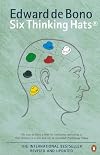
Like many people, I've bumped into the six hats method a few times during different meetings run by well meaning facilitators. Discovering the book while browsing the library prompted me to get it out, and read about the method from the source.
As with every de Bono book I've read so far, I quickly became annoyed by the author's voice. To me he seems overly earnest, self-aggrandising and oblivious to everything except the sound of his own echos. The breezy, rapid way he puts down words make show more for easy reading, rather like munching through a packet of rice crackers. But, like the rice crackers, de Bono's writing is bland, and puffed out with air. The method presented in the book could have been presented in a decent pamphlet.
This doesn't mean that his concepts don't have merit -- I'm interested in his ideas around this hats method as an imaginary structure that directs thinking, and turns meetings into games with rules. The approach could allow people to explore different thinking purposes under the protection of the game, without getting trapped by personal agenda.
What is missing from the book is any research (other than anecdotal success stories) that the method actually works. de Bono is an idea generating super-star, but it feels that he spends so much time spinning up exotic ideas, he has no time to invest in actually discovering if anything works. In the vernacular of the book, too much green hat. I'd like to hear from his black (risk and consequence) hat and his white (facts and research) to see how this method is really being used.
Overall, I liked the approach, and I think I will attempt to employ it in my next few thinking challenges. And I might read more de Bono books, but not any time soon. Rice crackers leave me feeling unsatisfied. show less
As with every de Bono book I've read so far, I quickly became annoyed by the author's voice. To me he seems overly earnest, self-aggrandising and oblivious to everything except the sound of his own echos. The breezy, rapid way he puts down words make show more for easy reading, rather like munching through a packet of rice crackers. But, like the rice crackers, de Bono's writing is bland, and puffed out with air. The method presented in the book could have been presented in a decent pamphlet.
This doesn't mean that his concepts don't have merit -- I'm interested in his ideas around this hats method as an imaginary structure that directs thinking, and turns meetings into games with rules. The approach could allow people to explore different thinking purposes under the protection of the game, without getting trapped by personal agenda.
What is missing from the book is any research (other than anecdotal success stories) that the method actually works. de Bono is an idea generating super-star, but it feels that he spends so much time spinning up exotic ideas, he has no time to invest in actually discovering if anything works. In the vernacular of the book, too much green hat. I'd like to hear from his black (risk and consequence) hat and his white (facts and research) to see how this method is really being used.
Overall, I liked the approach, and I think I will attempt to employ it in my next few thinking challenges. And I might read more de Bono books, but not any time soon. Rice crackers leave me feeling unsatisfied. show less
Lists
Awards

You May Also Like


Associated Authors
Statistics
- Works
- 233
- Also by
- 2
- Members
- 11,161
- Popularity
- #2,115
- Rating
- 3.5
- Reviews
- 83
- ISBNs
- 626
- Languages
- 22
- Favorited
- 8

