
Tony Buzan (1942–2019)
Author of The Mind Map Book: How to Use Radiant Thinking to Maximize Your Brain's Untapped Potential
About the Author
Tony Buzan, creador de los Mapas Mentales, asesora a ejecutivos de multinacionales, jefes de Estado y atletas de fama mundial. Sus obras, con millones de ejemplares vendidos en mas de 100 paises, estan traducidas a mas de 30 idiomas
Image credit: Tony Buzan
Works by Tony Buzan
The Mind Map Book: How to Use Radiant Thinking to Maximize Your Brain's Untapped Potential (1993) 1,351 copies, 11 reviews
Use Both Sides of Your Brain: New Mind-Mapping Techniques, Third Edition (Plume) (1976) 338 copies, 1 review
Use Your Perfect Memory: Dramatic New Techniques for Improving Your Memory; Third Edition (Plume) (1984) 138 copies
Mind Map Mastery: The Complete Guide to Learning and Using the Most Powerful Thinking Tool in the Universe (2018) 103 copies, 2 reviews
The Mind Map Book: Unlock Your Creativity, Boost Your Memory, Change Your Life (2010) 62 copies, 1 review
The Buzan Study Skills Handbook: The Shortcut to Success in Your Studies with Mind Mapping, Speed Reading and Winning Memory Techniques (Mind Set) (2006) 55 copies
Buzan's Study Skills: Mind Maps, Memory Techniques, Speed Reading and More! (Mind Set) (2011) 38 copies
Buzan Bites: Mind Mapping: Kickstart your creativity and transform your life (2006) 31 copies, 1 review
Super-Creativity - The Mind Map Method of Creative Problem Solving (Audio Renaissance) (1988) 8 copies
Dominando a Tecnica dos Mapas Mentais - Guia Completo de Aprendizado e o Uso da Mais Poderosa Ferramenta de Desenvolvimento da Mente Humana (Em Portugues do Brasil) (2019) 4 copies, 1 review
Etudiants : boostez vos résultats avec les mind maps ! Inclus également : les techniques de mémorisation, la lecture rapide (2012) 3 copies
Elmetérképezés mesterfokon : így használd az univerzum leghatékonyabb mentális eszközét! (2018) 3 copies
Sức Mạnh Của Trí Tuệ Tâm Linh 2 copies
Hafızana Hükmet: Hafızanın gücünü artırmak için yaratıcı yöntemler (Turkish Edition) (2009) 2 copies
Sử dụng trí nhớ của bạn 2 copies
Sách dạy đọc nhanh 2 copies
Collins Language Revolution Spanish: Beginner Plus (Collins Language Revolution!) (Spanish Edition) (2009) 2 copies
Lavinkite atmintį 2 copies
Harti mentale 2 copies
Étudiants : Boostez vos résultats avec les Mind maps !: Mind maps, techniques de mémorisation, lecture rapide (2023) 1 copy
Usted es mas inteligente de lo que cree: 10 formas de despertar su genio natural (Spanish Edition) (2004) 1 copy
Seven Day Brain Boost 1 copy
Collins Language Revolution! - Complete Spanish Beginner's Set - Language Learning meets Mind Mapping (2009) 1 copy
الكتاب الأمثل لخرائط العقل 1 copy
Αξιοποιήστε το μυαλό σας 1 copy
استخدم عقلك 1 copy
Aklini En Iyi Sekilde Kullan 1 copy
luyện não cho trẻ 1 copy
Lap ban do tu duy 1 copy
Mind Map untuk anak 1 copy
The Mind manager 1 copy
Mind Mapping For Dummies 1 copy
The Mind Map 1 copy
Vekk dine skjulte evner 1 copy
Buku Pintar Mind Map 1 copy
Associated Works
Brain Training: Boost Memory, Maximize Mental Agility, & Awaken Your Inner Genius (2009) — Foreword — 40 copies
Tagged
Common Knowledge
- Canonical name
- Buzan, Tony
- Legal name
- Buzan, Anthony Peter
- Other names
- BUZAN, Tony
- Birthdate
- 1942-06-02
- Date of death
- 2019-04-13
- Gender
- male
- Education
- University of British Columbia
Simon Fraser University - Occupations
- educational consultant
- Short biography
- [excerpted from Wikipedia]
As a popular psychology author, Tony Buzan wrote on subjects relating to the brain, "genius quotient (GQ)", spiritual intelligence, memory, creativity and speed reading. Following his 1970s series Use Your Head for the BBC, many of his ideas were set down in a series of five books: Use Your Memory, Master Your Memory, Use Your Head, The Speed Reading Book and The Mind Map Book. He was author or co-author of more than 80 books altogether. Buzan popularised the idea of mental literacy, radiant thinking, and a technique called mind mapping. - Cause of death
- heart attack
- Nationality
- UK
- Birthplace
- Palmers Green, London, Middlesex, England, UK
- Place of death
- Oxford, Oxfordshire, England, UK
- Associated Place (for map)
- England, UK
Members
Reviews
Mind Map Mastery: The Complete Guide to Learning and Using the Most Powerful Thinking: The Complete Guide to Learning and Using the Most Powerful Thinking Tool in the Universe by Tony Buzan
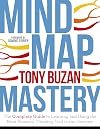
Mind Map Mastery is written in a tone of breathless enthusiasm, which is only reasonable, since Buzan spent half a century promoting his idea. I'm a big fan of non-linear information organization*, enough so that I would up entirely reorienting my career around the idea of using social network analysis and graphs to understand research collaborations.
Mind maps are subtly different from other chart-like forms of presentation. A mind map starts with a central concept image, with curvy show more radiating branches going out in all direction. The first level of branches are thick and curvy, but subsequent levels trace graceful arcs. A proper mind map uses lots of colors, single word labels along the branches, and small drawings. Notably, a Mind Map is distinct from a spider chart, the more conventional graph with straight spindly lines connecting bubbles with words in them, and something I use a lot.
This book has some tables of exercises to help build your mind mapping skills. I'm skeptical of the absolute benefits in terms of memory, creativity, and organization that Buzan promises with his tool, and this brief book definitely isn't worth the $12 Amazon is charging for it (I got it for $3), but it's an idea that's interesting enough to make me track down some markers.
*Actually, the best form of data is bulk columnar, but every day Excel exists we stray further from God's Divine Light. show less
Mind maps are subtly different from other chart-like forms of presentation. A mind map starts with a central concept image, with curvy show more radiating branches going out in all direction. The first level of branches are thick and curvy, but subsequent levels trace graceful arcs. A proper mind map uses lots of colors, single word labels along the branches, and small drawings. Notably, a Mind Map is distinct from a spider chart, the more conventional graph with straight spindly lines connecting bubbles with words in them, and something I use a lot.
This book has some tables of exercises to help build your mind mapping skills. I'm skeptical of the absolute benefits in terms of memory, creativity, and organization that Buzan promises with his tool, and this brief book definitely isn't worth the $12 Amazon is charging for it (I got it for $3), but it's an idea that's interesting enough to make me track down some markers.
*Actually, the best form of data is bulk columnar, but every day Excel exists we stray further from God's Divine Light. show less
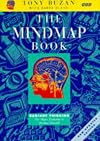
Despite being an avid user of mind maps for over a decade, upon rereading the mind map book, I realised I've been underutilising mind maps. I've been using mind maps for two main reasons:
1. The first is to mind map books I read and thus learn and retain what I learn.
2. The second way I've been using them is for the outdoors, the output of what I've learned, whether that is outlining articles or books or talks.
But there are far more useful ways of using mind maps beyond those two reasons:
- show more You can use them for decision making.
- You can use them for long-term and short-term planning.
- You can use them to create a way to remember and collect ideas on any given topic so that you can always see at a glance what you know about any given topic.
Really, it is extraordinary how useful and ubiquitous mind maps can be in your life if you truly start to use them. show less
1. The first is to mind map books I read and thus learn and retain what I learn.
2. The second way I've been using them is for the outdoors, the output of what I've learned, whether that is outlining articles or books or talks.
But there are far more useful ways of using mind maps beyond those two reasons:
- show more You can use them for decision making.
- You can use them for long-term and short-term planning.
- You can use them to create a way to remember and collect ideas on any given topic so that you can always see at a glance what you know about any given topic.
Really, it is extraordinary how useful and ubiquitous mind maps can be in your life if you truly start to use them. show less
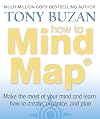
Mind maps are a useful tool, and this book explains them clearly. Unfortunately reading this book reminded me of 70s Marvel comics where every sentence ended in an exclamation mark - the tone is annoyingly hyperbolic.
So five stars for mind maps, but I am rating the book so it only gets three.
So five stars for mind maps, but I am rating the book so it only gets three.
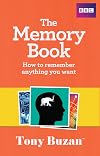
The could be a great book. Unfortunately it isn’t - it’s only good. It’s has good ideas and covers the leading memory systems. The problem is that the quality of the print is awful. It is riddled with typos and poor type setting. There are also inconsistencies with the word lists. And frankly some of the word choices as mnemonics seem quite poor - possibly chosen by an underlying who put the book together rather than by a master of memory. The other thing the book omits is discussion show more of a training or practice regime to put some of the ideas into practice. A shame, the first book by Tony Buzan which has (moderately) disappointed me. show less
Lists
You May Also Like


Associated Authors
Statistics
- Works
- 166
- Also by
- 2
- Members
- 6,396
- Popularity
- #3,851
- Rating
- 3.6
- Reviews
- 48
- ISBNs
- 439
- Languages
- 23
- Favorited
- 6