
Yehuda Berg
Author of The Power of Kabbalah: Technology for the Soul
About the Author
Yehuda Berg is a leading authority on Kabbalah. He teaches at the Kabbalah Centres worldwide
Series
Works by Yehuda Berg
El Poder de la Kabbalah: The Power of Kabbalah, Spanish-Language Edition (Spanish Edition) (2011) 15 copies
The 72 Names of God for Kids: A Treasury of Timeless Wisdom (Technology for the Soul) (2005) 14 copies, 1 review
The Spiritual Rules of Engagement: How Kabbalah Can Help Your Soul Mate Find You (2008) 14 copies, 2 reviews
Leviticus: The Kabbalistic Bible (Kabbalistic Bible Series) (English and Hebrew Edition) (2004) 10 copies
Rebooting: Defeating Depression with the Power of Kabbalah (Technology for the Soul) (2007) 9 copies
Exodus: The Kabbalistic Bible (Kabbalistic Bible Series) (English and Hebrew Edition) (2009) 7 copies
Reglas Espirituales de las Relaciones: Cómo la Kabbalah puede ayudar a tu alma gemela a encontrarte (Spanish Edition) (2010) 4 copies
If You Don't Like Your Life, Change It!: Using Kabbalah to Rewrite the Movie of Your Life (2013) 2 copies
The Prayer of the Kabbalist 1 copy
Kraften i Kabbalah 1 copy
Kabala'nin Gucu 1 copy
Tagged
Common Knowledge
- Gender
- male
- Relationships
- Berg, Philip S. (father)
- Short biography
- A bestselling author and prominent authority on Kabbalah, Yehuda Berg is part of a long lineage of kabbalistic masters, and the son of Rav and Karen Berg of The Kabbalah Centre. In 2009, GQ magazine’s The Gentlemen’s Fund honored him for being an Agent of Change in the field of Education. Yehuda has authored more than 30 books on topics ranging from self-empowerment and depression, to relationships and the Bible. He lectures internationally on the power of human consciousness and the possibility of personal transformation and global change. Yehuda speaks to thousands of people from all walks of life. Teaching Kabbalah as a wisdom of change, he simply delivers deep and complex concepts in a way that is applicable to daily life. Yehuda is co-director of Kabbalah Centre International, Inc. Founded in 1922, KCI is a not-for-profit organization leading the way to bringing Kabbalah to everyone who wants to learn.
- Nationality
- USA
- Associated Place (for map)
- USA
Members
Reviews
The 72 Names of God for Kids: A Treasury of Timeless Wisdom (Technology for the Soul) by Yehuda Berg
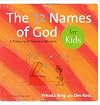
Thought this would be a little helpful in explaining some very basic kabbalah and at worst just cute and innocuous, but was sorely disappointed. The kids' artwork is fun and some of the principles admirable, but much of the "names of God" are rather vague, needing either more specific explanations or concrete suggestions on how to make good things happen. (This could be my bias toward action as opposed to just sitting in a chair and thinking things true, as this book recommends.) More show more troubling are two claims: that humans' anger is responsible for earthquakes, floods and other natural disasters, and that bad things that happen to us come about because of bad things we did. I have a very hard time with any line of reasoning that would lead a child to believe s/he somehow caused his/her parents to divorce, or a friend to die, or anything truly beyond his/her or any one person or people's control. If this is what proponents of kabbalah even remotely believe, I want no part of it. show less
My mom has been into Kaballah for awhile but I always scoffed. I am not looking for a soulmate, but this book touched me to the core and has me looking more into kaballah. I can believe everything I read here. It's too soon to say, but this book may have changed my life. A must read for any woman who has never really been satisfied with herself, whether she is looking for a soulmate or not.
I was so disappointed in this book. The concept of using 72 names for God as the locii for meditation appealed as a means of pondering God's different aspects and the way each figures in our lives. But Yehuda Berg's attempt to spread these ideas through a chatty style and excessive exclamation points trivializes what could be a profound spiritual opportunity.
I read this every few years. It's a short book but serves as a great reminder that we're in control of our own lives and we "get what we look for." Prosperity is really reaching a state of being truly fulfilled and serving your life's purpose.
You May Also Like


Statistics
- Works
- 88
- Members
- 1,102
- Popularity
- #23,318
- Rating
- 3.7
- Reviews
- 14
- ISBNs
- 129
- Languages
- 9