
Jane C. Lambert
Author of Five in a Row: Volume 1
About the Author
Image credit: via Exodus Books
Series
Works by Jane C. Lambert
Accidental Times: A Selection of Bizarre and Amusing Victorian Accidents from "The Times" (1984) 8 copies
A Scottish Teashop in Napoli: A heartwarming story of food, friendship and starting over under the Italian sun (2025) 3 copies
Five in a Row 2 copies
Enforcing Intellectual Property Rights: A Concise Guide for Businesses, Innovative and Creative Individuals (2009) 2 copies
The Start of Something Wonderful: a fantastically feel-good romantic comedy! (2018) 2 copies, 2 reviews
Five in a Row Vol 1 1 copy
Before 5 In a Row 1 copy
Associated Works
Tagged
Common Knowledge
- Gender
- female
Members
Reviews
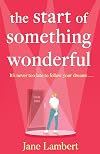
I really enjoyed The Start of Something Wonderful, which was previously published under the title Learning to Fly!. I had an audiobook.
The story is professionally narrated by author Jane Lambert, and there are other sound effects and music which enhanced my experience.
The story is told from the perspective of Emily Forsyth, a forty-year-old, singleton, who has been recently dumped by her long-term boyfriend, Nigel. Having realised that life is not taking her in the direction she thought it show more was, she has decided to give up her well-paid job as a flight attendant, and go to drama school in a bid fulfil her lifelong ambition to become an actress.
It felt almost like an autobiography, as there was great understanding and depth in the detail of the story. It is well-written and was brilliantly delivered in the audio version. I did think that it ended abruptly, but perhaps that was a cliff-hanger that would lead to another book. However, there is humour and sarcasm aplenty, and I would have to say that it's my kinda book, and one I'd be happy to recommend to others.
My thanks to the author for a free digital copy of this book to review. show less
The story is professionally narrated by author Jane Lambert, and there are other sound effects and music which enhanced my experience.
The story is told from the perspective of Emily Forsyth, a forty-year-old, singleton, who has been recently dumped by her long-term boyfriend, Nigel. Having realised that life is not taking her in the direction she thought it show more was, she has decided to give up her well-paid job as a flight attendant, and go to drama school in a bid fulfil her lifelong ambition to become an actress.
It felt almost like an autobiography, as there was great understanding and depth in the detail of the story. It is well-written and was brilliantly delivered in the audio version. I did think that it ended abruptly, but perhaps that was a cliff-hanger that would lead to another book. However, there is humour and sarcasm aplenty, and I would have to say that it's my kinda book, and one I'd be happy to recommend to others.
My thanks to the author for a free digital copy of this book to review. show less

This review was originally published in REACHEast homeschool parent support group newsletter in February 2007. So, it refers to older versions.
Five in a Row (FIAR) is a flexible, picture book-based unit study that can be used alone or as a supplementary literature program for preschool or early elementary. With this curriculum, you read the same book once a day for five days. Each day, you discuss a different topic with your child.
On Mondays, you talk about social studies topics, which show more include geography, history, human relationships, and character development. On Tuesday, you cover language arts topics, such as story structure, vocabulary, or literary devices. On Wednesday, you study the book's illustrations, focusing on art appreciation skills. The curriculum suggests art projects your child can do to try techniques used in the illustrations. You explore math topics on Thursday and science topics on Friday.
By reading the same book several days in a row, your child becomes familiar with the story. This allows him to focus on different aspects of the story and teaches him to think critically about literature. As a former English literature major, I really liked the idea of being able to teach my son literature at such a young age.
When we started to use FIAR, I only recognized a few titles from my childhood, such as "The Story of Ping," and I wasn't sure what kind of books we were getting into. After using the curriculum for kindergarten and the part of first grade, I now have a long list of favorite children's books. FIAR uses books from several decades of publication, which represent a variety of illustration styles. FIAR was the highlight of our school day, a cuddle time on the sofa with a great book.
We followed a four-day schedule, so I dropped the math. I often skipped the science topic as well so I could focus more on social studies or language arts topics. Some of the suggested literary concepts were over my son's head, though. Each Monday, we would discuss the setting or geographic location of the story. Then, we would place the story disk on our wall map. The story disks are small circles containing pictures from the stories and can be copied out of the curriculum book.
In addition to the story disks, the author has included reproducible pages for art and other projects. The curriculum comes with helpful instructions, a reproducible lesson plan sheet, a literary glossary, elements of a story page, a bibliography of the titles used, and an index.
Each FIAR volume provides a semester's worth of lessons and works with a span of ages. Some have used this curriculum in a co-op setting. The author listed the titles in seasonal order. However, because each lesson stands alone, you can do the books in any order you wish or even skip a book. I found most of the books in the King County Library System.
If you want to teach your children to love literature, this curriculum will give you a great start. show less
Five in a Row (FIAR) is a flexible, picture book-based unit study that can be used alone or as a supplementary literature program for preschool or early elementary. With this curriculum, you read the same book once a day for five days. Each day, you discuss a different topic with your child.
On Mondays, you talk about social studies topics, which show more include geography, history, human relationships, and character development. On Tuesday, you cover language arts topics, such as story structure, vocabulary, or literary devices. On Wednesday, you study the book's illustrations, focusing on art appreciation skills. The curriculum suggests art projects your child can do to try techniques used in the illustrations. You explore math topics on Thursday and science topics on Friday.
By reading the same book several days in a row, your child becomes familiar with the story. This allows him to focus on different aspects of the story and teaches him to think critically about literature. As a former English literature major, I really liked the idea of being able to teach my son literature at such a young age.
When we started to use FIAR, I only recognized a few titles from my childhood, such as "The Story of Ping," and I wasn't sure what kind of books we were getting into. After using the curriculum for kindergarten and the part of first grade, I now have a long list of favorite children's books. FIAR uses books from several decades of publication, which represent a variety of illustration styles. FIAR was the highlight of our school day, a cuddle time on the sofa with a great book.
We followed a four-day schedule, so I dropped the math. I often skipped the science topic as well so I could focus more on social studies or language arts topics. Some of the suggested literary concepts were over my son's head, though. Each Monday, we would discuss the setting or geographic location of the story. Then, we would place the story disk on our wall map. The story disks are small circles containing pictures from the stories and can be copied out of the curriculum book.
In addition to the story disks, the author has included reproducible pages for art and other projects. The curriculum comes with helpful instructions, a reproducible lesson plan sheet, a literary glossary, elements of a story page, a bibliography of the titles used, and an index.
Each FIAR volume provides a semester's worth of lessons and works with a span of ages. Some have used this curriculum in a co-op setting. The author listed the titles in seasonal order. However, because each lesson stands alone, you can do the books in any order you wish or even skip a book. I found most of the books in the King County Library System.
If you want to teach your children to love literature, this curriculum will give you a great start. show less

This review was originally published in REACHEast homeschool parent support group newsletter in February 2007. So, it refers to older versions.
Five in a Row (FIAR) is a flexible, picture book-based unit study that can be used alone or as a supplementary literature program for preschool or early elementary. With this curriculum, you read the same book once a day for five days. Each day, you discuss a different topic with your child.
On Mondays, you talk about social studies topics, which show more include geography, history, human relationships, and character development. On Tuesday, you cover language arts topics, such as story structure, vocabulary, or literary devices. On Wednesday, you study the book's illustrations, focusing on art appreciation skills. The curriculum suggests art projects your child can do to try techniques used in the illustrations. You explore math topics on Thursday and science topics on Friday.
By reading the same book several days in a row, your child becomes familiar with the story. This allows him to focus on different aspects of the story and teaches him to think critically about literature. As a former English literature major, I really liked the idea of being able to teach my son literature at such a young age.
When we started to use FIAR, I only recognized a few titles from my childhood, such as "The Story of Ping," and I wasn't sure what kind of books we were getting into. After using the curriculum for kindergarten and the part of first grade, I now have a long list of favorite children's books. FIAR uses books from several decades of publication, which represent a variety of illustration styles. FIAR was the highlight of our school day, a cuddle time on the sofa with a great book.
We followed a four-day schedule, so I dropped the math. I often skipped the science topic as well so I could focus more on social studies or language arts topics. Some of the suggested literary concepts were over my son's head, though. Each Monday, we would discuss the setting or geographic location of the story. Then, we would place the story disk on our wall map. The story disks are small circles containing pictures from the stories and can be copied out of the curriculum book.
In addition to the story disks, the author has included reproducible pages for art and other projects. The curriculum comes with helpful instructions, a reproducible lesson plan sheet, a literary glossary, elements of a story page, a bibliography of the titles used, and an index.
Each FIAR volume provides a semester's worth of lessons and works with a span of ages. Some have used this curriculum in a co-op setting. The author listed the titles in seasonal order. However, because each lesson stands alone, you can do the books in any order you wish or even skip a book. I found most of the books in the King County Library System.
If you want to teach your children to love literature, this curriculum will give you a great start. show less
Five in a Row (FIAR) is a flexible, picture book-based unit study that can be used alone or as a supplementary literature program for preschool or early elementary. With this curriculum, you read the same book once a day for five days. Each day, you discuss a different topic with your child.
On Mondays, you talk about social studies topics, which show more include geography, history, human relationships, and character development. On Tuesday, you cover language arts topics, such as story structure, vocabulary, or literary devices. On Wednesday, you study the book's illustrations, focusing on art appreciation skills. The curriculum suggests art projects your child can do to try techniques used in the illustrations. You explore math topics on Thursday and science topics on Friday.
By reading the same book several days in a row, your child becomes familiar with the story. This allows him to focus on different aspects of the story and teaches him to think critically about literature. As a former English literature major, I really liked the idea of being able to teach my son literature at such a young age.
When we started to use FIAR, I only recognized a few titles from my childhood, such as "The Story of Ping," and I wasn't sure what kind of books we were getting into. After using the curriculum for kindergarten and the part of first grade, I now have a long list of favorite children's books. FIAR uses books from several decades of publication, which represent a variety of illustration styles. FIAR was the highlight of our school day, a cuddle time on the sofa with a great book.
We followed a four-day schedule, so I dropped the math. I often skipped the science topic as well so I could focus more on social studies or language arts topics. Some of the suggested literary concepts were over my son's head, though. Each Monday, we would discuss the setting or geographic location of the story. Then, we would place the story disk on our wall map. The story disks are small circles containing pictures from the stories and can be copied out of the curriculum book.
In addition to the story disks, the author has included reproducible pages for art and other projects. The curriculum comes with helpful instructions, a reproducible lesson plan sheet, a literary glossary, elements of a story page, a bibliography of the titles used, and an index.
Each FIAR volume provides a semester's worth of lessons and works with a span of ages. Some have used this curriculum in a co-op setting. The author listed the titles in seasonal order. However, because each lesson stands alone, you can do the books in any order you wish or even skip a book. I found most of the books in the King County Library System.
If you want to teach your children to love literature, this curriculum will give you a great start. show less

This review was originally published in REACHEast homeschool parent support group newsletter in February 2007. So, it refers to older versions.
Five in a Row (FIAR) is a flexible, picture book-based unit study that can be used alone or as a supplementary literature program for preschool or early elementary. With this curriculum, you read the same book once a day for five days. Each day, you discuss a different topic with your child.
On Mondays, you talk about social studies topics, which show more include geography, history, human relationships, and character development. On Tuesday, you cover language arts topics, such as story structure, vocabulary, or literary devices. On Wednesday, you study the book's illustrations, focusing on art appreciation skills. The curriculum suggests art projects your child can do to try techniques used in the illustrations. You explore math topics on Thursday and science topics on Friday.
By reading the same book several days in a row, your child becomes familiar with the story. This allows him to focus on different aspects of the story and teaches him to think critically about literature. As a former English literature major, I really liked the idea of being able to teach my son literature at such a young age.
When we started to use FIAR, I only recognized a few titles from my childhood, such as "The Story of Ping," and I wasn't sure what kind of books we were getting into. After using the curriculum for kindergarten and the part of first grade, I now have a long list of favorite children's books. FIAR uses books from several decades of publication, which represent a variety of illustration styles. FIAR was the highlight of our school day, a cuddle time on the sofa with a great book.
We followed a four-day schedule, so I dropped the math. I often skipped the science topic as well so I could focus more on social studies or language arts topics. Some of the suggested literary concepts were over my son's head, though. Each Monday, we would discuss the setting or geographic location of the story. Then, we would place the story disk on our wall map. The story disks are small circles containing pictures from the stories and can be copied out of the curriculum book.
In addition to the story disks, the author has included reproducible pages for art and other projects. The curriculum comes with helpful instructions, a reproducible lesson plan sheet, a literary glossary, elements of a story page, a bibliography of the titles used, and an index.
Each FIAR volume provides a semester's worth of lessons and works with a span of ages. Some have used this curriculum in a co-op setting. The author listed the titles in seasonal order. However, because each lesson stands alone, you can do the books in any order you wish or even skip a book. I found most of the books in the King County Library System.
If you want to teach your children to love literature, this curriculum will give you a great start. show less
Five in a Row (FIAR) is a flexible, picture book-based unit study that can be used alone or as a supplementary literature program for preschool or early elementary. With this curriculum, you read the same book once a day for five days. Each day, you discuss a different topic with your child.
On Mondays, you talk about social studies topics, which show more include geography, history, human relationships, and character development. On Tuesday, you cover language arts topics, such as story structure, vocabulary, or literary devices. On Wednesday, you study the book's illustrations, focusing on art appreciation skills. The curriculum suggests art projects your child can do to try techniques used in the illustrations. You explore math topics on Thursday and science topics on Friday.
By reading the same book several days in a row, your child becomes familiar with the story. This allows him to focus on different aspects of the story and teaches him to think critically about literature. As a former English literature major, I really liked the idea of being able to teach my son literature at such a young age.
When we started to use FIAR, I only recognized a few titles from my childhood, such as "The Story of Ping," and I wasn't sure what kind of books we were getting into. After using the curriculum for kindergarten and the part of first grade, I now have a long list of favorite children's books. FIAR uses books from several decades of publication, which represent a variety of illustration styles. FIAR was the highlight of our school day, a cuddle time on the sofa with a great book.
We followed a four-day schedule, so I dropped the math. I often skipped the science topic as well so I could focus more on social studies or language arts topics. Some of the suggested literary concepts were over my son's head, though. Each Monday, we would discuss the setting or geographic location of the story. Then, we would place the story disk on our wall map. The story disks are small circles containing pictures from the stories and can be copied out of the curriculum book.
In addition to the story disks, the author has included reproducible pages for art and other projects. The curriculum comes with helpful instructions, a reproducible lesson plan sheet, a literary glossary, elements of a story page, a bibliography of the titles used, and an index.
Each FIAR volume provides a semester's worth of lessons and works with a span of ages. Some have used this curriculum in a co-op setting. The author listed the titles in seasonal order. However, because each lesson stands alone, you can do the books in any order you wish or even skip a book. I found most of the books in the King County Library System.
If you want to teach your children to love literature, this curriculum will give you a great start. show less
Awards

You May Also Like


Associated Authors
Statistics
- Works
- 30
- Also by
- 1
- Members
- 1,342
- Popularity
- #19,172
- Rating
- 3.7
- Reviews
- 5
- ISBNs
- 35