

Joseph Wechsberg (1907–1983)
Author of The Cooking of Vienna's Empire
About the Author
Image credit: www.keithsarver.com
Works by Joseph Wechsberg
Dining at the Pavillon 12 copies
Associated Works
Secret Ingredients: The New Yorker Book of Food and Drink (2007) — Contributor — 593 copies, 10 reviews
Choice Cuts: A Savory Selection of Food Writing from Around the World and Throughout History (2002) — Contributor — 367 copies, 2 reviews
Fifty Years: Being a Retrospective Collection of Novels, Novellas, Tales, Drama, Poetry, and Reportage and Essays: All Drawn from Volumes Issued during the Last Half-Century by… (1965) — Contributor — 56 copies
Gourmet: The Magazine of Good Living, November 1968 — Contributor — 1 copy
Gourmet: The Magazine of Good Living, September 1973 — Contributor — 1 copy
Gourmet: The Magazine of Good Living, July 1973 — Contributor — 1 copy
Gourmet: The Magazine of Good Living, February 1973 — Contributor — 1 copy
Gourmet: The Magazine of Good Living, January 1976 — Contributor — 1 copy
Gourmet: The Magazine of Good Living, February 1976 — Contributor — 1 copy
Gourmet: The Magazine of Good Living, March 1972 — Contributor — 1 copy
Gourmet: the Magazine of Good Living, June 1968 — Contributor — 1 copy
Gourmet: The Magazine of Good Living, February 1969 — Contributor — 1 copy
Gourmet: The Magazine of Good Living, August 1971 — Contributor — 1 copy
Tagged
Common Knowledge
- Birthdate
- 1907-08-29
- Date of death
- 1983-04-10
- Gender
- male
- Education
- Vienna State Academy of Music
Prague University Law School
Sorbonne University
Hochschule für Welthandel, Vienna, Austria - Occupations
- writer
journalist
musician
lawyer - Organizations
- The New Yorker
- Nationality
- Austria
USA (1944) - Birthplace
- Mährisch-Ostrau, Austro-Hungarian Empire
Ostrava, Czechia - Places of residence
- Mährisch-Ostrau, Austro-Hungarian Empire
Meran
Vienna, Austria
Paris, France
Prague, Czechoslovakia
New York, New York, USA (show all 7)
Hollywood, California, USA - Burial location
- Meran
Members
Reviews

This was a lively and entertaining look at two worlds that no longer exist, from the perspective of food and gourmet meals.
The first part, which I found more enjoyable, shows Wechsberg's childhood in Moravia (a Czech-speaking part of the Austro-Hungarian Empire) before and in the years after the first world war, and his life as a young man in Prague, Paris, and Vienna and as a traveling musician on ocean liners in the 1920s. This part was inherently more interesting for me, partly because show more I've read a lot of central European fiction more or less from this time period or slightly earlier, and also told more of a story. Also, there were lots of fascinating tidbits, like the 20 or so different cuts of boiled beef in Vienna, and the exploits of the women who frequented Maxim's in Paris in the 1890s.
The second part, which reads more like a collection of magazine articles (and probably was, since some of the chapters were published in a variety of US magazines) takes the reader on trips to French restaurants, truffle-gathering communities, and wine chateaus in the early 1950s. I found this moderately interesting in itself and as a portrait of a a way of life that, 50+ years later, seems almost as remote to us as the last days of the Austro-Hungarian empire must have seemed to Wechsberg when he wrote this book in 1953.
One of the most remarkable things about this book is Wechsberg's wonderful, lively, and humorous writing, because English is at least his fourth language (after Czech, German, and French) and he only learned it on coming to the US in 1938. show less
The first part, which I found more enjoyable, shows Wechsberg's childhood in Moravia (a Czech-speaking part of the Austro-Hungarian Empire) before and in the years after the first world war, and his life as a young man in Prague, Paris, and Vienna and as a traveling musician on ocean liners in the 1920s. This part was inherently more interesting for me, partly because show more I've read a lot of central European fiction more or less from this time period or slightly earlier, and also told more of a story. Also, there were lots of fascinating tidbits, like the 20 or so different cuts of boiled beef in Vienna, and the exploits of the women who frequented Maxim's in Paris in the 1890s.
The second part, which reads more like a collection of magazine articles (and probably was, since some of the chapters were published in a variety of US magazines) takes the reader on trips to French restaurants, truffle-gathering communities, and wine chateaus in the early 1950s. I found this moderately interesting in itself and as a portrait of a a way of life that, 50+ years later, seems almost as remote to us as the last days of the Austro-Hungarian empire must have seemed to Wechsberg when he wrote this book in 1953.
One of the most remarkable things about this book is Wechsberg's wonderful, lively, and humorous writing, because English is at least his fourth language (after Czech, German, and French) and he only learned it on coming to the US in 1938. show less

The author notes in the introduction to this book that he came from a family of merchant bankers; it shows, as this book is, in general, a very gentle and positive look at a number of banking powers. Time has not been very good to some of the firms represented in the book, most notably Barings and Lehman Brothers. The book came out in the mid-1960s, at a time when the old ways were starting to die out. The culture depicted in the book, I believe, has almost completely vanished, with the show more possible exception of the last, rather insubstantial, chapter on the Rothschilds. (For the Rothschilds, you're better off with Niall Ferguson's two-volume history.) A pleasant, but not a very deep read, mostly for folks who love the idea of the old-fashioned merchant bankers meeting in wood-panelled rooms. Not really recommended, as the material in the book is treated better elsewhere. show less
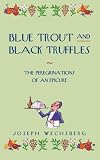
This lovely book is about more than food and wine. It is also a social history of Czechoslovakia and Vienna before the War, and France after. Wechsberg talks about waiters, chefs, gourmets, and a few others, and about food and wine. Written during the 1940s and 50s, he talks mostly about a lost world.

This series consists of two book for each "region". There is a hard bound text with key recipes (usually given in a contextural format.. i.e., everything for a classic Thanksgiving dinner), demonstrations, techniques, cultural, gastronimic, and historical food facts. The second book is a spiral bound recipe book giving all of the recipes in the hard bound book plus many many more. Although techniques are usually given in the hardbound volume where the advantage of color photography can be show more used, sometimes techniques and now too drawing are given int he spiral bound book of recipes. This is a wonderful arrangement. The hardbound books are delightful to sit and read for entertainment and inspiration. While, when you get down to the business of cooking, you have the open flat spiral bound recipes all in one spot.
This book starts with a quick history lesson on the countries along the Danube, clarifying the countries that came out of the once huge Austro-Hungarian Empire. It describe the culture and cusine of each of the areas above with clarity and respect.
The photography is superb, showing scenes of humble hay farmers at harvest and elaborate table settings reminiscent of the height of the Hapsburg rule. This book has the only recipe I've found for making home made jelly doughnuts - where the jelly goes in before they are fried (called Faschingskrapfen). All recipes have both English and indigenous names.
Once of the photo demonstrations is the making of a classic and monstrous apple strudel and another is making Yeast Fruit Dumplings (Kynute Ovocne Knedliky). There are several more and now I"m hungry for cabbage rolls. Yummmy.
This is one of my favorites from the series. I actually made the Spanish Windtorte for a theatre party once a loooong time ago. I suggest you make your own candied violets.. it easy and sooo much cheaper. show less
This book starts with a quick history lesson on the countries along the Danube, clarifying the countries that came out of the once huge Austro-Hungarian Empire. It describe the culture and cusine of each of the areas above with clarity and respect.
The photography is superb, showing scenes of humble hay farmers at harvest and elaborate table settings reminiscent of the height of the Hapsburg rule. This book has the only recipe I've found for making home made jelly doughnuts - where the jelly goes in before they are fried (called Faschingskrapfen). All recipes have both English and indigenous names.
Once of the photo demonstrations is the making of a classic and monstrous apple strudel and another is making Yeast Fruit Dumplings (Kynute Ovocne Knedliky). There are several more and now I"m hungry for cabbage rolls. Yummmy.
This is one of my favorites from the series. I actually made the Spanish Windtorte for a theatre party once a loooong time ago. I suggest you make your own candied violets.. it easy and sooo much cheaper. show less
Lists
Food Memoirs (1)
Awards


You May Also Like


Associated Authors
Statistics
- Works
- 43
- Also by
- 23
- Members
- 1,207
- Popularity
- #21,276
- Rating
- 3.8
- Reviews
- 10
- ISBNs
- 67
- Languages
- 6
- Favorited
- 2