
Martin Mayer (1928–2019)
Author of The Bankers
About the Author
Martin Mayer was an author, journalist and critic who wrote more than 40 books and hundreds of articles for laymen that demystified lawyers, banking, and thorny school problems. He started out as an old-time freelancer, writing 1,000 words a night. Then for a half-century, Mr. Mayer was a show more Renaissance man of letters, taking readers on behind-the-scene tours of Wall Street, Madison Avenue, the practice of law, and the tangles of a racially divisive New York City teachers strike. He wrote three novels; columns for Esquire magazine; was a music critic for a British journal; wrote for The New York Times, The Wall Street Journal, composed reports for the Ford, Carnegie and Kettering Foundations; and served on White House panels in the Kennedy and Reagan administrations. After graduating from Harvard he edited a scholarly labor publication, a pulp detective magazine and paperback Westerns. Landing at Esquire in 1951, he edited fiction, wrote articles and finished his first novel, "The Experts". Many of his books examined familiar professions and institutions, with titles like Madison Avenue, U.S.A. (1958), Wall Street: Men and Money (1960), The Schools (1961), The Lawyers (1967), About Television (1972), The Bankers (1974), The Builders: Houses, People, Neighborhoods, Governments, Money (1978) and The Diplomats (1983). Martin Prager Mayer was born in Manhattan on Jan. 14, 1928, the only child of Henry and Ruby (Prager) Mayer. In 1949, Mr. Mayer married Ellen Moers, an author and professor of literature. She died in 1979. In 1980, Mr. Mayer married Karin Lissakers, a Swedish-born writer and former State Department official who subsequently became the United States executive director of the International Monetary Fund. Martin Mayer passed away on August 1, 2019 at the age of 91 due to complications of Parkinson's disease. (Bowker Author Biography) show less
Works by Martin Mayer
The Fed: The Inside Story of How the World's Most Powerful Financial Institution Drives the Markets (2001) 98 copies, 3 reviews
The Bankers: The Next Generation The New Worlds Money Credit Banking Electronic Age (1997) 86 copies
The Greatest-Ever Bank Robbery: The Collapse of the Savings and Loan Industry (1990) 82 copies, 1 review
Nightmare on Wall Street: Salomon Brothers and the Corruption of the Marketplace (1993) 30 copies, 1 review
Stealing the Market: How the Giant Brokerage Firms, With Help from the Sec, Stole the Stock Market from Investors (1992) 12 copies
The Judges: A Penetrating Exploration of American Courts and of the New Decisions--Hard Decisions--They Must Make for a New Millennium (2006) 11 copies, 1 review
The teachers strike: New York, 1968 9 copies
The Teachers Strike, New York 1968 2 copies
Give yourself credit;: The art of borrowing, (The Dreyfus family money management service) (1972) 2 copies
Liverpool: 1970s 1 copy
Governor's Choice 1 copy
Hi-fi 1 copy
Jazz M'en Fou 1 copy
This is a School 1 copy
Associated Works
Tagged
Common Knowledge
- Legal name
- Mayer, Martin Prager
- Birthdate
- 1928-01-14
- Date of death
- 2019-08-01
- Gender
- male
- Education
- Harvard University (attended)
- Occupations
- author
journalist
critic - Relationships
- Moers, Ellen (wife)
- Nationality
- USA
- Birthplace
- New York, New York, USA
- Places of residence
- New York, New York, USA
- Place of death
- Shelter Island, Long Island, New York, USA
- Associated Place (for map)
- New York, USA
Members
Reviews

In many ways, this book is more interesting now than when it first appeared, for it describes a legal profession that no longer exists: where lawyers didn't advertise, a firm with a hundred partners was huge, clients paid unitemized bills, "white shoe" wasn't just a metaphor, WASP's and Jews moved in separate circles (and women were present only as secretaries), the "going rate" for first year associates in New York was $9,600, legal research relied on Shepherd's and West headnotes, show more telephones were answered by human beings, faxes didn't exist (much less e-mail), carbon paper was the mainstay of copying technology - I could go on and on.
My own legal career began just as this era was passing away. It probably wasn't better than what came after, but it was distinctly different. Martin Mayer does a fine job of portraying it, warts and all. show less
My own legal career began just as this era was passing away. It probably wasn't better than what came after, but it was distinctly different. Martin Mayer does a fine job of portraying it, warts and all. show less

Quite excellent.
Mayer's major theme is the nature of schooling in the US, and it how it became that way, but he clarifies his points with frequent reference to how things are done in different nations in Western Europe.
By far the best book on education I have ever read, and the fact that it was written in 1961 does nothing to diminish its validity today; on the contrary it simply reinforces how slowly human institutions change, and how human nature never changes.
My only complaint is that I show more wish he'd follow it up with an updated successor. In particular, his touching faith in the ability of technology to improve the situation could do with a review. show less
Mayer's major theme is the nature of schooling in the US, and it how it became that way, but he clarifies his points with frequent reference to how things are done in different nations in Western Europe.
By far the best book on education I have ever read, and the fact that it was written in 1961 does nothing to diminish its validity today; on the contrary it simply reinforces how slowly human institutions change, and how human nature never changes.
My only complaint is that I show more wish he'd follow it up with an updated successor. In particular, his touching faith in the ability of technology to improve the situation could do with a review. show less

Martin Mayer has written a number of books on the financial industry, but it doesn't seem to do him much good this time around. He can't quite seem to make up his mind whether he wants to write a serious book, or a book with a lot of the gruesomely funny stories about S&L defalcations. At one point in one of the two (!) epilogues, he tries to explain away the title of the book, but he never quite comes to grips with it, just as he never quite comes to grips with what, precisely, went wrong. show more He doesn't appear to think it was organized crime (as "Inside Job" seems to suggest -- Mayer does nod to that book explicitly), and while he talks a lot about political interference, he never quite brings himself to put blame on that, nor on economic conditions. In short, the book is something of a muddle, and I wouldn't recommend it for any insights into the S&L mess. show less
The Fed: The Inside Story How World's Most Powerful Financial Institution Drives Markets by Martin Mayer
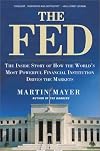
What Martin Mayer doesn't know about our banking and financial system is not worth knowing. This book is demanding of the reader, as are all Mayer's books, but it is a superb introduction to the Federal Reserve System.
Awards


You May Also Like


Associated Authors
Statistics
- Works
- 52
- Also by
- 1
- Members
- 904
- Popularity
- #28,379
- Rating
- 3.7
- Reviews
- 15
- ISBNs
- 55
- Languages
- 4