
Alice Starmore
Author of Alice Starmore's Book of Fair Isle Knitting
About the Author
Image credit: Alice Starmore
Works by Alice Starmore
Fishermen's Sweaters: 20 Exclusive Knitwear Designs for All Generations (1993) 779 copies, 5 reviews
Charts for Colour Knitting a Designer's Source Book From the Personal Collection of Alice Starmore (1992) 368 copies, 5 reviews
Tagged
Common Knowledge
- Other names
- Matheson, Alice (birth name)
- Birthdate
- unknown
- Gender
- female
- Occupations
- professional needleworker
photographer
author - Relationships
- Starmore, Jade (daughter)
- Nationality
- UK
- Birthplace
- Stornoway, Scotland, UK
- Places of residence
- Stornoway, Scotland, UK
- Associated Place (for map)
- Stornoway, Scotland, UK
Members
Reviews

Although I've had this book for at least five years, have gone through the patterns many times, and have even knitted some, until yesterday I had never read Alice Starmore's chapter on the historical background of Aran knitting, nor had I read her preface to this edition. It was a whole new take on the subject, something I had thought I knew something about -- why I've even designed some sweaters that would fall into this classification.
[Aran Knitting] was originally published in 1997. My show more edition is a newer and expanded one published by Dover in 2010. In it, Starmore reflects on her initial 1997 discussion of Aran knitting and the continued insistence by so many on ignoring the evidence that it is neither a centuries old tradition of stitch combinations, not a traditional fisher's garment. Wait a minute, where did all those stories come from? was my immediate thought.
Starmore thoughtfully and methodically lays out her arguments. She does it so well that the reader is left with little choice but to agree. Her idea that ignoring the evidence she provides is rooted in commercial interest has the ring of truth to it. She discusses some of the standard texts such as Richard Rutt's "A History of Knitting", explaining where her theories differ. Then, based on her own experience with the 1992 publication of her book "The Celtic Connection", she shows how that technique, "acknowledged as a completely new direction in colourwork, texture and cable knitting", has over the years become part of the lore of the "history" of knitting, comparing that development with the development of the romantic ideas around Aran knitting.
Here then are Starmore's conclusions, in her own words:
on construction and style
- The Aran sweater was developed from the traditional Scottish gansey.
- Aran women learned gansey knitting skills from a Scottish source or sources.
- The Aran sweater was not made as a fisherman's garment.
- The impetus behind the development of the Aran sweater was commercial.
- Aran "tradition" involving the Aran sweater is of recent origin, beginning only after 1946.
- Contrary to belief, the Aran sweater was not made from heavy, unscoured, naturally oily wool, spun straight from the sheep's back.
more controversially, on pattern
- Aran sweaters have no connection with ancient Celtic sources, unless it is on a purely superficial level.
- Most of the Aran patterns were born in the mind of an excellent gansey knitter.
- Commercial forces shaped the development of Aran sweater patterns, just as they shaped the method of construction
Now I have a whole new way of looking at and thinking about these designs. show less
[Aran Knitting] was originally published in 1997. My show more edition is a newer and expanded one published by Dover in 2010. In it, Starmore reflects on her initial 1997 discussion of Aran knitting and the continued insistence by so many on ignoring the evidence that it is neither a centuries old tradition of stitch combinations, not a traditional fisher's garment. Wait a minute, where did all those stories come from? was my immediate thought.
Starmore thoughtfully and methodically lays out her arguments. She does it so well that the reader is left with little choice but to agree. Her idea that ignoring the evidence she provides is rooted in commercial interest has the ring of truth to it. She discusses some of the standard texts such as Richard Rutt's "A History of Knitting", explaining where her theories differ. Then, based on her own experience with the 1992 publication of her book "The Celtic Connection", she shows how that technique, "acknowledged as a completely new direction in colourwork, texture and cable knitting", has over the years become part of the lore of the "history" of knitting, comparing that development with the development of the romantic ideas around Aran knitting.
Here then are Starmore's conclusions, in her own words:
on construction and style
- The Aran sweater was developed from the traditional Scottish gansey.
- Aran women learned gansey knitting skills from a Scottish source or sources.
- The Aran sweater was not made as a fisherman's garment.
- The impetus behind the development of the Aran sweater was commercial.
- Aran "tradition" involving the Aran sweater is of recent origin, beginning only after 1946.
- Contrary to belief, the Aran sweater was not made from heavy, unscoured, naturally oily wool, spun straight from the sheep's back.
more controversially, on pattern
- Aran sweaters have no connection with ancient Celtic sources, unless it is on a purely superficial level.
- Most of the Aran patterns were born in the mind of an excellent gansey knitter.
- Commercial forces shaped the development of Aran sweater patterns, just as they shaped the method of construction
Now I have a whole new way of looking at and thinking about these designs. show less
Disclaimer: I received a free copy from NetGalley in exchange for a review.
If you think you know Alice Starmore's work, get ready to learn more about her amazing design skills. Most serious knitters will be familiar with her talent via her well-respected traditional colorwork knitting patterns, mostly for sweaters. Beautiful but no-nonsense knitting patterns. This book shows a completely different side of her knitting & design talent, as well as the stories and photography by her daughter show more Jade Starmore. I'm not usually a fan of knitting books that are largely inspirational, filled with outlandish garments that push the boundaries but would never be worn in real life.
This book contains fanciful costumes inspired by Scottish mythology around the Isle of Lewis where the Starmores are from. They showcase Alice's talent in creating knitted structures and textures. These are not simple sweaters by any means. The photographs (by Jade) are stunning, to put it mildly. Each design is accompanied by a story and design notes. Having studied Gaelic and Scottish culture in the past, I found the stories really fascinating.
Then I think the icing on the cake is that the last part of the book contains patterns for more realistic garments related to the art pieces in the beginning of the book. This gives the book practical value beyond the artistic appreciation.
This is a well-executed design collaboration showcasing the flexibility and creativity of knitting. Highly recommended whether you're the type who prefers art-for-art's-sake knitting design or patterns for things you can actually wear. The stories and photos sweeten the deal. show less
If you think you know Alice Starmore's work, get ready to learn more about her amazing design skills. Most serious knitters will be familiar with her talent via her well-respected traditional colorwork knitting patterns, mostly for sweaters. Beautiful but no-nonsense knitting patterns. This book shows a completely different side of her knitting & design talent, as well as the stories and photography by her daughter show more Jade Starmore. I'm not usually a fan of knitting books that are largely inspirational, filled with outlandish garments that push the boundaries but would never be worn in real life.
This book contains fanciful costumes inspired by Scottish mythology around the Isle of Lewis where the Starmores are from. They showcase Alice's talent in creating knitted structures and textures. These are not simple sweaters by any means. The photographs (by Jade) are stunning, to put it mildly. Each design is accompanied by a story and design notes. Having studied Gaelic and Scottish culture in the past, I found the stories really fascinating.
Then I think the icing on the cake is that the last part of the book contains patterns for more realistic garments related to the art pieces in the beginning of the book. This gives the book practical value beyond the artistic appreciation.
This is a well-executed design collaboration showcasing the flexibility and creativity of knitting. Highly recommended whether you're the type who prefers art-for-art's-sake knitting design or patterns for things you can actually wear. The stories and photos sweeten the deal. show less
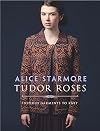
What a gorgeous book. I love the concept – patterns based on and inspired by the women of the Tudor dynasty, along with quotes from or about the women and with extraordinary photographs. The patterns are every one stunning (and probably far beyond my ability), color and style and pattern harking back to the Renaissance without being RenFaire garb. I want at least half the garments shown here – and even if, as I suspect, the patterns are beyond my capabilities, the book itself is simply show more lovely to look at.
The usual disclaimer: I received this book via Netgalley for review. show less
The usual disclaimer: I received this book via Netgalley for review. show less
This is the strangest craft book ever, composed as it is of at least three books in one.
Jade Starmore is a fantasy author. Alice Starmore, her mother, is a costumer and knitter. Together they have designed this book which is short stories, knitted and sewn costumes to match, and knit patterns that echo, but do not reproduce, the much more elaborate costumes. And, the book is a tribute to Scotland's seacoast.
Ok. I don't read much high fantasy and I certainly don't dress up in elaborate show more evocations of birds and sea anemones, nor do I wear knitted shrugs and ponchos. So this book doesn't offer much for me personally. But I think it might pique the interest of a budding costumer, if you happen to know one.
Costuming begins with dressing up for special occasion, and moves onward through competitive reproduction of classical garments with numerous side paths into theatre and film (think Outlander wedding dress). Here we are taking the idea from the stories, developing them into a proper costumes as if we were performing, and then simplifying the designs for everyday use (more or less, I don't want knitted feathers around my neck, and a peplum would be unfortunate on my hips).
Ms Starmore Sr.'s costumes are amusing, tending toward deeply dramatic jackets over billowing skirts, all in the colors of fantasy – blues, smoky grey, plum – with embroidered or felted accents. Knitted hats and helmets evoke birds and insects. The everyday patterns that go with them are disappointing in that some of the costume ideas that I enjoyed and might have considered using – like the elaborate collar and sleeves on the Mountain Hare jacket (more tortoise than hare, really), the full body pattern of the Otter costume, and especially the glorious Selkie offset button jacket with the cable on the collar reverse, have been replaced with mundane shapes, except for the fake feathers.
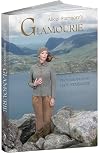
The book cover is particularly disappointing. Rather than one of the more dramatic costumes or an elaborate design like the Selkie jacket, the cover is the Mountain Hare sweater and hat, the most boring and colorless of the knitting patterns.
Unless you have the perfect gift recipient in mind, I'd look at this book in a shop before ordering.
I received a review copy of "Alice Starmore's Glamourie" by Alice Starmore (Calla Editions: Dover) through NetGalley.com. show less
Jade Starmore is a fantasy author. Alice Starmore, her mother, is a costumer and knitter. Together they have designed this book which is short stories, knitted and sewn costumes to match, and knit patterns that echo, but do not reproduce, the much more elaborate costumes. And, the book is a tribute to Scotland's seacoast.
Ok. I don't read much high fantasy and I certainly don't dress up in elaborate show more evocations of birds and sea anemones, nor do I wear knitted shrugs and ponchos. So this book doesn't offer much for me personally. But I think it might pique the interest of a budding costumer, if you happen to know one.
Costuming begins with dressing up for special occasion, and moves onward through competitive reproduction of classical garments with numerous side paths into theatre and film (think Outlander wedding dress). Here we are taking the idea from the stories, developing them into a proper costumes as if we were performing, and then simplifying the designs for everyday use (more or less, I don't want knitted feathers around my neck, and a peplum would be unfortunate on my hips).
Ms Starmore Sr.'s costumes are amusing, tending toward deeply dramatic jackets over billowing skirts, all in the colors of fantasy – blues, smoky grey, plum – with embroidered or felted accents. Knitted hats and helmets evoke birds and insects. The everyday patterns that go with them are disappointing in that some of the costume ideas that I enjoyed and might have considered using – like the elaborate collar and sleeves on the Mountain Hare jacket (more tortoise than hare, really), the full body pattern of the Otter costume, and especially the glorious Selkie offset button jacket with the cable on the collar reverse, have been replaced with mundane shapes, except for the fake feathers.
The book cover is particularly disappointing. Rather than one of the more dramatic costumes or an elaborate design like the Selkie jacket, the cover is the Mountain Hare sweater and hat, the most boring and colorless of the knitting patterns.
Unless you have the perfect gift recipient in mind, I'd look at this book in a shop before ordering.
I received a review copy of "Alice Starmore's Glamourie" by Alice Starmore (Calla Editions: Dover) through NetGalley.com. show less
Lists
You May Also Like


Associated Authors
Statistics
- Works
- 20
- Members
- 6,177
- Popularity
- #3,981
- Rating
- 4.2
- Reviews
- 50
- ISBNs
- 45
- Languages
- 1
- Favorited
- 4