
Barbara G. Walker (1930–2025)
Author of A Treasury of Knitting Patterns
About the Author
Disambiguation Notice:
also known as Barbara Walker. Knitting, New Age, Feminism, and a novel, the same person does it all.
Series
Works by Barbara G. Walker
Words That Count Women In 1 copy
Tagged
Common Knowledge
- Legal name
- Walker, Barbara Goodwin
- Birthdate
- 1930-07-02
- Date of death
- 2025-12-21
- Gender
- female
- Education
- University of Pennsylvania
- Occupations
- knitting expert
writer
knitter
feminist
occultist - Organizations
- Washington Star
Morris Museum Mineralogical Society
Trailside Mineral Club of the New Jersey Earth Science Association - Awards and honors
- Humanist Heroine Award of the American Humanist Association's Feminist Caucus (1993)
"Women Making Herstory Award" of the New Jersey National Organization for Women (1995) - Short biography
- 1) http://www.nownj.org/njNews/2005/0116... humanist_profile- Barbara G. Walker.htm
2) Barbara Walker's knitting legacy. IN: Falick, Melanie. Knitting in America. New York: 1997. pp 56-7. ISBN: 1-885183-27-5
3) Short profile and photo http://www.ffrf.org/day/?sel=1&da... - Nationality
- USA
- Birthplace
- Philadelphia, Pennsylvania, USA
- Places of residence
- Philadelphia, Pennsylvania, USA
Sarasota, Florida, USA
Venice, Florida, USA - Place of death
- Sarasota, Florida, USA
- Map Location
- Pennsylvania, USA
- Disambiguation notice
- also known as Barbara Walker. Knitting, New Age, Feminism, and a novel, the same person does it all.
Members
Reviews
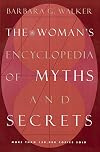
This is a work of fiction presented as if it were non-fiction, complete with footnotes to real works that don't support the author's points. I don't know what parts of this work are actually true, but once I found the dishonest footnotes, I didn't care.
I understand the desire to have lots of history favorable to one's group, and to imagine a better past when one doesn't like current conditions. Any number of authors of honest fiction do an excellent job of imagining such pasts. I can even show more kind of understand selecting the least likely explanation for some fact, if that's the one that feels most congenial, and writing it up with "could be ..." and "some researchers suggest ...".
But none of that excuses dishonest footnotes.
You can't learn anything from this work, even if parts of it are in fact true, because you'll never know which parts were basically made up. Checking for reliable-seeming sources won't help; you need to actually read the author's supposed sources. show less
I understand the desire to have lots of history favorable to one's group, and to imagine a better past when one doesn't like current conditions. Any number of authors of honest fiction do an excellent job of imagining such pasts. I can even show more kind of understand selecting the least likely explanation for some fact, if that's the one that feels most congenial, and writing it up with "could be ..." and "some researchers suggest ...".
But none of that excuses dishonest footnotes.
You can't learn anything from this work, even if parts of it are in fact true, because you'll never know which parts were basically made up. Checking for reliable-seeming sources won't help; you need to actually read the author's supposed sources. show less
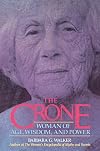
This book had some good points to make, but the pervasive "males are the enemy" attitude was off- putting. Also some of the scholarship was outdated, like the nine million Burning Times figure. However, the psychology of the fear of death and the ways people have evolved to address it was fascinating. I'm glad I read it, but I probably won't read it again.
[Review written by my younger self]
Despite the title, Barbara G. Walker's incredibly thorough handling of female connections and allusions in different cultures, ethnicities, histories, etc. is highly useful and engaging for anyone interested in myth, history, or society in general. In fact, the synopsis includes a highly praising quote from Russell Hoban, the author of _Riddley Walker_. The _Encyclopedia_ covers a huge number of interesting topics that is told in a style of writing that is show more not "monotone" as most normal encyclopedias are.
Among other things, it covers the significance of Cinderella's glass slipper, the various mythologies and beliefs surrounding the moon, and the symbolic qualities of things like pomegranates and hair. It answers questions like, "Who was Adam's first wife?" "Why is breaking a mirror considered to be bad luck?" and "Was there ever a female pope or a real Easter bunny?" I have gained so much knowledge from this book, which is best-read by flipping through it and stopping at different points of interest or curiosity. Aside from her entries, Walker includes interesting trivia on the margins and begins each section with various images of historic statues, sculptures, paintings, and photographs.
Walker is really worthy of much praise here. Over 1100 pages and over 20 years of research has resulted in an amazing fusion of myth, history, legend, culture, religion, and so many countless other disciplines. The detail is simply unbelievable. I found myself so enthralled in this book, much like I would be caught up in a good suspense novel. It is easy to get completely caught up in this book. So many topics are covered, and once I came up with one at random and found Walker's coverage and research on it, my mind popped up with yet another possibility to discover. show less
Despite the title, Barbara G. Walker's incredibly thorough handling of female connections and allusions in different cultures, ethnicities, histories, etc. is highly useful and engaging for anyone interested in myth, history, or society in general. In fact, the synopsis includes a highly praising quote from Russell Hoban, the author of _Riddley Walker_. The _Encyclopedia_ covers a huge number of interesting topics that is told in a style of writing that is show more not "monotone" as most normal encyclopedias are.
Among other things, it covers the significance of Cinderella's glass slipper, the various mythologies and beliefs surrounding the moon, and the symbolic qualities of things like pomegranates and hair. It answers questions like, "Who was Adam's first wife?" "Why is breaking a mirror considered to be bad luck?" and "Was there ever a female pope or a real Easter bunny?" I have gained so much knowledge from this book, which is best-read by flipping through it and stopping at different points of interest or curiosity. Aside from her entries, Walker includes interesting trivia on the margins and begins each section with various images of historic statues, sculptures, paintings, and photographs.
Walker is really worthy of much praise here. Over 1100 pages and over 20 years of research has resulted in an amazing fusion of myth, history, legend, culture, religion, and so many countless other disciplines. The detail is simply unbelievable. I found myself so enthralled in this book, much like I would be caught up in a good suspense novel. It is easy to get completely caught up in this book. So many topics are covered, and once I came up with one at random and found Walker's coverage and research on it, my mind popped up with yet another possibility to discover. show less
Despite the title, Barbara G. Walker's incredibly thorough handling of female connections and allusions in different cultures, ethnicities, histories, etc. is highly useful and engaging for anyone interested in myth, history, or society in general. In fact, the synopsis includes a highly praising quote from Russell Hoban, the author of _Riddley Walker_. The _Encyclopedia_ covers a huge number of interesting topics that is told in a style of writing that is not "monotone" as most normal show more encyclopedias are. Among other things, it covers the significance of Cinderella's glass slipper, the various mythologies and beliefs surrounding the moon, and the symbolic qualities of things like pomegranates and hair. It answers questions like, "Who was Adam's first wife?" "Why is breaking a mirror considered to be bad luck?" and "Was there ever a female pope or a real Easter bunny?" I have gained so much knowledge from this book, which is best-read by flipping through it and stopping at different points of interest or curiosity. Aside from her entries, Walker includes interesting trivia on the margins and begins each section with various images of historic statues, sculptures, paintings, and photographs.Walker is really worthy of much praise here. Over 1100 pages and over 20 years of research has resulted in an amazing fusion of myth, history, legend, culture, religion, and so many countless other disciplines. The detail is simply unbelievable. I found myself so enthralled in this book, much like I would be caught up in a good suspense novel. It is easy to get completely caught up in this book. So many topics are covered, and once I came up with one at random and found Walker's coverage and research on it, my mind popped up with yet another possibility to discover. show less
Lists
You May Also Like


Associated Authors
Statistics
- Works
- 29
- Members
- 9,737
- Popularity
- #2,450
- Rating
- 4.4
- Reviews
- 71
- ISBNs
- 82
- Languages
- 3
- Favorited
- 17