
Lothar-Günther Buchheim (1918–2007)
Author of The Boat
About the Author
Writer and art collector Lothar-Günther Buchheim studied at the Academies of Art in Dresden and Munich before becoming a reporter in the German navy during World War II. He was stationed aboard the U-96 in 1941 and took part in submarine operations in the Atlantic Ocean and Straits of Gibraltar. show more He photographed and wrote about his experience for propaganda purposes, but in 1973 he wrote the novel Das Boot or The Boat, which carried an underlying anti-war message. This novel was made into a German film in 1981. He also wrote U-Boat War, which is a non-fiction work that includes more than 5,000 of his photos from the U-96. He was an art collector that founded a museum to house his collection. He died from heart failure at the age of 89 on February 22, 2007. (Bowker Author Biography) show less
Image credit: © Virginia
Works by Lothar-Günther Buchheim
Der Luxusliner ein Logbuch 2 copies
U-Boat: il sommergibile 1 copy
Picasso 1961 1 copy
Ponorka 1 copy
Zwischen Traum und Tag - Zeichnungen von Marc Chagall. Mit e. Einl. von L.-G. Buchheim. (1955) 1 copy
Abstrakt und zugenäht! 1 copy
Associated Works
Tagged
Common Knowledge
- Canonical name
- Buchheim, Lothar-Günther
- Birthdate
- 1918-02-06
- Date of death
- 2007-02-22
- Gender
- male
- Education
- Academy of Fine Arts, Dresden, Germany
Academy of Fine Arts, Munich, Germany - Occupations
- artist
gallery owner
art auctioneer
author
publisher
illustrator (show all 8)
painter
filmmaker - Organizations
- Kriegsmarine (WWII)
- Nationality
- Germany
- Birthplace
- Weimar, Thuringia, Germany
- Places of residence
- Weimar, Thuringia, Germany
Rochlitz, Germany
Chemnitz, Saxony, Germany
Dresden, Saxony, Germany
Munich, Bavaria, Germany
Feldafing, Bavaria, Germany (show all 7)
Bernried, Bavaria, Germany - Place of death
- Starnberg, Bavaria, Germany
- Burial location
- Bernried cemetery, Bernried, Bavaria, Germany
- Associated Place (for map)
- Bavaria, Germany
Members
Reviews
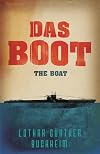
This is the absolutely harrowing tale of German submariners in World War II. The author wrote from first hand experience as a journalist on a U-boat, and is able to convey the kind of realism that is only possible by describing something that has been experienced. The terror and senseless tragedy of war are depicted about as well as I've encountered. The author also does a good job of maintaining suspense through most of the story. The boat always seems to be a depth charge away from show more annihilation. Where things go a little overboard, so to speak, are in the final, suicide mission and in the ending (which I won't describe). I realize the author was using his characters to create a composite of what would have been many U-boat missions by many crews, but after surviving the terrors of the Atlantic, the reader wishes the crew could at least put into port for a little R&R before being stupidly thrust into a mission from which the odds were so against them. show less
It is a long book, with long stretches where nothing is happening, interspersed with short sections of terror and action. This is by design. The book makes you feel the boredom of weeks and weeks out at sea when nothing is happening, but also the visceral horror of bring trapped in a metal tube at the bottom of the ocean.
This style of writing is a bit crude, but effective. A better author might have evoked the concepts of boredom and terror without actually being boring. But it works. It is show more only boring in places that are supposed to be boring, and vividly communicates the emotions of life in a U-boat.
In the end, I can hardly imagine a worse fate than having to live and work in a U-boat in WW2. And a book that manages to evoke this much dread, is a good one to me. show less
This style of writing is a bit crude, but effective. A better author might have evoked the concepts of boredom and terror without actually being boring. But it works. It is show more only boring in places that are supposed to be boring, and vividly communicates the emotions of life in a U-boat.
In the end, I can hardly imagine a worse fate than having to live and work in a U-boat in WW2. And a book that manages to evoke this much dread, is a good one to me. show less

Having seen some of the TV adaptation, I'd always intended to read this but it was only when my wife gave me a pre-owned copy for Christmas that I got round to it.
The book provides an entirely convincing description of life on a u-boat, complete with the authentic contrast between the time spent bored witless on patrol and the nerve-twisting tension of combat. The last quarter of the book caused me considerable difficulty because I couldn't put it down and completely neglected some important show more things.
The other interesting aspect of the book is its ability to draw one into the minds of people who - in the end - were fighting for Nazi Germany. Most people probably understand in theory how it must have felt to be fighting on the German side in WWII were able to do so, but this gives a very clear idea of how it must have felt. show less
The book provides an entirely convincing description of life on a u-boat, complete with the authentic contrast between the time spent bored witless on patrol and the nerve-twisting tension of combat. The last quarter of the book caused me considerable difficulty because I couldn't put it down and completely neglected some important show more things.
The other interesting aspect of the book is its ability to draw one into the minds of people who - in the end - were fighting for Nazi Germany. Most people probably understand in theory how it must have felt to be fighting on the German side in WWII were able to do so, but this gives a very clear idea of how it must have felt. show less

‘U-boat’ (also published as ‘Das Boot’), the fictionalised account of a WW2 German u-boot war patrol is the best account, bar none, of life on a German U-boot.
In reality Buchheim had shipped on U-96 (Lieutenant-Commander Heinrich Lehmann-Willenbrock) as a Leutnant photographer and writer in the propaganda unit of the German navy, for a single Atlantic patrol in 1941. Experiences on that patrol gave him the experience and factual background to write ‘U-boat’, eventually published show more in 1973. The book was used as the basis for the 1981 blockbuster film and TV series ‘Das Boot’ which was nominated for six Oscars.
The book is raw, gritty and earthy. It brilliantly pictures the boredom, fear, terror and awful moral dilemmas of U-boot patrols. Anyone who has served in the military of any nation will recognise the mix of characters that crew the boat. The tension is gripping and the mental images painted by Buchheim endure long after you have finished the book. Excellent. show less
In reality Buchheim had shipped on U-96 (Lieutenant-Commander Heinrich Lehmann-Willenbrock) as a Leutnant photographer and writer in the propaganda unit of the German navy, for a single Atlantic patrol in 1941. Experiences on that patrol gave him the experience and factual background to write ‘U-boat’, eventually published show more in 1973. The book was used as the basis for the 1981 blockbuster film and TV series ‘Das Boot’ which was nominated for six Oscars.
The book is raw, gritty and earthy. It brilliantly pictures the boredom, fear, terror and awful moral dilemmas of U-boot patrols. Anyone who has served in the military of any nation will recognise the mix of characters that crew the boat. The tension is gripping and the mental images painted by Buchheim endure long after you have finished the book. Excellent. show less
Lists
Awards


You May Also Like


Associated Authors
Statistics
- Works
- 42
- Also by
- 2
- Members
- 1,546
- Popularity
- #16,659
- Rating
- 4.2
- Reviews
- 25
- ISBNs
- 110
- Languages
- 14
- Favorited
- 1