
Helen Phillips (1) (1983–)
Author of The Need
For other authors named Helen Phillips, see the disambiguation page.
About the Author
Helen Phillips is Professor of English Studies at the University of Glamorgan.
Works by Helen Phillips
The Knowers 2 copies
Associated Works
Tagged
Common Knowledge
- Birthdate
- 1983
- Gender
- female
- Short biography
- Helen Phillips is the author of the novel THE BEAUTIFUL BUREAUCRAT, the inter-genre collection AND YET THEY WERE HAPPY (named a notable collection of 2011 by The Story Prize), the children's adventure novel HERE WHERE THE SUNBEAMS ARE GREEN, and the forthcoming short story collection SOME POSSIBLE SOLUTIONS. She has received a Rona Jaffe Foundation Writers' Award, the Italo Calvino Prize in Fabulist Fiction, and The Iowa Review Nonfiction Award. Her work has appeared in Tin House, Electric Literature, and BOMB, among others. She is a professor at Brooklyn College
- Nationality
- USA
- Birthplace
- Colorado, USA
- Places of residence
- Brooklyn, New York, USA
- Associated Place (for map)
- USA
Members
Reviews
Rating: 5* of five
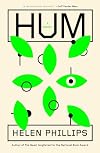
The Publisher Says: From the National Book Award–longlisted author of The Need comes an extraordinary novel about a wife and mother who—after losing her job to AI—undergoes a procedure that renders her undetectable to surveillance…but at what cost? In a city addled by climate change and populated by intelligent robots called “hums,” May loses her job to artificial intelligence. In a desperate bid to resolve her family’s debt and secure their future for another show more few months, she becomes a guinea pig in an experiment that alters her face so it cannot be recognized by surveillance.
Seeking some reprieve from her recent hardships and from her family’s addiction to their devices, she splurges on passes that allow them three nights’ respite inside the Botanical Garden: a rare green refuge where forests, streams, and animals flourish. But her insistence that her son, daughter, and husband leave their devices at home proves far more fraught than she anticipated, and the lush beauty of the Botanical Garden is not the balm she hoped it would be. When her children come under threat, May is forced to put her trust in a hum of uncertain motives as she works to restore the life of her family.
Written in taut, urgent prose, Hum is a work of speculative fiction that unflinchingly explores marriage, motherhood, and selfhood in a world compromised by global warming and dizzying technological advancement, a world of both dystopian and utopian possibilities. As New York Times bestselling author Jeff VanderMeer says, “Helen Phillips, in typical bravura fashion, has found a way to make visible uncomfortable truths about our present by interrogating the near-future.”
I RECEIVED A DRC FROM THE PUBLISHER VIA NETGALLEY. THANK YOU.
My Review: SciFi from a woman's PoV by an actual woman is not as rare a thing as it once was. Even women SF writers of the comparatively recent past wrote a boy's or man's PoV as often as not. Now this ignoring of The Future (as seen by women in it) is passé. We still don't see a ton of mothers as PoV characters, though.
May is such a PoV character, and she resonates powerfully with me. Her steely determination to provide for her family is the bedrock of the story. The worldbuilding is subtle, as one would expect from an author working in the (very) near future. Probably my single favorite touch of worldbuilding is one I think is largely invisible to most: May, our main charater, is married to Jem; their children are Sy and Lu.
Even their names are minimized. That most human of sounds, our names, is clipped down to the minimum of syllables, squeezing these beings into a narrower, and narrowing, bandwidth. One better suited, not coincidentally, to the vocal apparatus of the "hums" of the title.
Ah, the hums...the titular beings who represent the next (?) generation of the smartphones now falling out of favor among the young (to me) user base. If, as I suspect, their increasing disenchantment with these devices is being quietly steered, I suspect the course they're being steered ON is the one Author Phillips is showing us in this story.
The worst nightmare of a parent is to lose their children. Especially very young ones whose understanding of the World around them is unformed. Why else did the Satanic Panic/Stranger Danger epidemic get rolling? Losing a child to death by disease is less and less common...thank all those useless gods for that...but accidents, and malicious actions like addictions, malefactors who prey on the innocent are still there to obsess the fretful. Now add AI to that mix, and Author Phillips is on a winner to speak to this seething mass market. She does not do this cynically. Her brushes against the eerieness of the surveillance capitalism around us border on entry into the Uncanny Valley. Her own previous writing has been used without permission or compensation to train the generative AI we're being told will take over. I myownself think, however, that Sabine Hossenfelder's got the right handle on the reality of the eventual results. Author Phillips is wise to point to the ways this borning system is likely to fail Humanity, to the humans who still have time to change course.
Hum traverses nightmarish loss, dystopian social catastrophe, and failures of a deeply human sort in this tale. I wish I could pooh-pooh its premise, or its cconclusions, but I can't. I think all y'all who read my reviews will know what you need to know about my opinion of the read by the fact that a) I published a review on a Tuesday, 2) I was apprived for this DRC on 2 August and am reviewing it four days later, and iii) have not said, and do not intend to say, one critical word about its conception or execution.
Many of y'all do not like anything SFnal or speculative. I encourage those folk most especially to get this from the library and read it.
You're going to live it soon enough.
NB there are links to sources and definitions in the blogged review show less
The Publisher Says: From the National Book Award–longlisted author of The Need comes an extraordinary novel about a wife and mother who—after losing her job to AI—undergoes a procedure that renders her undetectable to surveillance…but at what cost? In a city addled by climate change and populated by intelligent robots called “hums,” May loses her job to artificial intelligence. In a desperate bid to resolve her family’s debt and secure their future for another show more few months, she becomes a guinea pig in an experiment that alters her face so it cannot be recognized by surveillance.
Seeking some reprieve from her recent hardships and from her family’s addiction to their devices, she splurges on passes that allow them three nights’ respite inside the Botanical Garden: a rare green refuge where forests, streams, and animals flourish. But her insistence that her son, daughter, and husband leave their devices at home proves far more fraught than she anticipated, and the lush beauty of the Botanical Garden is not the balm she hoped it would be. When her children come under threat, May is forced to put her trust in a hum of uncertain motives as she works to restore the life of her family.
Written in taut, urgent prose, Hum is a work of speculative fiction that unflinchingly explores marriage, motherhood, and selfhood in a world compromised by global warming and dizzying technological advancement, a world of both dystopian and utopian possibilities. As New York Times bestselling author Jeff VanderMeer says, “Helen Phillips, in typical bravura fashion, has found a way to make visible uncomfortable truths about our present by interrogating the near-future.”
I RECEIVED A DRC FROM THE PUBLISHER VIA NETGALLEY. THANK YOU.
My Review: SciFi from a woman's PoV by an actual woman is not as rare a thing as it once was. Even women SF writers of the comparatively recent past wrote a boy's or man's PoV as often as not. Now this ignoring of The Future (as seen by women in it) is passé. We still don't see a ton of mothers as PoV characters, though.
May is such a PoV character, and she resonates powerfully with me. Her steely determination to provide for her family is the bedrock of the story. The worldbuilding is subtle, as one would expect from an author working in the (very) near future. Probably my single favorite touch of worldbuilding is one I think is largely invisible to most: May, our main charater, is married to Jem; their children are Sy and Lu.
Even their names are minimized. That most human of sounds, our names, is clipped down to the minimum of syllables, squeezing these beings into a narrower, and narrowing, bandwidth. One better suited, not coincidentally, to the vocal apparatus of the "hums" of the title.
Ah, the hums...the titular beings who represent the next (?) generation of the smartphones now falling out of favor among the young (to me) user base. If, as I suspect, their increasing disenchantment with these devices is being quietly steered, I suspect the course they're being steered ON is the one Author Phillips is showing us in this story.
The worst nightmare of a parent is to lose their children. Especially very young ones whose understanding of the World around them is unformed. Why else did the Satanic Panic/Stranger Danger epidemic get rolling? Losing a child to death by disease is less and less common...thank all those useless gods for that...but accidents, and malicious actions like addictions, malefactors who prey on the innocent are still there to obsess the fretful. Now add AI to that mix, and Author Phillips is on a winner to speak to this seething mass market. She does not do this cynically. Her brushes against the eerieness of the surveillance capitalism around us border on entry into the Uncanny Valley. Her own previous writing has been used without permission or compensation to train the generative AI we're being told will take over. I myownself think, however, that Sabine Hossenfelder's got the right handle on the reality of the eventual results. Author Phillips is wise to point to the ways this borning system is likely to fail Humanity, to the humans who still have time to change course.
Hum traverses nightmarish loss, dystopian social catastrophe, and failures of a deeply human sort in this tale. I wish I could pooh-pooh its premise, or its cconclusions, but I can't. I think all y'all who read my reviews will know what you need to know about my opinion of the read by the fact that a) I published a review on a Tuesday, 2) I was apprived for this DRC on 2 August and am reviewing it four days later, and iii) have not said, and do not intend to say, one critical word about its conception or execution.
Many of y'all do not like anything SFnal or speculative. I encourage those folk most especially to get this from the library and read it.
You're going to live it soon enough.
NB there are links to sources and definitions in the blogged review show less
Tough Work
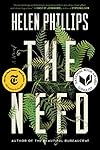
“Tough” is a word that describes the faceted character of Helen Phillips’ protagonist Molly in The Need. Molly, a paleobotanist and mother of a toddler and infant, works at an excavation and at home, and both places are challenging and increasingly difficult. She’s a woman grappling with her emotions, and maybe losing her mind, both regarding the extraordinary items she’s found in the excavation pit and at home, where her peripatetic musician husband leaves her to care show more for their two young children, and where she comes to face two sides of life, with her children, and without them. Marginally, it’s a horror tale, but at its heart it’s more a meditation on the hardships of modern working mothers who carry responsibilities for work and home, and sometimes find themselves schizophrenic over the whole deal.
Molly has discovered some disturbing items during an excavation, items that shouldn’t be there, like a bottle of Coke with the name slanted in the wrong direction, flora that have no evolved descendants, and, most troubling of all for the furor it arouses, a bible with the wrong pronoun. It’s this last item that draws people to the site to marvel and violently express hatred. Could these be items that have leaked over into our world from a parallel dimension, where things might appear the same but also vastly different?
All this upsets her to the point that at home she begins believing that an intruder has entered her home. Sure enough, one has and as the book promo hints, it is one who knows way too much about her. To reveal the intruder here would spoil the one startling aspect of the novel for you. But it’s this intruder who launches Molly into an ongoing dialogue with herself regarding the care of her children, from the often frustrating mundane tasks of care that she relishes as love, to the fear of what it would be like to lose them. Not that she wasn’t tough before this experience, but she emerges tougher, stronger in all regards, after it.
If you discount the supposed horror and the parallel worlds aspect of the novel, many readers will find things to like about The Need. Women readers with children will readily identify with Molly, particularly with all she has to do, for the burdens of child rearing fall squarely on her shoulders. Male readers might find the constant enumeration of Molly’s tasks, of her concerns for her children, of the loneliness of being left alone pretty much to fend for herself for long periods of time, and of continuously battling herself over whether she’s mother enough, revealing and, maybe, helpful in better appreciating their partners. As to the horror and multidimensional component, if you buy the book with this in mind, you’ll certainly find yourself disappointed. show less
“Tough” is a word that describes the faceted character of Helen Phillips’ protagonist Molly in The Need. Molly, a paleobotanist and mother of a toddler and infant, works at an excavation and at home, and both places are challenging and increasingly difficult. She’s a woman grappling with her emotions, and maybe losing her mind, both regarding the extraordinary items she’s found in the excavation pit and at home, where her peripatetic musician husband leaves her to care show more for their two young children, and where she comes to face two sides of life, with her children, and without them. Marginally, it’s a horror tale, but at its heart it’s more a meditation on the hardships of modern working mothers who carry responsibilities for work and home, and sometimes find themselves schizophrenic over the whole deal.
Molly has discovered some disturbing items during an excavation, items that shouldn’t be there, like a bottle of Coke with the name slanted in the wrong direction, flora that have no evolved descendants, and, most troubling of all for the furor it arouses, a bible with the wrong pronoun. It’s this last item that draws people to the site to marvel and violently express hatred. Could these be items that have leaked over into our world from a parallel dimension, where things might appear the same but also vastly different?
All this upsets her to the point that at home she begins believing that an intruder has entered her home. Sure enough, one has and as the book promo hints, it is one who knows way too much about her. To reveal the intruder here would spoil the one startling aspect of the novel for you. But it’s this intruder who launches Molly into an ongoing dialogue with herself regarding the care of her children, from the often frustrating mundane tasks of care that she relishes as love, to the fear of what it would be like to lose them. Not that she wasn’t tough before this experience, but she emerges tougher, stronger in all regards, after it.
If you discount the supposed horror and the parallel worlds aspect of the novel, many readers will find things to like about The Need. Women readers with children will readily identify with Molly, particularly with all she has to do, for the burdens of child rearing fall squarely on her shoulders. Male readers might find the constant enumeration of Molly’s tasks, of her concerns for her children, of the loneliness of being left alone pretty much to fend for herself for long periods of time, and of continuously battling herself over whether she’s mother enough, revealing and, maybe, helpful in better appreciating their partners. As to the horror and multidimensional component, if you buy the book with this in mind, you’ll certainly find yourself disappointed. show less
This book is VERY aptly named. “The Need” or needs of the main character Molly come across so strongly that the feeling is palpable. It’s not a long book – but everything that she was doing and everything that was happening to her were written with such intensity and power that I found myself putting it down several times in the few hours it took me to read – just because I needed to take a break and back away from the building explosion of emotion.
“But then, existing the show more bathroom, returning to the kitchen, a cosmic precariousness. The anguish of the other was a contaminating force spreading throughout Norma’s house, the hallway, the floor, the ceiling, and Molly found herself polluted, debilitated, by images she could no longer keep out of her head.” Molly’s experience is similar to the way I felt while reading – the words and the feelings they convey just flow from the page with such force that they are almost unshakable.
The author uses several techniques to keep the reader off guard and unsettled – timelines go back and forth, Molly is an unreliable narrator, reality and fantasy are interwoven, characters are introduced whose very existence is in doubt… Imagine all of that interspersed with a short novel about a new, exhausted, overworked mother who very much loves her children at the same time she is trying to figure out how her life got this way. “Moment by moment, maddened by them and melted by them, maddened/melted, maddened/melted, maddened/melted.”
Molly adores her children, is nearly consumed by not only their day to day needs, but by their very existence, by the responsibility she has as their mother to care, in all senses of the word, for them. When they are safe and with her (and sleeping) – she can finally be at peace. “No safety like this safety. The oxytocin churning through them. If the world must end, let it end now, when we are here, like this. Every single other thing – from the exhaustion of the week to evolution itself – in in the interest of this. This pure lack of desire. The need for absolutely nothing more than this.”
Any parent or caregiver who has lived through the awake at night/exhausted during the day cycle of watching small children can relate to Molly’s world. “The house had slipped into its alternate state of being, the sublime calm that envelops a space when its undomesticated residents are, at last, at rest. It was as though the house, too, slept, as though the walls themselves breathed, matching the pace of their breathing to the extra slow in and out of children sleeping, the lungs of the universe.”
The book is about life and death and safety and danger and love and grief – all in the most intense formats and sometimes all mixed together.
If that sounds confusing (I’m sure it does) – all I can say is that somehow it works. Somehow – this book absolutely sucks the reader in. Molly’s story is one that is incredibly powerful and absolutely unforgettable.
“It had always seemed a bit deceitful to Molly, the way we put our children to bed in soft pajamas, give them milk, read them books, locate their stuffed creatures, tell them that all is well, there’s nothing to be scared of, as though sleep isn’t one-sixteenth of death. When they resist the prospect of sleep, of long dark lonely hours, intuiting that this is indeed a rehearsal for death, we murmur to them, we rub their backs, pretending they will never die.”
“The Need” is about the most basic needs of the human animal interspersed with the deepest and truest of the complex and incredibly unique emotional needs of we creatures that make up the human race. show less
“But then, existing the show more bathroom, returning to the kitchen, a cosmic precariousness. The anguish of the other was a contaminating force spreading throughout Norma’s house, the hallway, the floor, the ceiling, and Molly found herself polluted, debilitated, by images she could no longer keep out of her head.” Molly’s experience is similar to the way I felt while reading – the words and the feelings they convey just flow from the page with such force that they are almost unshakable.
The author uses several techniques to keep the reader off guard and unsettled – timelines go back and forth, Molly is an unreliable narrator, reality and fantasy are interwoven, characters are introduced whose very existence is in doubt… Imagine all of that interspersed with a short novel about a new, exhausted, overworked mother who very much loves her children at the same time she is trying to figure out how her life got this way. “Moment by moment, maddened by them and melted by them, maddened/melted, maddened/melted, maddened/melted.”
Molly adores her children, is nearly consumed by not only their day to day needs, but by their very existence, by the responsibility she has as their mother to care, in all senses of the word, for them. When they are safe and with her (and sleeping) – she can finally be at peace. “No safety like this safety. The oxytocin churning through them. If the world must end, let it end now, when we are here, like this. Every single other thing – from the exhaustion of the week to evolution itself – in in the interest of this. This pure lack of desire. The need for absolutely nothing more than this.”
Any parent or caregiver who has lived through the awake at night/exhausted during the day cycle of watching small children can relate to Molly’s world. “The house had slipped into its alternate state of being, the sublime calm that envelops a space when its undomesticated residents are, at last, at rest. It was as though the house, too, slept, as though the walls themselves breathed, matching the pace of their breathing to the extra slow in and out of children sleeping, the lungs of the universe.”
The book is about life and death and safety and danger and love and grief – all in the most intense formats and sometimes all mixed together.
If that sounds confusing (I’m sure it does) – all I can say is that somehow it works. Somehow – this book absolutely sucks the reader in. Molly’s story is one that is incredibly powerful and absolutely unforgettable.
“It had always seemed a bit deceitful to Molly, the way we put our children to bed in soft pajamas, give them milk, read them books, locate their stuffed creatures, tell them that all is well, there’s nothing to be scared of, as though sleep isn’t one-sixteenth of death. When they resist the prospect of sleep, of long dark lonely hours, intuiting that this is indeed a rehearsal for death, we murmur to them, we rub their backs, pretending they will never die.”
“The Need” is about the most basic needs of the human animal interspersed with the deepest and truest of the complex and incredibly unique emotional needs of we creatures that make up the human race. show less
Wild, unsettling, gorgeously written litfic as horror as domestic sci-fi.
How can you be in two places at once when you’re not anywhere at all?
How can you be in two places at once when you’re not anywhere at all?
Lists
Awards


You May Also Like


Associated Authors
Statistics
- Works
- 7
- Also by
- 2
- Members
- 1,810
- Popularity
- #14,213
- Rating
- 3.3
- Reviews
- 130
- ISBNs
- 72
- Languages
- 5
- Favorited
- 1
