
Rumaan Alam
Author of Leave the World Behind
About the Author
Works by Rumaan Alam
Associated Works
Tagged
Common Knowledge
- Birthdate
- 1977-08-09
- Gender
- male
- Education
- Oberlin College
- Occupations
- novelist
short story writer - Nationality
- USA
- Places of residence
- Brooklyn, New York, USA
- Associated Place (for map)
- New York, USA
Members
Reviews
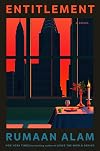
In this discomfiting novel, Brooke, a Black woman living a student-type life in Manhattan, burnt out from Covid and her teaching job, stumbles into a consultant gig with a foundation charged with spending down a billionaire's fortune. Asher Jaffee is in his nineties, aware of his limited time, and still bereft from the loss of his only child in 9/11. They seem to have a uniquely simpatico relationship built on trust and admiration, until Brooke is infected by the 1% trappings - a fantastic show more apartment, the ability to spend a million dollars on a painting for a birthday present, even a sumptuous meal. She takes unwise actions in the interest of gaining some of the advantages Asher has and advocates for a large expenditure on a thriving arts school, though the owner, an older Black woman, has no interest in exchanging her stewardship for a cash infusion. This frustrates Brooke, who shuts out the friends and family who are concerned about her struggles with her place in the foundation and in the city. The themes are momentous and the ending is devastating. show less

A couple and their two teenage children are taking a vacation, a pleasant getaway from their home in NYC spent in a very nice house they've rented for a few days, in a place far enough out in the country that they can't even get decent cell phone service. They do get just enough signal, though, to catch a glimpse of some kind of news about a big blackout on much of the east coast. And then the TV and the internet go out. And the people who own the house, who also happened to be out of the show more city for the day, stop by and want to stay, because something tells them maybe New York City isn't where they want to be right now.
But, really, everything's fine. Everything is absolutely fine. How can everything possibly not be fine, when you're on vacation?
Hooooo boy.
For most of this novel, I kept thinking that I didn't like it very much, that the writing just wasn't working for me. Such a pity, I thought to myself, because it has a lot going for it, otherwise. The author clearly does have some real talent, and the characters are very believable, the details of their lives and attitudes almost painfully recognizable at times. There's some good suspense, and some complicated, insightful thematic stuff. But, oh, I told myself, I just can't get along with the writing style at all. All that head-hopping (a particular pet peeve of mine, and something I believe very few authors can get away with). That detached narrative voice that keeps flat-out telling us things about the characters instead of showing us through words and actions (even if it doesn't feel amateurish the way that sort of thing usually does). The places where the sentences start to seem like they've maybe been polished one too many times, to the point where they've become slightly unnatural. The "little did they know"-type moments that start to pop up here and there, which surely must be just a little too coy, a little too narratively convenient. Yes, I decided, all of that is just too much of a problem for me. A pity, but that's obviously the reason I keep not wanting to pick this back up after I've put it down, the reason I'm not fully sinking into the story, the reason I feel sort of stressed out and annoyed as I read.
Yeah, well, you know what? Most of that is me being almost as much in denial as some of the characters. Because this is not a badly written book, or even a book whose writing is so much not to my taste that it just kind of ruins everything for me. I'm still not a fan of this particular POV structure, but Alam does actually do some good stuff with it, and those moments of dramatic irony that I kept wanting to think of as coy and convenient ultimately turn out to be nothing short of devastating.
No, it took me until very near the end to fully admit it to myself, but the truth is, the reason I kept fighting getting too much into this novel and telling myself it wasn't working is because it was just absolutely, positively not the book I should have been reading in the first week of 2021. Which is to say, a novel that, among other things, plays on the anxious possibility that if you take your eyes off the news for one moment something terrible will happen while you're not looking (something that did, in fact, happen for me on the same day I started reading this), a novel that reminds you, slowly but insistently, that the lives and the systems that we take for granted are in fact vulnerable and unstable and maintained largely by fragile consensus
Yeah. Basically, it stirred up every single horrible, anxious, frightened thing that's sitting in my brain right now, and it seems I am not quite emotionally equipped to confront in fiction what I'm already currently having a hard time handling in reality. And yet, once I finally recognized this fact, once I gave up fighting against it and just let myself go where it wanted to take me... Well, the result was very powerful. I may have let out a very long, ragged breath at the end. I guess you do have to count that as a significant success.
I still really, really wish I'd read it some other week, though. Or some other year. Or maybe in some other timeline.
Rating: 4.5/5, entirely despite myself. Damn you, Rumaan Alam. show less
But, really, everything's fine. Everything is absolutely fine. How can everything possibly not be fine, when you're on vacation?
Hooooo boy.
For most of this novel, I kept thinking that I didn't like it very much, that the writing just wasn't working for me. Such a pity, I thought to myself, because it has a lot going for it, otherwise. The author clearly does have some real talent, and the characters are very believable, the details of their lives and attitudes almost painfully recognizable at times. There's some good suspense, and some complicated, insightful thematic stuff. But, oh, I told myself, I just can't get along with the writing style at all. All that head-hopping (a particular pet peeve of mine, and something I believe very few authors can get away with). That detached narrative voice that keeps flat-out telling us things about the characters instead of showing us through words and actions (even if it doesn't feel amateurish the way that sort of thing usually does). The places where the sentences start to seem like they've maybe been polished one too many times, to the point where they've become slightly unnatural. The "little did they know"-type moments that start to pop up here and there, which surely must be just a little too coy, a little too narratively convenient. Yes, I decided, all of that is just too much of a problem for me. A pity, but that's obviously the reason I keep not wanting to pick this back up after I've put it down, the reason I'm not fully sinking into the story, the reason I feel sort of stressed out and annoyed as I read.
Yeah, well, you know what? Most of that is me being almost as much in denial as some of the characters. Because this is not a badly written book, or even a book whose writing is so much not to my taste that it just kind of ruins everything for me. I'm still not a fan of this particular POV structure, but Alam does actually do some good stuff with it, and those moments of dramatic irony that I kept wanting to think of as coy and convenient ultimately turn out to be nothing short of devastating.
No, it took me until very near the end to fully admit it to myself, but the truth is, the reason I kept fighting getting too much into this novel and telling myself it wasn't working is because it was just absolutely, positively not the book I should have been reading in the first week of 2021. Which is to say, a novel that, among other things, plays on the anxious possibility that if you take your eyes off the news for one moment something terrible will happen while you're not looking (something that did, in fact, happen for me on the same day I started reading this), a novel that reminds you, slowly but insistently, that the lives and the systems that we take for granted are in fact vulnerable and unstable and maintained largely by fragile consensus
Yeah. Basically, it stirred up every single horrible, anxious, frightened thing that's sitting in my brain right now, and it seems I am not quite emotionally equipped to confront in fiction what I'm already currently having a hard time handling in reality. And yet, once I finally recognized this fact, once I gave up fighting against it and just let myself go where it wanted to take me... Well, the result was very powerful. I may have let out a very long, ragged breath at the end. I guess you do have to count that as a significant success.
I still really, really wish I'd read it some other week, though. Or some other year. Or maybe in some other timeline.
Rating: 4.5/5, entirely despite myself. Damn you, Rumaan Alam. show less

Reading Leave the World Behind by Rumaan Alam during an ongoing pandemic may not seem like a good idea. After all, a story about what looks like a catastrophic event as experienced by two families with no access to the news is a little too on-the-nose considering current events. For those brave enough to crack open its pages, however, what you will find is a mesmerizing story of opposites forced into cooperation and brutal self-reflection that does as much to help you forget reality as it show more does make you grateful that we are only experiencing a pandemic.
Leave the World Behind is chilling on so many levels – the lack of news, the isolation, the panic. What will strike readers the most, however, is the self-reflection required of each of the characters as they strive to work together all while trying to overcome their inherent biases. After all, the two families are as opposite as can be. Black versus white. Rich versus middle class. Retired versus vacationers. Old versus young. A reliance on wifi and electronics versus those who view such gadgets as unnecessary. Plus one family has the experiences that come with living a full and long life while the other family is still in the throes of puberty, school, and everything else that comes with raising a family.
Not every character is as successful at addressing their inner biases as others. In fact, much of what makes Leave the World Behind so brilliant is the fact that the characters acknowledge their racism and other biases while also understanding that they shouldn’t have those feelings if they want to consider themselves truly enlightened. It makes for some very uncomfortable reading at times, which, I believe, is Mr. Alam’s point. While showing the characters’ weaknesses, he forces readers to confirm their own.
The unknown event in New York is very much a secondary character in its own right, even though we never find out what exactly happened. Mr. Alam draws our attention to certain seemingly random events happening in nature as well as mentioning various long-term effects of that event so that you understand just how catastrophic, almost apocalyptic, it was. As a result, the characters’ state of uncertainty and eventual panic becomes that much more palpable because you understand the gravity of the situation more than they do.
Ultimately, Leave the World Behind is a rather intense apocalyptic novel that fits well into 2020. Its deep dive into the inherent racism and other biases we each internally carry is spot on for this year’s ongoing fight against systemic racism. Plus, its unknown catastrophe is an intriguing alternative to our current, still-relatively-unknown pandemic. Make no mistake, Leave the World Behind is going to be among many a Best of 2020 list. show less
Leave the World Behind is chilling on so many levels – the lack of news, the isolation, the panic. What will strike readers the most, however, is the self-reflection required of each of the characters as they strive to work together all while trying to overcome their inherent biases. After all, the two families are as opposite as can be. Black versus white. Rich versus middle class. Retired versus vacationers. Old versus young. A reliance on wifi and electronics versus those who view such gadgets as unnecessary. Plus one family has the experiences that come with living a full and long life while the other family is still in the throes of puberty, school, and everything else that comes with raising a family.
Not every character is as successful at addressing their inner biases as others. In fact, much of what makes Leave the World Behind so brilliant is the fact that the characters acknowledge their racism and other biases while also understanding that they shouldn’t have those feelings if they want to consider themselves truly enlightened. It makes for some very uncomfortable reading at times, which, I believe, is Mr. Alam’s point. While showing the characters’ weaknesses, he forces readers to confirm their own.
The unknown event in New York is very much a secondary character in its own right, even though we never find out what exactly happened. Mr. Alam draws our attention to certain seemingly random events happening in nature as well as mentioning various long-term effects of that event so that you understand just how catastrophic, almost apocalyptic, it was. As a result, the characters’ state of uncertainty and eventual panic becomes that much more palpable because you understand the gravity of the situation more than they do.
Ultimately, Leave the World Behind is a rather intense apocalyptic novel that fits well into 2020. Its deep dive into the inherent racism and other biases we each internally carry is spot on for this year’s ongoing fight against systemic racism. Plus, its unknown catastrophe is an intriguing alternative to our current, still-relatively-unknown pandemic. Make no mistake, Leave the World Behind is going to be among many a Best of 2020 list. show less
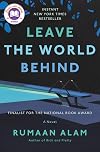
Enjoyable, but I see why this book is rated poorly on here. The ending is very abrupt and answers no questions. The writing style takes getting used to, and I wasn’t a fan of the useless details in some spots (example: listing every single thing one of the characters bought at the store).
But you know what? I’m not mad. Does knowing the cause of the apocalypse change anything, for me or the characters living through it? Not really. In this case it’s beside the point. The focus is show more supposed to be on the dynamic between the two families and how race/class informs everything about the way they interact and handle the world ending. This book does something different and, to me, it makes the experience a little confusing and jarring at times. I understand why this wouldn’t work for everyone, though. show less
But you know what? I’m not mad. Does knowing the cause of the apocalypse change anything, for me or the characters living through it? Not really. In this case it’s beside the point. The focus is show more supposed to be on the dynamic between the two families and how race/class informs everything about the way they interact and handle the world ending. This book does something different and, to me, it makes the experience a little confusing and jarring at times. I understand why this wouldn’t work for everyone, though. show less
Lists
Read with Jenna (1)
Summer Books (1)
Awards


You May Also Like


Associated Authors
Statistics
- Works
- 6
- Also by
- 2
- Members
- 4,273
- Popularity
- #5,881
- Rating
- 3.3
- Reviews
- 208
- ISBNs
- 73
- Languages
- 11