
Jakob Arjouni (1964–2013)
Author of Happy Birthday, Turk!
About the Author
Series
Works by Jakob Arjouni
Die Kayankaya-Romane: Happy birthday, Türke!, Mehr Bier, Ein Mann, ein Mord, Kismet, Bruder Kemal (2014) 4 copies
Associated Works
Tagged
Common Knowledge
- Canonical name
- Arjouni, Jakob
- Legal name
- Michelsen, Jakob Bothe
- Other names
- BOTHE, Jakob
ARJOUNI, Jakob
MICHELSEN, Jakob Bothe - Birthdate
- 1964-10-08
- Date of death
- 2013-01-17
- Gender
- male
- Occupations
- writer
- Relationships
- Michelsen, Hans Günter (father)
- Cause of death
- cancer
- Nationality
- Germany (birth)
- Birthplace
- Frankfurt am Main, Germany
- Places of residence
- Frankfurt, Germany (birth)
Ginestas, France - Place of death
- Berlin, Germany
- Associated Place (for map)
- Germany
Members
Reviews
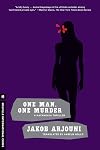
Hard-boiled prose, lean, clean dialogue, hard bitten as Sam Spade, cynically cool as Philip Marlowe. Kemal Kayankaya is a worthy successor to the great noir characters and hard boiled detectives of the past. This isn't a parody or a cheap imitation, Jakob Arjouni has created the real thing. Beautiful!
Jakob Arjouni tells a tale that could have come off of the mean streets of Chandler's Los Angles or Hammet's San Francisco, or Chicago or New York or Boston but it takes place in Frankfurt, show more Germany - the dullest town in Germany, except it isn't. One Man, One Murder was originally written in 1991 as Ein Mann, ein Mord. Melville International Crime provided me with this Galley of the translation and after reading it, it's jumped to the top of the list of `Best Surprise Book' of the year. In an original voice, Arjouni tells such a true story and he tells it so well, maintaining tension throughout, dialogue that is clever, witty, and sad and an atmosphere that James M. Cain would have been proud of.
Kemal Kayankaya is the orphaned son of a Turkish garbage collector, a German Citizen, born and bred. But, because he is of Turkish extraction he encounters suspicion and racism wherever he goes. He meets them with a smart assed attitude and a cynical, jaded tongue.
This book would have worked so well as just a comic take on the American Hardboiled detective transplanted to Europe in the late 80's; as a cynical updating of Chandler's Philip Marlowe, but Arjouni had loftier goals. And he achieved them in spades. Sam Spades. It is Arjouni's willingness to confront serious social issues and display them in the light of a hardboiled/noir novel, with an avoidance of clichés, intelligent observation, and dialog that is both realistic and dripping with acid-tinged sarcasm. And to do it all without preaching. He kind of reminds me of the great Walter Mosley in that regard.
The protagonist encounters deadly crime bosses, indifferent and crooked cops, violent muscle men, a landlord who wants his money, an illegal immigrant ring that sells the hopefuls fake visas and then disposes of them - the hopefuls, not the visas, a miasma of bureaucratic and social injustice and racial prejudice that mirrors Americas own. The air of contemporary Europe's racial politics and inane nationalism are the maze that Kayankaya navigates in his quest but he is well equipped with a sharp mind, a sharper tongue and meets these challenges with a cynical, smart-assed attitude and an anti-authority front. There are enough seeming dead ends, as almost any detective novel requires, but instead of having them ...dead end, Arjouni has them turn into very interesting `small mysteries' or stories inside the story. Arjouni is a consummate professional. His prose are efficient with a minimalists approach that Hemingway would love, but not so minimalist that he doesn't manage to fully develop the characters without using stock, stereotypes, and he makes them way too real. He also paints scenes both colorful and dark about the underbelly of a city and maintains a pace that lingers just enough in all the right places.
The only criticism I have for this otherwise master work is that it took to damn long to get it translated and released in English. Well, Melville International Crime has fixed that, and thank you very much.
The Dirty Lowdown
http://the-dirty-lowdown.blogspot.com/ show less
Jakob Arjouni tells a tale that could have come off of the mean streets of Chandler's Los Angles or Hammet's San Francisco, or Chicago or New York or Boston but it takes place in Frankfurt, show more Germany - the dullest town in Germany, except it isn't. One Man, One Murder was originally written in 1991 as Ein Mann, ein Mord. Melville International Crime provided me with this Galley of the translation and after reading it, it's jumped to the top of the list of `Best Surprise Book' of the year. In an original voice, Arjouni tells such a true story and he tells it so well, maintaining tension throughout, dialogue that is clever, witty, and sad and an atmosphere that James M. Cain would have been proud of.
Kemal Kayankaya is the orphaned son of a Turkish garbage collector, a German Citizen, born and bred. But, because he is of Turkish extraction he encounters suspicion and racism wherever he goes. He meets them with a smart assed attitude and a cynical, jaded tongue.
This book would have worked so well as just a comic take on the American Hardboiled detective transplanted to Europe in the late 80's; as a cynical updating of Chandler's Philip Marlowe, but Arjouni had loftier goals. And he achieved them in spades. Sam Spades. It is Arjouni's willingness to confront serious social issues and display them in the light of a hardboiled/noir novel, with an avoidance of clichés, intelligent observation, and dialog that is both realistic and dripping with acid-tinged sarcasm. And to do it all without preaching. He kind of reminds me of the great Walter Mosley in that regard.
The protagonist encounters deadly crime bosses, indifferent and crooked cops, violent muscle men, a landlord who wants his money, an illegal immigrant ring that sells the hopefuls fake visas and then disposes of them - the hopefuls, not the visas, a miasma of bureaucratic and social injustice and racial prejudice that mirrors Americas own. The air of contemporary Europe's racial politics and inane nationalism are the maze that Kayankaya navigates in his quest but he is well equipped with a sharp mind, a sharper tongue and meets these challenges with a cynical, smart-assed attitude and an anti-authority front. There are enough seeming dead ends, as almost any detective novel requires, but instead of having them ...dead end, Arjouni has them turn into very interesting `small mysteries' or stories inside the story. Arjouni is a consummate professional. His prose are efficient with a minimalists approach that Hemingway would love, but not so minimalist that he doesn't manage to fully develop the characters without using stock, stereotypes, and he makes them way too real. He also paints scenes both colorful and dark about the underbelly of a city and maintains a pace that lingers just enough in all the right places.
The only criticism I have for this otherwise master work is that it took to damn long to get it translated and released in English. Well, Melville International Crime has fixed that, and thank you very much.
The Dirty Lowdown
http://the-dirty-lowdown.blogspot.com/ show less
http://www.mytwostotinki.com/?p=810
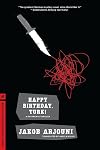
Kemal Kayankaya – the name is without doubt Turkish. But Kemal doesn’t speak Turkish because he was adopted by a German couple when he was still a toddler. His parents, immigrants from Anatolia in Frankfurt/Main, died young. And so Kemal grew up like any other German child, except for his name.
A very clever choice by the author, I can say. Because it makes the hero of Happy Birthday, Turk! a born outsider - for many Germans he is the Turk who they think show more cannot speak proper German and should probably work as a garbage collector and for the Turks he is encountering in his work as a private investigator he is the fellow countryman who truly understands them because he has the same background as they do. But both sides are wrong.
In reality this cocky, quick-witted young man in his late twenties with the talent for seeking trouble who after several attempts to find his true vocation somehow acquired a license for his business, and who has an issue with alcohol, is – like many literary heroes of this genre – a romantic to the core. Just scratch a bit on the surface and you will see…
And this is the case with which the Philip Marlowe of Frankfurt has to deal in this book:
Ahmed Hamul, the husband of Ilter, Kayankaya's client, was found stabbed to death on the streets of Frankfurt's red light district. Since the police is not very eager to solve the case and because the wife has little trust in them, she is asking her alleged compatriot for help to find out who murdered her husband. Kayankaya accepts and finds himself soon in a case that gets much bigger than he initially thought.
While meeting the family, K. remarks that the brother-in-law has a particularly low opinion of the victim and except for Ahmet's widow nobody seems really very interested in finding the truth. Also that the family is hiding the youngest daughter under the pretext that she is ill is a hint for the private eye that something is fishy here.
The police proves little willingness to give the needed information to Kemal and his impudent behavior to some of the admittetly racist policemen doesn't exactly help. Kommissar Futt (a dialect word for vagina by the way), one of the least endearing exemplars in this biotop is leading the investigation and makes it a personal issue to keep Kayankaya, who fooled him once as alleged investigator from the Turkish Embassy, in the dark.
But fortunately, Kayankaya is in friendly terms with the retired police commissioner Löff who is pulling some strings with his former colleagues and is also later of great help. The slightly chaotic Kayankaya and his unofficial assistant who in his very German pedantic way tries to teach his friend some order and discipline and organization are an odd couple and this adds to the humor in the book which is frequently supported by witty dialogues and descriptions.
While some facts are hinting at a conflict in the red light district - Ahmet had obviously a girl friend among the prostitutes there - it is soon obvious that the issue is bigger than Kayankaya thought. It turns out that Ahmet was close with his father-in-law, who got killed in a car accident just months before. Unless the car accident wasn't exactly an accident as one of the children that witnessed the event, claimed. But Kayankaya cannot ask the child, because it too fell victim to an accident...
I don't want to give the whole story away, that would spoil the fun for possible future readers of the book. Honestly speaking, the plot was rather conventional and I saw it more or less coming from an early stage of the book.
But when this sounds a bit derogative, I don't really mean it. Arjouni was 23 when the book was published first and it is quite an accomplishment for such a young author to deliver such a fast-paced classical hardboiled crime novel with an interesting main character.
And there is more to the book. As someone who has lived in Frankfurt for several years in the 1990s I can say that the book gives an authentic impression of the place to its readers. Starting from the Frankfurt dialect that is used in the German version (yes, Kayankaya "babbelt" frequently in Frankfurterish - how funny is that?) to the description of the locations ("Wasserhäuschen" inclusive - a kind of kiosk open 24/7, literally "little water house", the typical place for an alcoholic to buy and drink his booze), it all fits. And there is plenty of hilarious situations that give Kayankaya not only opportunity for acerbic or ironic remarks but also for a playful inventiveness on his (and the author's) side.
Was Frankfurt, the city with the highest percentage of migrants (and the highest crime rate in Germany) really that racist in the 1980s? I cannot really say from my own experience - but I am not a migrant and my living conditions and the milieu in which I lived and worked there a few years later were very different from Kayankaya's. Since the whole book is so well written and researched, probably it was.
A good decision by the author was also to choose Frankfurt and not Berlin as the location for this novel. In no other place in Germany is the connection between big money and crime so tangible as here, no other city in Germany looks like a miniature version of Metropolis, no other city has this mixture of backwater mentality and delusions of grandeur.
The only bad thing about the book is that it is such a fast read. I finished it in one sitting during a flight from Istanbul to Almaty. But there are four more Kayankaya novels and I am quite sure you will like all of them. (The whole set is translated and available in the Melville International Crime series)
Jakob Arjouni died last year after a long battle with cancer. A real loss for German literature and especially for crime fiction afficionados. I can also strongly recommend his Magic Hoffmann, a crime novel too (but without Kayankaya). show less
Kemal Kayankaya – the name is without doubt Turkish. But Kemal doesn’t speak Turkish because he was adopted by a German couple when he was still a toddler. His parents, immigrants from Anatolia in Frankfurt/Main, died young. And so Kemal grew up like any other German child, except for his name.
A very clever choice by the author, I can say. Because it makes the hero of Happy Birthday, Turk! a born outsider - for many Germans he is the Turk who they think show more cannot speak proper German and should probably work as a garbage collector and for the Turks he is encountering in his work as a private investigator he is the fellow countryman who truly understands them because he has the same background as they do. But both sides are wrong.
In reality this cocky, quick-witted young man in his late twenties with the talent for seeking trouble who after several attempts to find his true vocation somehow acquired a license for his business, and who has an issue with alcohol, is – like many literary heroes of this genre – a romantic to the core. Just scratch a bit on the surface and you will see…
And this is the case with which the Philip Marlowe of Frankfurt has to deal in this book:
Ahmed Hamul, the husband of Ilter, Kayankaya's client, was found stabbed to death on the streets of Frankfurt's red light district. Since the police is not very eager to solve the case and because the wife has little trust in them, she is asking her alleged compatriot for help to find out who murdered her husband. Kayankaya accepts and finds himself soon in a case that gets much bigger than he initially thought.
While meeting the family, K. remarks that the brother-in-law has a particularly low opinion of the victim and except for Ahmet's widow nobody seems really very interested in finding the truth. Also that the family is hiding the youngest daughter under the pretext that she is ill is a hint for the private eye that something is fishy here.
The police proves little willingness to give the needed information to Kemal and his impudent behavior to some of the admittetly racist policemen doesn't exactly help. Kommissar Futt (a dialect word for vagina by the way), one of the least endearing exemplars in this biotop is leading the investigation and makes it a personal issue to keep Kayankaya, who fooled him once as alleged investigator from the Turkish Embassy, in the dark.
But fortunately, Kayankaya is in friendly terms with the retired police commissioner Löff who is pulling some strings with his former colleagues and is also later of great help. The slightly chaotic Kayankaya and his unofficial assistant who in his very German pedantic way tries to teach his friend some order and discipline and organization are an odd couple and this adds to the humor in the book which is frequently supported by witty dialogues and descriptions.
While some facts are hinting at a conflict in the red light district - Ahmet had obviously a girl friend among the prostitutes there - it is soon obvious that the issue is bigger than Kayankaya thought. It turns out that Ahmet was close with his father-in-law, who got killed in a car accident just months before. Unless the car accident wasn't exactly an accident as one of the children that witnessed the event, claimed. But Kayankaya cannot ask the child, because it too fell victim to an accident...
I don't want to give the whole story away, that would spoil the fun for possible future readers of the book. Honestly speaking, the plot was rather conventional and I saw it more or less coming from an early stage of the book.
But when this sounds a bit derogative, I don't really mean it. Arjouni was 23 when the book was published first and it is quite an accomplishment for such a young author to deliver such a fast-paced classical hardboiled crime novel with an interesting main character.
And there is more to the book. As someone who has lived in Frankfurt for several years in the 1990s I can say that the book gives an authentic impression of the place to its readers. Starting from the Frankfurt dialect that is used in the German version (yes, Kayankaya "babbelt" frequently in Frankfurterish - how funny is that?) to the description of the locations ("Wasserhäuschen" inclusive - a kind of kiosk open 24/7, literally "little water house", the typical place for an alcoholic to buy and drink his booze), it all fits. And there is plenty of hilarious situations that give Kayankaya not only opportunity for acerbic or ironic remarks but also for a playful inventiveness on his (and the author's) side.
Was Frankfurt, the city with the highest percentage of migrants (and the highest crime rate in Germany) really that racist in the 1980s? I cannot really say from my own experience - but I am not a migrant and my living conditions and the milieu in which I lived and worked there a few years later were very different from Kayankaya's. Since the whole book is so well written and researched, probably it was.
A good decision by the author was also to choose Frankfurt and not Berlin as the location for this novel. In no other place in Germany is the connection between big money and crime so tangible as here, no other city in Germany looks like a miniature version of Metropolis, no other city has this mixture of backwater mentality and delusions of grandeur.
The only bad thing about the book is that it is such a fast read. I finished it in one sitting during a flight from Istanbul to Almaty. But there are four more Kayankaya novels and I am quite sure you will like all of them. (The whole set is translated and available in the Melville International Crime series)
Jakob Arjouni died last year after a long battle with cancer. A real loss for German literature and especially for crime fiction afficionados. I can also strongly recommend his Magic Hoffmann, a crime novel too (but without Kayankaya). show less
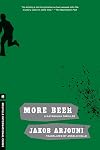
The Kayankaya books have the feel of old-school, hard-boiled detective noir, like Raymond Chandler or Dashiell Hammett, complete with the misogyny. Oh, that misogyny! The depiction of women in this book is dreadful. While I didn’t enjoy this as much as the first, Happy Birthday Turk, it was still an interesting mystery. I don’t know that I’d call it a thriller, but that may have more to do with the translation than the original text. There were a number of typos, which I found show more distracting. Overall, it’s a decent story, but the ending was thoroughly dissatisfying. I’m sure I’ll finish the series (I own them), but I do think it will be a little while before I grab the next one, because ugh. show less

Happy Birthday Turk! is rife with noir cliches. A private eye who does not eat anything for days; he is so tough that he just drinks coffee and alcohol. He gets beaten up, his eye swollen shut and his jaw bleeding, yet he can go on to investigate crimes, interview people, chase down criminals. The plot is obvious from the very beginning and everything unravels very easily: It seems that people are just waiting to be asked to spill the beans. Perhaps the only redeeming quality is the "ethnic" show more identity of the private eye, a German-Turk, who is pretty German in culture, but looks like a Turk. So there is some biting commentary, and some incidences written into the plot, that bring out this aspect of the main character. He has a witty and fast mouth, which he uses well to dish out advice for those unfortunate enough to discriminate against him due to his looks or those who assume he is just another Turk. But then again, he also thinks Turkey is a dictatorship so who knows what that's all about... Maybe it is on purpose, to show us that Kayankaya is just like the other ignorant Germans, or it is a mistake the author made, or maybe the translator chose "dictatorship" but the actual text said "democratic rule often overseen by the military"? Also the whole family structure of the Turkish family (of the murder victim) is wrong. To imagine such an obedient and quiet mother-in-law, to the point that she'd remain silent when one of her daughters "gets sick" is unbelievable.
I hear that the translation is actually pretty good, so I am going to guess that, like most noir out there, the book was written in the choppy style that dwells way too much on minute-by-minute movements of the main character (i.e. "I opened the door. I walked in. I sat down. I reached for the glass on the table. I poured myself some water.") Just how many times can a smell "hit" someone's "nostrils"? Many, many, many times. show less
I hear that the translation is actually pretty good, so I am going to guess that, like most noir out there, the book was written in the choppy style that dwells way too much on minute-by-minute movements of the main character (i.e. "I opened the door. I walked in. I sat down. I reached for the glass on the table. I poured myself some water.") Just how many times can a smell "hit" someone's "nostrils"? Many, many, many times. show less
Lists
Awards


You May Also Like


Associated Authors
Statistics
- Works
- 28
- Also by
- 1
- Members
- 1,297
- Popularity
- #19,796
- Rating
- 3.5
- Reviews
- 50
- ISBNs
- 144
- Languages
- 11
- Favorited
- 3
