
Friedrich Glauser (1896–1938)
Author of Thumbprint
About the Author
Friedrich Glauser is a legendary figure in Continental crime writing. He was a morphine and opium addict much of his life and began writing Thumbprint while at the Waldau asylum
Series
Works by Friedrich Glauser
Die Kriminalromane mit Wachtmeister Studer: Wachtmeister Studer, Matto regiert, Die Fieberkurve, Der Chinese, Krock & Co. (2013) 5 copies
Kult-Krimis: 26 Romane & Detektivgeschichten: Wachtmeister Studer Matto regiert Die Fieberkurve Der Chinese Der Tee der drei alten Damen (2017) 3 copies
Mattos Puppentheater (Erzählungen) 2 copies
Altre indagini per il sergente Studer: Il cinese-Il regno di Matto-I primi casi del sergente Studer (2012) 2 copies
Knarrende Schuhe 1 copy
Letztes Stelldichein : Wachtmeister Studer ermittelt. Kriminalgeschichten (Unionsverlag Taschenbücher) (metro) (2020) 1 copy
A biciklikullo 1 copy
Glauser Friedrich 1 copy
Die Studer Romane 1 copy
Annegare è il nostro destino : lettere a Elisabeth von Ruckteschell e agli amici di Ascona (2011) 1 copy
Das erzählerische Werk 1 copy
Associated Works
Tagged
Common Knowledge
- Canonical name
- Glauser, Friedrich
- Legal name
- Glauser, Friedrich Charles
- Birthdate
- 1896-02-04
- Date of death
- 1938-12-08
- Gender
- male
- Education
- Collège de Genève (no degree ∙ Maturitätsschule ∙ 1913)
Gartenbauschule Oeschberg (1931) - Occupations
- soldier
coal miner
hospital orderly
writer - Organizations
- French Foreign Legion
- Awards and honors
- The Friedrich-Glauser-Preis for German language crime fiction is named for him
- Short biography
- Friedrich Glauser, född 1896, död 1938 var en schweizisk författare. Han har fått ett pris uppkallat efter sig, Friedrich-Glauser-Preis. Priset utdelas av tyska författarföreningen Das Syndikat till bästa tyskspråkiga kriminalroman under året.
- Cause of death
- Mordverdacht
- Nationality
- Switzerland
- Birthplace
- Vienna, Austria
- Places of residence
- Bern, Switzerland (Waldau Insane Asylum and Mental Hospital)
Brittany, France - Place of death
- Genoa, Italy
- Burial location
- Friedhof Manegg, Zürich, Zürich, Schweiz
- Map Location
- Switzerland
Members
Reviews

Glauser's Sergeant Studer books are unusual in their strange imagery and bursts of dreamlike confusion and I became lost in Fever, the last book in the series. There's a confusion of identities, with many of the characters having similar names and pseudonyms. Even Studer uses a false identity. There's a mysterious corporal who can predict the future, an elderly barefoot priest, a missing stockbroker, a geologist who may or may not be dead, and might have been a murderer, and a young woman show more whose cryptic communications and sudden unexpected appearances create even more confusion. The corporal, who is probably someone else altogether, is in the French Foreign Legion, so Studer's unofficial investigation takes him to Morocco.
The book was first published in 1935, and the undercurrents of political corruption, mistrust, and the fear of the coming war add to the nightmarish atmosphere. As a crime novel Fever is deeply flawed, but as a record of the times it's worth reading. show less
The book was first published in 1935, and the undercurrents of political corruption, mistrust, and the fear of the coming war add to the nightmarish atmosphere. As a crime novel Fever is deeply flawed, but as a record of the times it's worth reading. show less
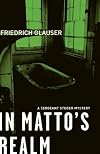
In Matto's Realm takes place in a psychiatric hospital. The deputy director has called in Studer because both the director and a convicted child killer are missing. Matto's realm is the realm of madness, which affects the staff as well as the patients, and everyone connected with them. A foreign voice on the radio says, "Two hundred thousand men and women are gathered here to cheer me. Two hundred thousand men and women have come as representatives of the whole nation, which is behind me. show more Foreign states dare to accuse me of breaking a treaty. When I seized power this land lay desolate, ravaged, sick...I have made it great, I have made others respect it.."
The deputy director tells Studer, "The man who was talking just now was lucky. Had he had a psychiatric examination at the beginning of his career, perhaps the world might look a little different today. As I said before, contact with the mentally ill is contagious. And there are people who are particularly susceptible - whole nations can be susceptible. I once said something in a lecture to which people objected. Certain so-called revolutions, I said are basically nothing more than the vengeance of psychopaths."
Glauser is writing in 1936 so the psychopath is Hitler, but the tone is familiar. It was the background - the politics, the corruption, Studer's sympathy for the poverty-stricken working people, the world of the mental asylum with its warders and its experiments on the patients - that held my interest, more so than the plot. In fact, the plot was confusing, as befits a crime in an asylum.
Well worth reading. show less
The deputy director tells Studer, "The man who was talking just now was lucky. Had he had a psychiatric examination at the beginning of his career, perhaps the world might look a little different today. As I said before, contact with the mentally ill is contagious. And there are people who are particularly susceptible - whole nations can be susceptible. I once said something in a lecture to which people objected. Certain so-called revolutions, I said are basically nothing more than the vengeance of psychopaths."
Glauser is writing in 1936 so the psychopath is Hitler, but the tone is familiar. It was the background - the politics, the corruption, Studer's sympathy for the poverty-stricken working people, the world of the mental asylum with its warders and its experiments on the patients - that held my interest, more so than the plot. In fact, the plot was confusing, as befits a crime in an asylum.
Well worth reading. show less

Thumbprint was written in 1936 but translated from German to English for the first time in 2004. Glauser, described as the Swiss Simenon, wrote a psychological detective series featuring the Swiss detective Sergeant Studer. Thumbprint is the first. It is surprisingly modern in its outlook, not at all a period piece. Glauser, an opium addict diagnosed with schizophrenia, spent much of his life in psychiatric hospitals. Many of his descriptions of people and surroundings are arresting in their show more technicolour oddness.
Studer is an honest man. He was once an inspector, but was demoted to the lowest rank for refusing to give up on a case that his superiors wanted to ignore, and has managed to work his way back to sergeant. Studer is an appealing, well-rounded character. He has arrested a young man for murdering his girlfriend's father, but something seems wrong, so Studer convinces the examining magistrate that it would be bad for his career not to allow Studer to reopen the investigation. show less
Studer is an honest man. He was once an inspector, but was demoted to the lowest rank for refusing to give up on a case that his superiors wanted to ignore, and has managed to work his way back to sergeant. Studer is an appealing, well-rounded character. He has arrested a young man for murdering his girlfriend's father, but something seems wrong, so Studer convinces the examining magistrate that it would be bad for his career not to allow Studer to reopen the investigation. show less
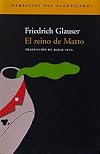
Pues mucho mejor de lo que me esperaba.
Es un caso policiaco muy raro, con un inspector que parece cualquier cosa menos un policía; un montón de personajes de un hospital psiquiátrico que dan la falsa sensación de ser una familia; un misterio detrás de otro y soluciones que van desenredando una madeja de interrelaciones humanas en las que casi nada es lo que parece.
Mucha reflexión filosófica detrás de cada paso que avanza la novela, mucha soledad de fondo en cada personaje. Y show more cuestionamientos constantes sobre el funcionamiento de la sociedad del momento, y de las relaciones sociales en general. show less
Es un caso policiaco muy raro, con un inspector que parece cualquier cosa menos un policía; un montón de personajes de un hospital psiquiátrico que dan la falsa sensación de ser una familia; un misterio detrás de otro y soluciones que van desenredando una madeja de interrelaciones humanas en las que casi nada es lo que parece.
Mucha reflexión filosófica detrás de cada paso que avanza la novela, mucha soledad de fondo en cada personaje. Y show more cuestionamientos constantes sobre el funcionamiento de la sociedad del momento, y de las relaciones sociales en general. show less
Lists
Awards


You May Also Like


Associated Authors
Statistics
- Works
- 76
- Also by
- 1
- Members
- 1,416
- Popularity
- #18,162
- Rating
- 3.8
- Reviews
- 31
- ISBNs
- 219
- Languages
- 14
- Favorited
- 2


