
Bessora
Author of Alpha: Abidjan to Paris
About the Author
Image credit: Sandrine B. Bessora
Works by Bessora
Associated Works
Tagged
Common Knowledge
- Birthdate
- 1968-12-17
- Gender
- female
- Relationships
- Beetschen, Olivier (uncle)
- Birthplace
- Brussels, Belgium
- Associated Place (for map)
- Brussels, Belgium
Members
Reviews
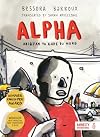
This graphic novel of a refugee’s desperate journey to free himself from the corrupt and hopeless existence of his hometown is not based on a true story and surprisingly this makes for a stronger work. I think this is because we don’t need to question the extremity and validity of what he experiences in his escape. As fiction we can instead imagine and know such hardships exist; we are not drawn into a ‘did this really happen?’ ‘is he exaggerating events for effect’ discussion, show more which might dilute the compassion felt for these people whose lives are such a bleak struggle. Instead, our focus is on what it should be on: namely that somewhere out there, people like Alpha who want to provide for their families find it impossible to do so in their native country and face difficult choices between oppressed status quo’s or perilous quests to the Western world - complete with encounters of extortion, fear, abuse, disease, humiliation, captivity; slim chances of success and often fatal results in failure. Refugees give everything for such a small reward and it is poignantly captured in this short and stylishly illustrated graphic novel. show less
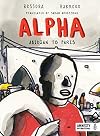
Yes, white people traveling are explorers, heroes, tourists, and Ex-pats. POC are undesirables, villains, terrorists, and illegal migrants. Oh, but also opportunities for exploitation, cheap labor, slavers, and pimps. This book will put you in their shoes for a little while. Hopefully those shoes will stay on in your mind and your actions when you think about migrants and immigrants and inequity.
As Michael Morpurgo states in the introduction, “Here is a book we should all be reading, show more young and old, of whatever country and continent, of whatever religion, or of no religion, of whatever political persuasion or none.” This is especially with migrants and immigrants the target of so much animosity in so many countries around the world. In the United States of America, those immigrants are also one of the mainstays of much of our economy. But skipping the politics for now, this book gets to the heart of the matter, and that is that there are hearts involved here. We are not talking about things, or “others”, we are talking about living and breathing human beings with hearts exactly like ours, with lovers and families and friends and communities just like ours. This book is the story of a man trying to get back together with his wife and child across many of those arbitrary lines we draw on our world.
This is a lose/lose scenario. When Alpha tries the legal route, he learns “When you leave the consulate, one thing’s for sure—you understand that Cote d’Ivoire loves France more than France loves Cote d’Ivoire. But, seeing as Cote d’Ivoire doesn’t love its own people very much either, Ivorians still flee for Europe.” When his only choice of reuniting with his wife and son is the illegal way, he learns the way “…is bristling with con artists. All vying to win you over. With their toothpaste smiles, they boast about the advantages of going with them. But examine their mouths more closely and you’ll see how rotten they are. When you’re relying on someone, you don’t want to know he’s got rotten teeth.” Despite all this, he doesn’t get sucked into the underworld that probably claims many initially well-meaning and hopeful migrants. He tries to stay focused on his goal, and thinks, “I’d rather smile. Smiling means surviving.”
In the stable white privilege of my California world and my citizenship, I can’t imagine how it must feel to make a dangerous journey across at least five national borders through countries that don’t want you around. A journey that could take one eighteen dangerous months from Cote d’Ivoire to Paris and then see you returned to the starting point of despair in one nine hour return flight.
Read this book. It will make you think a little harder about migrants/immigrants regardless of your position on them. Maybe it will even change your position on them. Even if the only thing it does is remind you that you are talking about people, not things, not “other”. That would be a great first step towards a just, equitable world with humane immigration policy.
This book was reviewed for the LibraryThing Early Reviewers program, which supplied a copy of the book for review. show less
As Michael Morpurgo states in the introduction, “Here is a book we should all be reading, show more young and old, of whatever country and continent, of whatever religion, or of no religion, of whatever political persuasion or none.” This is especially with migrants and immigrants the target of so much animosity in so many countries around the world. In the United States of America, those immigrants are also one of the mainstays of much of our economy. But skipping the politics for now, this book gets to the heart of the matter, and that is that there are hearts involved here. We are not talking about things, or “others”, we are talking about living and breathing human beings with hearts exactly like ours, with lovers and families and friends and communities just like ours. This book is the story of a man trying to get back together with his wife and child across many of those arbitrary lines we draw on our world.
This is a lose/lose scenario. When Alpha tries the legal route, he learns “When you leave the consulate, one thing’s for sure—you understand that Cote d’Ivoire loves France more than France loves Cote d’Ivoire. But, seeing as Cote d’Ivoire doesn’t love its own people very much either, Ivorians still flee for Europe.” When his only choice of reuniting with his wife and son is the illegal way, he learns the way “…is bristling with con artists. All vying to win you over. With their toothpaste smiles, they boast about the advantages of going with them. But examine their mouths more closely and you’ll see how rotten they are. When you’re relying on someone, you don’t want to know he’s got rotten teeth.” Despite all this, he doesn’t get sucked into the underworld that probably claims many initially well-meaning and hopeful migrants. He tries to stay focused on his goal, and thinks, “I’d rather smile. Smiling means surviving.”
In the stable white privilege of my California world and my citizenship, I can’t imagine how it must feel to make a dangerous journey across at least five national borders through countries that don’t want you around. A journey that could take one eighteen dangerous months from Cote d’Ivoire to Paris and then see you returned to the starting point of despair in one nine hour return flight.
Read this book. It will make you think a little harder about migrants/immigrants regardless of your position on them. Maybe it will even change your position on them. Even if the only thing it does is remind you that you are talking about people, not things, not “other”. That would be a great first step towards a just, equitable world with humane immigration policy.
This book was reviewed for the LibraryThing Early Reviewers program, which supplied a copy of the book for review. show less
 This review was written for LibraryThing Early Reviewers.
Alpha: Abidjan to Paris is a tragic, graphic novel account of one man's attempt to flee a life of misery in Côte d'Ivoire and follow his wife and child to Paris. After numerous attempts to depart legally, Alpha discovers that the process to obtain a visa is corrupt and impossible for an impoverished man. He researches his options carefully and strikes out with a group of other would-be emigrants. Although he knows the trip will be dangerous, he is nevertheless hopeful that he will be show more reunited with his family and his relatives in France. He fancies himself an "adventurer." His first-person account of his "adventures" devolves into a living nightmare as the journey drags on with a constantly changing group of companions. The prose is simple, and the story is told without embellishment—there is no need for embellishment; the facts are gruesome enough,
"Very quickly, I learn to avoid the barricades. We stop a lot. Abebi is vomiting froth. She has no bile left. She's spitting bubbles of saliva. We've been on the road for nine hours, and we still haven't covered a hundred miles. Darkness falls. Perhaps Abebi will feel better tomorrow. Augustine sucks his fingers in silence. It's a cold night. We sleep huddled together, forming a sort of human radiator. We can't even make a fire—the smoke would betray us."
The illustrations—one or two panels per page, are also spare—mostly shades of black and greys with an occasional splash of color—Alpha's red shirt, the striped soccer jersey of an emigrant hoping to land in Spain and play for Barcelona, a flowered dress. The illustrations set a mood of haste and simplicity, appearing to be marker sketches - almost as if they could have been made on the journey.
An epilogue provides the outcome of the trip from Abidjan to Paris. It will be difficult to look upon the plight of any refugees without reflecting on Alpha's journey. This is a short and powerful, award-winning graphic novel.
My copy of Alpha was provided by LibraryThing Early Reviewers. show less
"Very quickly, I learn to avoid the barricades. We stop a lot. Abebi is vomiting froth. She has no bile left. She's spitting bubbles of saliva. We've been on the road for nine hours, and we still haven't covered a hundred miles. Darkness falls. Perhaps Abebi will feel better tomorrow. Augustine sucks his fingers in silence. It's a cold night. We sleep huddled together, forming a sort of human radiator. We can't even make a fire—the smoke would betray us."
The illustrations—one or two panels per page, are also spare—mostly shades of black and greys with an occasional splash of color—Alpha's red shirt, the striped soccer jersey of an emigrant hoping to land in Spain and play for Barcelona, a flowered dress. The illustrations set a mood of haste and simplicity, appearing to be marker sketches - almost as if they could have been made on the journey.
An epilogue provides the outcome of the trip from Abidjan to Paris. It will be difficult to look upon the plight of any refugees without reflecting on Alpha's journey. This is a short and powerful, award-winning graphic novel.
My copy of Alpha was provided by LibraryThing Early Reviewers. show less
This review was written for LibraryThing Early Reviewers.This graphic novel made up of simple felt-tip drawings follows Alpha Coulibaly as he attempts to migrate from Côte d’Ivoire to France. Alpha's wife and child left earlier to live with a sister-in-law in Paris, and he's not heard from since. The dream of reunion carries Alpha for 18 months as he travels in crowded vehicles across hot deserts, lives and works in refugee camps, and sees the suffering and deaths of the companions he meets along the way, including a child traveling show more unaccompanied. It's a heartbreaking yet matter-of-fact story of what far too many people encounter as refugees today. show less
This review was written for LibraryThing Early Reviewers.Lists
Awards


You May Also Like
Associated Authors
Statistics
- Works
- 11
- Also by
- 1
- Members
- 116
- Popularity
- #169,720
- Rating
- 3.8
- Reviews
- 17
- ISBNs
- 22
- Languages
- 5
- Favorited
- 1
