
James Garlow
Author of Cracking Da Vinci's Code: You've Read the Fiction, Now Read the Facts
About the Author
James L. Garlow is the senior pastor of Skyline Church in San Diego and is heard daily on over 800 radio outlets in a one-minute commentary called The Garlow Perspective. He received his PhD in historical theology from Drew University in Madison, New Jersey. Before that he received degrees from show more Princeton Theological Seminary (ThM.), Asbury Theological Seminary (M.Div.), Southern Nazarene University (BA MA) and Oklahoma Wesleyan University (AA.). Rob Price serves as an assistant professor in the Communication Arts Department at Southwestern Assemblies of God University (SAGU) in Waxahachie, Texas. He worked in pastoral ministry at Lakeview Church in Indianapolis, where he served as media outreach pastor. His educational degrees include a bachelor's degree in broadcasting/journalism from Evangel University in Springfield, Missouri and a master's degree in television and Film from Regent University in Virginia Beach, Virginia. show less
Works by James Garlow
The Da Vinci Codebreaker: An Easy-to-Use Fact Checker for Truth Seekers (2006) 166 copies, 2 reviews
The 21 Irrefutable Laws of Leadership Tested by Time: Those Who Followed Them . . . and Those Who Didn't! (2002) 109 copies, 1 review
Encountering Heaven and the Afterlife: True Stories From People Who Have Glimpsed the World Beyond (2010) 81 copies, 4 reviews
This Precarious Moment: Six Urgent Steps that Will Save You, Your Family, and Our Country (2018) 9 copies
God Will See You Through This: 26 Lessons I Learned from the Father through the Joys and Hurts of Everyday Life (2019) 4 copies
Re Versed 1 copy
How God Saved Civilization 1 copy
4 Audio Tapes - The Covenant 1 copy
Tagged
Common Knowledge
- Other names
- Garlow, James L.
- Birthdate
- 1944-05-25
- Gender
- male
- Education
- Drew University (PhD)
- Occupations
- cleric
Members
Reviews
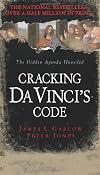
Cracking Da Vinci's Code is by far the most illogical and least objective response to Dan Brown's The Da Vinci Code that I have read. There is no question that, despite Brown's claim of historical accuracy, there are serious inconsistencies between Brown's interpretation of biblical and art literature vs. that of more scholarly authors. Unfortunately, Garlow and Jones present what is at best a knee-jerk reaction to what they perceive as a personal attack on Christianity. Every chapter begins show more and ends with inflammatory rhetorical questions that are in most cases given only cursory answers, and in some cases not even addressed at all. The authors consistently spend entire chapters setting up straw-men, and then end the chapters without even having outright attacked them. The implication is that certain elements of The Da Vinci Code (as Garlow and Jones have explained them) are so absurd that they need no direct refutation. This tactic might work on the uninitiated, however anyone who has spent any time in an academic setting will see right through it. To make matters worse, when Garlow and Jones do attempt to provide evidence to support their arguments, they throw all rules of logic out the window. For example, the authors address the accusation that the Church retaliated against anyone who appeared to question the 'natural order' and brought about the execution of women branded as witches. The authors admit that many women were executed as witches, but deny that the Church was attempting to hold on to its authority. Somehow Garlow and Jones offer this quote from Jenny Gibbons in refutation: "When the Church was at the height of its power (11th to 14th centuries) very few witches died. Persecutions did not reach epidemic levels until after the Reformation, when the Catholic church had lost its position as Europe's indisputable moral authority." Anyone even half paying attention should question how this passage could possibly disprove the idea that an insecure church was retaliating against what it saw as the greatest threat to its authority. In fact, that passage goes a long way the proving exactly what Garlow and Jones want to disprove. Moreover, this faulty logic seems to permeate every page, to the point that by the time I was halfway through, I realized I was reading just to see if a valid argument would be made at all. Sadly, I was disappointed.
In fairness, I'll admit that I thoroughly enjoyed The Da Vinci Code, though I take very little of it as a serious piece of literature - after all, it is fiction. However, as my library will attest, I own many other criticisms of Dan Brown's work and I can say with all honesty that there are far better books available for anyone that would like to explore the history and art of The Da Vinci Code. As an example of how strongly I feel about this, one should note that I have at this point been a paid member of library thing for more than 2 years, and this is so far the only work I have felt the need to review.
As an aside, I would like to point out that a highly positive review was written on Nov 13 2006 by an individual who admitted that she had never actually read The Da Vinci Code itself - and that is exactly the kind of person that Garlow and Jones are hoping will read Cracking Da Vinci's Code. show less
In fairness, I'll admit that I thoroughly enjoyed The Da Vinci Code, though I take very little of it as a serious piece of literature - after all, it is fiction. However, as my library will attest, I own many other criticisms of Dan Brown's work and I can say with all honesty that there are far better books available for anyone that would like to explore the history and art of The Da Vinci Code. As an example of how strongly I feel about this, one should note that I have at this point been a paid member of library thing for more than 2 years, and this is so far the only work I have felt the need to review.
As an aside, I would like to point out that a highly positive review was written on Nov 13 2006 by an individual who admitted that she had never actually read The Da Vinci Code itself - and that is exactly the kind of person that Garlow and Jones are hoping will read Cracking Da Vinci's Code. show less
What will happen to me when I die? Most of us will wrestle with this question at some point in our lives. Garlow, an evangelical pastor, looks at what the Bible teaches about the afterlife. Heaven is only a part of that teaching. He also looks at biblical teaching on hell, angels, demons, Satan, ghosts and communication with deceased loved ones, reincarnation and annihilationism. Garlow includes a lot of anecdotal evidence from near-death experiences, encounters with angels and ghosts, etc. show more The stories of other people’s experiences are the major weakness of the book, as readers must decide how far to trust Garlow’s judgment of the validity of these stories and the truthfulness of their original tellers.
I read an ARC that originally belonged to my father, and it included his marginal notes. I learned as much from my father’s notes as I did from the book. It struck me that this is a trustworthy way to receive communication from my deceased father! show less
I read an ARC that originally belonged to my father, and it included his marginal notes. I learned as much from my father’s notes as I did from the book. It struck me that this is a trustworthy way to receive communication from my deceased father! show less
I really wanted to like this book. As a Christian, Heaven/the afterlife forms a relatively substantial part of my core beliefs. Until the last year or two, I hardly ever thought about it. (I am, after all, just barely in college!) Then I was recommended "Heaven" by Randy Alcorn and it changed my views. I had previously thought of Heaven as a boring place with angels and fluffy clouds and all. Making it "earthlike" but perfect was wonderful news indeed, and I could actually start to look show more forward to it! Then I saw this book available as a giveaway and was glad to get it to see what it would add.
But I was disappointed. I haven't finished the book, and probably won't for a long while. The way I read many things at once, if I'm not actively forcing it to stay on the top of my pile it takes a long time, and I'm "demoting" this. I really did want to like it, but, six chapters into it, I'm shocked at how unBiblical it really seems to be, especially coming out of a publisher as generally good as Bethany House.
I mentioned I have read through the first five chapters, and part of the sixth. In those I have read of several near-death experiences (NDEs), encounters with the dead, ghosts, etc. Garlow has analyzed what we can draw from NDEs and Americans' general views on death. What is conspicuously absent, however, is anything uniquely Christian about the content. Sure, he occasionally throws in a verse, but anyone can do that. Sometimes they're not even good. For example, "The implication is that loved ones ... wait on the other side ... Why should it be any other way for God's children? God has promised: 'Never will I leave you. Never will I forsake you.'" The passage is used way out of its context in Hebrews and being content in our day to day lives! It certainly doesn't fit when dealing with non-believing relatives.
Meanwhile, some of his content is on theologically shaky ground. I do not believe that God typically gives us contact with the dead. Sure, he is capable, and I know he continues to work in this world in supernatural ways. But, generally speaking, I am aware of no support for ghosts in the Bible! The NDEs he likes to use are no better. Most of them are very positive experiences! The Bible is chock full of passages which say very clearly that most people are *not* going to Heaven! If the NDE is really supernatural, we should have far more bad ones than good. The fact that we don't is highly suspicious, and I don't think we should be speculating too much off them. And it's also unbiblical to use them, as he does, to show that God's presence is in Hell in any meaningful way (beyond the mere fact that he's omnipresent).
I better stop rambling and summarize. What I have read of this book is not Biblically based. It starts with the mysterious things we see in popular culture and tries to squeeze the Bible into them. It needs to start directly from the clearer passages of the Bible itself and then use that to explain culture, not vice versa. The theology I see hinted behind the scenes worries me, and I think I have better things to do than this book. Perhaps it will get better (looks more theological later on) as I go deeper over the next years, but I have my doubts. I would instead recommend the book I mentioned earlier, "Heaven" by Randy Alcorn, as a more Scriptural alternative. show less
But I was disappointed. I haven't finished the book, and probably won't for a long while. The way I read many things at once, if I'm not actively forcing it to stay on the top of my pile it takes a long time, and I'm "demoting" this. I really did want to like it, but, six chapters into it, I'm shocked at how unBiblical it really seems to be, especially coming out of a publisher as generally good as Bethany House.
I mentioned I have read through the first five chapters, and part of the sixth. In those I have read of several near-death experiences (NDEs), encounters with the dead, ghosts, etc. Garlow has analyzed what we can draw from NDEs and Americans' general views on death. What is conspicuously absent, however, is anything uniquely Christian about the content. Sure, he occasionally throws in a verse, but anyone can do that. Sometimes they're not even good. For example, "The implication is that loved ones ... wait on the other side ... Why should it be any other way for God's children? God has promised: 'Never will I leave you. Never will I forsake you.'" The passage is used way out of its context in Hebrews and being content in our day to day lives! It certainly doesn't fit when dealing with non-believing relatives.
Meanwhile, some of his content is on theologically shaky ground. I do not believe that God typically gives us contact with the dead. Sure, he is capable, and I know he continues to work in this world in supernatural ways. But, generally speaking, I am aware of no support for ghosts in the Bible! The NDEs he likes to use are no better. Most of them are very positive experiences! The Bible is chock full of passages which say very clearly that most people are *not* going to Heaven! If the NDE is really supernatural, we should have far more bad ones than good. The fact that we don't is highly suspicious, and I don't think we should be speculating too much off them. And it's also unbiblical to use them, as he does, to show that God's presence is in Hell in any meaningful way (beyond the mere fact that he's omnipresent).
I better stop rambling and summarize. What I have read of this book is not Biblically based. It starts with the mysterious things we see in popular culture and tries to squeeze the Bible into them. It needs to start directly from the clearer passages of the Bible itself and then use that to explain culture, not vice versa. The theology I see hinted behind the scenes worries me, and I think I have better things to do than this book. Perhaps it will get better (looks more theological later on) as I go deeper over the next years, but I have my doubts. I would instead recommend the book I mentioned earlier, "Heaven" by Randy Alcorn, as a more Scriptural alternative. show less
 This review was written for LibraryThing Early Reviewers.
Heaven and the Afterlife: What happens the second we die? If heaven is a real place, who will live there? If hell exists, where is it located? What do ... mean? Can the dead speak to us? And more (Y) by James L. Garlow
I received an Advanced Reading Copy of this book called Heaven and the Afterlife by James L.Garlow and Keith Wall (the real title is a whole long sentence...silly) from LibraryThing. My opinion about the book changed as I read it. I feel like the book is suffering from multiple personality disorder. If I just picked it up off a shelf somewhere, I would have left it alone after the first couple of chapters -- there's reasonable theology in the middle (that is, I agree with much of what he show more says at a few points) but the beginning sounds all pop culture cliche and stereotyped about heaven and ghosts and hell, and the end about hell, sounds ... somewhere in between theological and pop culture. The reincarnation stuff, too, comes across as a footnote -- "oh, by the way, there's no such thing as reincarnation." It's as if the author is trying to reach the average person while looking academic with footnotes and name-dropping. To me, it is too "smart" sounding for a layperson, too pop culture for an academic (if you're going to buy the good stuff, you're not likely a believer in the bad stuff).
I can't complain about the quality of the writing -- it's sound enough: flows well, concise yet descriptive, sufficiently articulate. I appreciate that it's academic in its style yet fully accessible.
A few other judgemental comments:
--The first few chapters have drop-in Scripture quotes and God/Jesus references to create the appearance of a Christian perspective, yet nothing is based out of solid theology. Instead he references people who have studied Near Death Experiences (NDE) and anecdotes from people who have had NDE as evidence. Chapters on Angels and Satan are more biblically based, but without the support of other biblical scholars -- he throws in Scripture, but does not discuss it or its context. (Eg, some scholars believe the Is14 passage is about an earthly king, not Satan.)
--gives the illusion of credibility by referencing famous scholars or writers (eg CS Lewis, Shakespeare, Descartes). Yes, the author is educated, but this does not automatically give his thesis credibility.
The "experts" he does cite are often not attributed with recognzied creditentials beyond the books they've written -- why should I trust their judgement? And he references wikipedia! This guy has a PhD? (ie, doesn't a PhD know wikipedia is not a good source in this situation?)
--based on the stereotypes of heaven and hell: heaven is light, with pearly gates and gold-paved streets, a peaceful place; hell is fire and brimstone with tormented souls waiting to eat you. It's pop culture aimed at non-critical thinkers. He never explores what the Bible actually means by "heaven"
--much better book on "Heaven" is Nathan Bierma's Bringing Heaven Down to Earth
--the last chapter's personal anecdotes are the author's attempt to personalize the text, but it gets altar-calling preachy. A reflection of the fact that he workshopped the book as a series of sermons, I suppose. show less
I can't complain about the quality of the writing -- it's sound enough: flows well, concise yet descriptive, sufficiently articulate. I appreciate that it's academic in its style yet fully accessible.
A few other judgemental comments:
--The first few chapters have drop-in Scripture quotes and God/Jesus references to create the appearance of a Christian perspective, yet nothing is based out of solid theology. Instead he references people who have studied Near Death Experiences (NDE) and anecdotes from people who have had NDE as evidence. Chapters on Angels and Satan are more biblically based, but without the support of other biblical scholars -- he throws in Scripture, but does not discuss it or its context. (Eg, some scholars believe the Is14 passage is about an earthly king, not Satan.)
--gives the illusion of credibility by referencing famous scholars or writers (eg CS Lewis, Shakespeare, Descartes). Yes, the author is educated, but this does not automatically give his thesis credibility.
The "experts" he does cite are often not attributed with recognzied creditentials beyond the books they've written -- why should I trust their judgement? And he references wikipedia! This guy has a PhD? (ie, doesn't a PhD know wikipedia is not a good source in this situation?)
--based on the stereotypes of heaven and hell: heaven is light, with pearly gates and gold-paved streets, a peaceful place; hell is fire and brimstone with tormented souls waiting to eat you. It's pop culture aimed at non-critical thinkers. He never explores what the Bible actually means by "heaven"
--much better book on "Heaven" is Nathan Bierma's Bringing Heaven Down to Earth
--the last chapter's personal anecdotes are the author's attempt to personalize the text, but it gets altar-calling preachy. A reflection of the fact that he workshopped the book as a series of sermons, I suppose. show less
This review was written for LibraryThing Early Reviewers.You May Also Like


Associated Authors
Statistics
- Works
- 35
- Members
- 1,660
- Popularity
- #15,485
- Rating
- 3.5
- Reviews
- 38
- ISBNs
- 68
- Languages
- 5
