
Randy Alcorn
Author of The Treasure Principle
About the Author
Randy Alcorn is the founder and director of Eternal Perspectives Ministries and a New York Times bestselling author of 55 books, including Heaven and Face to Face with Jesus. His books have sold over 11 million copies and been translated into more than 70 languages. Randy resides in Oregon with his show more wife, Nanci. show less
Series
Works by Randy Alcorn
Heaven: A Comprehensive Guide to Everything the Bible Says About Our Eternal Home (Clear Answers to 44 Real Questions About the Afterlife, Angels, Resurrection, and the Kingdom of… (2007) 1,082 copies, 2 reviews
The Law of Rewards: Giving what you can't keep to gain what you can't lose. (2003) 247 copies, 1 review
We Shall See God: Charles Spurgeon’s Classic Devotional Thoughts on Heaven (50 Daily Reflections on Eternity from the Prince of Preachers with Additional Insights from Randy… (2011) 147 copies, 4 reviews
Eternal Perspectives: A Collection of Quotations on Heaven, the New Earth, and Life after Death (2012) 53 copies
Ninety Days of God's Goodness: Daily Reflections That Shine Light on Personal Darkness (2011) 48 copies, 2 reviews
It's All About Jesus: A Treasury of Insights on Our Savior, Lord, and Friend (2020) — Author — 42 copies
Pro-Choice or Pro-Life?: Examining 15 Pro-Choice Claims: What Do Facts & Common Sense Tell Us? (2020) 23 copies
Seeing the Unseen, Expanded Edition: A 90-Day Devotional to Set Your Mind on Eternity (2017) 17 copies
天堂: 從聖經了解天堂真貌 2 copies
The Theology of Money Class 2 copies
Your Passport To Heaven 2 copies
السماء 1 copy
Scrisorile Lordului Foulgrin 1 copy
A CHAVE DO TESOURO 1 copy
Princip čistoty 1 copy
Entre la Gracia y la Verdad 1 copy
İffet Cinsen Paklık 1 copy
Store It Up 1 copy
Light of Eternity 1 copy
If God is Good... Faith in the Midst of Suffering and Evil [Small Group Reading and Viewing Guide] 1 copy
Nguyên Tắc Của Cải 1 copy
Investing with Integrity 1 copy
Associated Works
For the Fame of God's Name: Essays in Honor of John Piper (2010) — Contributor — 600 copies, 1 review
Come, Thou Long-Expected Jesus: Experiencing the Peace and Promise of Christmas (2008) — Contributor, some editions; Contributor, some editions — 518 copies, 2 reviews
O Love That Will Not Let Me Go: Facing Death with Courageous Confidence in God (2011) — Contributor — 245 copies, 2 reviews
Why, O God?: Suffering and Disability in the Bible and the Church (2011) — Foreword — 69 copies, 1 review
Tagged
Common Knowledge
- Legal name
- Alcorn, Randy Craig
- Birthdate
- 1954-06-23
- Gender
- male
- Education
- Multnomah Bible College (ThB | 1976)
Multnomah Bible College (MA | 1979)
Western Seminary (1976-1977) - Occupations
- pastor
- Organizations
- Eternal Perspective Ministries
- Awards and honors
- New York Times bestseller
- Short biography
- Randy Alcorn is the founder and director of Eternal Perspective Ministries (EPM), a nonprofit organization dedicated to teaching biblical truth and drawing attention to the needy and how to help them. EPM exists to meet the needs of the unreached, unfed, unborn, uneducated, unreconciled and unsupported people around the world. Randy is the author of 40+ books, including Heaven, Deadline, The Grace and Truth Paradox, The Purity Principle, and Lord Foulgrin's Letters. Before starting EPM in 1990, he co-pastored for fourteen years Good Shepherd Community Church outside Gresham, Oregon. Randy has taught on the part-time faculties of Western Seminary and Multnomah Bible College, both in Portland, Oregon. He lives in Gresham, Oregon with his wife, Nanci, and their Dalmatian, Moses. Randy and Nanci have two married daughters, Karina and Angela, and five grandchildren.
- Nationality
- USA
- Birthplace
- Portland, Oregon, USA
- Places of residence
- Gresham, Oregon, USA
- Map Location
- Oregon, USA
Members
Discussions
Adult Fiction (Red Book Cover with Road and maybe a green city) in Name that Book (January 2018)
Reviews
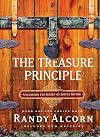
Nice discussion on joy, glorification, and a godly perspective on life, that comes from Jesus' brief parable about finding the treasure in the field. Alcorn, however, exchanges Jesus' wider paradigm of love for the paradigm given to us by bankers and capitalists. Although there are many things I will revisit as I discuss stewardship in the future (e.g., section on Tyranny of Things and principle #5: Giving is the antidote to materialism), Acorn's starting point sets the whole tone of the show more book, and it's not a tone rooted in love.
He's right about so much: Giving can/should be joyful, Giving jump starts our relationship with God, Giving helps us store up heavenly rewards, but what is almost entirely absent is the object of the giving: the poor.
Acorn writes, "We need to feed, clothe, house, and transport our families. But when the basics are taken care of, why shouldn't the rest go toward treasures in heaven?" He also writes, "When we die after devoting our lives to acquiring things, we don't win--we lose." In both cases, he ends with a focus on ourselves instead of on others, that is, his motivation isn't love. The first statement should end with the phrase the poor who need it and the second with the poor lose.
Acorn believes that the biggest roadblock to giving is thinking that earth is our home. He's wrong. The biggest roadblock is our lack of empathy with the poor. For who could live the affluent life of a suburban American with all our excess and know that there are people dying because our money is tied up in HDTV subscriptions? show less
He's right about so much: Giving can/should be joyful, Giving jump starts our relationship with God, Giving helps us store up heavenly rewards, but what is almost entirely absent is the object of the giving: the poor.
Acorn writes, "We need to feed, clothe, house, and transport our families. But when the basics are taken care of, why shouldn't the rest go toward treasures in heaven?" He also writes, "When we die after devoting our lives to acquiring things, we don't win--we lose." In both cases, he ends with a focus on ourselves instead of on others, that is, his motivation isn't love. The first statement should end with the phrase the poor who need it and the second with the poor lose.
Acorn believes that the biggest roadblock to giving is thinking that earth is our home. He's wrong. The biggest roadblock is our lack of empathy with the poor. For who could live the affluent life of a suburban American with all our excess and know that there are people dying because our money is tied up in HDTV subscriptions? show less
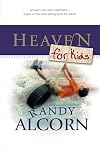
Alcorn's book on Heaven but spoken toward children. Many reviews negatively referenced the amount of speculative material in the original book. If it was off-putting there, it will be no less disagreeable here. I found the speculative material to be food for thought and areas for opening discussions with my children. The book is kid-friendly in language and style.
I have a problem with it referencing too many other books to make its point - esp. C. S. Lewis' Narnia Chronicles. Not only do I show more have to explain difficult text, I have to explain the Narnia stuff, too. Eventually, I just read ahead and paraphrased everything. When my kids are a little older, they can do the Narnia books. This book will go on the kid's shelf so they can get to it easily and look up answers or speculations. show less
I have a problem with it referencing too many other books to make its point - esp. C. S. Lewis' Narnia Chronicles. Not only do I show more have to explain difficult text, I have to explain the Narnia stuff, too. Eventually, I just read ahead and paraphrased everything. When my kids are a little older, they can do the Narnia books. This book will go on the kid's shelf so they can get to it easily and look up answers or speculations. show less
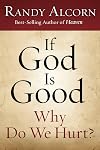
Out of the deepest hurts of the human condition, Randy Alcorn brings into clear focus our most pressing questions about evil and suffering—including those that wrench our souls when we or someone we love is victimized by evil or assaulted by disease.
He faces these questions with seasoned sensitivity, skillful insight, and a heart of compassion. He dodges none of the difficulties, and never lapses into platitudes, hand-wringing, or oversimplification.
On this troubling but inescapable show more topic, you’ll find frank acknowledgment of the inherent limitations that set humanity apart from the God who has none. There’s also generous, real encouragement that brings God nearer in our understanding when we need His comfort the most. And amid our heavy doubts and swirling confusion on this topic, Randy Alcorn points us ultimately toward Jesus as “the only answer bigger than the questions.” show less
He faces these questions with seasoned sensitivity, skillful insight, and a heart of compassion. He dodges none of the difficulties, and never lapses into platitudes, hand-wringing, or oversimplification.
On this troubling but inescapable show more topic, you’ll find frank acknowledgment of the inherent limitations that set humanity apart from the God who has none. There’s also generous, real encouragement that brings God nearer in our understanding when we need His comfort the most. And amid our heavy doubts and swirling confusion on this topic, Randy Alcorn points us ultimately toward Jesus as “the only answer bigger than the questions.” show less
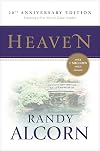
"Other than the Bible itself, this may well be the single most life-changing book you'll ever read." - says a quote prominently displayed on the dust jacket. I remember the first time I looked at this book and saw this quote from a man I have no knowledge of named Stu Weber. I thought to myself "Yeah, right... I'm sure it's a good book, but THAT's gotta be an exaggeration." Now having finished the book, I can agree with Stu Weber's analysis! This has been a life-changing read for me - one show more that I'm sure to revisit again.
The author does a fantastic job of taking deep subject matter and explaining it in a conversational tone, meant to be understood by the masses - he didn't write this just to impress his colleagues. The chapters typically range between 8-12 pages each, making for easily digestible chunks.
There is a deficiency in the church when it comes to teaching about heaven, and a considerable amount of the teaching that does exist makes incorrect assumptions that are unbiblical in nature. It's difficult to have a longing for something that we don't understand and cannot rightly imagine. Randy Alcorn has attempted to correct this, having written an in-depth analysis of what the Bible has to say about heaven - and there's more there than many might assume. Going beyond a simple textual study of the doctrinal side of heaven, Alcorn instructs the reader in how having a right understanding of eternity should impact our day to day lives. This should spark the average reader to transform his thinking, attitude and actions.
Knowing that this present world will end and be resurrected into new heavens and a New Earth should profoundly affect our behavior. Thinking of Heaven leads inevitably to pursuing holiness. Our high tolerance for sin testifies of our failure to prepare for heaven.. show less
The author does a fantastic job of taking deep subject matter and explaining it in a conversational tone, meant to be understood by the masses - he didn't write this just to impress his colleagues. The chapters typically range between 8-12 pages each, making for easily digestible chunks.
There is a deficiency in the church when it comes to teaching about heaven, and a considerable amount of the teaching that does exist makes incorrect assumptions that are unbiblical in nature. It's difficult to have a longing for something that we don't understand and cannot rightly imagine. Randy Alcorn has attempted to correct this, having written an in-depth analysis of what the Bible has to say about heaven - and there's more there than many might assume. Going beyond a simple textual study of the doctrinal side of heaven, Alcorn instructs the reader in how having a right understanding of eternity should impact our day to day lives. This should spark the average reader to transform his thinking, attitude and actions.
Knowing that this present world will end and be resurrected into new heavens and a New Earth should profoundly affect our behavior. Thinking of Heaven leads inevitably to pursuing holiness. Our high tolerance for sin testifies of our failure to prepare for heaven.. show less
Lists
Awards


You May Also Like


Associated Authors
Statistics
- Works
- 123
- Also by
- 9
- Members
- 24,425
- Popularity
- #860
- Rating
- 4.0
- Reviews
- 222
- ISBNs
- 383
- Languages
- 11
- Favorited
- 29


