
Margaret Leech (1893–1974)
Author of Reveille in Washington, 1860-1865
About the Author
Works by Margaret Leech
The feathered nest 1 copy
Historian’s progress 1 copy
Associated Works
The Best Short Stories of 1929 and the Yearbook of the American Short Story (1929) — Contributor — 3 copies
Tagged
Common Knowledge
- Legal name
- Leech, Margaret Kernochan
- Other names
- Pulitzer, Margaret
- Birthdate
- 1893-11-07
- Date of death
- 1974-02-24
- Gender
- female
- Education
- Vassar College (BA|1915)
- Occupations
- novelist
biographer
historian
journalist - Organizations
- American Committee for Devastated France
Algonquin Round Table - Awards and honors
- Pulitzer Prize (History, 1942 and 1960)
- Relationships
- Pulitzer, Ralph (husband)
Pulitzer, Joseph (father-in-law)
Kaufman, Beatrice (co-author)
Broun, Heywood (co-author) - Short biography
- Margaret Leech was born in Newburgh, New York, and earned a B.A. from Vassar College in 1915. She moved to New York City and began her writing career in the advertising and publicity departments of Condé Nast. After World War I, she served on the American Committee for Devastated France and became a journalist and author. She was a member of the famous Algonquin Round Table of wits and writers in Manhattan. In 1928, she married Ralph Pulitzer, publisher of the New York World, with whom she had a daughter. Her father-in-law Joseph Pulitzer had established the Pulitzer Prize by a bequest to Columbia University in 1917. Magaret became the first woman to win the Pulitzer Prize for History and one of only two people to win it twice. The first was in 1942 for Reveille in Washington, 1860-1865, a history of the capital during the American Civil War. The second was for In the Days of McKinley (1960), which also received the Bancroft Prize. Margaret Leech also wrote three novels: The Back of the Book (1924), Tin Wedding (1926), and The Feathered Nest (1928). In 1927, she co-wrote a biography of Anthony Comstock with Heywood Broun, and she collaborated with Beatrice Kaufman on a play, Divided by Three (1934).
- Nationality
- USA
- Birthplace
- Newburgh, New York, USA
- Place of death
- New York, New York, USA
- Associated Place (for map)
- New York, USA
Members
Reviews
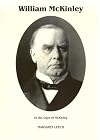
I've been reading biographies of each U.S. president in order, and this is, the 25th book, is the best I have read. In fact it's one of the best books I've ever read...period. It is long, yes, and it is packed with detail. But Margaret Leech is an utterly splendid writer, with the best novelistic style brought to bear on what could have been dry material. Her format and detail gave me the best sense I've ever had of what it must be like to do the job of president day in and day out. It took show more me a long time to read this book, but it was so completely, splendidly worthwhile. (The last chapter reads like a thriller, too.) show less
This is the best bio I have found of Comstock; there are not many others to choose from. I can't say it is unbiased, or is it the truth that is biased against him? Trumbull's biography is equally biased, but in Comstock's favor. Comstock's own books indict him as unbalanced.
What you think of Anthony Comstock depends upon what you think of censorship. If you think smut is dangerous, as he did, then his extremes of behavior are perhaps understandable. And you have to consider the times he show more lived in. But this was a man who thought that scientific treatises on the propagation of marsupials were dangerously lubricious! That unclad mannikins menaced public morality! That smut dealers deserved death. There was never a dull moment when Comstock was official vice hound of the U.S. Post Office. He clashed with some interesting characters. The chapter on George Francis Train is especially entertaining.
Heywood Broun summed him up best when he said, "Any given censor is a fool. The very fact that he is a censor indicates that." This is a book about censorship. The authors were against it. Good for them! show less
What you think of Anthony Comstock depends upon what you think of censorship. If you think smut is dangerous, as he did, then his extremes of behavior are perhaps understandable. And you have to consider the times he show more lived in. But this was a man who thought that scientific treatises on the propagation of marsupials were dangerously lubricious! That unclad mannikins menaced public morality! That smut dealers deserved death. There was never a dull moment when Comstock was official vice hound of the U.S. Post Office. He clashed with some interesting characters. The chapter on George Francis Train is especially entertaining.
Heywood Broun summed him up best when he said, "Any given censor is a fool. The very fact that he is a censor indicates that." This is a book about censorship. The authors were against it. Good for them! show less
A very readable biography about an often neglected President. There are some flaws; Ms. Leech has a tendency to impute motives and ideas on contemporaries of McKinley on the basis of little (or conflicting) evidence, and much of the book s taken up with McKinley's Presidency, glossing over his much longer (if less documented) history in government service. Still Leech makes a very good case the McKinley was very much 'his own man', and far from being a puppet of Mark Hanna, was the dominant show more one in their relationship. McKinley also comes across as a very likable, personable man and President; contemporaries noted that Harrison made an enemy when he gave someone a position, whereas McKinley made a friend when turning them down. Not a bad starting point for someone who wants to know more about McKinley, the last president to serve in the Civil War and the founder of the American Empire. show less
I picked up this book in a used bookstore, with no previous knowledge of it. What a serendipitous choice!
I thoroughly enjoyed this book as a portrait of Washington in the 1860s. The author's choice of words is a bit out of kilter with the words we would use today (her terms of reference to African Americans would not be today's choice) but her description of the electrifying impact of the Emancipation Proclamation could have been written yesterday.
Hats off to Margaret Leech for a show more well-written and engaging book. show less
I thoroughly enjoyed this book as a portrait of Washington in the 1860s. The author's choice of words is a bit out of kilter with the words we would use today (her terms of reference to African Americans would not be today's choice) but her description of the electrifying impact of the Emancipation Proclamation could have been written yesterday.
Hats off to Margaret Leech for a show more well-written and engaging book. show less
Lists
Awards


You May Also Like


Associated Authors
Statistics
- Works
- 7
- Also by
- 1
- Members
- 1,162
- Popularity
- #22,116
- Rating
- 4.0
- Reviews
- 12
- ISBNs
- 21
