
V. S. Alexander
Author of The Taster
About the Author
V.S. Alexander is an historical women's fiction author. His novels include strong female protagonists whose lives carry them on wonderful journeys that involve various dangerous settings. All along the way they learn about life, love, and their inner selves. His first novel was the Magdalen Girls, show more which was set in 1962 Dublin. His second release in February 2018 was entitled, The Taster. His third book is scheduled for release in 2019. (Bowker Author Biography) show less
Series
Works by V. S. Alexander
The Magdalen Girls 1 copy
Associated Works
Tagged
Common Knowledge
- Legal name
- Meeske, Michael
- Other names
- Alexander, V. S.
Wilde, Vincent - Gender
- male
Members
Reviews
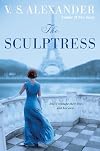
Complex!
Oh my! I was almost speechless by the time I finished this. I was exhausted by the gamit of emotionally charged situations. I felt like I’d run a marathon. I’m still wondering about that. Is being played out like this the sign of a great read or a super complicated read, or both? Or is this the story of a person subjugated by and subjected to social rules made by male traditions taken to another level.
This story of a woman’s life journey begins with fifteen years old Emma show more Lewis, gifted with artistic talents, a young girl with dreams that soured. Of falling in love too young, leading to secrets and tragedies. Eventually Emma becomes a female sculptor striving for acceptance in the hidebound, male dominated world of the arts in the traditional Boston society of the early 1900’s. Beyond that, this is a story of relationships, of marriage, of betrayals and near betrayals, of unforgiveness and heartache, and a woman who has huge regrets and anger.
Eventually Emma marries a doctor, Thomas Evan Swan. Prior to the United States entering the war Tom leaves for the France working at the frontline trenches out of Paris during World War I. Emma eventually goes to Paris. Tom persuades her to use her skills of sculpting to make masks for armed forces personnel whose faces have been severely damaged.
I must admit my first glimpses of Emma were not flattering. Shaped by an overbearing mother, fearful of going against social mores, and a father who quietly encouraged her talent, in many ways Emma seesaws through life either looking for acceptance or standing strong. And when Emma decides to take back, to set right in her own mind that time of anguish in her early years, it’s forceful to the point of shockingly unexpected. Is she meting out punishment or being coldly expedient?
As things come full circle, the idea of self forgiveness, of rising beyond being mired in actions of the past, of exonerating those who’ve deceived her—all this is prominent. There were moments when I found this a hard read. Sometimes frustrating at other times appalling.
The author’s note and research gives gravitas to this most unusual and often harrowing story.
A Kensington Books ARC via NetGalley show less
Oh my! I was almost speechless by the time I finished this. I was exhausted by the gamit of emotionally charged situations. I felt like I’d run a marathon. I’m still wondering about that. Is being played out like this the sign of a great read or a super complicated read, or both? Or is this the story of a person subjugated by and subjected to social rules made by male traditions taken to another level.
This story of a woman’s life journey begins with fifteen years old Emma show more Lewis, gifted with artistic talents, a young girl with dreams that soured. Of falling in love too young, leading to secrets and tragedies. Eventually Emma becomes a female sculptor striving for acceptance in the hidebound, male dominated world of the arts in the traditional Boston society of the early 1900’s. Beyond that, this is a story of relationships, of marriage, of betrayals and near betrayals, of unforgiveness and heartache, and a woman who has huge regrets and anger.
Eventually Emma marries a doctor, Thomas Evan Swan. Prior to the United States entering the war Tom leaves for the France working at the frontline trenches out of Paris during World War I. Emma eventually goes to Paris. Tom persuades her to use her skills of sculpting to make masks for armed forces personnel whose faces have been severely damaged.
I must admit my first glimpses of Emma were not flattering. Shaped by an overbearing mother, fearful of going against social mores, and a father who quietly encouraged her talent, in many ways Emma seesaws through life either looking for acceptance or standing strong. And when Emma decides to take back, to set right in her own mind that time of anguish in her early years, it’s forceful to the point of shockingly unexpected. Is she meting out punishment or being coldly expedient?
As things come full circle, the idea of self forgiveness, of rising beyond being mired in actions of the past, of exonerating those who’ve deceived her—all this is prominent. There were moments when I found this a hard read. Sometimes frustrating at other times appalling.
The author’s note and research gives gravitas to this most unusual and often harrowing story.
A Kensington Books ARC via NetGalley show less
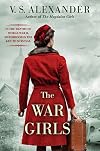
I have read a lot of World War II fiction but nothing I've read has made me feel the despair of the characters who lived through the Blitz in London and the Warsaw Ghetto like this book. It was so well written that I felt like I was part of history instead of just reading about it. I cried with the characters and felt their fear as bombs were dropped in London and the Nazis worked toward their final solution in Warsaw.
The year is 1940 and the Majewski family in Warsaw believe that they will show more be safe even though they are Jewish because the father has a needed job of inspecting meat in a large hotel to make sure that it's safe and kosher. Stefa, her parent and younger brother all live in a nice house in a rich neighborhood. Hannah's older sister was living in London with her aunt and uncle. She left the family because she felt restrained by her life in a Jewish family especially since her parents were starting to look for a husband for her. Hannah didn't totally understand why her sister left but she knew that she missed the closeness that she and Hannah had always had and wonders about her new life in London. Hannah's life in London is wonderful until the fall of 1940 when the Germans started bombing London continuously. For eight months the Luftwaffe dropped bombs on London and other strategic cities across Britain. After a tragic night of bombing, her aunt and uncle are killed and she ends up in the hospital where she is approached by a woman who asks her to join the OAS. They feel like she would be an excellent spy since she knows so many languages and because she used to live in Warsaw. After her training is completed, she gets dropped into Poland with the objective of finding out more about the Germans plans and radioing that information back to London. She's been told not to try to rescue her family but she knows that once she's in Warsaw, she will try to find them.
In Warsaw, all of the Jewish families are removed from their homes. Some of them are immediately sent to the camps and others are forced to live in a small walled off area called the Warsaw ghetto. Life is horrible - there isn't enough room or food and the half a million Jews in the Ghetto are faced with starvation and disease and the constant threat of deportation to the concentration camps. The Nazis cruelty to the Jewish families is continuous and it seems as if they make their lives difficult just for the fun of it. Stefa joins the resistance group in the ghetto and does what she can to ruin the German's plans. She, her sister and a friend from the Aryan part of Warsaw call themselves the War Girls and fight to rescue their family and friends against the overwhelming odds that exist. Will the courage and the love between the two sisters be enough to save their family and loved ones from being sent to the camps or will the German hatred of the Jewish people overwhelm their lives and love for their family?
The characters in this book are extremely well written. The two sisters, Hannah and Stefa are brave beyond words and their love for each other and their family is strong. The author did very deep research into life in the Warsaw ghetto and described it in such detail that I sometimes felt as if I was there. Have tissues close because there will be some tears but the overwhelming feeling at the end of the book is that despite the sadness and loss of the war, love can overcome all the hatred that exists.
Thanks to Edelweiss for a copy of this book to read and review. show less
The year is 1940 and the Majewski family in Warsaw believe that they will show more be safe even though they are Jewish because the father has a needed job of inspecting meat in a large hotel to make sure that it's safe and kosher. Stefa, her parent and younger brother all live in a nice house in a rich neighborhood. Hannah's older sister was living in London with her aunt and uncle. She left the family because she felt restrained by her life in a Jewish family especially since her parents were starting to look for a husband for her. Hannah didn't totally understand why her sister left but she knew that she missed the closeness that she and Hannah had always had and wonders about her new life in London. Hannah's life in London is wonderful until the fall of 1940 when the Germans started bombing London continuously. For eight months the Luftwaffe dropped bombs on London and other strategic cities across Britain. After a tragic night of bombing, her aunt and uncle are killed and she ends up in the hospital where she is approached by a woman who asks her to join the OAS. They feel like she would be an excellent spy since she knows so many languages and because she used to live in Warsaw. After her training is completed, she gets dropped into Poland with the objective of finding out more about the Germans plans and radioing that information back to London. She's been told not to try to rescue her family but she knows that once she's in Warsaw, she will try to find them.
In Warsaw, all of the Jewish families are removed from their homes. Some of them are immediately sent to the camps and others are forced to live in a small walled off area called the Warsaw ghetto. Life is horrible - there isn't enough room or food and the half a million Jews in the Ghetto are faced with starvation and disease and the constant threat of deportation to the concentration camps. The Nazis cruelty to the Jewish families is continuous and it seems as if they make their lives difficult just for the fun of it. Stefa joins the resistance group in the ghetto and does what she can to ruin the German's plans. She, her sister and a friend from the Aryan part of Warsaw call themselves the War Girls and fight to rescue their family and friends against the overwhelming odds that exist. Will the courage and the love between the two sisters be enough to save their family and loved ones from being sent to the camps or will the German hatred of the Jewish people overwhelm their lives and love for their family?
The characters in this book are extremely well written. The two sisters, Hannah and Stefa are brave beyond words and their love for each other and their family is strong. The author did very deep research into life in the Warsaw ghetto and described it in such detail that I sometimes felt as if I was there. Have tissues close because there will be some tears but the overwhelming feeling at the end of the book is that despite the sadness and loss of the war, love can overcome all the hatred that exists.
Thanks to Edelweiss for a copy of this book to read and review. show less
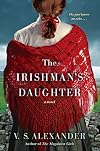
The Irishman's Daughter is one of those rare books that make me wish I could give it more than 5 stars. It is a beautiful, well written, fantastically researched historical fiction novel about a rarely discussed time in Irish history - the Famine of the mid 1800s. I have read a lot about this time period because most of my maternal ancestors immigrated to America from Ireland during this time period. Even though I have read a lot about it, this book gave me more information about the Irish show more farmers and what they went through during this terrible time.
The novel begins in 1845 in County Mayo where Briana lives with her father Brian, the agent to a wealthy English landowner. As the land agent, Brian is responsible for collecting rent from the tenant farmers who grow crops on the land. Tenant farmers sell the oats and rye they grow to pay rent to Sir Thomas, surviving on the potatoes that flourish in the remaining scraps of land. When the potato crop fails, the farmers are left with no food and no way to survive. Briana feels great compassion for the farmers and has been in love with Rory, one of the local tenant farmers, since they were children. As the hunger and disease spread over Ireland, Briana and Rory work to make sure that their families survive despite the odds against them.
Briana was a wonderfully written character. The reader could feel her pain and compassion as the drought worsened and I must admit that I cried along with her several times. Her love of her home and the beauty of the Irish countryside is so strong that I consider Ireland to be one of the main characters in the book. I know that it made me want to take another trip to Ireland to see the beauty of it. This is a book that I won't soon forget.
Thanks to the publisher for a copy of this book to read and review. All opinions are my own. show less
The novel begins in 1845 in County Mayo where Briana lives with her father Brian, the agent to a wealthy English landowner. As the land agent, Brian is responsible for collecting rent from the tenant farmers who grow crops on the land. Tenant farmers sell the oats and rye they grow to pay rent to Sir Thomas, surviving on the potatoes that flourish in the remaining scraps of land. When the potato crop fails, the farmers are left with no food and no way to survive. Briana feels great compassion for the farmers and has been in love with Rory, one of the local tenant farmers, since they were children. As the hunger and disease spread over Ireland, Briana and Rory work to make sure that their families survive despite the odds against them.
Briana was a wonderfully written character. The reader could feel her pain and compassion as the drought worsened and I must admit that I cried along with her several times. Her love of her home and the beauty of the Irish countryside is so strong that I consider Ireland to be one of the main characters in the book. I know that it made me want to take another trip to Ireland to see the beauty of it. This is a book that I won't soon forget.
Thanks to the publisher for a copy of this book to read and review. All opinions are my own. show less
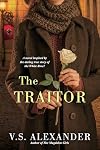
The Traitor is inspired by the Germany's White Rose, a group of people, mostly in their early twenties, who resisted the Nazis from within Germany. The group was uncovered, and the majority of its members were executed. Rather than writing a fictionalized narrative of one of the White Rose members, V.S. Alexander invents one—Natalya, a Russian who immigrated to Germany as a child with her parents, in order to escape the Stalin regime in the Soviet Union.
Natalya begins the novel as a show more relatively naive volunteer, returning for the first time to the Soviet Union as a nurse affiliated with the German Army. While there, she befriends a local woman and her children. At this time, her first questions about the ethics of the Nazi regime arise. When Natalya returns home, she gradually finds herself among others asking similar questions and the novel moves from that point through to the conquest/liberation of Germany by the allied forces.
I found the novel to be highly engaging and not, as it might have been, sensationalistic. Natalya is sincere in her opposition the the Nazis, but none of her decision-making is easy. Reading this novel gives some small taste of what it might be like to make such difficult, potentially life-threatening choices and also gives an excellent overview of WWII as it was experienced in Munich. The Traitor offers reading time well-spent.
I received an electronic review copy of this title from the publisher via NetGalley. The opinions are my own. show less
Natalya begins the novel as a show more relatively naive volunteer, returning for the first time to the Soviet Union as a nurse affiliated with the German Army. While there, she befriends a local woman and her children. At this time, her first questions about the ethics of the Nazi regime arise. When Natalya returns home, she gradually finds herself among others asking similar questions and the novel moves from that point through to the conquest/liberation of Germany by the allied forces.
I found the novel to be highly engaging and not, as it might have been, sensationalistic. Natalya is sincere in her opposition the the Nazis, but none of her decision-making is easy. Reading this novel gives some small taste of what it might be like to make such difficult, potentially life-threatening choices and also gives an excellent overview of WWII as it was experienced in Munich. The Traitor offers reading time well-spent.
I received an electronic review copy of this title from the publisher via NetGalley. The opinions are my own. show less
Lists
Awards

You May Also Like


Associated Authors
Statistics
- Works
- 21
- Also by
- 2
- Members
- 1,084
- Popularity
- #23,705
- Rating
- 3.9
- Reviews
- 70
- ISBNs
- 86
- Languages
- 5