
Caite Dolan-Leach
Author of Dead Letters: A Novel
Works by Caite Dolan-Leach
Tagged
Common Knowledge
- Gender
- female
- Birthplace
- Finger Lakes, New York, USA
- Associated Place (for map)
- New York, USA
Members
Reviews
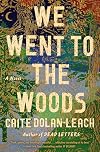
I received an ARC of this book from the publisher in exchange for an honest review. This did not affect my opinion of the book or my review itself.
Our narrator, Mack, is coming off a stint on a reality show that has left America hating her. Desperate to find a fresh start, she is swept up into the idea of The Homestead, an off the grid living community made up of four young adults she has recently become involved with.
Determined to become entirely self-sustaining, so as to fight against show more capitalism and the environmental disasters they feel are imminent, the five strive to create their own Utopia. But as Mack does research on other such communities, she begins to realize that despite their best intentions, they are all, in the end, only human.
I love a book that is both smart and accessible. Dolan-Leach has a lot to say, but it never feels preachy. Both sides of all the issues are shown in all their beauty and ugliness.
These are some believably complicated characters as well, all thinking they are doing what is best for the world, but still driven by human desires and foibles.
There is also this amazing sense of foreboding hanging over the whole book. From the start, Mack lets the readers know something is going to happen, something she feels she should have seen coming. And whether it's what Mack did on the reality show, what happened to the Oneida community that was there before The Homestead, or what is truly going on at The Collective, a large and seemingly thriving self-sustaining community nearby, there are so many twists and surprises.
I thought I might struggle through the parts about growing vegetables or Utopian philosophy, but Dolan-Leach weaves everything together so well that nothing felt difficult or boring to read.
There were a few parts with animals I struggled with, but that's because it made me really sad what happened to the animals, not because those parts weren't well-written or didn't fit into the narrative.
I would definitely recommend this book. It feels almost like a trend now to say a book is like The Secret History (a book I absolutely love), but I can definitely see really positive similarities in the ways Dolan-Leach explores the concepts of intelligence, communities, relationships, and intentions. show less
Our narrator, Mack, is coming off a stint on a reality show that has left America hating her. Desperate to find a fresh start, she is swept up into the idea of The Homestead, an off the grid living community made up of four young adults she has recently become involved with.
Determined to become entirely self-sustaining, so as to fight against show more capitalism and the environmental disasters they feel are imminent, the five strive to create their own Utopia. But as Mack does research on other such communities, she begins to realize that despite their best intentions, they are all, in the end, only human.
I love a book that is both smart and accessible. Dolan-Leach has a lot to say, but it never feels preachy. Both sides of all the issues are shown in all their beauty and ugliness.
These are some believably complicated characters as well, all thinking they are doing what is best for the world, but still driven by human desires and foibles.
There is also this amazing sense of foreboding hanging over the whole book. From the start, Mack lets the readers know something is going to happen, something she feels she should have seen coming. And whether it's what Mack did on the reality show, what happened to the Oneida community that was there before The Homestead, or what is truly going on at The Collective, a large and seemingly thriving self-sustaining community nearby, there are so many twists and surprises.
I thought I might struggle through the parts about growing vegetables or Utopian philosophy, but Dolan-Leach weaves everything together so well that nothing felt difficult or boring to read.
There were a few parts with animals I struggled with, but that's because it made me really sad what happened to the animals, not because those parts weren't well-written or didn't fit into the narrative.
I would definitely recommend this book. It feels almost like a trend now to say a book is like The Secret History (a book I absolutely love), but I can definitely see really positive similarities in the ways Dolan-Leach explores the concepts of intelligence, communities, relationships, and intentions. show less
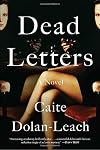
Parents expecting identical twins often decide to get whimsical with their children’s names and Marlon and Nadine Antipova are no different. To paraphrase the pretentious Marlon—his daughters would be the beginning and the end, explaining how Ava and Zelda came to get their names. This family story is the only sentimental one found in Caite Dolan-Leach’s mesmerizing debut, Dead Letters. The novel opens with twenty-five-year-old Ava on a plane, heading home after two years away because show more she’s gotten an email from her mother that her sister is dead. Which sums up relationships in this family- an email telling you your twin sister is dead. Except, given what she knows of Zelda and “feels” about her twin, Ava doesn’t believe it. Zelda’s not dead.
To say the Antipova family is dysfunctional is putting it mildly. The only thing they all have in common is an overwhelming and abiding love of alcohol, which makes the choice of owning a winery understandable but dangerous. This is a fractured family—Dad decamped years ago to a new wife and life in California and Ava lives in Paris pursuing a PhD in literature. Only Zelda and Nadine still live on the family’s vineyard in upstate New York, with Nadine sinking deeper into early onset dementia and Zelda trying to hold the failing family business and her mother together. Zelda and Ava haven’t seen each other or spoken since Zelda slept with Ava’s boyfriend. Now, Ava is back in the home she wants no part of, with a mother who thinks she’s her twin and a father who is his usual charming, but ineffectual self. As she surveys the ashes of the winery’s barn—from which unidentifiable human remains have been pulled—her sense that she is being played by her sister is confirmed when an email arrives…from Zelda.
And so the hunt begins. Zelda has felt abandoned by Ava and now wants her sister to play with her again—in the form of clues as to what she’s done. In this macabre treasure hunt the clues are the letters of the alphabet, in order. Zelda has gone from being ignored by Ava to being in control of her sister. While they wait for dental identification of the remains in the barn, the clues pile up and Ava uses looking like her sister to get private information from doctors and bankers about her life in the last two years. Not surprisingly, none of it is good. All of this, plus missing her twin, has led Zelda to take some extreme action, but what is her game?
Front loading a novel with the kind of drama found in Dead Letters is risky, but Dolan-Leach wins big with her portrayal of the Antipovas. Their love of alcohol is a novel in itself, which could become tiresome, but she uses it to great effect. Even Ava is not immune
But all I can think is that I need a bottle of something, and somewhere quiet to consume it. Loc1262
The fact that this is only one small component of a much larger whole is indicative of a writer with the confidence to go all in with deeply flawed characters and an intricate plot. At any one point, Dead Letters could have gone over the edge into an abyss of the unbelievable, but the guide wire of Dolan-Leach’s writing maintains perfect tension and credibility from start to finish.
Last week I wrote about a novel being like the best college bender you’ve ever been on. In that case, the author seemed as out of control as the reader was going to be reading her novel—but in a good way. Dolan-Leach is much more wicked. She is the person handing you the brew that is about to blow your mind, but she’s stone cold sober and writes a tale of suspense so perfectly balanced that you’ll follow wherever she leads and be happy to wake up with a book hangover. At 30% in I was certain I knew what the surprise was going be. Then again at 50%. And again. Every time I was wrong and that is as good as it gets in the world of book love—sharp, snarky, intelligent writing; a story that bends and twists like taffy and is just as chewy and delicious in its details. It’s only February but for readers Christmas is here because Dead Letters is a literary gift. show less
To say the Antipova family is dysfunctional is putting it mildly. The only thing they all have in common is an overwhelming and abiding love of alcohol, which makes the choice of owning a winery understandable but dangerous. This is a fractured family—Dad decamped years ago to a new wife and life in California and Ava lives in Paris pursuing a PhD in literature. Only Zelda and Nadine still live on the family’s vineyard in upstate New York, with Nadine sinking deeper into early onset dementia and Zelda trying to hold the failing family business and her mother together. Zelda and Ava haven’t seen each other or spoken since Zelda slept with Ava’s boyfriend. Now, Ava is back in the home she wants no part of, with a mother who thinks she’s her twin and a father who is his usual charming, but ineffectual self. As she surveys the ashes of the winery’s barn—from which unidentifiable human remains have been pulled—her sense that she is being played by her sister is confirmed when an email arrives…from Zelda.
And so the hunt begins. Zelda has felt abandoned by Ava and now wants her sister to play with her again—in the form of clues as to what she’s done. In this macabre treasure hunt the clues are the letters of the alphabet, in order. Zelda has gone from being ignored by Ava to being in control of her sister. While they wait for dental identification of the remains in the barn, the clues pile up and Ava uses looking like her sister to get private information from doctors and bankers about her life in the last two years. Not surprisingly, none of it is good. All of this, plus missing her twin, has led Zelda to take some extreme action, but what is her game?
Front loading a novel with the kind of drama found in Dead Letters is risky, but Dolan-Leach wins big with her portrayal of the Antipovas. Their love of alcohol is a novel in itself, which could become tiresome, but she uses it to great effect. Even Ava is not immune
But all I can think is that I need a bottle of something, and somewhere quiet to consume it. Loc1262
The fact that this is only one small component of a much larger whole is indicative of a writer with the confidence to go all in with deeply flawed characters and an intricate plot. At any one point, Dead Letters could have gone over the edge into an abyss of the unbelievable, but the guide wire of Dolan-Leach’s writing maintains perfect tension and credibility from start to finish.
Last week I wrote about a novel being like the best college bender you’ve ever been on. In that case, the author seemed as out of control as the reader was going to be reading her novel—but in a good way. Dolan-Leach is much more wicked. She is the person handing you the brew that is about to blow your mind, but she’s stone cold sober and writes a tale of suspense so perfectly balanced that you’ll follow wherever she leads and be happy to wake up with a book hangover. At 30% in I was certain I knew what the surprise was going be. Then again at 50%. And again. Every time I was wrong and that is as good as it gets in the world of book love—sharp, snarky, intelligent writing; a story that bends and twists like taffy and is just as chewy and delicious in its details. It’s only February but for readers Christmas is here because Dead Letters is a literary gift. show less
This review can also be found on my blog.
disclaimer: I received an advanced copy of this book from NetGalley and the publisher in exchange for review consideration. All of the opinions presented below are my own. All quotes have been taken from the advanced copy and are subject to change upon publication.
We Went to the Woods is a quietly intense novel following five not-quite-yet adults as they leave the comforts of the modern world to create a commune of sorts in upstate New York. All are show more there for different reasons but the narrator of the novel, Mack, is attempting to escape her infamy after a very public experiment goes awry. While the threads of a mystery are woven throughout, this is very much not a thriller; the focus is held much more deeply on the characters and their relationships and introspections than on the plot itself.
Even if most of my days felt useless, days where I came home with some cash felt like they hadn’t been entirely wasted. This depressed me, this feeling that my life mattered only as it was measured out in paper dollars.
Mack herself is quite relatable in some ways: she has fallen into this tightly knit friend group and feels more like an outsider than anything else. As readers, we are not privy to the ins and outs of the four other characters and must slowly figure them out alongside Mack. There is a strong element of voyeurism to this and it was difficult not to be torn between wanting things to settle down and wanting to watch the drama unfurling.
Could I learn to live? The clouds opened up and I let them drench me, waiting to feel something. The intensity I wanted seemed close, attainable -- the chill I felt out here and the coziness I would feel inside, with them? Was that what I hoped for? The distance between two feelings?
I found the parallels drawn between past and present to be quite interesting. Mack begins researching older communities that had struck out from society at large in similar ways. It seems obvious that humanity keeps making the same mistakes rather than learning from those who came before them. Even when drawing comparisons to the Collective, another nearby commune, this much is obvious. Whilst Mack’s group has struck out alone in an effort to avoid existing groups and their mistakes, this means they simply turn around and make their own.
But action is not something that has ever come easily to me; I wait for others’ decisiveness, not choosing for myself. Never recognizing that my passivity, too, is a choice.
There is a lot to be said about the portrayal of sexuality in this novel, and I’m intrigued to see what others have gotten from it. It is clear that Mack’s draw to the others in the group is firmly rooted in the erotic tension they all share. This is something that Mack herself focuses heavily on, literally obsessed with the physical relationships between each of them. There seems to be little delineation as far as gender or sexual orientation goes and most of the focus is on “free love” though it is clear that not all of the characters enjoy participating in non-monogamy. Indeed, it’s clear that any lack of boundaries is more forced than natural, particularly as secret upon secret is slowly unearthed.
But then, how can one small group of committed individuals hope to alter a whole society bent on injustice?
As much as I enjoyed the novel, there were some aspects that I felt could have been handled better. For one, Mack’s infamy is a point of interest throughout the book that I felt was played up a bit too much. It is quite some time before the reader finds out what had happened and in my opinion, the eventual reveal was quite anticlimactic. It felt heavy-handed and clunky in the moment and I felt it could have been woven in better. Aside from that, the reason itself just confused me. Sure, what Mack did was terrible, but I was expecting something so much worse and felt let down by what had promised to be a major confession. Where Mack ends up in the end also irritated me and seemed like a throwaway, but that’s something I can’t get into without spoilers.
“That is the saddest thing I’ve ever heard,” Jack said, musing. “The idea that you don’t have a home inside your own head. That breaks my heart.”
Speaking of which, what an ending it was! While the tension slowly builds throughout the novel and a climax is strongly alluded to (there are a lot of “had I known what I was coming…” reflections), I was still unprepared for where it led. Again this is difficult to discuss without spoilers, but I’d compare Caite Dolan-Leach’s writing to a well-done score: it is easy not to realize how much it is impacting you until you realize you are taut with anxiety and all hell is about to break loose.
“Do you think it’s because of the pesticides?” I asked finally. “I think it’s because of the whole damn world, Wee Mack. There’s nowhere to get away from the poison.”
Anyway, yeah this is a doozy of a read. I wasn’t sure what to think of it as I progressed but I have to say that the last act really cemented things for me. I was actually racing through the pages and dreaded the idea of not finishing before I would have to put it down. There’s much more to think about than what I touched on here, and even what I discussed could be analyzed at great length. I’m really interested in seeing what others have gotten out of this, and definitely recommend it if you’re looking for a slower, more intense read. show less
disclaimer: I received an advanced copy of this book from NetGalley and the publisher in exchange for review consideration. All of the opinions presented below are my own. All quotes have been taken from the advanced copy and are subject to change upon publication.
We Went to the Woods is a quietly intense novel following five not-quite-yet adults as they leave the comforts of the modern world to create a commune of sorts in upstate New York. All are show more there for different reasons but the narrator of the novel, Mack, is attempting to escape her infamy after a very public experiment goes awry. While the threads of a mystery are woven throughout, this is very much not a thriller; the focus is held much more deeply on the characters and their relationships and introspections than on the plot itself.
Even if most of my days felt useless, days where I came home with some cash felt like they hadn’t been entirely wasted. This depressed me, this feeling that my life mattered only as it was measured out in paper dollars.
Mack herself is quite relatable in some ways: she has fallen into this tightly knit friend group and feels more like an outsider than anything else. As readers, we are not privy to the ins and outs of the four other characters and must slowly figure them out alongside Mack. There is a strong element of voyeurism to this and it was difficult not to be torn between wanting things to settle down and wanting to watch the drama unfurling.
Could I learn to live? The clouds opened up and I let them drench me, waiting to feel something. The intensity I wanted seemed close, attainable -- the chill I felt out here and the coziness I would feel inside, with them? Was that what I hoped for? The distance between two feelings?
I found the parallels drawn between past and present to be quite interesting. Mack begins researching older communities that had struck out from society at large in similar ways. It seems obvious that humanity keeps making the same mistakes rather than learning from those who came before them. Even when drawing comparisons to the Collective, another nearby commune, this much is obvious. Whilst Mack’s group has struck out alone in an effort to avoid existing groups and their mistakes, this means they simply turn around and make their own.
But action is not something that has ever come easily to me; I wait for others’ decisiveness, not choosing for myself. Never recognizing that my passivity, too, is a choice.
There is a lot to be said about the portrayal of sexuality in this novel, and I’m intrigued to see what others have gotten from it. It is clear that Mack’s draw to the others in the group is firmly rooted in the erotic tension they all share. This is something that Mack herself focuses heavily on, literally obsessed with the physical relationships between each of them. There seems to be little delineation as far as gender or sexual orientation goes and most of the focus is on “free love” though it is clear that not all of the characters enjoy participating in non-monogamy. Indeed, it’s clear that any lack of boundaries is more forced than natural, particularly as secret upon secret is slowly unearthed.
But then, how can one small group of committed individuals hope to alter a whole society bent on injustice?
As much as I enjoyed the novel, there were some aspects that I felt could have been handled better. For one, Mack’s infamy is a point of interest throughout the book that I felt was played up a bit too much. It is quite some time before the reader finds out what had happened and in my opinion, the eventual reveal was quite anticlimactic. It felt heavy-handed and clunky in the moment and I felt it could have been woven in better. Aside from that, the reason itself just confused me. Sure, what Mack did was terrible, but I was expecting something so much worse and felt let down by what had promised to be a major confession. Where Mack ends up in the end also irritated me and seemed like a throwaway, but that’s something I can’t get into without spoilers.
“That is the saddest thing I’ve ever heard,” Jack said, musing. “The idea that you don’t have a home inside your own head. That breaks my heart.”
Speaking of which, what an ending it was! While the tension slowly builds throughout the novel and a climax is strongly alluded to (there are a lot of “had I known what I was coming…” reflections), I was still unprepared for where it led. Again this is difficult to discuss without spoilers, but I’d compare Caite Dolan-Leach’s writing to a well-done score: it is easy not to realize how much it is impacting you until you realize you are taut with anxiety and all hell is about to break loose.
“Do you think it’s because of the pesticides?” I asked finally. “I think it’s because of the whole damn world, Wee Mack. There’s nowhere to get away from the poison.”
Anyway, yeah this is a doozy of a read. I wasn’t sure what to think of it as I progressed but I have to say that the last act really cemented things for me. I was actually racing through the pages and dreaded the idea of not finishing before I would have to put it down. There’s much more to think about than what I touched on here, and even what I discussed could be analyzed at great length. I’m really interested in seeing what others have gotten out of this, and definitely recommend it if you’re looking for a slower, more intense read. show less
This book is squarely in my wheelhouse and was probably the most engaging read I've picked up this year. I've always loved books with the equivalent of an ensemble cast and where the characters are not necessarily likable. Think Secret History by Donna Tartt, The Girls by Emma Cline, or Lake of Dead Languages by Carol Goodman, and you'll get my drift. If you need to love the characters to enjoy a novel, I don't suggest picking this one up.
Mack, Chloe, Louisa, Beau and Jack are present day show more millenial types who decide to try to live sustainably off the land, growing their own food, and sans electricity or plumbing in upstate New York. As someone who was born in Ithaca and lived upstate for twenty years, I think the characterization of upstate NY and the weather and challenges with living off the land year around were well portrayed. There's a lot of underlying tension, both hostile and sexual, in this book, not simply amongst the five aforementioned, but with the neighboring Collective.
The author does a nice job building suspense throughout though I felt like there were a few unanswered plot points in the end that made for a less than perfectly satisfying reading experience. Nonetheless, I love a dark, suspenseful, character driven novel, and this one checked a lot of boxes for me personally. show less
Mack, Chloe, Louisa, Beau and Jack are present day show more millenial types who decide to try to live sustainably off the land, growing their own food, and sans electricity or plumbing in upstate New York. As someone who was born in Ithaca and lived upstate for twenty years, I think the characterization of upstate NY and the weather and challenges with living off the land year around were well portrayed. There's a lot of underlying tension, both hostile and sexual, in this book, not simply amongst the five aforementioned, but with the neighboring Collective.
The author does a nice job building suspense throughout though I felt like there were a few unanswered plot points in the end that made for a less than perfectly satisfying reading experience. Nonetheless, I love a dark, suspenseful, character driven novel, and this one checked a lot of boxes for me personally. show less
Lists
Awards

You May Also Like


Statistics
- Works
- 3
- Members
- 747
- Popularity
- #34,027
- Rating
- 3.6
- Reviews
- 53
- ISBNs
- 25
- Languages
- 1