
Bruce Holsinger
Author of The Gifted School
About the Author
Bruce W. Holsinger is Assistant Professor of English at the University of Colorado
Series
Works by Bruce Holsinger
Associated Works
The Legitimacy of the Middle Ages: On the Unwritten History of Theory (2010) — Contributor — 31 copies
The Cambridge Companion to Medievalism (Cambridge Companions to Culture) (2016) — Contributor — 29 copies
The Tongue of the Fathers: Gender and Ideology in Twelfth-Century Latin (The Middle Ages Series) (1998) — Contributor — 6 copies
Tagged
Common Knowledge
- Gender
- male
- Nationality
- USA
- Birthplace
- Fairfax, Virginia, USA
- Associated Place (for map)
- Virginia, USA
Members
Reviews
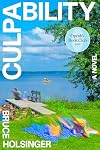
This is an insightful examination of the dangers of unchecked AI wrapped in an engaging story. Holsinger masterfully paces his twisty plot while maintaining tension throughout. His characterizations are nuanced, especially Noah, who narrates with a great deal of humility, humanity and understanding. Holsinger avoids being overly didactic or excessively fearful. Yet he sounds a clear warning. The benefits of AI are clearly seductive but they need to include consideration of the traits we show more recognize as human. show less
Rating: 4.5* of five
The Publisher Says: Set at a summer rental on the Chesapeake Bay, a riveting family drama about moral responsibility in the age of artificial intelligence, from the bestselling author of the “wise and addictive” (New York Times) The Gifted School.
When the Cassidy-Shaws’ autonomous minivan collides with an oncoming car, seventeen-year-old Charlie is in the driver’s seat, with his father, Noah, riding shotgun. In the back seat, tweens Alice and Izzy are on their show more phones, while their mother, Lorelei, a world leader in the field of artificial intelligence, is absorbed in her work. Yet each family member harbors a secret, implicating them each in the accident.
During a weeklong recuperation on the Chesapeake Bay, the family confronts the excruciating moral dilemmas triggered by the crash. Noah tries to hold the family together as a seemingly routine police investigation jeopardizes Charlie’s future. Alice and Izzy turn strangely furtive. And Lorelei’s odd behavior tugs at Noah’s suspicions that there is a darker truth behind the incident—suspicions heightened by the sudden intrusion of Daniel Monet, a tech mogul whose mysterious history with Lorelei hints at betrayal. When Charlie falls for Monet’s teenaged daughter, the stakes are raised even higher in this propulsive family drama that is also a fascinating exploration of the moral responsibility and ethical consequences of AI.
Culpability explores a world newly shaped by chatbots, autonomous cars, drones, and other nonhuman forces in ways that are thrilling, challenging, and unimaginably provocative.
I RECEIVED A DRC FROM THE PUBLISHER VIA NETGALLEY. THANK YOU.
My Review: I am not used to this plot twist. The consequences of a fatal car crash? How many times...the crash was caused by AI doing the driving? *sits bolt upright*
That by itself gets my undivided attention. Of course you'd expect something more complex in the way of complications to sustain a novel-length story. You get it in the form of many, many questions, many...let's call them "obfuscations" by people who should know better, and many evil-intent lies told by scumbags.
It really is a novel of the moment. It's not a nonce book, though it has trappings still new to our culturally changed time. The real, deeper exploration is, as we're ever and always confronted with, how far will you go to protect someone you love? That is an evergreen plot because there is no one answer, no one way to think about your own answer, and a never-ending carnival of reasons the question keeps needing an answer.
Tragedy strikes an ordinary family somewhere every minute of every day. When the world is in the midst of an upheaval like the ever-increasing dominance of AI...which doesn't exist, it's really just a handy term for "data-mining executive algorithms" or some less punchy way of saying "fast, fancy databases"...the question of culpability (and Culpability) is a great way to interrogate personal responsibility. It's always worth interrogating. The parents who broke the rules and trusted AI to backstop them? Culpable. The kid who was, well, a bog-standard overconfident kid? Culpable. The vile scum who unleashed an ill-considered AI tool on the world without effective controls?
Do I even need to type it?
It was a very effective choice, making the mother an AI researcher; it left us without a clean shot at our tech-billionaire villain. (Wouldn't matter to me if he was the kindest, most fleecy-li'l-lambkin of a good guy; anyone involved in this AI nightmare of surveillance and control, with corporations acting as the Stasi, the KGB, and the CIA rolled into one, is guilty of something far worse than mere negligence.) The author's made it impossible to assign all blame in only one place. That means we're all left to think through who owes what to whom, in guilt terms; what happens as a result of our decisions is the root of all family relationships. This family's in crisis, but the way they got there? That started a long time ago.
Really back when these two Millennial solipsists had children; nay, when they hooked up the first time. No one seems to like anyone else in the autonomous van that wrecked; no one seems to know why anyone else feels the way they do; the parents are aware of their kids as entities but don't seem to understand why they're acting the way they are. In many ways, I got the impression that Author Holsinger was using the AI-aided disaster to interrogate whether the family in the van is a family at all. Are they in any fundamentally-human way related, or are they merely biologically similar in statistically significant degrees? The AI plot, then, is both point and pointed; we're asked to think about consequences, and should not stop at the simplest ones.
It's a story familiar in its outlines and so makes that deeper probing far clearer in purpose and execution. Because I've read a zillion family-in-crisis tales, that fact of defending your young was just expected and unsurprising. The last half of the story, after the consequences were pretty much on the table, was where I engaged my deeper reading skills. We're led to contemplate, and to contextualize, love and guilt and privilege and responsibility as a nexus; if you could do that without applying it, and its results, to yourself, I think you're deluded.
It is obvious Culpability was a carefully selected title. Guilt and responsibility twined like snakes around each other, and around duty and obligation. These are topics readers love in their stories because they are truly universal. The ending of this story is not going to please everyone. It is absolutely the best ending to my thinking, because it foregrounds the single greatest weakness of trusting, as in "with your life," A System:
Humans are chaotic, and no system will ever manage chaos. show less
The Publisher Says: Set at a summer rental on the Chesapeake Bay, a riveting family drama about moral responsibility in the age of artificial intelligence, from the bestselling author of the “wise and addictive” (New York Times) The Gifted School.
When the Cassidy-Shaws’ autonomous minivan collides with an oncoming car, seventeen-year-old Charlie is in the driver’s seat, with his father, Noah, riding shotgun. In the back seat, tweens Alice and Izzy are on their show more phones, while their mother, Lorelei, a world leader in the field of artificial intelligence, is absorbed in her work. Yet each family member harbors a secret, implicating them each in the accident.
During a weeklong recuperation on the Chesapeake Bay, the family confronts the excruciating moral dilemmas triggered by the crash. Noah tries to hold the family together as a seemingly routine police investigation jeopardizes Charlie’s future. Alice and Izzy turn strangely furtive. And Lorelei’s odd behavior tugs at Noah’s suspicions that there is a darker truth behind the incident—suspicions heightened by the sudden intrusion of Daniel Monet, a tech mogul whose mysterious history with Lorelei hints at betrayal. When Charlie falls for Monet’s teenaged daughter, the stakes are raised even higher in this propulsive family drama that is also a fascinating exploration of the moral responsibility and ethical consequences of AI.
Culpability explores a world newly shaped by chatbots, autonomous cars, drones, and other nonhuman forces in ways that are thrilling, challenging, and unimaginably provocative.
I RECEIVED A DRC FROM THE PUBLISHER VIA NETGALLEY. THANK YOU.
My Review: I am not used to this plot twist. The consequences of a fatal car crash? How many times...the crash was caused by AI doing the driving? *sits bolt upright*
That by itself gets my undivided attention. Of course you'd expect something more complex in the way of complications to sustain a novel-length story. You get it in the form of many, many questions, many...let's call them "obfuscations" by people who should know better, and many evil-intent lies told by scumbags.
It really is a novel of the moment. It's not a nonce book, though it has trappings still new to our culturally changed time. The real, deeper exploration is, as we're ever and always confronted with, how far will you go to protect someone you love? That is an evergreen plot because there is no one answer, no one way to think about your own answer, and a never-ending carnival of reasons the question keeps needing an answer.
Tragedy strikes an ordinary family somewhere every minute of every day. When the world is in the midst of an upheaval like the ever-increasing dominance of AI...which doesn't exist, it's really just a handy term for "data-mining executive algorithms" or some less punchy way of saying "fast, fancy databases"...the question of culpability (and Culpability) is a great way to interrogate personal responsibility. It's always worth interrogating. The parents who broke the rules and trusted AI to backstop them? Culpable. The kid who was, well, a bog-standard overconfident kid? Culpable. The vile scum who unleashed an ill-considered AI tool on the world without effective controls?
Do I even need to type it?
It was a very effective choice, making the mother an AI researcher; it left us without a clean shot at our tech-billionaire villain. (Wouldn't matter to me if he was the kindest, most fleecy-li'l-lambkin of a good guy; anyone involved in this AI nightmare of surveillance and control, with corporations acting as the Stasi, the KGB, and the CIA rolled into one, is guilty of something far worse than mere negligence.) The author's made it impossible to assign all blame in only one place. That means we're all left to think through who owes what to whom, in guilt terms; what happens as a result of our decisions is the root of all family relationships. This family's in crisis, but the way they got there? That started a long time ago.
Really back when these two Millennial solipsists had children; nay, when they hooked up the first time. No one seems to like anyone else in the autonomous van that wrecked; no one seems to know why anyone else feels the way they do; the parents are aware of their kids as entities but don't seem to understand why they're acting the way they are. In many ways, I got the impression that Author Holsinger was using the AI-aided disaster to interrogate whether the family in the van is a family at all. Are they in any fundamentally-human way related, or are they merely biologically similar in statistically significant degrees? The AI plot, then, is both point and pointed; we're asked to think about consequences, and should not stop at the simplest ones.
It's a story familiar in its outlines and so makes that deeper probing far clearer in purpose and execution. Because I've read a zillion family-in-crisis tales, that fact of defending your young was just expected and unsurprising. The last half of the story, after the consequences were pretty much on the table, was where I engaged my deeper reading skills. We're led to contemplate, and to contextualize, love and guilt and privilege and responsibility as a nexus; if you could do that without applying it, and its results, to yourself, I think you're deluded.
It is obvious Culpability was a carefully selected title. Guilt and responsibility twined like snakes around each other, and around duty and obligation. These are topics readers love in their stories because they are truly universal. The ending of this story is not going to please everyone. It is absolutely the best ending to my thinking, because it foregrounds the single greatest weakness of trusting, as in "with your life," A System:
Humans are chaotic, and no system will ever manage chaos. show less
Well-written, intense novel that could be used in an A.I. ethics or philosophy class. It poses many different perspectives, with everyone culpable in the sense that they acted as though the A.I. negated any responsibility for behavior. At times, the characters are simply talking heads narrating nuances and arguments. These are issues we have to grapple with, along with the trend of sloppiness and gloss of displaying 'good' behavior without the deep moral core needed for one's adult awareness show more and willingness to act responsibly.
Universal behavior plays out in ancient ways -- greed is greed, selfishness rules almost always.
Over and over again, the fact is that computers record everything, and regardless of what you want or reasonably expect. It's greased lightning. Perhaps we'll let it destroy us. Maybe enough of us will unite for common cause. I don't think the future is predetermined.
Poor Alice is a mess. show less
Universal behavior plays out in ancient ways -- greed is greed, selfishness rules almost always.
Over and over again, the fact is that computers record everything, and regardless of what you want or reasonably expect. It's greased lightning. Perhaps we'll let it destroy us. Maybe enough of us will unite for common cause. I don't think the future is predetermined.
Poor Alice is a mess. show less
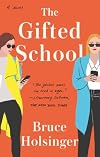
This is a novel that feels close to home. Four women meet in a baby swim class in a fictional town in Colorado (which sounded a lot like Boulder -and the author admits he based the fictional town on Boulder) that is upper middle class, liberal and mostly white. It is announced that a new gifted school will be opening encompassing four school districts and students will need to test to make the first cut. The four women all have 11 year old children who go to various schools. The competition show more to get into the gifted school makes them do crazy things and strains their friendships, their marriages and their relationships with their kids. It also does a number on their kids. There's crazy dad soccer competition too and a Facebook group that forms in opposition to the gifted school and the elitism it represents. There's also an 11 year old whose Peruvian mother and grandmother clean the houses of the other women who is very smart and gifted at origami. The boy is held up at an informational session about the school as a model of diversity- his grandmother feels the school administrators are using him The book explores a lot of hot button issues and was an enjoyable, if sometimes uncomfortable read. show less
Lists
Awards


You May Also Like


Associated Authors
Statistics
- Works
- 12
- Also by
- 4
- Members
- 2,519
- Popularity
- #10,188
- Rating
- 3.7
- Reviews
- 129
- ISBNs
- 73
