
Nancy Bilyeau
Author of The Crown
About the Author
Image credit: http://www.nancybilyeau.com/
Series
Works by Nancy Bilyeau
Tagged
Common Knowledge
- Gender
- female
- Nationality
- USA
- Places of residence
- New York, USA
- Associated Place (for map)
- New York, USA
Members
Reviews

Emancipated heroine, full of pseudo-feminist contemporary remarks: Check
Said heroine is a reluctant part of the richest family in the USA: Check
Said heroine has a superficial sister: Check
Said heroine has a strict mother: Check
Said heroine was once engaged to her sister’s evil-looking fiance.
Said fiance has a strict mother n.2:Check
New York setting in the year of Our Lord 1911 because we definitely need to be fashionable and pretend we are writing a Great Gatsby for the modern audience: show more Check
Bookish references because we need to show we are educated: Check
Secrets in a coastal area: Check
More secrets in a coastal area that are implausible and horribly presented but what the heck, let’s do it! : Check
Instant love because that’s how we roll: Check
The wealthy girl disregards everything for the love of an artist: Check
More instant love:Check
Maidens (or not…) ‘’melting in broad chests...:” : Check
...No way...Abandoned at 30% in fury that a mediocre writer had the audacity to think that a 350-plus page ‘’novel’’ of naive romance and pseudo-magical realism that tried to be The Great Gatsby, The Night Circus and The Age of Innocence could actually work. I am sure it has worked and will work for many, but for me, those were three days of my life I will never get back…
How could I think that the writer of the snoozefest ‘’The Blue’’ could actually produce something of quality is beyond me. It must have been the Christmas champagne…
Many thanks to Endeavour and NetGalley for the ARC in exchange for an honest review. show less
Said heroine is a reluctant part of the richest family in the USA: Check
Said heroine has a superficial sister: Check
Said heroine has a strict mother: Check
Said heroine was once engaged to her sister’s evil-looking fiance.
Said fiance has a strict mother n.2:Check
New York setting in the year of Our Lord 1911 because we definitely need to be fashionable and pretend we are writing a Great Gatsby for the modern audience: show more Check
Bookish references because we need to show we are educated: Check
Secrets in a coastal area: Check
More secrets in a coastal area that are implausible and horribly presented but what the heck, let’s do it! : Check
Instant love because that’s how we roll: Check
The wealthy girl disregards everything for the love of an artist: Check
More instant love:Check
Maidens (or not…) ‘’melting in broad chests...:” : Check
...No way...Abandoned at 30% in fury that a mediocre writer had the audacity to think that a 350-plus page ‘’novel’’ of naive romance and pseudo-magical realism that tried to be The Great Gatsby, The Night Circus and The Age of Innocence could actually work. I am sure it has worked and will work for many, but for me, those were three days of my life I will never get back…
How could I think that the writer of the snoozefest ‘’The Blue’’ could actually produce something of quality is beyond me. It must have been the Christmas champagne…
Many thanks to Endeavour and NetGalley for the ARC in exchange for an honest review. show less
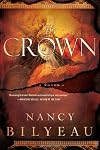
The mystery of The Crown unravels slowly and deliberately, keeping you drawn into the machinations of the politicians surrounding Henry VIII, and wanting desperately to stop the dissolution of the monasteries, that ended the work of great houses of learning and healing in England and started "The Pilgrimage of Grace," a rebellion that should have succeeded. Unfortunately, it did not. The Crown shows us life in a priory as all wait for Cromwell's creatures to come and 'examine' the life and show more work of the order, take inventory and take it for themselves or the king; what happens when a murder leads to the discovery of a legend, and the aftermath. Ms. Bilyeau has done such a wonderful job in her research and the weaving of a good mystery, that I actually hated Henry VIII, Anne Boleyn, Thomas Cromwell and Bishop Stephen Gardinier and was repulsed by their characters. Henry and Anne appear briefly, Cromwell not at all, but the fallout of Henry's obssession for Anne Boleyn and ultimate and complete power is palpable.
This is one of the best novels I've read about this period and I'm glad that someone has finally taken a sympathetic lens to the plight of the religious who were turned out of their homes and their livelihoods so that Henry VIII, using corruption and vice as an excuse, could seize the wealth and property of monasteries that provided education, shelter and healing for many, in addition to being centers of worship and spirituality. Combine that with charismatic characters like Sister Joanna Stafford and Geoffrey Scovill, Brother Edmund, and a bit of fantasy and mystery, you have a wonderful, compelling, story like "The Crown." Can't wait to read "The Chalice," which was picked up recently and continues the exploits of Joanna. show less
This is one of the best novels I've read about this period and I'm glad that someone has finally taken a sympathetic lens to the plight of the religious who were turned out of their homes and their livelihoods so that Henry VIII, using corruption and vice as an excuse, could seize the wealth and property of monasteries that provided education, shelter and healing for many, in addition to being centers of worship and spirituality. Combine that with charismatic characters like Sister Joanna Stafford and Geoffrey Scovill, Brother Edmund, and a bit of fantasy and mystery, you have a wonderful, compelling, story like "The Crown." Can't wait to read "The Chalice," which was picked up recently and continues the exploits of Joanna. show less
‘’London is alive. And so am I.’’
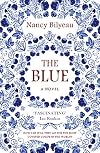
18th century, England. Genevieve comes from a Huguenot family that found shelter in England, persecuted in their own country due to their religious beliefs. In a time when the war with France is raging, Genevieve has to fight her own battle to acquire the right to be acknowledged for her talent to create beauty. Apart from the military conflict, there is an ongoing race for the finest porcelain and the creation of the most unique and powerful of show more colors. The colour blue, the symbol of divine perfection, authority, eternal beauty. The colour of the sky, the color of the Virgin Mary. Genevieve finds herself in a web of secrets and espionage, in an era when being a woman was already dangerous by itself.
The background of this novel by Nancy Bilyeau is very interesting and the era is beautifully depicted. The reader definitely acquires a vivid image of the circumstances that used to influence one of the most turbulent eras in European History and the first steps of an elaborate version of espionage and warfare, the social background is also successfully depicted with references to the position of women in the British and French society, especially the young and less privileged ones who had to use their minds and courage to escape a low position on the social ladder. There are many interesting facts on the subject of porcelain and its significance in Britain, France and Germany as well as the importance of blue in the field of Art and its impact on sovereignty. I appreciated the references to Newton's theories on colours and the influence of Jean-Jacques Rousseau's works in the era.
All’s well and good, then? Not exactly. Yes, the painted canvas of the story is elaborate and faithful to the era, the pace is satisfying and the premise interesting and engaging. The problem is, in my opinion, that we’ve seen everything before. Those of us who consider Historical Fiction as their favourite genre (and by Historical Fiction I don’t mean romances but ACTUAL Literature...) have witnessed the involvement of an underprivileged young woman with a talent in Art or Culture in general in a game of politics and power. So basically, this is one of those stories that becomes a little more appealing by the theme of how Art can be used to a country’s purposes and benefit. Nothing more, nothing less.
The writing is very good in the descriptive passages and the sequence of events is clearly drawn out, rich and detailed without being repetitive. However, everything is predictable. Too predictable, in fact. Again, if you have read a significant number of quality books falling into this genre, you’ll probably be able to guess the continuation of the story, even its conclusion. However, my major complaint is the dialogue. I don’t know how to describe it with accuracy but it is a weird mix of period language and contemporary phrases that felt wooden, strange and unnatural. Especially the interaction between Genevieve and her romantic interest were cringeworthy. Despite my well-known aversion to anything remotely related to romance, I could have stomached this relationship if it weren’t for the millions of ‘’I love you’’ every other page. It was this element of romance that made the heroine of the story behave like a naive schoolgirl and diminished my interest in the conclusion of the novel. In addition, the characters failed to impress me. In my opinion, Genevieve is the well-known figure of the feisty young woman who interacts with monarchs and peasants alike, always being wrong, always admired for her fearlessness but the dialogue was not adequately written to justify this. To tell you the truth, I've seen much more interesting, spirited heroines over the years. This one is not a character I will remember after a while.
In my opinion, this is a moderately satisfying Historical Fiction novel. Its greatest advantage the depiction of the era, its greatest weaknesses the dialogue and the development of the characters. It is average. I don't regret reading it and I recommend it but I found nothing new or memorable and 3 stars is the most I can give.
Many thanks to PigeonholeHQ and Nancy Bilyeau for the serialized ARC.
My reviews can also be found on https://theopinionatedreaderblog.wordpress.com show less
18th century, England. Genevieve comes from a Huguenot family that found shelter in England, persecuted in their own country due to their religious beliefs. In a time when the war with France is raging, Genevieve has to fight her own battle to acquire the right to be acknowledged for her talent to create beauty. Apart from the military conflict, there is an ongoing race for the finest porcelain and the creation of the most unique and powerful of show more colors. The colour blue, the symbol of divine perfection, authority, eternal beauty. The colour of the sky, the color of the Virgin Mary. Genevieve finds herself in a web of secrets and espionage, in an era when being a woman was already dangerous by itself.
The background of this novel by Nancy Bilyeau is very interesting and the era is beautifully depicted. The reader definitely acquires a vivid image of the circumstances that used to influence one of the most turbulent eras in European History and the first steps of an elaborate version of espionage and warfare, the social background is also successfully depicted with references to the position of women in the British and French society, especially the young and less privileged ones who had to use their minds and courage to escape a low position on the social ladder. There are many interesting facts on the subject of porcelain and its significance in Britain, France and Germany as well as the importance of blue in the field of Art and its impact on sovereignty. I appreciated the references to Newton's theories on colours and the influence of Jean-Jacques Rousseau's works in the era.
All’s well and good, then? Not exactly. Yes, the painted canvas of the story is elaborate and faithful to the era, the pace is satisfying and the premise interesting and engaging. The problem is, in my opinion, that we’ve seen everything before. Those of us who consider Historical Fiction as their favourite genre (and by Historical Fiction I don’t mean romances but ACTUAL Literature...) have witnessed the involvement of an underprivileged young woman with a talent in Art or Culture in general in a game of politics and power. So basically, this is one of those stories that becomes a little more appealing by the theme of how Art can be used to a country’s purposes and benefit. Nothing more, nothing less.
The writing is very good in the descriptive passages and the sequence of events is clearly drawn out, rich and detailed without being repetitive. However, everything is predictable. Too predictable, in fact. Again, if you have read a significant number of quality books falling into this genre, you’ll probably be able to guess the continuation of the story, even its conclusion. However, my major complaint is the dialogue. I don’t know how to describe it with accuracy but it is a weird mix of period language and contemporary phrases that felt wooden, strange and unnatural. Especially the interaction between Genevieve and her romantic interest were cringeworthy. Despite my well-known aversion to anything remotely related to romance, I could have stomached this relationship if it weren’t for the millions of ‘’I love you’’ every other page. It was this element of romance that made the heroine of the story behave like a naive schoolgirl and diminished my interest in the conclusion of the novel. In addition, the characters failed to impress me. In my opinion, Genevieve is the well-known figure of the feisty young woman who interacts with monarchs and peasants alike, always being wrong, always admired for her fearlessness but the dialogue was not adequately written to justify this. To tell you the truth, I've seen much more interesting, spirited heroines over the years. This one is not a character I will remember after a while.
In my opinion, this is a moderately satisfying Historical Fiction novel. Its greatest advantage the depiction of the era, its greatest weaknesses the dialogue and the development of the characters. It is average. I don't regret reading it and I recommend it but I found nothing new or memorable and 3 stars is the most I can give.
Many thanks to PigeonholeHQ and Nancy Bilyeau for the serialized ARC.
My reviews can also be found on https://theopinionatedreaderblog.wordpress.com show less
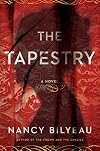
A fun read. Bilyeau provides a compelling heroine, interesting plot, and wonderfully detailed setting. Although I'm thoroughly burned out on Tudor stories, this one kept my interest and provided a different take on the tragic story of Katherine Howard. I particularly appreciated the era-sensitive attitude toward the occult and magic--something most authors avoid unless they write fantasy or the story is about witches and heretics.
A note on the narration: This was the audio book edition and show more I found the narrator easy to listen to. She spoke in a British accent and used a light touch with the voices, trying to make distinctions, but not create separate characters.
I got this book free through an Early Reader program, but that did not affect my review. show less
A note on the narration: This was the audio book edition and show more I found the narrator easy to listen to. She spoke in a British accent and used a light touch with the voices, trying to make distinctions, but not create separate characters.
I got this book free through an Early Reader program, but that did not affect my review. show less
 This review was written for LibraryThing Early Reviewers.
Lists
Awards


You May Also Like


Statistics
- Works
- 10
- Members
- 1,233
- Popularity
- #20,820
- Rating
- 3.9
- Reviews
- 136
- ISBNs
- 66
- Languages
- 5
- Favorited
- 1
