
Graham McNeill
Author of False Gods
About the Author
Series
Works by Graham McNeill
Freedom's Home or Glory's Grave 2 copies
Anioł Exterminatus 1 copy
Ambasador. T. 1 1 copy
SUPERIA: Dawn of the Spirits 1 copy
Associated Works
Editors' Selection May 2014 eBundle (Warhammer 40,000, The Horus Heresy) (2014) — Contributor — 1 copy
Tagged
Common Knowledge
- Birthdate
- 1971
- Gender
- male
- Education
- Glasgow Caledonian University (BSc|Building Surveying)
- Occupations
- games developer
building surveyor
writer - Organizations
- Games Workshop (games developer)
Riot Games (principal narrative writer) - Nationality
- UK
- Birthplace
- Glasgow, Scotland, UK
- Places of residence
- Glasgow, Scotland, UK
Beverly Hills, California, USA - Map Location
- Scotland, UK
Members
Reviews

I remember reading this when it came with the pre-order for Macragge's Honour and either I didn't finish it, was too enamoured with Neil Roberts' art, or John Banks brilliant narration makes a hell of a difference, because i remember enjoying it quite a lot, but not in the way I just did with my hair blow back and an exploding plasma core teleported into my brain!
Jumping back to even before Ullanor, this follows the glorious times that Horus laments losing after the Emperor returned to show more Terra, making him the Warmaster, as Lupercal and the Master of Mankind go father and son hogwild on one of the most ridiculous and epic descriptions of an Ork armada and Scrapworld.
We are given an insight to the Mournival that was with Sejanus, including some rather suspicious traditions and a strange veneration of Cthonian gang culture that suggest levels of superstition and division were always a part of the Lunar Wolves.
I am very immature and couldn't stop giggling about Sejanus' Glory Squad, which conjures the image of a Queer chapter of the Proud Boys.
The action is out of this world and truly feels Primarch+ and godlike in the ludicrous exploits of the toxic positivity father and son duo, including glimpses at the phenemonal level of the Emperor's power and how that relates to metaphysical questions.
Honestly, I absolutely adored this and felt it was some of McNeill's best work at an overarching narrative and action story. Bloody marvellous! show less
Jumping back to even before Ullanor, this follows the glorious times that Horus laments losing after the Emperor returned to show more Terra, making him the Warmaster, as Lupercal and the Master of Mankind go father and son hogwild on one of the most ridiculous and epic descriptions of an Ork armada and Scrapworld.
We are given an insight to the Mournival that was with Sejanus, including some rather suspicious traditions and a strange veneration of Cthonian gang culture that suggest levels of superstition and division were always a part of the Lunar Wolves.
I am very immature and couldn't stop giggling about Sejanus' Glory Squad, which conjures the image of a Queer chapter of the Proud Boys.
The action is out of this world and truly feels Primarch+ and godlike in the ludicrous exploits of the toxic positivity father and son duo, including glimpses at the phenemonal level of the Emperor's power and how that relates to metaphysical questions.
Honestly, I absolutely adored this and felt it was some of McNeill's best work at an overarching narrative and action story. Bloody marvellous! show less
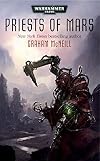
I have to admit I did not expect much form this book, but it literary blew me away.
When it comes to W40K (especially older stories) it usually narrows down to a group of characters (Space Marines, guards, Inquisition etc) facing a very unfavorable odds (and not always surviving the ordeal). It is always action oriented, with mysteries yes but always of such magnitude that they are always in the background but no one is sure what their role is. It is always action packed but not that detailed show more on characters or setting. Assumption was that reader is familiar with the setting so not much accent was on this.
Man, how this changed in last several years. I will just mention Horus Heresy, Watchers of the Throne or Vaults of Terra as some of the excellent epic scale Warhammer 30/40K story lines that come to my mind (also they compare well because they are all series which is case here).
Forges of Mars series for me takes place amongst some of the best W40K works.
Story (first installment in three book series) is epic - Mechanicum leader/high-priest Kotov tries to redeem himself and replenish his fortunes by launching expedition into Halo Scar, mysterious cluster that is out of reach even for most powerful psykers. Place where sheer gravitational forces tear everything apart on a very approach. Kotov wants to follow the path of the last known Mechanicum fleet that went into Halo Scar and left nothing but mysterious message of finding the great riches. Together with Kotov we see enormous expedition gathering - from fabulous Speranza, forge ship of ages past, to Roboute, intrepid Rouge Trader intent on conquering the unknown space and making empire of his own outside the Empire itself, unfortunate dock workers that get recruited as workforce on expedition ships in a manner of age of sails, Guard troops to Mechanicum Skitarii (Dahan is just wow) and Space Marines working on finding ways to regain lost honor after a deadly losses experienced in their last engagement.
Internal working of various organizations, interaction between the characters, the very out-of-this-world description of Mechanicum, the sheer level of cyberpunkism and amalgamation of biological and mechanical/digital - I mean, just the incident involving the Titans and their Princeps', man!
And this is just the tip of the iceberg (I dont want to mention details about Galatea or Speranza itself).
This is wonderful adventure story, that starts slowly but with every page it gains momentum. Ending is fantastically done (although it is a cliffhanger since, as I said before, this is part of the series).
Highly recommended to fans of W40K but also to any fan of space opera and SF adventures in general. show less
When it comes to W40K (especially older stories) it usually narrows down to a group of characters (Space Marines, guards, Inquisition etc) facing a very unfavorable odds (and not always surviving the ordeal). It is always action oriented, with mysteries yes but always of such magnitude that they are always in the background but no one is sure what their role is. It is always action packed but not that detailed show more on characters or setting. Assumption was that reader is familiar with the setting so not much accent was on this.
Man, how this changed in last several years. I will just mention Horus Heresy, Watchers of the Throne or Vaults of Terra as some of the excellent epic scale Warhammer 30/40K story lines that come to my mind (also they compare well because they are all series which is case here).
Forges of Mars series for me takes place amongst some of the best W40K works.
Story (first installment in three book series) is epic - Mechanicum leader/high-priest Kotov tries to redeem himself and replenish his fortunes by launching expedition into Halo Scar, mysterious cluster that is out of reach even for most powerful psykers. Place where sheer gravitational forces tear everything apart on a very approach. Kotov wants to follow the path of the last known Mechanicum fleet that went into Halo Scar and left nothing but mysterious message of finding the great riches. Together with Kotov we see enormous expedition gathering - from fabulous Speranza, forge ship of ages past, to Roboute, intrepid Rouge Trader intent on conquering the unknown space and making empire of his own outside the Empire itself, unfortunate dock workers that get recruited as workforce on expedition ships in a manner of age of sails, Guard troops to Mechanicum Skitarii (Dahan is just wow) and Space Marines working on finding ways to regain lost honor after a deadly losses experienced in their last engagement.
Internal working of various organizations, interaction between the characters, the very out-of-this-world description of Mechanicum, the sheer level of cyberpunkism and amalgamation of biological and mechanical/digital - I mean, just the incident involving the Titans and their Princeps', man!
And this is just the tip of the iceberg (I dont want to mention details about Galatea or Speranza itself).
This is wonderful adventure story, that starts slowly but with every page it gains momentum. Ending is fantastically done (although it is a cliffhanger since, as I said before, this is part of the series).
Highly recommended to fans of W40K but also to any fan of space opera and SF adventures in general. show less
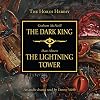
The Lightning King by Dan Abnett
“What are you afraid of? What are you really afraid of?”
This was the first Horus Heresy audio drama (possibly the first one from the Black Library?), released as a double CD: The Dark King and The Lightning Tower by Dan Abnett and Graham McNeill (2007). This was a year after the opening trilogy and the same year as The Flight of the Eisenstein, so word had literally just reached Terra or maybe Magnus had already sent his naughty message, the release order show more and timeline are wild, but the point I'm making is that it's interesting that this story jumps to Dorn preparing the Palace of Terra for the eventual siege (as well as The Dark King jumping back to pre-Heresy tensions with Curze, referenced in this story). This really marked the beginning of jumping around in time.
Dorn, Primarch of the Imperial Fists, has been recalled to Terra to prepare for the impending siege as building things up is his Special Son Skill (as knocking things down is Perturabo's). He is very sad about making the pretty palace ugly, worries about what made Horus turn and how he would fair against the Warmaster, and cringes at the memory of that time Curze nearly beat him to death. Evil Eliminster has a weird little chat with him and pokes the memory of getting curb-stomped, flashing Nighthaunter's fancy tarot deck. Symbolism!
I wrote a really scathing review on Twitter a few years ago when I attempted a re-read of the series, while going through a tenderqueer phase brought on by everything already wrong with my brain and Twitter brain rot, which I don't disagree with in spirit. I'll be folding elements of that in with this review, albeit somewhat tempered.
I enjoyed the conversation between Dorn and Malcador. There is an interesting play of their respective positions and personalities, as well as the portentous discussion of the tarot and Curze's visions (which the Emperor gaslit him about, lest we forget). This has the drama, tragedy, and mythos I want from the Horus Heresy.
The writing is great, which I have come to expect from Abnett, weird misogynistic, puritanical inner-monologues aside, but it is presenting a lot of bleak stuff as positive at face value. This is because it's Dorn's perspective, admittedly, but in this story he is cast as the honourable, if afraid and questioning, son doing his duty. There is no question of his perspective being wrong, so it's a big ask for the casual reader and those unaware of, or flatly refute, the satirical nature of the Warhammer 40K (and 30K) galaxy. It's not quite the portrayal of Guilliman and war crime apologia that we see in some later Primarch stories and the Ultramarines’ Primarch's return to 40K, but there is unquestioned veneration of brutal authoritarianism, long before it explicitly ‘justified as necessity’ (within the Imperium's lore). More satire or telehgraphing of fucked perspectives please, you know there is a depressing amount regressive and reactionary
Warhammer fans (which is funny as another huge chunk of the community is us big ole Queer transes).
Past me spitting:
So he converted the gilded palace from a shrine to opulence of feudal fascism into a brutalist shrine to the militarism of galactic fascism because of the coming siege? Like, I know which one I'd rather look at, but I'd rather tear them both down and use their valuables to help the subjugated populace.
Old me spitting, but cringe:
"It's ugly." You know what Dorn? War and fascism are ugly, and people in bright yellow ceramite houses... Oh, and so is using slave labour to build your defences. Ugly, abhorrent and evil.
The architect's slaves described as “following him...like timorous litter of young following their mother" is proper fucked though.
Dorn's fears of Horus' reasons for treachery and his fear of Kurze showing his humanity and how fallible even primarchs are highlights, though the additional details of Kurze's condition and visions that Fulgrim shared with him make his treatment of his brother even more unconscionable. In exploring these elements, introducing Malcador and showing us the Sigillite and the Praetorian's relationship, this story does a good enriching the Horus Heresy saga, despite its problems.
Having encountered a lot more of the Sigillite, especially since smashing through the Errant Knights collection, I have a better perspective on the Bastard Blackstaff and how much of a glorious prick he's being in this. His line, "salvation in ignorance" truly shows how much the Imperium of the 41st millennium is founded on this Dogcunt Dumbledore. Of course he has the Mona Lisa in his chambers. Webb's Malcador voice puts me in mind of an old version of Hamill's Joker, which feels appropriate.
I enjoyed the glimpse of the Siege of Terra and the unimaginable scale of the battle, even if it slips away as only a simulation. But the idea of a simulator that you can just plug in the idea of Legions and Primarchs into is FASCINATING.
I really the great connection to The Dark King by Graham McNeil, especially through the tarot, which speaks to the planning and collaboration at play at the beginning of this saga. It would have been great to see more connected double audio dramas as connected as these two.
The Dark King by Graham McNeil
Part of the first Horus Heresy audio drama double feature, The Dark King is much more about tensions and divisions in the Legions before the Heresy and some wild and ridiculous action.
Told through memories and reflections, jumping around a relatively short period of time, this is the story of how the Nighthaunter and the Praetorian and the Phoenician's kinship came to an end and with it Curze's connections to his homeworld and the Imperium.
A disagreement over the execution of prisoners during a Compliance enacted by the Imperial Fists and Night Lords and a troubling secret told in confidence, betrayed, leads the brother Primarchs come to blows with brother almost killing brother, long before Isstvan, and, ultimately, the destruction of an entire planet.
I looked at a previous review I wrote of this when I was in a very strange, sensitive place that I almost entirely disagree with. I essentially railed against it as Miller and Millar edgelord Batman bolter porn, which is wildly unfair to McNeil and Curze. He's clearly edgelord Spawn. But seriously, that was a weird time when Twitter was melting my brain. I even had so little fun left in my soul that I took umbrage with the silly karate chop sound effect when Curze chops an Astartes in full plate's head off. Hey past me, things can be fun and silly and violent, as a treat.
This is a gloriously grim and entertainingly dark tale that truly encapsulates the gothic melodrama, epic tragedy, and bloody spectacle that the Dark Millennium and the times that lead to it dance between. The two-faced hypocrisy of the Imperium, represented both the two-headed eagle of the Aquila with its one head face the past and the other facing the future blind and Konrad Curze and Rogal Dorn is shown spectacularly through the Primarchs and their views of the Imperium and the Great Crusade. The betrayal that will come to define the whole of its future represented by Fulgrim betraying Curze's trust about his cursed knowledge of the coming Heresy, how apropos!
We get to see how powerful a Primarch is, as well as getting our first real glimpse on the unique abilities of the individual demigods with Nighthaunter's oneness with the shadows. This is exquisitely expressed by McNeil describing him as “a glimmering shadow of dead stars and extinction.”
The talk of prophecy and the significance of the tarot also brings that quintessential Horus Heresy mythos element and tie so perfectly to Abnett's The Lightning Tower. Seriously, how did Maleficent Merlin get hold of Curze's cards? Was he just fucking with Dorn?
While listening, I was struck with my inability to express how much I hate Dorn and sympathise with Curze, not with the murdering POWs and blowing up of planets, to be clear.
Yes, Curze is a bloody, authoritarian monster, but that is what his life and the curse in his creation by whatever fucked deals the Emperor made to create him and his brothers. But he was truly open to becoming something else and could have been more good or at least more grey like his most analogous siblings, Corax and the Lion, but his father broke him by gaslighting him the moment they met. (Gods’ arseholes does the Emperor shit me! Yes, having massive daddy issues heightens the feeling, but he truly is the worst!)
Dorn, is the yellow demigod of centrism, 'acceptable' atrocity, and the unfathomable notion that empire and authority aren't built on blood. Truly the king of the libs paving the bloody way for daddy fash claiming to not see the suffering he enables and enacts.
(In before ‘Warhammer isn't political’. Shut up. Yes it is. Always was. Grow up!)
One incredible nerd pedant thing that is on display here and throughout Horus Heresy and Warhammer 40K tales that I actually love and find very funny is the inconsistency with which humans are able to use bolters is hilarious. I don't know where it was, but I remember one story talking about how a human firing the machine gun rocket launcher would be killed by the recoil. It's standard that Inquisitors, their retinue, high ranking Astra Militarum officers have special repulsors to allow them to heft and handle the recoil. Honestly, it would have been an incredible moment highlighting the inhuman strength of Astartes for the prisoner to attempt to shoot Curze in the back and be bludgeoned to death by the attempt.
I truly feel for Curze & Angron, both warped & abused by their lives on their home worlds, & then simply used as tools with no care or aid by the Emperor. He did them both so wrong, particularly in this instance Curze, who's visions plagued him all his life, before the Emperor gaslit him about them. Devastating to see Fulgrim snithcing to Dorn who just comes to berate him about them, like a kind & thoughtful brother. (I'm not entirely sure of the timeline here, so this could have been a purpose traitor move, either way it's brutal).
This truly is an absolutely cracking audio drama that crams a ludicrous amount into its mere 25 minutes without ever feeling rushed or unsatisfying, which is an unbelievable feat!
Goodness me I had a good time with this and a serious cringe at reading back my old review (long before I joined Goodreads)! I am so happy for Nighthaunter and myself to be free and doing better, I'm sure the future only holds wonderful good times for the both of us! show less
“What are you afraid of? What are you really afraid of?”
This was the first Horus Heresy audio drama (possibly the first one from the Black Library?), released as a double CD: The Dark King and The Lightning Tower by Dan Abnett and Graham McNeill (2007). This was a year after the opening trilogy and the same year as The Flight of the Eisenstein, so word had literally just reached Terra or maybe Magnus had already sent his naughty message, the release order show more and timeline are wild, but the point I'm making is that it's interesting that this story jumps to Dorn preparing the Palace of Terra for the eventual siege (as well as The Dark King jumping back to pre-Heresy tensions with Curze, referenced in this story). This really marked the beginning of jumping around in time.
Dorn, Primarch of the Imperial Fists, has been recalled to Terra to prepare for the impending siege as building things up is his Special Son Skill (as knocking things down is Perturabo's). He is very sad about making the pretty palace ugly, worries about what made Horus turn and how he would fair against the Warmaster, and cringes at the memory of that time Curze nearly beat him to death. Evil Eliminster has a weird little chat with him and pokes the memory of getting curb-stomped, flashing Nighthaunter's fancy tarot deck. Symbolism!
I wrote a really scathing review on Twitter a few years ago when I attempted a re-read of the series, while going through a tenderqueer phase brought on by everything already wrong with my brain and Twitter brain rot, which I don't disagree with in spirit. I'll be folding elements of that in with this review, albeit somewhat tempered.
I enjoyed the conversation between Dorn and Malcador. There is an interesting play of their respective positions and personalities, as well as the portentous discussion of the tarot and Curze's visions (which the Emperor gaslit him about, lest we forget). This has the drama, tragedy, and mythos I want from the Horus Heresy.
The writing is great, which I have come to expect from Abnett, weird misogynistic, puritanical inner-monologues aside, but it is presenting a lot of bleak stuff as positive at face value. This is because it's Dorn's perspective, admittedly, but in this story he is cast as the honourable, if afraid and questioning, son doing his duty. There is no question of his perspective being wrong, so it's a big ask for the casual reader and those unaware of, or flatly refute, the satirical nature of the Warhammer 40K (and 30K) galaxy. It's not quite the portrayal of Guilliman and war crime apologia that we see in some later Primarch stories and the Ultramarines’ Primarch's return to 40K, but there is unquestioned veneration of brutal authoritarianism, long before it explicitly ‘justified as necessity’ (within the Imperium's lore). More satire or telehgraphing of fucked perspectives please, you know there is a depressing amount regressive and reactionary
Warhammer fans (which is funny as another huge chunk of the community is us big ole Queer transes).
Past me spitting:
So he converted the gilded palace from a shrine to opulence of feudal fascism into a brutalist shrine to the militarism of galactic fascism because of the coming siege? Like, I know which one I'd rather look at, but I'd rather tear them both down and use their valuables to help the subjugated populace.
Old me spitting, but cringe:
"It's ugly." You know what Dorn? War and fascism are ugly, and people in bright yellow ceramite houses... Oh, and so is using slave labour to build your defences. Ugly, abhorrent and evil.
The architect's slaves described as “following him...like timorous litter of young following their mother" is proper fucked though.
Dorn's fears of Horus' reasons for treachery and his fear of Kurze showing his humanity and how fallible even primarchs are highlights, though the additional details of Kurze's condition and visions that Fulgrim shared with him make his treatment of his brother even more unconscionable. In exploring these elements, introducing Malcador and showing us the Sigillite and the Praetorian's relationship, this story does a good enriching the Horus Heresy saga, despite its problems.
Having encountered a lot more of the Sigillite, especially since smashing through the Errant Knights collection, I have a better perspective on the Bastard Blackstaff and how much of a glorious prick he's being in this. His line, "salvation in ignorance" truly shows how much the Imperium of the 41st millennium is founded on this Dogcunt Dumbledore. Of course he has the Mona Lisa in his chambers. Webb's Malcador voice puts me in mind of an old version of Hamill's Joker, which feels appropriate.
I enjoyed the glimpse of the Siege of Terra and the unimaginable scale of the battle, even if it slips away as only a simulation. But the idea of a simulator that you can just plug in the idea of Legions and Primarchs into is FASCINATING.
I really the great connection to The Dark King by Graham McNeil, especially through the tarot, which speaks to the planning and collaboration at play at the beginning of this saga. It would have been great to see more connected double audio dramas as connected as these two.
The Dark King by Graham McNeil
Part of the first Horus Heresy audio drama double feature, The Dark King is much more about tensions and divisions in the Legions before the Heresy and some wild and ridiculous action.
Told through memories and reflections, jumping around a relatively short period of time, this is the story of how the Nighthaunter and the Praetorian and the Phoenician's kinship came to an end and with it Curze's connections to his homeworld and the Imperium.
A disagreement over the execution of prisoners during a Compliance enacted by the Imperial Fists and Night Lords and a troubling secret told in confidence, betrayed, leads the brother Primarchs come to blows with brother almost killing brother, long before Isstvan, and, ultimately, the destruction of an entire planet.
I looked at a previous review I wrote of this when I was in a very strange, sensitive place that I almost entirely disagree with. I essentially railed against it as Miller and Millar edgelord Batman bolter porn, which is wildly unfair to McNeil and Curze. He's clearly edgelord Spawn. But seriously, that was a weird time when Twitter was melting my brain. I even had so little fun left in my soul that I took umbrage with the silly karate chop sound effect when Curze chops an Astartes in full plate's head off. Hey past me, things can be fun and silly and violent, as a treat.
This is a gloriously grim and entertainingly dark tale that truly encapsulates the gothic melodrama, epic tragedy, and bloody spectacle that the Dark Millennium and the times that lead to it dance between. The two-faced hypocrisy of the Imperium, represented both the two-headed eagle of the Aquila with its one head face the past and the other facing the future blind and Konrad Curze and Rogal Dorn is shown spectacularly through the Primarchs and their views of the Imperium and the Great Crusade. The betrayal that will come to define the whole of its future represented by Fulgrim betraying Curze's trust about his cursed knowledge of the coming Heresy, how apropos!
We get to see how powerful a Primarch is, as well as getting our first real glimpse on the unique abilities of the individual demigods with Nighthaunter's oneness with the shadows. This is exquisitely expressed by McNeil describing him as “a glimmering shadow of dead stars and extinction.”
The talk of prophecy and the significance of the tarot also brings that quintessential Horus Heresy mythos element and tie so perfectly to Abnett's The Lightning Tower. Seriously, how did Maleficent Merlin get hold of Curze's cards? Was he just fucking with Dorn?
While listening, I was struck with my inability to express how much I hate Dorn and sympathise with Curze, not with the murdering POWs and blowing up of planets, to be clear.
Yes, Curze is a bloody, authoritarian monster, but that is what his life and the curse in his creation by whatever fucked deals the Emperor made to create him and his brothers. But he was truly open to becoming something else and could have been more good or at least more grey like his most analogous siblings, Corax and the Lion, but his father broke him by gaslighting him the moment they met. (Gods’ arseholes does the Emperor shit me! Yes, having massive daddy issues heightens the feeling, but he truly is the worst!)
Dorn, is the yellow demigod of centrism, 'acceptable' atrocity, and the unfathomable notion that empire and authority aren't built on blood. Truly the king of the libs paving the bloody way for daddy fash claiming to not see the suffering he enables and enacts.
(In before ‘Warhammer isn't political’. Shut up. Yes it is. Always was. Grow up!)
One incredible nerd pedant thing that is on display here and throughout Horus Heresy and Warhammer 40K tales that I actually love and find very funny is the inconsistency with which humans are able to use bolters is hilarious. I don't know where it was, but I remember one story talking about how a human firing the machine gun rocket launcher would be killed by the recoil. It's standard that Inquisitors, their retinue, high ranking Astra Militarum officers have special repulsors to allow them to heft and handle the recoil. Honestly, it would have been an incredible moment highlighting the inhuman strength of Astartes for the prisoner to attempt to shoot Curze in the back and be bludgeoned to death by the attempt.
I truly feel for Curze & Angron, both warped & abused by their lives on their home worlds, & then simply used as tools with no care or aid by the Emperor. He did them both so wrong, particularly in this instance Curze, who's visions plagued him all his life, before the Emperor gaslit him about them. Devastating to see Fulgrim snithcing to Dorn who just comes to berate him about them, like a kind & thoughtful brother. (I'm not entirely sure of the timeline here, so this could have been a purpose traitor move, either way it's brutal).
This truly is an absolutely cracking audio drama that crams a ludicrous amount into its mere 25 minutes without ever feeling rushed or unsatisfying, which is an unbelievable feat!
Goodness me I had a good time with this and a serious cringe at reading back my old review (long before I joined Goodreads)! I am so happy for Nighthaunter and myself to be free and doing better, I'm sure the future only holds wonderful good times for the both of us! show less

This was a tricky one to rate because it has a lot going for it with McNeil's skill in crafting dynamic encounters around a simple dialogue that reminded me of why I used to hold him in such esteem until the last time I started a Horus Heresy re-read and was faced with the bioessentialist, misogynistic, men writing women that is the true horror of Fulgrim far and above the Dark Prince's cacophonous imrov troupe, the fact it is a genuinely significant and still so simple and contained a show more moment in the timeline of Warhammer /- 40K, and a nice grounding on lore with references to the Unification Wars, Thunder Warriors, and the often quaint and rather silly real world analogues to our own Terra.
The problem is that as much as I was initially drawn in by the conversation and theological philosophising, it quickly becomes an exercise in the insufferable arguments and pomposity ripped straight from the New Atheist movement of the 2000s. Being reminded of my brush with that religiously intolerant, fart sniffing smugness isn't pleasant and neither is McNeil showing nary of a wink of self awareness beyond the obvious ironies of the Imperial Creed and the Inquisition -- this mention is played so straight and clangy that it just came across as painfully on the nose. I know a lot of Warhammer fans forget or are new enough to have never known, but remember when 40K was a parody and the Imperium of Man a send up of the British Empire and Thatcher's draconian malevolence? I enjoy the epic mythos of the Horus Heresy as much as the next gal, but it doesn't have to be this dry.
The allusions to real world cultures also gets into some really dicey territory, playing into the colonial, orientalist 'Western' view of the practices of the cultures of the Global South and Middle East, boiling them down into exoticsed caricatures and fetishising the parts that can be sensationalised without regard for the span of time and breadth of people that are bundled into these generalisations. I enjoy a lot of works of the Black Library, but they consistently need to check themselves when dealing with cultures beyond the UK and USA, BIPOC, and gender. This might not be the most egregious, but it's unfortunately a thing.
We got one of the Horus Heresy magic words: actinic. Sadly, there was no charnel house in sight.
All in all, this is still a pretty decent audio drama that gets into the lore and philosophy of the Horus Heresy and the Emperor, but it does make clear to me that irony, vibes, and over 9000 Internet IQ philosophy aren't enough to make a truly top year grimdark tale.
Jonathan Keeble does a smashing job as always. show less
The problem is that as much as I was initially drawn in by the conversation and theological philosophising, it quickly becomes an exercise in the insufferable arguments and pomposity ripped straight from the New Atheist movement of the 2000s. Being reminded of my brush with that religiously intolerant, fart sniffing smugness isn't pleasant and neither is McNeil showing nary of a wink of self awareness beyond the obvious ironies of the Imperial Creed and the Inquisition -- this mention is played so straight and clangy that it just came across as painfully on the nose. I know a lot of Warhammer fans forget or are new enough to have never known, but remember when 40K was a parody and the Imperium of Man a send up of the British Empire and Thatcher's draconian malevolence? I enjoy the epic mythos of the Horus Heresy as much as the next gal, but it doesn't have to be this dry.
The allusions to real world cultures also gets into some really dicey territory, playing into the colonial, orientalist 'Western' view of the practices of the cultures of the Global South and Middle East, boiling them down into exoticsed caricatures and fetishising the parts that can be sensationalised without regard for the span of time and breadth of people that are bundled into these generalisations. I enjoy a lot of works of the Black Library, but they consistently need to check themselves when dealing with cultures beyond the UK and USA, BIPOC, and gender. This might not be the most egregious, but it's unfortunately a thing.
We got one of the Horus Heresy magic words: actinic. Sadly, there was no charnel house in sight.
All in all, this is still a pretty decent audio drama that gets into the lore and philosophy of the Horus Heresy and the Emperor, but it does make clear to me that irony, vibes, and over 9000 Internet IQ philosophy aren't enough to make a truly top year grimdark tale.
Jonathan Keeble does a smashing job as always. show less
Lists
Awards


You May Also Like


Associated Authors
Statistics
- Works
- 193
- Also by
- 158
- Members
- 8,051
- Popularity
- #3,009
- Rating
- 3.6
- Reviews
- 137
- ISBNs
- 402
- Languages
- 9
- Favorited
- 5