
James Swallow
Author of The Flight of the Eisenstein
About the Author
Image credit: James Swallow
Series
Works by James Swallow
Relics 7 copies
Deus Ex: Fallen Angel 5 copies
The Steppes of Thoth 1 copy
Half Life 1 copy
Marc Dane Series 6 Books Collection Set By James Swallow (Nomad, Exile, Ghost, Shadow, Rogue, Outlaw) (2022) 1 copy
Commando Number 5531 1 copy
Dan Dare: The Red Moon Mystery — Scriptwriter — 1 copy
Associated Works
Tagged
Common Knowledge
- Birthdate
- 1969-05-06
- Gender
- male
- Occupations
- author
scriptwriter - Nationality
- UK
- Birthplace
- London, Middlesex, England, UK
- Places of residence
- London, Middlesex, England, UK
Kent, England, UK - Map Location
- England, UK
Members
Reviews

I remember enthusing to Marco Palmieri about Titan at Shore Leave 2008, calling it my favorite original Star Trek fiction concept. There was a scene in the first or second book (I forget exactly which) that brought it all to life for me: a conversation between a bunch of Titan junior officers at the "Blue Table," where we saw this delightful array of perspectives and ideologies all in play together, all working toward the same goal. Subsequent novels tapped into that too; my particular show more favorite was Geoff Thorne's Sword of Damocles, but many were good.
The last few Titan novels, though, have foundered. Seize the Fire was dreadful and Fallen Gods was even worse. The Poisoned Chalice was a good read, but its events promised a big change to the Titan format: the promotion of Will Riker to admiral. What would Titan look like with its lead assuming new responsibilities?
Sight Unseen only kind of answers that question. I don't think it's impossible for a Star Trek series to have an admiral as its lead, but it would have be different from what we are used to. Sight Unseen kind of plays lip service to that, and it informs the character details of the novel in important ways, but not the overall plot. Admiral Akaar pulls Titan off its mission of exploration to serve as Admiral Riker's flag in handling a sector on the Federation frontier... but Riker doesn't do any of the kind of things you might do as an admiral; the ship goes to answer a distress call and does some investigating. Not to complain about what this book isn't and probably isn't even trying to be, but I kept thinking about C. S. Forester's Admiral Hornblower in the West Indies, which really effectively took a captain character and gave him the new problems of admiralcy.
So I am of two minds because in sort of ignoring Riker's promotion, the book sticks closer to the core of what makes Titan appealing, but also it undermines the integrity of the series as it's developing because it is clearly shying away from its own status quo changes. This isn't exactly an "exploration novel" like many Titan books have been, but it does hew closer to the strengths of the Titan series than we've seen since James Swallow's last contribution, 2009's Synthesis. We have mysteries in space, daring rescues, clever problem-solving, good teamwork, and meaningful character conflict all in a fairly slick, well-written package.
Titan goes to rescue another Starfleet vessel that itself was assisting a recently contacted alien race with their new warp drive technology... only it discovers that both have fallen victim to the "Solanae," the mysterious aliens responsible for the events of the TNG episode "Schisms" (one I've never seen, fact fans). The creepy aliens begin preying on Titan's crew, and for Will Riker and Sariel Rager in particular, it brings back some bad memories. Soon, though, things get ever more complicated.
It's one of those books that's filled with little bits that work and all add up to make it fairly effective. Like I said, it doesn't feel like Riker is really doing admirally things... but the book does make good use of his and Captain Vale's new sets of responsibilities as well as Riker's previous experience with the Solanae. Riker is untrusting and paranoid, Vale is more open-minded and idealistic. It's not what we usually expect, but it makes sense for both characters, and it leads to some good conflict and moments between them. Riker getting to meet his own torturer (and what that torturer does) was good, too.
I also liked new characters Ethan Kyzak, a Skagaran rancher, and Sarai, the new executive officer. Kyzak is fun, and gives us a few good moments in the book, and Sarai brings some useful tension to the perhaps overly cozy Titan crew without crossing the line into villainy.
We also get good moments for lots of other Titan characters: Ra-Havreii and Pazlar and Torvig and WhiteBlue and especially Zurin Dakal. Some long-running threads are paid off; I have felt like the minor Titan characters have kind of been in stasis since Synthesis, so it's good to see them in motion again.
There are also lots of great sequences: the away team drifting in space, the creepy action on the Titan against the Solanae replicators, the Titan's purposeful creation of a wormhole, the way the transporter is used as a weapon, the rescue operation from the Solanae prison. Lots of clever, interesting stuff; the book was... well, fun isn't the right word given how grim it could be, but it balances the darkness well with punch-the-air moments.
There's an implacable enemy here, but the book also reaffirms in post–The Fall fashion the return to optimistic Federation values at the same time. This isn't going to be my favorite Titan novel, but it is a solid one, and despite my misgivings about its premise and the series's change of concept, proves that my favorite original Star Trek fiction concept still has legs on it. (I also have a bad feeling it may be the last Titan novel to do that, but I'll try to stay open-minded.)
Continuity Notes:
The last few Titan novels, though, have foundered. Seize the Fire was dreadful and Fallen Gods was even worse. The Poisoned Chalice was a good read, but its events promised a big change to the Titan format: the promotion of Will Riker to admiral. What would Titan look like with its lead assuming new responsibilities?
Sight Unseen only kind of answers that question. I don't think it's impossible for a Star Trek series to have an admiral as its lead, but it would have be different from what we are used to. Sight Unseen kind of plays lip service to that, and it informs the character details of the novel in important ways, but not the overall plot. Admiral Akaar pulls Titan off its mission of exploration to serve as Admiral Riker's flag in handling a sector on the Federation frontier... but Riker doesn't do any of the kind of things you might do as an admiral; the ship goes to answer a distress call and does some investigating. Not to complain about what this book isn't and probably isn't even trying to be, but I kept thinking about C. S. Forester's Admiral Hornblower in the West Indies, which really effectively took a captain character and gave him the new problems of admiralcy.
So I am of two minds because in sort of ignoring Riker's promotion, the book sticks closer to the core of what makes Titan appealing, but also it undermines the integrity of the series as it's developing because it is clearly shying away from its own status quo changes. This isn't exactly an "exploration novel" like many Titan books have been, but it does hew closer to the strengths of the Titan series than we've seen since James Swallow's last contribution, 2009's Synthesis. We have mysteries in space, daring rescues, clever problem-solving, good teamwork, and meaningful character conflict all in a fairly slick, well-written package.
Titan goes to rescue another Starfleet vessel that itself was assisting a recently contacted alien race with their new warp drive technology... only it discovers that both have fallen victim to the "Solanae," the mysterious aliens responsible for the events of the TNG episode "Schisms" (one I've never seen, fact fans). The creepy aliens begin preying on Titan's crew, and for Will Riker and Sariel Rager in particular, it brings back some bad memories. Soon, though, things get ever more complicated.
It's one of those books that's filled with little bits that work and all add up to make it fairly effective. Like I said, it doesn't feel like Riker is really doing admirally things... but the book does make good use of his and Captain Vale's new sets of responsibilities as well as Riker's previous experience with the Solanae. Riker is untrusting and paranoid, Vale is more open-minded and idealistic. It's not what we usually expect, but it makes sense for both characters, and it leads to some good conflict and moments between them. Riker getting to meet his own torturer (and what that torturer does) was good, too.
I also liked new characters Ethan Kyzak, a Skagaran rancher, and Sarai, the new executive officer. Kyzak is fun, and gives us a few good moments in the book, and Sarai brings some useful tension to the perhaps overly cozy Titan crew without crossing the line into villainy.
We also get good moments for lots of other Titan characters: Ra-Havreii and Pazlar and Torvig and WhiteBlue and especially Zurin Dakal. Some long-running threads are paid off; I have felt like the minor Titan characters have kind of been in stasis since Synthesis, so it's good to see them in motion again.
There are also lots of great sequences: the away team drifting in space, the creepy action on the Titan against the Solanae replicators, the Titan's purposeful creation of a wormhole, the way the transporter is used as a weapon, the rescue operation from the Solanae prison. Lots of clever, interesting stuff; the book was... well, fun isn't the right word given how grim it could be, but it balances the darkness well with punch-the-air moments.
There's an implacable enemy here, but the book also reaffirms in post–The Fall fashion the return to optimistic Federation values at the same time. This isn't going to be my favorite Titan novel, but it is a solid one, and despite my misgivings about its premise and the series's change of concept, proves that my favorite original Star Trek fiction concept still has legs on it. (I also have a bad feeling it may be the last Titan novel to do that, but I'll try to stay open-minded.)
Continuity Notes:
- I feel like, some small mentions aside, you could go straight from The Poisoned Chalice to Sight Unseen. The scenes in the beginning about Riker becoming an admiral and Vale becoming a captain feel like they pick up right from Swallow's previous book, without the events of Absent Enemies and Takedown; it doesn't feel like Riker has done any admiralling or had any meaningful interactions with Vale.
- The book is right to point out that Seasons 4-6 was a pretty creepy time on TNG: Rager mentions "Schisms" and "Night Terrors," but you could add "Violations" and others I'm sure I'm forgetting. (Despite Rager saying "that year," though, "Schisms" and "Night Terrors" are set in 2367 and '69 if you believe the Okuda Chronology, or 2366 and '68 if you believe me.)
- There's a reference to the TNG Dominion War novels by John Vornholt, which surprised me... but I actually feel like I read a different one of those recently. In one of David George's DS9 books? Am I imagining this?
- Despite a mention of Vale fighting Remans in Absent Enemies being acknowledged as a mistake (and even deleted from the text, thanks to the magic of ebooks), this book reiterates that she was on the Enterprise-E during Nemesis, despite what we actually saw in A Time for War, A Time for Peace.
- It was cute to see Starship Spotter established as an in-universe text.
- I guess
I will never get my dream of a Ravel Dygan / Zurin Dakal team-up, alas . - This is the third Riker story in a row, after Absent Enemies and Takedown, to be a direct sequel to a TNG episode. It's beginning to make the world of Titan feel a bit insular.
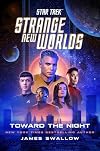
A planet circling a star that is suddenly acting erratic causing the inhabitants to deal with it in a radical solution, one that will eventually get the attention of Starfleet not once but twice. Toward the Night by James Swallow is the third book featuring the characters from Star Trek: Strange New Worlds in a novelization surrounding one of the latest Star Trek series.
Taking place between the second season episodes “Among the Lotus Eaters” and “Charades”, the book follows the crew show more of the Enterprise as it tracks down a distress signal from century-lost early Federation vessel in a disputed system between the Federation and Klingon Empire only to find a chronological enigma. I don’t know if there is a record for the number of cliché plot-of-the-week thrown into one story, but this has to be up for consideration as there is a new alien civilization, mysterious derelict starship, mysterious orb, time travel and not ruining the timeline, finding hardboiled shipwreck survivors, long lost family member who isn’t what you imagined, deadly planet in two different time frames, and fighting Klingons just off the top of my head. If this was a single 60-minute episode, it would be bad, but thankful this is in a book allowing all these cliches to meld together in a great narrative scope conceived and executed by James Swallows. Using numerous points of view from the show’s main characters as well as those created for the story, Swallow does a good job bringing the show characters onto the page and bring forth engaging new characters for them to interact with. Of the three books of the Strange New Worlds line, this is easily the best not only in story but in how the author brings all the characters across.
Toward the Night is an example of a media tie-in novel that uses its medium for maximum potential to bring an entertaining story that would be too much for a single episode to the reader for their enjoyment. show less
Taking place between the second season episodes “Among the Lotus Eaters” and “Charades”, the book follows the crew show more of the Enterprise as it tracks down a distress signal from century-lost early Federation vessel in a disputed system between the Federation and Klingon Empire only to find a chronological enigma. I don’t know if there is a record for the number of cliché plot-of-the-week thrown into one story, but this has to be up for consideration as there is a new alien civilization, mysterious derelict starship, mysterious orb, time travel and not ruining the timeline, finding hardboiled shipwreck survivors, long lost family member who isn’t what you imagined, deadly planet in two different time frames, and fighting Klingons just off the top of my head. If this was a single 60-minute episode, it would be bad, but thankful this is in a book allowing all these cliches to meld together in a great narrative scope conceived and executed by James Swallows. Using numerous points of view from the show’s main characters as well as those created for the story, Swallow does a good job bringing the show characters onto the page and bring forth engaging new characters for them to interact with. Of the three books of the Strange New Worlds line, this is easily the best not only in story but in how the author brings all the characters across.
Toward the Night is an example of a media tie-in novel that uses its medium for maximum potential to bring an entertaining story that would be too much for a single episode to the reader for their enjoyment. show less
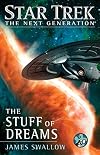
I can't claim I ever wanted a follow-up to Generations. "What was the nexus?" is a question I never even thought about. But The Stuff of Dreams brings the Enterprise crew back into contact with that phenomenon, several decades ahead of schedule. Instead of passing through local space every 39.1 years, it's returning 25 years early... and coming within the reach of the Typhon Pact, who might like to have some easy access to time travel.
At first, I will admit I really didn't see the point of show more all this. The nexus (always lower case, which feels wrong to me, like it's just some nexus, when surely it's the Nexus) is kind of a maguffin. The Enterprise has met up with the science vessel Newton, which has been studying the nexus for months; with the nexus about to enter Kinshaya space, the Newton is going to destroy it so that no one can get their hands on it. But there's a saboteur on board: it felt like this could have been any space thing in any Typhon Pact story.
But then Picard returns to the nexus about halfway through the novella, and the story gets wistful and melancholy and true. Picard has to convince another man to give up the fantasies of the nexus while once again confronting his own. The writing is tight and evocative and character focused; as it goes on, it becomes genuinely moving, and I found myself tearing up as I finished the novella over lunch. (Warning: parenthood makes you into a total sap.) The reappearance of a certain Generations character seemed obvious once it happened, but I didn't expect it, and I really like what was done with him. It gave him good closure. Swallow has a good grasp on Picard, and this is the first Destiny-era story to convince me that there's something interesting in marrying Picard off and giving him a family, the first one to tell a story that could not have been told before.
And, I must admit, the more thriller-focused elements in the first half work well; the culprit seems obvious, so I was surprised to be wrong-footed. (And then Swallow puts a second surprise on top of the first-- sneaky!)
It's quick, and that's to its advantage. One of the things I like about these novellas is that they read like episodes of the television series; Destiny-era fiction can often feel bloated, but The Stuff of Dreams gets right to it and never really wastes any time. It kind of makes me think all Star Trek tie-in fiction should be novella-length! Another thing I like is its perspective. A lot of Star Trek books jump from character to character to character in a way that makes it hard for the book to maintain any real throughlines; the choice of viewpoint feels like it says more about the plot than anything else. The Stuff of Dreams focuses primarily on Picard, using him as the focal character for the majority of its scenes. But not every scene is a Picard one; we'll segue into Worf or whoever when it's needed, but we always quickly come back to Picard. So while this might read like an episode in terms of pacing, in terms of character focus, I think it plays to the strengths of prose instead of trying to emulating tv-style ensemble storytelling.
So despite my initial skepticism, this turned out to be nice little adventure of the kind I wish we saw more of. I think all of Swallow's Destiny-era books were Titan ones outside of this, so it's nice to get to see him do something different. I'd like to read more TNG by him.
Continuity Note:
At first, I will admit I really didn't see the point of show more all this. The nexus (always lower case, which feels wrong to me, like it's just some nexus, when surely it's the Nexus) is kind of a maguffin. The Enterprise has met up with the science vessel Newton, which has been studying the nexus for months; with the nexus about to enter Kinshaya space, the Newton is going to destroy it so that no one can get their hands on it. But there's a saboteur on board: it felt like this could have been any space thing in any Typhon Pact story.
But then Picard returns to the nexus about halfway through the novella, and the story gets wistful and melancholy and true. Picard has to convince another man to give up the fantasies of the nexus while once again confronting his own. The writing is tight and evocative and character focused; as it goes on, it becomes genuinely moving, and I found myself tearing up as I finished the novella over lunch. (Warning: parenthood makes you into a total sap.) The reappearance of a certain Generations character seemed obvious once it happened, but I didn't expect it, and I really like what was done with him. It gave him good closure. Swallow has a good grasp on Picard, and this is the first Destiny-era story to convince me that there's something interesting in marrying Picard off and giving him a family, the first one to tell a story that could not have been told before.
And, I must admit, the more thriller-focused elements in the first half work well; the culprit seems obvious, so I was surprised to be wrong-footed. (And then Swallow puts a second surprise on top of the first-- sneaky!)
It's quick, and that's to its advantage. One of the things I like about these novellas is that they read like episodes of the television series; Destiny-era fiction can often feel bloated, but The Stuff of Dreams gets right to it and never really wastes any time. It kind of makes me think all Star Trek tie-in fiction should be novella-length! Another thing I like is its perspective. A lot of Star Trek books jump from character to character to character in a way that makes it hard for the book to maintain any real throughlines; the choice of viewpoint feels like it says more about the plot than anything else. The Stuff of Dreams focuses primarily on Picard, using him as the focal character for the majority of its scenes. But not every scene is a Picard one; we'll segue into Worf or whoever when it's needed, but we always quickly come back to Picard. So while this might read like an episode in terms of pacing, in terms of character focus, I think it plays to the strengths of prose instead of trying to emulating tv-style ensemble storytelling.
So despite my initial skepticism, this turned out to be nice little adventure of the kind I wish we saw more of. I think all of Swallow's Destiny-era books were Titan ones outside of this, so it's nice to get to see him do something different. I'd like to read more TNG by him.
Continuity Note:
- One character, Kolb, is an old friend of Picard; it's mentioned they met when the Enterprise-D saved his planet, Styris IV, from Anchilles fever. I vaguely recognized those names, so I assumed he had appeared on some old episode of TNG that I had mostly forgotten. I was surprised when later I discovered he was an invention of this book-- Styris IV was where the Enterprise was going after "Code of Honor." I do wonder if there's a pre-established character Swallow could have used again to give things slightly more oomph. I am not a huge fan of the never-before-mentioned-old-friend trope!
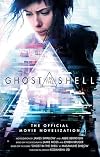
Basically, it's just the film in writing. Which, if you're just wanting to read what happens in the film, then great, but personally i feel that this is just totally lazy on the part of the writer: or maybe this is all they were told to do by the rights holder???
The great thing about books, as opposed to film, is that you don't have to pay for the sets, the extra cameras, the costumes, etc.. In a book the writer is simply limited by their own imagination and language skills, whereas in show more a film the director/writers are totally and absolutely constrained by finite resources such as finances, but also logistics, cgi limitations, the human elements of everyone involved (remember the pandemic and the disruption that caused to films and tv shows?) and many other things besides. So to sit down and write a novel based upon a film, one would think a really good writer would have a fucking field day with it, but, with Ghost in the Shell, they didn't.
Like is say, maybe this was the brief, and when someone throws a bag of money in the direction of writers and tells them what they want writing i would imagine they'll get plenty of writers clamouring to take on such an easy task as this "novelisation" must have been.
At less than 2300 Kindle Loc points you're pushing it to label this as a novel anyway. At this length you're seriously riding the boundaries between novella and novel.
I suppose they didn't want to upset the film fans who only have attention spans of two hours.
So yeah, sadly, a total let down. There could have been so much more background and detail that could have really added to the story. A seriously wasted opportunity. show less
The great thing about books, as opposed to film, is that you don't have to pay for the sets, the extra cameras, the costumes, etc.. In a book the writer is simply limited by their own imagination and language skills, whereas in show more a film the director/writers are totally and absolutely constrained by finite resources such as finances, but also logistics, cgi limitations, the human elements of everyone involved (remember the pandemic and the disruption that caused to films and tv shows?) and many other things besides. So to sit down and write a novel based upon a film, one would think a really good writer would have a fucking field day with it, but, with Ghost in the Shell, they didn't.
Like is say, maybe this was the brief, and when someone throws a bag of money in the direction of writers and tells them what they want writing i would imagine they'll get plenty of writers clamouring to take on such an easy task as this "novelisation" must have been.
At less than 2300 Kindle Loc points you're pushing it to label this as a novel anyway. At this length you're seriously riding the boundaries between novella and novel.
I suppose they didn't want to upset the film fans who only have attention spans of two hours.
So yeah, sadly, a total let down. There could have been so much more background and detail that could have really added to the story. A seriously wasted opportunity. show less
Lists
Awards


You May Also Like


Associated Authors
Statistics
- Works
- 146
- Also by
- 66
- Members
- 6,734
- Popularity
- #3,636
- Rating
- 3.6
- Reviews
- 151
- ISBNs
- 387
- Languages
- 10
- Favorited
- 2

