
Anna Thayer
Author of The Traitor's Heir
About the Author
Series
Works by Anna Thayer
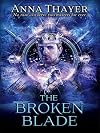
The Broken Blade: No Man Can Serve Two Masters Forever (The Knight of Eldaran) (2015) 16 copies, 6 reviews
Associated Works
Hither Shore Band 6: Gewalt, Konflikt und Krieg bei Tolkien: Jahrbuch 2009 der Deutschen Tolkien Gesellschaft (2010) — Author — 10 copies
Tagged
Common Knowledge
There is no Common Knowledge data for this author yet. You can help.
Members
Reviews
4.5 Stars
An unusual fantasy story in which, rather than following the rise of the Chosen One, we follow the the journey of his childhood friend who is seemingly fated to one day betray him.
Rather than an epic fantasy loaded with adventure, magic and battles The Knight of Eldaran might be best described as a slow-burn character study in a not-super-high-but-moderate-fantasy setting, with a heavy focus on politics and relationships.
I believe that Thayer gave herself a great challenge by the show more type of story she sought to tell in these books. It is not an easy one to pull off well, and I would argue that the layers of allegory she wove into the story could've made it all the more disastrous if she failed to pull it off. However, I believe she did manage to pull it off quite satisfactorily. An impressive feat, especially considering this appears to have been her debut in fiction.
There is much I want to say about this trilogy, especially after reading this final installment. But I will limit myself to a few remarks.
First of all, the influence of Lewis and Tolkien on Thayer is very apparent, but Thayer's work does not feel derivative. Her world seems clearly inspired by theirs and similar works, but it has unique aspects that set it apart, and her story feels very much her own. The structure of the military and politics, and the magic systems were particularly unusual. At least if I consider the fantasy works I have read thus far. I also really appreciated that Thayer did not shy away from including and exploring more dark and complex choices and themes. A lot of the actions and consequences felt fairly realistic, and things weren't always solved cleanly.
Thayer clearly put a lot of thought into the entire story. This is not one of those series where the first book is a satisfactory standalone story and the second and third were written afterwards as continuations and feel a bit unnecessary and tacked-on. This is very much a single story separated into three books. One example of this is how the plot twists in this installment were fairly well foreshadowed and laid out in the earlier books. I eagerly speculated and hoped for the one before it was revealed, and was utterly surprised to the point of momentarily getting mad at the author for pulling the other one out of thin air before remembering she had actually laid out the pieces for it from fairly early on. I am quite keen to reread the trilogy one day to more closely analyse her set-up and foreshadowing of these a bit more thoroughly.
One area in which I found the trilogy a bit lacking was in regards to its world-building. While the military and political system were quite detailed and well-explained, I only started to understand the magic system and how it ties in to the greater plot properly in the third book (granted, it is possible I just wasn't paying as much attention to the details of the magic in the first book). I also would have loved more detail and description of the surroundings, and a bit more information about the other countries and nations. Thayer's writing not bland or dull--it flows well, and there are moments of vivid description and detail throughout--but there could have been more scene setting, and it was only towards the second half of this final book that I felt I started to get a clearer sense of the world these characters inhabited. Two of my favourite "world-building" moments in the entire trilogy were a description of a fruit unique to the region in the second book, and a description of some bread the city bakers were making for an event in the final chapters.
Another issue that I had was with regards to the protagonist Eamon. On the whole I found him likable and relatable, but there were some moments where his thought process seemed a little unbelievable or he came across as a bit silly(eg. how quick he was to believe Arlaith's claim that Alessia had intentionally aborted their child) , and I found him unlikable for some periods of the story as a result of these moments.
Overall though, this trilogy was a solid and unified narrative with a satisfying ending and clear themes. I really enjoyed the journey and the variety of characters Thayer introduced us to in its course. It was also very apparent throughout that Thayer put a lot of thought and love into this story. While it certainly won't be a story that appeals to everyone, I think this series deserves much more attention than it seems to receive. show less
An unusual fantasy story in which, rather than following the rise of the Chosen One, we follow the the journey of his childhood friend who is seemingly fated to one day betray him.
Rather than an epic fantasy loaded with adventure, magic and battles The Knight of Eldaran might be best described as a slow-burn character study in a not-super-high-but-moderate-fantasy setting, with a heavy focus on politics and relationships.
I believe that Thayer gave herself a great challenge by the show more type of story she sought to tell in these books. It is not an easy one to pull off well, and I would argue that the layers of allegory she wove into the story could've made it all the more disastrous if she failed to pull it off. However, I believe she did manage to pull it off quite satisfactorily. An impressive feat, especially considering this appears to have been her debut in fiction.
There is much I want to say about this trilogy, especially after reading this final installment. But I will limit myself to a few remarks.
First of all, the influence of Lewis and Tolkien on Thayer is very apparent, but Thayer's work does not feel derivative. Her world seems clearly inspired by theirs and similar works, but it has unique aspects that set it apart, and her story feels very much her own. The structure of the military and politics, and the magic systems were particularly unusual. At least if I consider the fantasy works I have read thus far. I also really appreciated that Thayer did not shy away from including and exploring more dark and complex choices and themes. A lot of the actions and consequences felt fairly realistic, and things weren't always solved cleanly.
Thayer clearly put a lot of thought into the entire story. This is not one of those series where the first book is a satisfactory standalone story and the second and third were written afterwards as continuations and feel a bit unnecessary and tacked-on. This is very much a single story separated into three books. One example of this is how the plot twists in this installment were fairly well foreshadowed and laid out in the earlier books. I eagerly speculated and hoped for the one before it was revealed, and was utterly surprised to the point of momentarily getting mad at the author for pulling the other one out of thin air before remembering she had actually laid out the pieces for it from fairly early on. I am quite keen to reread the trilogy one day to more closely analyse her set-up and foreshadowing of these a bit more thoroughly.
One area in which I found the trilogy a bit lacking was in regards to its world-building. While the military and political system were quite detailed and well-explained, I only started to understand the magic system and how it ties in to the greater plot properly in the third book (granted, it is possible I just wasn't paying as much attention to the details of the magic in the first book). I also would have loved more detail and description of the surroundings, and a bit more information about the other countries and nations. Thayer's writing not bland or dull--it flows well, and there are moments of vivid description and detail throughout--but there could have been more scene setting, and it was only towards the second half of this final book that I felt I started to get a clearer sense of the world these characters inhabited. Two of my favourite "world-building" moments in the entire trilogy were a description of a fruit unique to the region in the second book, and a description of some bread the city bakers were making for an event in the final chapters.
Another issue that I had was with regards to the protagonist Eamon. On the whole I found him likable and relatable, but there were some moments where his thought process seemed a little unbelievable or he came across as a bit silly
Overall though, this trilogy was a solid and unified narrative with a satisfying ending and clear themes. I really enjoyed the journey and the variety of characters Thayer introduced us to in its course. It was also very apparent throughout that Thayer put a lot of thought and love into this story. While it certainly won't be a story that appeals to everyone, I think this series deserves much more attention than it seems to receive. show less
I'm very selective in my reading of the fantasy genre; dragons, for instance, put me off, but I was very glad I was led to read this novel. Although it was the third volume in a trilogy, I was captivated--somewhat by the fantasy world, a faux medieval world in this case, but more by the very human interactions and emotions of the characters. Now I wish to read the first two of the three. For someone starting the trilogy, I would advise reading the volumes in numerical order if possible.
In show more the two previous volumes we see the rise of Eamon Goodman [an allegorical surname?], the protagonist, from cadet in the army called the Gauntlet, through different ranks, in this book to become a Quarter Hand [the major city Dunthruik is divided into North, South, East and West Quarters; River Realm into provinces] and finally to Right Hand, or second-in-command to the ruler, the usurper the throned Master. In this volume, Eamon faces and agonizes over the biggest choice of his life: will he stay with the Master, or defy him and his cruelty to stand with the rightful King? His decision will influence the fate of all River Realm. The subtitle of the novel was perfect.
I enjoyed the themes of loyalty, friendship, forgiveness, and grace, which occurred over and over in the story. Chapter XXIII gave the best explanation of grace I have read anywhere. A religious thread tied the story together but it was not saccharine or obtrusive. All the characters, except the obvious villains, were engaging. I also was not enamoured with Lady Turnholt.
Highly recommended. I have since bought and now own the other two volumes in the series after having read Book I from the library. show less
In show more the two previous volumes we see the rise of Eamon Goodman [an allegorical surname?], the protagonist, from cadet in the army called the Gauntlet, through different ranks, in this book to become a Quarter Hand [the major city Dunthruik is divided into North, South, East and West Quarters; River Realm into provinces] and finally to Right Hand, or second-in-command to the ruler, the usurper the throned Master. In this volume, Eamon faces and agonizes over the biggest choice of his life: will he stay with the Master, or defy him and his cruelty to stand with the rightful King? His decision will influence the fate of all River Realm. The subtitle of the novel was perfect.
I enjoyed the themes of loyalty, friendship, forgiveness, and grace, which occurred over and over in the story. Chapter XXIII gave the best explanation of grace I have read anywhere. A religious thread tied the story together but it was not saccharine or obtrusive. All the characters, except the obvious villains, were engaging. I also was not enamoured with Lady Turnholt.
Highly recommended. I have since bought and now own the other two volumes in the series after having read Book I from the library. show less
 This review was written for LibraryThing Early Reviewers.
I normally don't read a lot of fantasy, but this was a really good read. The writing was so vivid that I had no problem picturing this land and people from the first page.
The book does a great job of presenting the struggle between heart and head and the sacrifices that must be endured for the greater good.
It also shows that leaders can be dedicated to improving things under their control for no other reason than to see their charges happy.
The book does a great job of presenting the struggle between heart and head and the sacrifices that must be endured for the greater good.
It also shows that leaders can be dedicated to improving things under their control for no other reason than to see their charges happy.
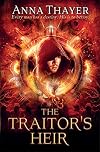
This review was written for LibraryThing Early Reviewers.The Traitor's Heir: Every man has a destiny. His is to betray. (The Knight of Eldaran) by Anna Thayer
This originally appeared at The Irresponsible Reader.
---
WHAT'S THE TRAITOR'S HEIR ABOUT?
When the book opens, Eamon Goodman, the orphaned son of a bookbinder currently a cadet in the final stages of his training as a member of the army of the Master of the River Realm. He doesn't seem to be very good at being a soldier but is committed to passing and taking the oath. Beyond that, his heart doesn't seem to be in it, either—but maybe it's just the best route for some sort of security for show more him.
He seems to be a decent guy in an army that doesn't have a lot of them—although those traits seem to be highly valued. After taking his oath, and achieving more success than seems deserved he meets someone who claims to be a descendant of the true king, deposed some centuries ago. Eamon agrees to work for this King in the capital.
Eamon isn't the Chosen One—that's (presumably) the King. However, Eamon is a direct descendant of the last King's First Knight—champion and advisor. He's not the Chosen One—he's more like the Chosen Sidekick. Eamon's calling seems to be to aid the King to reclaim the throne and serve him.
He goes to the capital and follows the King's wishes. Until, with the help of a beautiful noblewoman, he gets distracted and serves the Master. Then circumstances lead him back to the King. And then...he ping-pongs between the two until he makes a final choice.
WHAT I DON'T GET...
I've run into this issue before, this isn't me picking on Thayer. The reader is clearly to get invested in this struggle between the King and the Master, we're supposed to want to see the Master defeated and the King to retake the throne. But...
There is no reason to root for the King and his forces here beyond "generations ago his ancestor lost the throne due to the duplicity of his trusted knight. We have no vision of how he'll improve anything for anyone but those supporters of his that have to hide their allegiance or have to live in his secret campground. His being on the throne would allow them to live openly and/or in society. Yes, he seems to be kind, compassionate, and honorable, but...there are a lot of good guys who happen to be related to someone who used to be in power that shouldn't be put back in a position of authority.
There aren't a lot of reasons for the reader to want to see the downfall of The Master. Sure, he treats those sewing dissension in the populace and/or actively working to bring down his government harshly. But...what government doesn't? The methods he uses seem extreme and capricious, but also seem like the kind of thing a government in this setting would do.
Don't get me wrong, it's clear that The Master is evil, he manipulates Eamon throughout—and anyone who gets "behind the curtain" to see how the government is run should have qualms about it. But John and Jane Smith working away in their village outside the city aren't being oppressed. They're not being starved. They're not being exploited. The same is true for Jill or Joe practicing their trades or selling their wares in the cities.
I can tell you why Panem's President Snow should be defeated. I can tell you why the Golds should be replaced by the government that Darrow's revolt made possible. The Sheriff of Nottingham? Oh, absolutely—Robin Hood is in the right. The White Witch and her never-ending (and Christmas-free) Winter need to be overthrown. But I can't tell you how things are going to be better for the River Realm or its people. That's really hard for me to push past.
SO, WHAT DID I THINK ABOUT THE TRAITOR'S HEIR?
Thayer has a thinly disguised allegory here—our protagonist is a good man who has sworn an allegiance to an evil master while being given grace by the rightful king, who appeals to him to freely choose to serve this king. Allegories aren't necessarily supposed to be subtle, but this was just one degree shy of Pilgrim's Progress-level obviousness. Go for allegory if you want, but unless you're Bunyan, do something other than use it like a 2x4 in the hands of "Hacksaw" Jim Duggan.
Eamon didn't struggle between the two who wanted his allegiance. If you think of his allegiance as a number line from -10 to 10, he was wholly devoted to -10 and then swung to the other extreme. Then he'd rush back to -10. He never spent any time at 5, or -5—always the extreme. Show me some wavering. Show him spending some time around 0, teetering in each direction. Give me conflict. All I see is a flake that two antagonists are vying over—for no discernible reason than his status as Chosen Sidekick.
Eamon is a problematic character for me—even without his wavering allegiances. I clearly can't buy into the political struggle. I'm dissatisfied with the world-building (I had a section detailing it, but deleted it because this post was becoming too negative). This book was headed for the DNF pile...and yet.
And yet...
Thayer kept ensnaring me. I couldn't stop reading. I wasn't enjoying anything, didn't think I was reading a decent book—but I had to know what the next page held. And the next. And the next. Sure, I kept checking the page number so I knew how much longer this would go (and kept wishing the number was closer to 541)—but I'd have to see what 253 held. It makes no sense to me—but Thayer got her hooks in me. Her knack for that means I can't go lower than 3 (begrudging) stars
So yeah, this was a compelling, if frustrating, read. Your results may vary. I know at least one friend/sometimes reader of this blog will disagree with me (he is, after all, who recommended the book to me). Others are more than welcome—encouraged, even—to weigh in and tell me what I missed. Give this a shot if the idea appeals to you—the trilogy looks like it'll take a different shape than most. Just that novelty may be enough to intrigue you (it pulls on me). show less
---
WHAT'S THE TRAITOR'S HEIR ABOUT?
When the book opens, Eamon Goodman, the orphaned son of a bookbinder currently a cadet in the final stages of his training as a member of the army of the Master of the River Realm. He doesn't seem to be very good at being a soldier but is committed to passing and taking the oath. Beyond that, his heart doesn't seem to be in it, either—but maybe it's just the best route for some sort of security for show more him.
He seems to be a decent guy in an army that doesn't have a lot of them—although those traits seem to be highly valued. After taking his oath, and achieving more success than seems deserved he meets someone who claims to be a descendant of the true king, deposed some centuries ago. Eamon agrees to work for this King in the capital.
Eamon isn't the Chosen One—that's (presumably) the King. However, Eamon is a direct descendant of the last King's First Knight—champion and advisor. He's not the Chosen One—he's more like the Chosen Sidekick. Eamon's calling seems to be to aid the King to reclaim the throne and serve him.
He goes to the capital and follows the King's wishes. Until, with the help of a beautiful noblewoman, he gets distracted and serves the Master. Then circumstances lead him back to the King. And then...he ping-pongs between the two until he makes a final choice.
WHAT I DON'T GET...
I've run into this issue before, this isn't me picking on Thayer. The reader is clearly to get invested in this struggle between the King and the Master, we're supposed to want to see the Master defeated and the King to retake the throne. But...
There is no reason to root for the King and his forces here beyond "generations ago his ancestor lost the throne due to the duplicity of his trusted knight. We have no vision of how he'll improve anything for anyone but those supporters of his that have to hide their allegiance or have to live in his secret campground. His being on the throne would allow them to live openly and/or in society. Yes, he seems to be kind, compassionate, and honorable, but...there are a lot of good guys who happen to be related to someone who used to be in power that shouldn't be put back in a position of authority.
There aren't a lot of reasons for the reader to want to see the downfall of The Master. Sure, he treats those sewing dissension in the populace and/or actively working to bring down his government harshly. But...what government doesn't? The methods he uses seem extreme and capricious, but also seem like the kind of thing a government in this setting would do.
Don't get me wrong, it's clear that The Master is evil, he manipulates Eamon throughout—and anyone who gets "behind the curtain" to see how the government is run should have qualms about it. But John and Jane Smith working away in their village outside the city aren't being oppressed. They're not being starved. They're not being exploited. The same is true for Jill or Joe practicing their trades or selling their wares in the cities.
I can tell you why Panem's President Snow should be defeated. I can tell you why the Golds should be replaced by the government that Darrow's revolt made possible. The Sheriff of Nottingham? Oh, absolutely—Robin Hood is in the right. The White Witch and her never-ending (and Christmas-free) Winter need to be overthrown. But I can't tell you how things are going to be better for the River Realm or its people. That's really hard for me to push past.
SO, WHAT DID I THINK ABOUT THE TRAITOR'S HEIR?
Thayer has a thinly disguised allegory here—our protagonist is a good man who has sworn an allegiance to an evil master while being given grace by the rightful king, who appeals to him to freely choose to serve this king. Allegories aren't necessarily supposed to be subtle, but this was just one degree shy of Pilgrim's Progress-level obviousness. Go for allegory if you want, but unless you're Bunyan, do something other than use it like a 2x4 in the hands of "Hacksaw" Jim Duggan.
Eamon didn't struggle between the two who wanted his allegiance. If you think of his allegiance as a number line from -10 to 10, he was wholly devoted to -10 and then swung to the other extreme. Then he'd rush back to -10. He never spent any time at 5, or -5—always the extreme. Show me some wavering. Show him spending some time around 0, teetering in each direction. Give me conflict. All I see is a flake that two antagonists are vying over—for no discernible reason than his status as Chosen Sidekick.
Eamon is a problematic character for me—even without his wavering allegiances. I clearly can't buy into the political struggle. I'm dissatisfied with the world-building (I had a section detailing it, but deleted it because this post was becoming too negative). This book was headed for the DNF pile...and yet.
And yet...
Thayer kept ensnaring me. I couldn't stop reading. I wasn't enjoying anything, didn't think I was reading a decent book—but I had to know what the next page held. And the next. And the next. Sure, I kept checking the page number so I knew how much longer this would go (and kept wishing the number was closer to 541)—but I'd have to see what 253 held. It makes no sense to me—but Thayer got her hooks in me. Her knack for that means I can't go lower than 3 (begrudging) stars
So yeah, this was a compelling, if frustrating, read. Your results may vary. I know at least one friend/sometimes reader of this blog will disagree with me (he is, after all, who recommended the book to me). Others are more than welcome—encouraged, even—to weigh in and tell me what I missed. Give this a shot if the idea appeals to you—the trilogy looks like it'll take a different shape than most. Just that novelty may be enough to intrigue you (it pulls on me). show less
You May Also Like
Associated Authors
Statistics
- Works
- 5
- Also by
- 4
- Members
- 102
- Popularity
- #187,250
- Rating
- 3.9
- Reviews
- 32
- ISBNs
- 12
